See also:
What’s the Matter with Guide Dogs? (Chapter 1: What Happened at the Airport?)
To understand why I am concerned about what is happening with guide dogs now, you have to have some understanding of what my experiences have been in the past. I have now been to guide dog training 4 different times and 3 different schools. I’m going to review these experiences one by one to enable a little compare and contrast each school, but also to look at changing trends over time.
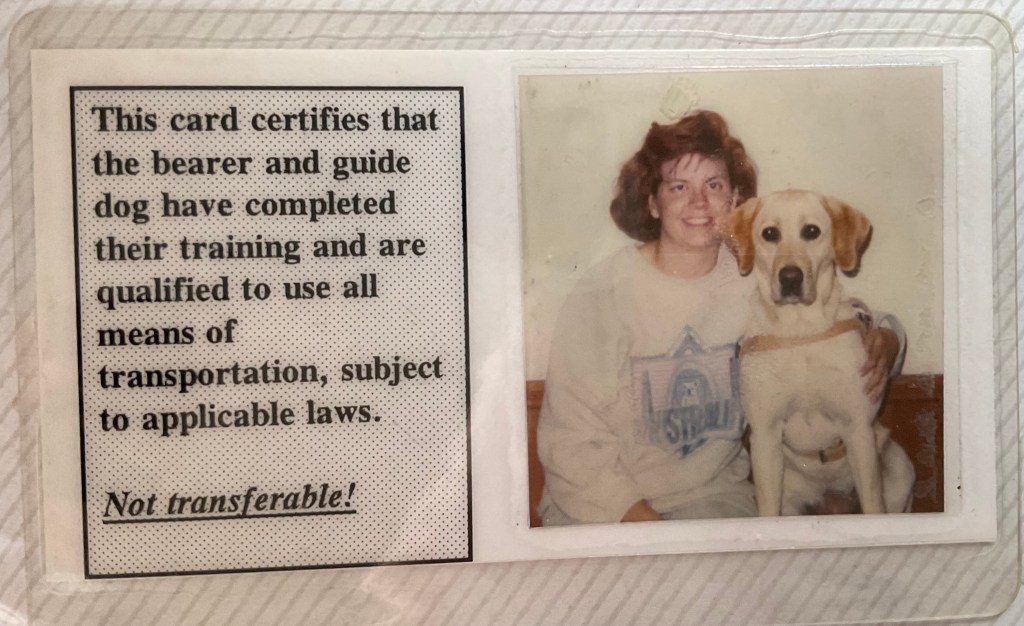
My first experience with the guide dog life as a blind person was 30 years ago, when I got my first guide, Mara, from Guide Dog Foundation for the Blind (GDF) in 1993. This is also where I met my husband, and where he got his first guide, Jats. Thirty years ago is a long time to remember things, but since this was our first guides and the experience was such a huge one in our lives, I actually remember quite a lot of it. I have also looked up some information using old records, pictures and journals.
Why I picked GDF:
I actually sort of approached this like I was choosing a college. I wrote to every school and got information. I threw out the ones that were too patronizing and custodial at the get go. For example, Guide Dogs for the Blind said that I needed to find a volunteer (perhaps a Boy Scout) to walk with me up to a mile a day for the three months preceding my class to get me in shape. I already walked probably 3-5 miles a day just walking to my college classes on UNL east campus from my apartment on 51st and Vine Street in Lincoln, Nebraska. I then called each school and interviewed them. I also called and interviewed people who had dogs from the schools and listened to other word of mouth. One couple said good things about their school but everyone else said their house was full of dog piss and shit stains. So that was out. No one said anything bad about GDF. I ended up applying to two schools, Guiding Eyes for the Blind (GEB) and GDF. Guiding Eyes sent a rep out to visit me, which I found annoying but I complied. I remember him saying my apartment was so clean, and I was like…where must you go to think this is that clean? GDF sent out no one, and that made me happy. I had a telephone interview.
The Training:
Back then, the training lasted 26 or so, days. We didn’t even get our dogs until the third day. What I remember most about the training was how thorough and tedious it was. Every single thing you did had a procedure to it. The first thing I had to do after meeting my dog was to walk down a hallway and sit in a chair. It took FOREVER! And I wondered if I would ever get up from that chair. But my dog was nice and clean and beautiful, happy and friendly. I fell in love with her right away.
There was a lot of downtime at this school. There were ten students in the class and two instructors. John was the director of training and was obviously the boss. Doug was new, just off of his apprenticeship and this was his first class. The class was divided in half, so a 5:1 ratio. Nik and I were assigned to Doug. The first few days we stayed at the campus and trained on their training blocks. Then we would pile into two vans (a John van and a Doug van) and go off to different places every day. The tasks spiraled out from simple to more and more complex. The commands used and the procedures were consistent among all of us and were explained in detail. There was a way to open a door, get in a car, ride an escalator, take your dog out to the bathroom, use the leash, etc.
These dogs used no food rewards. In fact, except for their meals, any food was strictly prohibited. All work was done with commands and tone of voice. There were some hand gestures, too. And leash corrections. Lots of leash corrections. A leash correction uses a choke chain and you do a sharp, quick jerk on the leash that snaps the collar around the neck of the dog. The dogs were 70-80 pound labradors and had super strong neck muscles. I was constantly being told my leash corrections were too wimpy. Doug, who was probably 6 foot something, would hold his hand over mine and yank HARD, snapping the leash quickly and tightly. Mara would immediately respond to his corrections, and only sometimes respond to mine. Not every misbehavior needed a severe leash correction like that. You could do just a little tug to get the dog’s attention, or even just a small shake of the harness handle would do it. But if your dog was off the rails, you would-in one movement-drop the harness handle and yank quickly and strongly back with your wrist on the leash. This dropped handle and snap would definitely get the dog’s attention.
Everything was done with the left hand. The leash went around your left wrist and you held the harness with your left hand. Your right hand was always free. If you dropped the harness, even accidentally, you would still have the dog’s leash around your wrist. Leash corrections were taught as a last resort. The first resort was the tone of your voice and lots and lots of praise and pets. Then you might move to a stern voice and a little leash tug, then you would go all out leash correction. The dogs were big and strong.
The dogs were also taught to guide without harness. The first few days, we went around in the building with our dogs guiding us on leash only. The commands used were consistent whether your dog was in harness or not. Leash guiding was not something you would do for long periods or all the time, it was more of an indoor thing or a “just to the mailbox” thing. So the dogs had some context for when they were off leash and not working vs. guiding on leash. You held the leash close to the dog’s neck when guiding on leash. Nik loved this, I never gave it much thought until this year.
But they were wicked smart, too, and they liked to guide. They did intelligent disobedience very well. This is when the dog overrides a command of a blind person because the command could put you in harms way. They were not all that sensitive in that if you scolded them, they recovered quickly and moved on. They all could find things–or “target”–already when we got them, and this seemed like magic. They were great and helping you find the door outside, because they always were glad to go outside. I thought this would be great if I was ever in a fire. They found curbs, of course. But also chairs, doors, elevators, stairs and “left/right” which is when they find a path you are looking for on the left or right. We moved from walking on little park paths to going to subways and walking on sidewalks in Queens.
The expectations for the decorum and manners of these dogs was super high. My dog barked one time, when a random person on a tour came into my room suddenly. I had trainers come running in concern and asking why she barked and what was the matter because it was so rare. I was scared she would get into trouble, but because the circumstances were so weird (a total stranger busting into my room) they let it go. But these dogs never barked. They never fought with each other. They laid almost perfectly still under you at meals and at our class meetings, never bothering any of the other dogs. They would get on the bus and go right under the seat without you even doing a thing. They were not perfect and made mistakes, but in general, this is how they came to you at training.

The Facilities:
I have laughed at people who only go to the schools with the nicest resort-like facilities rather than worrying about the quality of the dogs, but I have seen how facilities can play a part, so I will talk briefly about them. The GDF dorm facility at that time was like living in a large house. There was a living room when you walked in the front door, there was a dining and kitchen there, a basement with sort of a rec room in it and a TV, and two wings with 3 bedrooms each. They were divided into a mens and woman’s wing, and we each had a roommate. Each bedroom had a bathroom and a door to the outside where you took your dog out. The grounds had a couple of practice city blocks, a small dog run, and a garden. There was also a kennel and an administration building. The facilities were perfectly acceptable but not fancy. It felt a lot like a house. The two vans were just like Chevy passenger vans and we spent a lot of time in them. There was no other facility that we spent time in. When we were out, we either stayed in the vans or just outside of them in folding lawn chairs, or we had arrangements to stay in nearby buildings, mostly church basements with church volunteers who would bring us snacks.
The Level of Custodialism:
The custodialism back then was rather high. We were not allowed in each other’s rooms or in the case of gender, in each other’s wings. The overnight babysitter was nosy and lurked around, getting on Nik’s and my case for being up later than about 10pm, even if we were just sitting quietly talking in the basement. We were not allowed to use our canes at all, even in the first few days when we didn’t have dogs. Nik was moved the last few days to John’s van because they thought we were too close. (I admit, Nik and I spent a lot of time together probably making googl-y eyes at each other and being annoying, but we showed up for every training thing we were required to, listened and did what we were told, did not have a sexual relationship–cuz no privacy whatsoever!–and did not go into each other’s rooms or interfere with each other’s roommates. We were exceptionally good kids.) When I say there was no privacy, I mean it. Once I jumped out of the van and headed for the shower because I was hot and sweaty and thought we were done till dinner. It turned out there was something we were supposed to do in the living room that I hadn’t heard about. I stepped out of the shower and a male trainer was banging on my bathroom door–I don’t even think our bedroom or bathrooms had locks–and was telling me to get down there already, even if I was naked. John started calling Nik a “fat boy” and upsetting him with little insults about his weight and his accent. A classmate of ours brought his dog back to retire with its puppy raisers, and I have never seen a more brutal scene than them taking the dog from him harshly and unceremoniously from the van when he arrived from the airport, never to be seen again. That was what made me decide that I would NEVER give my dogs back to these people. We were not allowed to go out of the house without permission. and we really never got permission. It was one of my first experiences with feeling really jailed and like the walls were closing in on me. I used to do stuff that probably looked batshit. I would put on headphones, listen to music and ASL sign the lyrics, while pacing back and forth in the front yard area by the fence in a kind of trance, trying not to jump the fence and make a run for it.
On the other side of that, though, was that after the first few days of individual training walks, we started going out as larger and larger groups. So, with that 5:1 ratio, we were able to have some time and space to ourselves to figure out how to trust the dogs and learn their mistakes. The trainers would be “around” but all ten of us were going on routes by ourselves with just each other to check in with and the trainers might come around and ask how things were going every 10 or 15 minutes or so. I walked a lot more by myself this training than I ever would again. I think that was great for really building trust with the dog.
Initial Problems:
Every guide dog comes home with some adjustment issues. There are always a few problems to work out. A couple of things stand out from my experience with Mara. The first was that she threw up all the time the first few weeks. She threw up in Target, in the mall, in the movie theater, in my house, on the street, everywhere. In the first couple of weeks, once a day at least, she would throw up. The vet couldn’t find anything wrong with her. She had not changed foods. It could have been anxiety, the water, an allergy, who knows? After a while, this problem took care of itself and she stopped throwing up.
I also had a bit of an issue with my apartment building. I lived in a big complex where there were several buildings surrounded by idiosyncratic parking lots. There was no way to tell her where to go to get out! They never taught us to walk from your door to the street through a bunch of mishapen parking, cars and buildings. I could do it with a cane, but was trying to follow all of the rules and procedures so had no idea how to do it with a dog. I ended up just teaching her a path with my cane. Which is when I decided that canes and dogs can make great combinations and their whole cane prohibition was bunk.
The other problem she had that we dealt with a lot in the first year were dog distractions. If she would see a dog on the street, she would slide off the cracker. She was actually, at times, hard to control. Again, I had to work hard to do leash corrections that were strong enough for her to care about them. I would say it took us maybe a good year to eliminate most of her issues with dog distractions. She only wanted to play, but it would throw me off course. It was also embarrassing to have to be that violent with her to correct her that strongly. People would think I was a terrible person. But I was doing what I was taught.
Graduation:
GDF did not have an official graduation ceremony. We had a day near the end where we met in a reception-type event at the house with our guide dog raisers and sponsors. It was very casual and light food was served. The dogs did not attend with us, which was a bit weird. I absolutely do not mind meeting with puppy raisers and thanking them, and I understand the need to show sponsors the end product of their contribution as well and show gratitude. Although meeting new people is a bit awkward, I felt like this event was fine. We had an exit interview with the CEO.

Guiding with Mara and Jats:
Both Nik and I will say objectively that Mara and Jats were the hands-down best guides. They had wonderful decorum. Despite their couple of weak spots, they hardly ever needed correction. They did not need to be told a lot of information to know what to do, and they were very keen on the context of the situation and generalizing from one situation to another. They learned how to find bus stops and classrooms after only 2 or 3 lessons. They were sharp until the end. They were friendly but not over sensitive. They understood their job and liked to do it. We had so many adventures with them and went to so many places and travels. Yes, they made mistakes, but mostly we were able to travel anywhere we wanted to go with them.
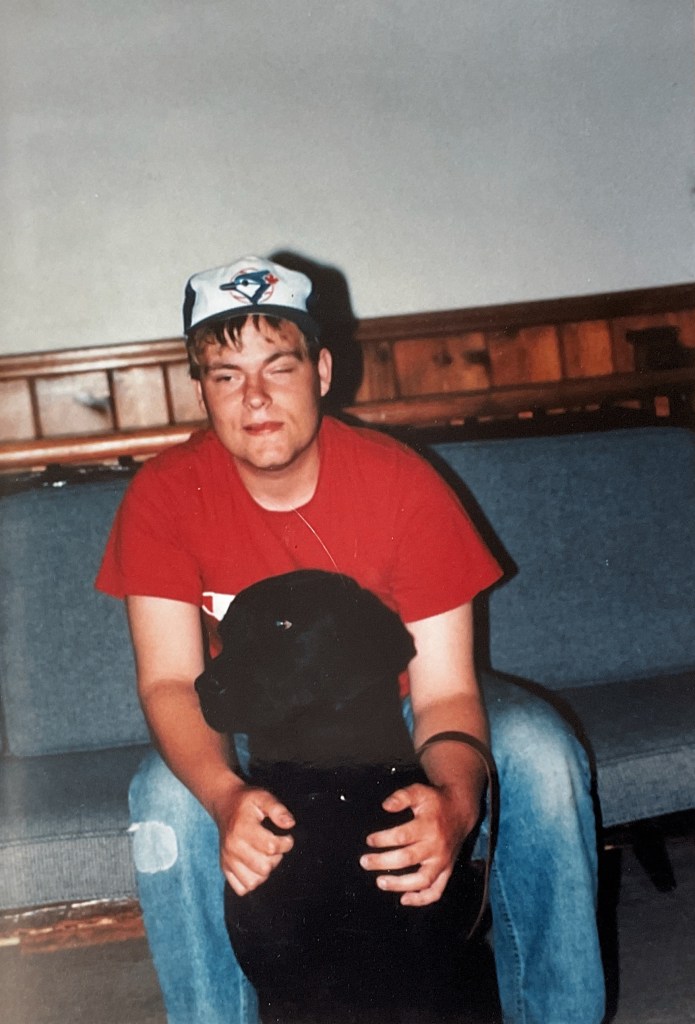
Mara’s timeline:
From the best that I can put together today (it might be a bit off…):
Born: September 15, 1991. From what I recall, puppies stayed with their mothers at the school’s puppy center for about 9-12 weeks.
Puppy raisers: November 1991 to February 1993. Puppy raisers attended obedience camp at the school every Saturday and had assignments throughout the week.
In for training/kennel: February-June 1993. Her trainer was Tim. He had her the whole time until class. She spent about 3.5-4 months in the kennels.
On class: June 1993. She was 1 year 9 months when I got her.
Working Guide: July-1993 to about September 2002. 9 years, 2 months, although modified schedule in 2002. Retired due to hip/orthopedic issues.
Died: June 4th, 2004. 12 years, 9 months. Euthanized due to uncontrollable hip joint pain and lack of joint function.
Overall Impressions:
Although I found out I do not enjoy the constraints of guide dog training, this was the most thorough, complete and organized training I had ever had. There were some annoying aspects of it, like when we would have to sit around FOREVER to “learn” how to assemble and disassemble the harness when I could do it by feel immediately in 2 seconds. some others couldn’t, which is often caused by blind folks never getting opportunities to do anything mechanical with their hands their whole lives. I understand that all people are different, but some things were taught at the lowest common denominator. If you said anything, they would say “oh well, you can see. Other’s can’t.” While I do understand that usable vision does give me some advantages, blindness does not make you a bad mechanical person, lack of opportunity does. Nik, who is totally blind, could also figure out the harness in seconds. So that got old. But overall, the training was concise, consistent across dogs and trainers, the dogs could do a LOT of things and there were very high expectations of the dogs. No one balked at the idea of pulling a stroller or grocery cart behind you. In fact, that is where I learned to do it. No one excused the dog’s bad manners or squirrelly behavior. Expectations were very high for the blind handler and the guide dog to work together at a high level and be very presentable doing it. Even though I have made modifications, mostly in vastly decreasing leash corrections, this training was the basis of all of my guide dog work for the rest of my life.
 Writebook