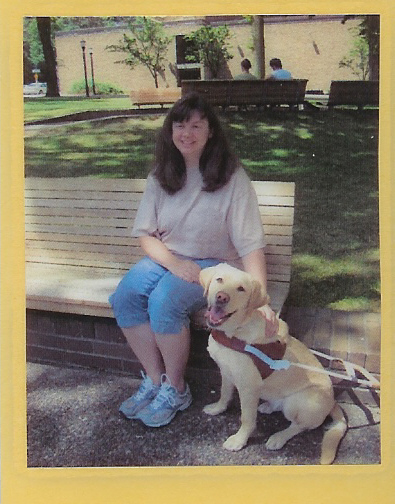
My Decade of Trying to Get the Door Open to the Unitarian Universalist Church (aka Ode to Sara Cloe)

A stylized UU Chalice with a small red heart in the flame.

I have been working on cleaning up and fixing my computer that I hadn’t used in over a year and found this essay I wrote maybe 2-3 years ago for a Beacon Press publication on the disability experience in religious organizations. I was told that the editors/authors got so many contributions, they changed their strategy to just include side bar pull quotes from the contributor’s essays. After reading it, I thought, “yeah, that is pretty spot on about what happened back then. What the hell. I’LL publish it.” I will say that my last interactions with the church were probably around 2017 or so. I do not know much about what the UUA or any individual churches have possibly done to be more inclusive of diverse members since then.

The first time I ever went to a Unitarian Universalist Church, the door was locked. 

I am blind and hearing impaired and at that time was pregnant with twins, and my parenting partner, Dwight, has quadriplegia and uses a wheelchair. We were excited to get up on Sunday morning and have this new experience. Both of us were new to the neighborhood, and really wanted to find a positive and supportive community with which to raise our children. I had researched Unitarian Universalism online and it looked exactly like what we wanted. A church community low on dogma, open to diverse families, and high on doing good deeds to make the world a better place. We had noticed a long, triple level ramp that had been built on the backside of the building as we had walked by in previous weeks and took it as a good sign that disabled people were welcome there. But when we arrived and climbed the long ramp on that first Sunday, the door wouldn’t open. We knocked but got no response. After waiting a few minutes, I told Dwight to wait there and I grabbed the underside of my protruding pregnant belly, as I had come to find was the only slightly comfortable way to walk anymore. I went back down the three levels of decline, worked my way around the church, and up the flight of stairs at the front of the building. I was welcomed when I entered the door, but not knowing the building myself, I had to ask several people to help me get to the back door where my partner waited so I could let him in. 

In the ten years that I participated in Unitarian Universalist church congregations and activities, my family and I faced a lot of locked doors—both real and metaphorical. We worked hard to open them. Sometimes we had success, sometimes we did not. Sometimes it even seemed as if our work only caused the doors to get additional, sturdier locks. After years of this exhausting work, slowly my family gave up. I was the last hold out, but finally I didn’t know why I was there anymore, either. This is my story of being a UU failure. And how the UU church failed me. 

My disability is a bit hard for people to understand. I have some vision and some hearing. Sometimes, it might have seemed like I had no problems at all hearing or seeing what was going on, other times I was unable to use my vision and hearing effectively without alternatives and accommodations. I have always understood that no one, not even my closest friends and family, can truly understand when I can or can’t see or hear something. They would regularly misinterpret when I needed accommodation or what kind. This has always been understandable to me, and I have never expected perfection. I never expect everyone I meet to be experts in ADA accessibility or in how blind, deaf or otherwise disabled people do everything. What I and most other disabled people like me hope for is to be included. We want to be welcomed and seen as contributing members just like anybody else. If something isn’t working, if we can’t access something, we want people around us to be willing to work it out with us until it works. To be adaptable to change and to prioritize inclusion. 

This is why we were not too phased when the accessible entrance door was locked. Maybe someone just forgot today or didn’t grab it yet. No problem. It barely raised concern for us, and we enjoyed the service and afterwards, a few people came up to us and politely welcomed us. So far so good. But then it was locked the next week, too. And a few after that. It was locked approximately half the time we went. When we finally brought it up to the minister, we just thought it was a procedural problem. We knew there were a rotating number of volunteers that probably got the church ready on Sunday morning. I thought it just needed to be added to a checklist and the problem would be solved. I was shocked at the response we got.

The interim minister was very defensive. He told us that the door was not being kept locked to keep us out on purpose, but that the door got stuck a lot. This didn’t quite make sense to me because I was often the one who went around and physically unlocked the latched door, but I do suppose it was possible. We told the minister that we did not think the door was being locked or stuck shut on purpose to keep us out, but that the effect was the same. We couldn’t get into the building. I had newborn twins at this time, and between the wheelchair, the twins in car seats and their stroller, and my poor vision, it was quite a difficult task to get in the church. And it also meant that Dwight, or anyone else who needed ramp access, could not get in on their own. We asked that a solution be found, not that blame be sought. The problem got marginally better over the next few years, but never completely got solved. Even when we did get in that entrance, there was no on there to greet us, or give us an order of service like at the other entrance. In an old church, we understood the difficulties of architectural accessibility. Again, we did not expect perfection. But it would have been nice to feel welcomed on Sunday mornings instead of worrying what rigamarole we might be faced with to even get in. 

If it was only the door, I think we could have managed it. But many other things became as much of a barrier as the locked door. It was a little bit like death by 1000 paper cuts–isolated incidences don’t individually seem that dramatic, but taken collectively, they wore us down. I have a severe/profound hearing loss and use hearing aids. I tried to mitigate my problems hearing the sermons by sitting up front. But it seemed to cause problems with the flow in the aisles when Dwight’s wheelchair blocked the aisle. There were spaces for wheelchairs in back, but then I would really just be sitting there, cut off from both the visual and audio aspects of the service. I found that the sermon transcripts were available to read after the service. This made me have an idea. Could I possibly get the sermon sent to me beforehand in an email? Then I could read along with it by having my laptop speech reader read it to me. A very kind woman asked the minister if he could do this. He declined, saying there was no way he could remember in time and have it ready even 5 minutes before the service. This was a different minister than the one who we discussed the stuck door with. These kinds of responses almost physically hurt, like punches to the stomach. They made me feel like I was asking for too much, like I didn’t matter, and like I wasn’t really wanted there. 

The reason I stayed so long and kept trying were because of two things: One, this response to disability is not rare, it is universal in many places, so why would it be any different in this community? And the most important reason, because Dwight and I had champions there. There were a few people who always stood up for us and always tried to make things work with us. These were both individual congregants and sometimes staff. Our biggest champion in our early UU days was the Religious Education Director, Sara Cloe. If not for Sara, we would not have lasted more than maybe a few months. But Sara helped advocate for an assistive listening device for me and other hard of hearing folks, she advocated for the parish house to have a ramp, she sometimes advocated for rides for us when off grounds activities were occurring that we couldn’t get to on our own. She even advocated for a covenant group to be made to help specifically include us.

One of our problems was that when activities, such as covenant groups happen at people’s houses, we couldn’t go because the house would not be wheelchair accessible or on a bus line. Sara made it so a covenant group happened at the church, she even arranged childcare. She called it the “Family Covenant Group” and we did make friends with those families that I still care about and keep in touch with to this day. It was one of the lasting gifts that came out of our UU experience. 

Another example about how things aren’t always perfect but can be made to work if people work together is our experience with the UU Family Camp. There was no way Dwight could go to family camp due to the inaccessibility of the sleeping arrangements and bathrooms, but my young twins and I went. Sometimes, when a disabled person has never experienced something, it is impossible to know what you might need as far as accommodations. I had never attended anything like a church camp before. This was also the first year that this camp was put on by the church, so kinks were inevitable. On the first morning, I went down with my kids to eat breakfast in the dining hall and then went back to the room I was staying in for just a few minutes to drop off some things and let my newly potty-trained toddlers hit the rest room. When I came out, everyone was gone. I didn’t know where they were so started walking around. Then my kids started happily playing in the sand volleyball court. So, we just stayed there and played. I didn’t really know what I was supposed to do. When lunch time came around, the people were back in the dining hall, so we returned there, and I got so busy just trying to figure out what the food was and help my kids through the buffet line that no one really talked to me and I didn’t get a chance to ask questions. Then, in the afternoon, everyone was gone again. Poof! So, we played on a nearby playground and just entertained ourselves. I was getting really distraught, though. It was just exhausting to try to figure out this campground and keep track of my toddlers and just figure out my own way around. And no one seemed to notice or care that we were struggling through the buffet line and all by ourselves all day. I ended up calling Dwight and asking him to come pick us up 2 days early. I made some excuse and left. 

I felt like I failed but I didn’t exactly know how or why or what to do to prevent it. It wasn’t until a year later that I found out that there was a print agenda of activities with a map of where they would be that I was never given nor told about. They were all off doing different camp and religious activities and I was left behind. I did not know there was going to be formal activities that people would all go to together. Sometimes you don’t know what to ask! Again, it was Sara Cloe that came to my rescue and gave me the courage to try again. I told her what would be helpful to me. Could someone tell me what food is in the buffet line and perhaps help my kids and I get through it? Could someone just let me know what is on the itinerary and walk me to the activities? Sara and her two teenaged daughters completely came through for me that next year and the following year as well. The girls were always there the instant I came into the dining hall to grab a plate for one of my kids and tell me what food was being served. I always knew what activities were going on and where they were. I was able to participate in many activities and we all had a very good time. I was also able to help clean up when I was given the chance to be shown where to put things. 

It was important to me that I was able to contribute to the community as well. A teacher by trade and training, I very much enjoyed teaching different religious education classes and working on the religious education committee. Sara was always willing to work with me. Sometimes, we would still be excluded, though. In each church service, we were told that if we wanted to be members, we should talk to a board member to take the next steps. Over the years, I asked to become a member on at least four occasions, but no board member ever followed through with me to tell me what it was that I needed to do. Sometimes, several people would go to an indoor playground after the service together so their kids could play, but we could not get there without a car. I understand that not everyone has a place in their car for 4 or 5 extra people, but when I suggested a different indoor playground that I could easily get to by light rail, I was told they didn’t like that one and they were sorry we just couldn’t go. I didn’t care so much, but it was hard on my children who heard through the kids about the plans and knew they weren’t going to be invited. 

When my kids were about 5, several things changed in my life. Dwight and I were and still are friends and parenting partners. We never had a romantic or marriage type relationship. We were a family unit, albeit untraditional. I came to marry my now husband, Nik, and we had a child together. Around this same time, Dwight had become less interested in the UU church. He went largely because of me, and although he did try to stay engaged for several years, he tired of the exclusion. Because of that and due to additional health issues, he no longer wanted to put forth the energy to go. I kept going, but I imagine it looked as though I swiped out Dwight for Nik. Nik is totally blind andhas some facial deformity. When Nik started going to church with me, the tone seemed to change for many people. It felt like we were even more excluded. At first, I thought it might be that it looked like I divorced Dwight and quickly married Nik and it was just odd for people who maybe had some loyalty to Dwight, who was no longer around. But he was around in MY life, and so I tried to explain that to people in the nicest way possible. I did not toss him out for another man! We are all still co-parenting together! Its good, no worries!

But then another church member had a very public and contentious divorce. And I saw how people supported both her and her ex-husband. It did not seem like people were too judgmental about divorce here. So, what was wrong? People barely said “hi” to us. They didn’t engage us hardly at all anymore. It wasn’t everyone, but the climate had changed. I had also noticed it with the kids’ school as well. Nik is as outgoing and as friendly as they come, so what gives? I slowly came to the conclusion that it was because of how we now looked. Before, Dwight just was a basically good-looking guy sitting in a chair. With Dwight, my disabilities were somewhat more hidden because since he could see, he helped me out a lot. With Nik, he was Capital D-Disabled! There was no denying it. He looked different, he moved differently, and he was no help to me visually, so all of my low vision quirks were in full view. I had caught the disability cooties from Nik, and we made people much more uncomfortable than we seemed to when I was “coupled” with Dwight. One time, a person whom I had been acquainted with for years came up to me and started telling me about another blind mom who used to come to church with her husband who used a wheelchair. It took me a second to realize that he was talking about me and didn’t realize I was the same person. This slammed home for me that the change really had nothing to do with any “divorce” people may have assumed I had. Some people just really never saw past the disability at all. 

This was when we changed churches, just to try something new. We went to a much larger UU church in the downtown of our metro area. Some things were instantly better here. They had assistive listening devices that mostly actually worked. At the old UU church, they were either broken, low on battery power or those speaking refused to use the microphones. The new church had braille orders of service and large print and braille songbooks. Instantly, we felt like we were considered and that we were welcome. There were a few people who were genuinely kind to us, one was again the religious education director. But the luster soon faded to a grey confusion. 

On one of our first visits, a congregant came up to us and wanted us to join his group for disabled UUs. We were delighted. He was also vision and hearing impaired and was struggling to fit in. We also met another man who used a wheelchair. This man had also formerly gone to a smaller church. He said he quit going when he had gone to an evening event and had to knock on several windows before anyone would open the accessible door and let him in. (“Ah! That is familiar,” I shared.) He told a story about how he was out in the cold and rain and was literally having temperature issues and getting ill waiting and pounding on the basement windows while his wheelchair got stuck in the mud. That was his final straw at that church. We met and exchanged all kinds of ideas about how to make the church more welcoming to parishioners with disabilities. All of us had stories like these, and all of us sensed this defensiveness that occurred when we talked to the powers that be in the church about these issues. Most importantly, all of us had tried to find community and make friends but had mostly had the experience of just not getting past a very basic polite “hello” with most people. People were rarely openly mean, but barely said more than “hi” to us. 

We decided that our approach should be to be more proactive. Instead of waiting for things to become problems and then be constantly put in the position of complaining, the UU Disability Committee (which we had invented on our own) would serve the church by helping it to become more accessible. We could do an accessibility audit and suggest changes to be made, and when disabled people had accessibility issues, they could come to us and we would help them work it out. We would also offer educational programs and events for the church and invite them into our world with fun events. We were excited to take this on. All we needed next was to make it official with the endorsement and support of the minister and board. 

We couldn’t even get a meeting. Months went by and the minister was always too busy to meet with us and finally told us it wasn’t a priority at this time. Even though essentially we would be doing all the work, they didn’t want us to proceed.They felt it was too much of an undertaking. They were not even willing to put a blurb in the newsletter saying that we were a committee who could help with accessibility concerns.  There was only so much we could do on our own. 

And then one day I was in my son’s RE classroom and Nik had attended the service. When we met afterwards, he was upset. He said that he really enjoyed the sermon. The minister had talked about growing up black in America and the oppression he faced. Nik identified with a lot of it because of his own experiences as a blind person. As disabled people, we are a minority group that faces rampant oppression and civil rights violations. Although not identical, we face some of the same types of things as racial and cultural minorities, LGBTQ+ populations, and others. Nik greeted the minister on the way out and complimented the sermon. He said he found some common ground with it and identified with it. The minister, Nik reported, acted disgusted by what he said. He said, “I don’t possibly see how being blind is anything like being black,” as he walked off. He refused to shake Nik’s hand. 

I know that one has to be very careful not to give the impression that because you may share some experiences of oppression, that does not mean you know what it was like to be black if you are not black. Or that you know what it is like to be disabled if you are not. It is also very important that we do not play Oppression Olympics, comparing who has the worst form of oppression as if it is a contest. But minority groups do share some common experiences that could strengthen and unite us if we could find those and work together. I did not hear the conversation, and I suppose it is possible that Nik’s wording was jarring. He is an immigrant and English is his second language. But he is also extremely mild mannered, and I have rarely ever heard him say anything offensive. I felt like at the very least, the minister could have talked to him about it and told him why it had offended him. Maybe he was just having an off day. But that conversation, coupled with the fact that this minister refused to meet with our disability committee, turned Nik off completely. After several years of trying, first Dwight had given up on the UUs and now Nik was also done.

But I kept going. I had another round in me. The answer to my prayers had dropped in my lap. A group from the Unitarian Universalist Association was looking for a project manager for the (now named) Accessibility and Inclusion Ministry (AIM). It was exactly what we were trying to do at our church, but on a national level. Modeled after the Welcoming Church certification that aided churches to implement steps to make them be more welcoming to congregants in the LGBTQ+ community, it laid out a series of steps for congregations to be more welcoming and accessible to people with disabilities. The team were largely disabled folks, and they were wonderful to work for. I felt like I had real allies who had some power and influence, and this project was exactly what the UUs needed. 

My job was to support 7 pilot congregations who had volunteered to go through the program. We were also modifying the program as it went along based of the experiences of these congregations, as well as trying to learn where the challenges were. Within the 7 congregations were some highly committed individuals, both disabled and nondisabled, who wanted to make their churches more accessible and inclusive. I would talk to them on a weekly or biweekly basis and help them through each step of the certification process. They would work on ADA assessments of their programs, church sermons that centered the disability experience, and classes that helped educate about best practices in accessibility and inclusion. The idea was not for each congregation to become perfectly accessible, but to have a plan to constantly prioritize and improve access and inclusion on an ongoing basis. 

Some of the congregations had real challenges, like churches on the historical register that could not be easily architecturally modified. Budget was always an issue as well. But often the biggest challenge seemed to me that no one really cared, beyond the committee. Most of the tension was between the committees who wanted to implement the AIM program and the church staff and board of directors. Some challenges were just based on silliness. One church had a large lower and small upper parking lot. The larger lower parking lot had a long flight of outdoor cement steps to get to the church entrance. The smaller upper parking lot had no such barrier to entrance, but it was reserved for the minister and staff. It seemed easy enough to me to change at least some of the upper parking lot into disabled parking. But the ministry refused to do that, because then the entire staff wouldn’t fit up there and they wanted that perk. They chose to close off their church to disabled and elderly people to keep their parking perk. Many times, it isn’t that something can’t be done, it is that it is just not important to anyone. 

Another issue that came up often was the issue of disability accommodations being seen as “extra” and “special” such that they were funded by much smaller discretionary “pastoral care” funding rather than incorporated into the operating budget. People with disabilities do not have special needs, their needs are the same as everyone else. Everyone needs accommodations to be able to participate in church life. How narrowly or widelythe church decides to throw out a net to accommodate people has more to do with politics than disability. When disability accommodations are framed as “pastoral care,” it says a lot about what type of people are prioritized as being welcome in the church. If printed orders of service are an operating cost, why would braille or digital orders of service not also be an operating cost? Both are accommodations. If parking lots are operating costs, why would there need to be a special fundraiser to make accessible parking spaces? If PA systems are an operating cost, why aren’t Assistive Listening Devices? Why are accommodations for nondisabled people expected but those for disabled folks are optional and “extra?” Many of them, when integrated from the ground up, don’t even cost any more than more typical accommodations. Budget restraints are difficult everywhere, but people with disabilities should not always be the group that is sacrificed, burdened, and excluded by those budget restraints. Singling out one group for these types of burdens is the very definition of systemic oppression. 

Because of some personal, health and job shenanigans in my life at the time, I found myself working four part-time jobs. I needed to lose one. I chose to quit the UUA AIM project, even though I really thought my colleagues were first rate and the project was an important one. But I was just exhausted and disheartened by the UUs. It had been a decade, and those thousand paper cuts, of which only a small fraction are explained here, were starting to really burn. And now I saw them everywhere, on a national level and it was overwhelming. When I quit working for the UUA, I pretty much faded out of the church altogether. It was too tiring, and as a Deafblind person, I had also to advocate for myself in health care, in my children’s education, in my career and in just walking down the street being Deafblind. It was exhausting. Dealing with the UUs was optional; the others often weren’t.

But there was something else. On the whole, the UUs I met were not any better or worse than the general population as far as how they chose to include disabled people. But there were a couple of differences that were hard for me to take. The first is that there is no ADA or other disability civil rights laws to fall back on when dealing with religious organizations. There are some elements of the ADA that churches need to follow in regard to employment, but other than that, they are exempt. This means that all efforts to make their churches welcoming and meet basic legal guidelines for accessibility are voluntary. And it appears that they largely just didn’t want to. Whenever I hear anyone say that no one is against the disabled, and people just don’ t know any better and are confused about the ADA, I think of the UUs. The UUs could have voluntarily done a lot to include disabled folks, had a lot of resources and help to learn how, and simply chose not to. 

The other thing that is different about the UUs than the general population is the defensiveness and hypocrisy that I saw over and over again. Once I wrote about my confusion about the UU church in a blog post titled, “I Think I Am an Alien.” Somehow, it got to the minister. I was just about to have my twins dedicated in a UU church service when he wrote to me asking how I could want to have my kids dedicated if I hated the church so much. But I never hated the church. I felt like the church hated me and people like me and I didn’t know how to change it. I broke down and cried, I was so confused. When I tried to make things work for me, I was met with such defensiveness and derision that I wasn’t grateful enough for the little things someone might have already done for me. I just didn’t understand how to “be” in the church, nor how to take seriouslywhat they proclaimed. This is the church that believes in the inherent dignity and worth of each person. This is the church that promotes justice, equality and interdependence. This is the church that promotes acceptance of one another. To see these principles over and over, and yet to feel like there is no place for you in this church hurts. To have worked so hard to try to help the church become welcoming and to be cast off as unimportant hurts. It hurts a lot. 

There are a lot of nice, good people in the UU church. As I write this, I imagine that maybe some people reading knew me in the church and were even nice to me and tried to include me and my family. And some really did and I appreciate them. There may be others who may remember me and my family a bit and think that they didn’t try very hard to know me, or didn’t really think about me at all. And I get that and that is ok, too. We have busy lives; we can’t know everyone and help everyone. I’m certainly not the center of the universe. Some may be reading and might be thinking, “I had no idea anything like this happened in my church.” And here is where we might find the crux of the problem. 

When I think back on my ten years of UU experiences at multiple different congregations and levels of leadership, I have both good and bad memories. Again, there are a lot of good people in the church. But as I try to find the running theme through what I experienced and what many others with disabilities experienced, the common thread seems to beleadership failures. People didn’t know about my issues because they were never told, nor did they see any action taken by leadership to mitigate them. Time and time again, on all levels, congregants, both disabled and nondisabled tried to improve things in big and small ways, but when they went to leadership, it fell through. I can only theorize about why this might be the case. 

The only thing I can come up with is this story I remember from early on in my UU experience. We had a service where the minister answered anonymous questions that people had submitted to a box the week before. He picked out a question and read it to himself and sighed. The congregation laughed. I wondered what difficult question this could be? It turned out that it was my question. I had asked why there were not more racial minorities and disabled folks in the congregation or UU at large and what could be done to be more inclusive? He paused a minute and then answered. 

“This is up to you,” he said. “There is nothing leaders can do about it without you all. It has to come from you.” And he shoved the question away and picked another one.

In a democratic organization of associations like the UUA, individuals do have a lot of responsibility for what happens within. And it does take everyone to do the work of change and to make an organization more inclusive of all types of people. But leadership has to lead. In all of my work within the UU organizations, I always had individual supporters. I had Sara Cloe, and Rev. Patti Pomerantz was a great supporter in her all-too-brief temporary tenure at one of my churches, as were many individual congregants. People wished us well when we tried to have the Disability Committee and the AIM project. Individuals offered support. But often, it stopped with leadership. We were cast aside by the leadership who were often “too busy” for people with disabilities and the budget was “too tight” to touch. Leaders are put in these positions by voters to lead and to see the big picture and help set priorities, organize and direct action and set a standard. It is hard to reach the correct balance of being directed by constituents and over-directing them. It isn’t always going to be perfect. But when a concerted effort needs to happen to effect change, leaders need to stand up and set the standard. It feels to me like in the UU organizations; the balance was always off. The leaders only reacted to what they felt was the hot social issue at the time. Disability inclusion was never a hot issue to them. 

It has been several years since I effectively ended my participation with the church. I hope that perhaps changes for the better have been made in those years. But I was disheartened to find out that my former AIM project, which I had such high hopes for, has ended its certification program after only four congregations became certified after a decade of work. I still feel that there are a lot of well-meaning people in the church who do want to see congregational life that is more welcoming and inclusive of people with disabilities and other minorities.But they have not been able to effectively organize for more immediate action because they do not appear to have much support from their leaders. One thing that attracted me to the UUs and that I also enjoyed while there was this notion that everyone is choosing to be here, everyone has come together to do good, to be a good person, to feel good and help others feel good. That is very powerful and can be a huge motivation for change. But only if the need to be seen as good doesn’t become a barrier to actually doing good works. 

This reminds me of one more “gut punch” story I will share. Once, a very nice woman from church helped me out when I was in a bind by babysitting my children for an afternoon. A few days later, I was at the church for an RE meeting and I saw her in a pastoral care committee meeting. I stopped in and said hi to the women there and thanked her again for babysitting for me. I told her that my kids enjoyed their time with her, and that my son had drawn her a picture, and I would bring it in for her on Sunday. Another woman in the group said, “Aw, that’s what happens when they get too attached.” They all laughed and went on to talk about how they have to be careful when they help “those people” and set boundaries, so “they” don’t have unrealistic expectations and depend on pastoral care too much. I froze; the wind seemed to leave my lungs as I listened to them talk about me and my family, along with others who might have received pastoral care in the third person right in front of me. I had not known I was a “project” for them. I thought my family and I had just made a new friend and someday, we would of course return the favor back to her like friends do. I felt like I would never be seen as a fellow congregant who had gifts to contribute. It felt like my only role for them was to be needy so they could feel like they had done good deeds.  I felt very much “othered” and I vowed that I would never seek help from the church for anything anymore. 

There are many disabled people out there that are willing to help, even willing to lead the way. They have the skills and knowledge to not only help to make congregations more accessible but have gifts to offer in every aspect of UU life. Some are teachers, accountants, computer programmers, tech folks, et cetera, that have material skills that can assist congregations. Others will be counselors and spiritual leaders. Instead of being fearful of what we will take from you, let us also give to you. When we are ignored and we spend all of our time trying to knock down the barriers preventing us from joining you, all of Unitarian Universalism missed out on a rich and vibrant community of people. 

It’s all there for you if you will just unlock the doors. 
What’s the Matter with Guide Dogs? (Chapter 6: Will There Be More Guide Dogs in the Future?)

What’s the Matter With Guide Dogs? (Chapter 1: What happened at the airport?)

What’s the Matter with Guide Dogs? (Chapter 2: Mara and Jats, The Gold Standard)

What’s the Matter with Guide Dogs? (Chapter 3: The Strange Story of Barley)

What’s the Matter with Guide Dogs? (Chapter 4 Old School and New School Diverge: Sully and Marra)

What’s the Matter with Guide Dogs? (Chapter 5: Salvaging Mia)

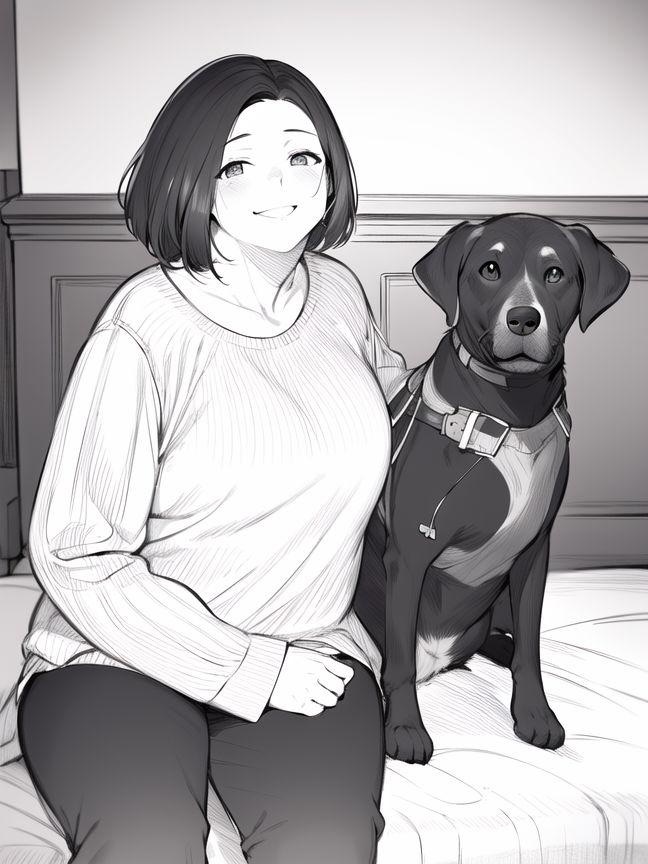
This is a picture of Mia and I that the kids put a “sketch” filter over so it sort of looks like a pencil sketch? We look a bit cartoonish.

Due to a serious lack of transparency and study, statistics about guide dogs are hard to find. According to Guiding Eyes for the Blind’s own website, about 2% of all eligible blind people use guide dogs. This number has always been low. There are complex reasons for this.

Each individual has to decide for themselves whether the net positives of a guide dog outweigh the net negatives. This depends on their own personal situation. Do they like dogs? Is their vision or their cane travel skills giving them enough problems to want to seek out alternative solutions? Does their lifestyle accommodate a dog? Do they have the time off from employment to pursue the training? Can they afford the expense of a dog?

Despite all the glossy stories showing teary eyed blind people who credit their dog with giving them independence and dignity (terms which grate the nerves), many blind people flat out don’t want to pursue it. And that number appears to be increasing. Also for complex reasons.

I tried to find data on whether guide dog use was increasing or decreasing or staying steady over time, but could not find good data. Some of the data seems to say use is decreasing, but with the pandemic, those numbers may have been skewed and it’s possible they may recover. There is also the stats of blindness prevalence itself. Type 1 diabetes, which used to be the leading cause of child and young adult blindness, has become much more sophisticatedly managed with the invention of insulin pumps and continuous glucose monitors. When I was young, almost all the young people I knew were blind due to Type 1 diabetes. Now, this is rare. Things like macular degeneration are increasing in older populations (apparently due to our LED lightbulbs and screens), but older people are less likely to pursue a guide dog (or a cane for that matter.) So, it is hard to say what is happening on a population level.

In my own life, where I speak to countless blind folks every day, I am seeing (admittedly anecdotally) a decline in a desire for guide dogs. Some of this might be because of the improved technology for navigation that has come about. Blind folks now have access to apps that help you cross streets, that give point-by-point walking directions, that tell you what stores and addresses and intersections are around you, and even access to live visual interpreters that can explain what is going on around you by having access to your camera. A cane is a very useful tool, much more useful than a guide dog, to explore the space around you and make sense of it. But a cane is also tedious and requires a lot of concentration on your part to keep track of everything. Guide dogs take some of the tedium and mental burden away. You share some mental responsibilities with the dog. But now, you can share some of the mental responsibilities with these apps, And they can be much more reliable and give much more specific information than a dog can.

But also, much of this is likely due to what has happened with the massive increase in discrimination and oppressive regulations around service animals. This is largely due to the “faker” and largely untrained emotional support dogs and the notorious emotional support peacocks and lizards that began showing up in airports and in public places, causing messes and mayhem where they went. It has definitely been something where abusers ruined it for the bonafide users. However, I also think that the decline in the training of guide dogs has not done us any favors.

In the 90s, it was extremely rare to ever be questioned about whether my guide dog was legitimate or to be refused service in a business, taxi, or airport due to the dog. Guide dogs actually helped lessen stigma and discrimination against blind people. People knew what they were, knew what the harness meant, and knew they were hard to get and so that you must really be blind and need them if you had one. There was literally no way to get a harness or service dog signage back then unless you went through a guide dog program. Now, you can buy that stuff off Amazon. People knew they were well behaved because their behavior was exemplary. It had to be, because until 1990, we did not have a lot of universal legal protection. (Many states had some laws, but the Americans with Disabilities Act of 1990 codified national service dog rights for the first time.)

When you look back to the history of guide dogs, which started in Germany after WWI for blinded vets, guide dog trainers and users had no protections and so they had something to prove. When trainer Dorothy Eustis and her first U.S. student, Morris Frank, started The Seeing Eye in 1926, much of what they did was to advocate and educate as well as put political pressure on lawmakers to legislate guide dog access. The dogs coming out of her program had to be above reproach. The blind students who used them also had to be above reproach. I imagine there were many people who could have benefited from guide dogs that did not get selected for programs because of the very high standards for both handlers and dogs. For decades, you were required to wear a suit and tie or wear a dress as a student at the Seeing Eye.

In 1993, it seemed like we were still sort of in the leftovers of that era of having something to prove and having to have exemplary handler and dog behavior. Since then, it seems there has been an overall devolvement of expectations all around, for the dogs, for the trainers, and for blind folks themselves.

Schools Low Expectations of Blind People

In my experience, this has always been a problem. And in some ways, this has improved over time. But there has always been a lack of respect and equity by the Guide Dog Schools in regards to blind people. On an organizational level, we’ve always been treated like shit. In fact, when I ask people who like dogs and are fairly good travelers why they don’t consider using a guide dog, this is the number one reason that comes up. They don’t want to have to put up with all the patronizing of the guide dog schools.

But first, before 500 people start telling me how great their guide dog experience is and how nice the staff was, let me explain a bit more. Oppression can be complicated. It can be stealth. It can be benevolent. You may have heard of benevolent racism or sexism. There is benevolent ablism as well. In fact, I think ablism is particularly prone to it.

A lot of people will describe guide dog school as a vacation. And I totally get that. You don’t have to cook or clean. Unlike the rest of the world, everything is made accessible for you. And people are nice. They are really nice and polite. And I am in no way saying that for many/most of the staff, it is insincere or part of some grand conspiracy to trick you into being duped into their secret condescension. I think the person who serves us food really wants us to enjoy the food and have a nice day. I think the trainers largely want you to have a good experience. For many, especially those who come from really shitty home, community or work situations where they deal with constant daily, hatred and antagonism because they are blind, this experience can be a revelation of good treatment. But the higher up you go, the worse the oppression gets.

The power differential is extreme. We aren’t like regular students who are covered by laws or pay tuition. We aren’t colleagues or employees who have some union or HR protections. We are recipients of charity. The prevailing underlying thought is that we have no rights and should only be grateful for our salvation by these white knights.

Now, it is tricky to be a beneficiary of charity. Of course there is room for gratitude. The fundraising PR they use often throws blind people under the bus to gain sympathy. Tearful people will talk about how they had no dignity and couldn’t do anything until they got a guide dog that changed their whole life around and gave them a life again. I mean, there are people who legit feel that way and so be it. But there is also a lot of pressure to “put on” that show and be that person. In doing this, it makes blindness look like a fate worse than death and if you don’t’ have a guide dog, you cannot function in society and you have no dignity. They will often show someone apparently struggling with a cane by getting stuck behind a door or getting tangled in a bike rack or something. These things do happen. But it has nothing to do with our dignity or independence. That is how blind people who use canes move. Usually you are not that tangled, but when it happens, who cares? There has been a lot of hatred, discrimination and stigma surrounding just how blind people move. There is nothing wrong with how we move or how we use our canes. There is no moral or ethical value here between how a cane user moves, vs. a dog user, vs. a sighted person. But the guide dog schools use propaganda to make it sound like traveling with a cane or moving like a blind person moves is a fate worse than death. This rhetoric is damaging out in the world. There are legit advantages to having a guide dog. In fact, recently a volunteer of a guide dog program asked me what the benefits were to me as a guide dog user and I gave her paragraphs of them. She commented that this was the first time someone actually explained the true advantages of guide dogs in a practical way without just giving the tearful dignity explanation. I think funds can be raised on the truth about guide dogs. Not a lie about how you don’t have dignity unless you have a guide dog.

You are also constantly being told that a guide dog team costs anywhere from $40-80,000 and there is no way you will ever be able to pay that debt back. You are therefore at their mercy and you have no say. Yet, we are then supposed to trust completely our lives and wellbeing to these dogs with almost no control or transparency into their level of quality.

And quite frankly, we do give back. All guide dog users are on some level, ambassadors for guide dogs and their particular school. Many take it further by doing public speaking educational engagements, recruitment, and word of mouth referrals. Everyone answers a million questions from the public and everyone does a level of fundraising, some by just talking about their dog in public and others by participating in fund raising events, hosting their own events, and donating money themselves to schools. My sister and I sponsored a GDF dog together, I have participated in walks and gofundme type events and have done countless guide dog presentations in schools and community organizations. Nik and I organized a guide dog info and recruitment fair at our local agency for the blind. MOST guide dog users have done these things on different levels. For Free. Is it $40-80,000 worth of free? Who is to say? Ask Haben Girma or Erik Wehermeyer what their speaking fees are these days. Yes, they are more famous than most of us, but I still know what kind of fees my business partner and I can get for some of our simple intro AT workshops we’ve done. I know some of the fees my blind colleagues who do DEI presentations can get. Yes, I think that many of us, if we could monetize all the free PR we’ve done for the schools, contribute enough time, expertise, and ambassadorship and recruiting and fundraising to earn pretty close to these amounts over the lifespan of our dogs. If all of that went away, it would be interesting to see what would happen to the bottom line. I believe the work we do for the schools is worth something. I don’t know that most of the leaders of these organizations have considered that.

I get that fundraising is hard and takes a ton of work. I get that pleasing donors and volunteers is essential. But they aren’t your customer base, WE ARE. Also, unless you are going to change the nature of your nonprofit and your mission, you aren’t in the business of selling dogs, either. I’m not saying it is wrong to sell dogs to the police or other schools, but that isn’t your main product, right? WE ARE. Nik totally thinks that the guide dog schools are only doing classes of like 4-5 people because they are making real money (apparently $15-45K per dog) selling to selling dogs to police and other working dog customers. I don’t know if that is why, but it does feel like a LOT of dogs are being bred without a lot of blind people matches being made. Is this becoming the focus of these orgs and guide dogs and blind people are almost the afterthoughts? I can’t say, it’s just a theory I’ve heard, but maybe it is one explanation for the deterioration of guide dog training?

Without blind people, there is no guide dog school. There is no guide dog trainer jobs, there is no raising of funds, there is no organization at all. I am not implying that blind people should not be appreciative for the free services they are getting. And I actually do feel an obligation to give back. And I will work harder for those who can’t do the work I can do. (And for those who say this series of Guide Dog posts is the opposite of good PR, maybe. But it has also been a labor of love for the whole concept of guide dogs. And all the people in the field. I’m trying to help you a bit by holding up a mirror to your face. You need to do better.)

Blind guide dog users are essential, the most essential part actually—of the whole guide dog industry. We should be treated with more respect, more transparency, and higher quality services than I’m seeing lately. To give you just one simple example of what kind of stuff is happening, I’ll share this experience with you:

For decades, blind people never owned their own dogs. This actually caused problems for many people. Some reported dogs taken away from them because they were thought to be a poor match. Or for mandatory retirement. Or dogs that were euthanized without the blind handler’s knowledge, or dogs that were taken away because of reports of abuse but with no due process. Being the central decision maker with access to due process is key here. There are still local laws and animal services as well as veterinarians that have the authority to deal with abused or sick dogs. But ownership matters. Even if most people will not ever deal with any bad situations, it is still insulting that we are still not thought to be trusted competent adults that can own our own dogs that we spend the majority of their lives caring for.

The vetting process to get a guide dog is more extensive than the vetting processes I’ve been through to get into college, or be a teacher, or work as a state certified home health worker. All the schools are a bit different, but here is what most require:

-Initial application with questions about your blindness, travel skills, guide dog history, overall health, employment, housing, lifestyle, finances, criminal history, etc.

-evaluation of your travel skills from an orientation and mobility professional

-1 to 3 letters of recommendation

-An extensive physical examination from a medical professional with a full report of your medical history and current status, vaccinations, etc. I’ve even seen sexual history on these forms.

-A phone interview with a staff nurse

-A phone interview with a trainer or other staff

-An in-person visit where your home is inspected for suitability and your travel skills are evaluated in a walk around your neighborhood and street crossings, etc.

-Two to four weeks of in person training where they control our schedule 24/7. We eat and sleep and shower there, we are evaluated constantly. Notes about our behavior are written and given to the proper authority. They lurk around at times and don’t even tell you they are watching you. No, I don’t think they have cameras in your room, but they do have key access to your room. There is no privacy.

-Within the training, we are continually evaluated by trainers and nursing staff. Interviews with the nurse, the trainers, the directors of training happen often and are required. Competency with the dog is evaluated. Data, never shared with us, is taken.

-After graduation, there can be follow up visits from training staff, progress calls, and mandatory veterinary reports.

Just to be clear, I’m not even necessarily objecting to most of this (although some of it really IS excessive and a violation of privacy). What I object to is that all of us have been thoroughly vetted on multiple occasions. If we were not suitable to ethically care for and handle a guide dog in this year long vetting and student training process, well then you’ve had your chance to kick us out. If we have passed the muster to graduate, then give us ownership of our dogs upon graduation. Don’t hang a power trip over us the rest of our (dog’s) lives. Because that is all it is, a power trip. I’ve been trusted to take care of people’s disabled children with less vetting than this.

This is patronizing ablism.

I about jumped out of my chair and stabbed a guide dog staffer about this issue, (ok, not really. I’m a pacifist. Don’t take my dog away) because he was basically gaslighting and lying to everyone about this. He presented the ownership issue as if there was no real reason to own your dog, it didn’t matter, and it was better for you to let the school retain ownership. (At this particular school, ownership could be granted in two years IF you request it. I already have a note in my calendar for my exact two year anniversary with Mia so I can “request” to own my own dog. The dog I’ve spent much of the last 8 months training myself.)

When I mentioned the due process issue and some of the problems others have had not owning their dog, he poo pooed them with some assurances that they can’t just pound on your door and take your dog. Perhaps not, but I know what can happen afterwards if there is no due process. Then he went off on some stupid straw man about how nodogs should be property anyway. Well, that is not the debate we are having and that is not the world we live in and you are a gaslighting, lying condescending, ablist ass. No, there is really no other excuse for you. You are saying this right in front of a lawyer who knows better (not me, my classmate. But every single student in there knew better and knew he was full of shit.)

Look, in most cases, I don’t think these problems ever come up. I don’t think they are trying to take back people’s dogs on a whim. But it is a matter of respect. And by holding the ownership thing over our heads, they are showing a complete lack of it for no other reason than that they do not trust, respect or think of blind people as their equals. Blind people have fought hard over the years for guide dog ownership and due process and that is for good reasons. Some schools do now have ownership upon graduation, as it should be. Other schools need to take a good hard look at how much they are discriminating against and loathing the blind people they purport to serve.

Another thing I would like to say about respecting blind people. I think I am an average blind person. I do OK. I have some additional stuff like hearing loss and kidney disease, but generally I’m average. There are a wide variety of blind people out there. Some with other disabilities, different levels of functional vision, different educational opportunities, socioeconomic backgrounds, etc. A lot of times when I have complained about guide dog schools, or anything blindness service related, I get a version of this one comeback which I would like to just shut down right now.

People say stuff like:

“Not everyone has vision like you do.”

“Not everyone has your level of success.”

“Not everyone has your Orientation and Mobility Skills”

“Not everyone has your level of determination or moxie.”

“You don’t know what it is like to work with the people we work with. Some are very challenging and need a lot of support.”

Ok, first of all…I help run an AT training service that works with blind and disabled people. YES, I DO know what it is like to work with a wide variety of people who have a wide variety of skills, problems, levels of functioning, whatever. I not only work with these people, I am friends with these people. They are my community.

If some people are just too much for you, you had your chance to eliminate these people in your vetting process if you didn’t think they could handle a guide dog. (We don’t get to do that, by the way. We take everyone.) So, if you accepted them into the program, treat them with the respect they deserve. Respect is more than basic politeness. It means treating them like adults who have capacity and self determination and deserve full information and responsibility. Always presume competence. Acknowledge the imbalance of power and risk of oppression under those circumstances, and double and triple step back your power with intention and make sure that you are not manipulating them or treating them poorly.

I am all for meeting people where they are. That’s fine. But just because people have low skills or functioning or whatever does not give you any type of justification for being disrespectful to them. Yes, there are people who’ve had lousy or almost no education. Yes, t here are people who have additional disabilities, a lot of learned helplessness and don’t function well without a lot of support.

So what? None of that is justification for treating people in condescending fashion and being dishonest, patronizing and ablist. Saying that somehow I deserve more respect and self determination because I am a bit more independent or have some better advocacy skills or look less blind or can travel a bit more independently is bullshit and you should be ashamed of yourselves for putting some arbitrary goal post on equal treatment. Everyone has inherent worth and dignity. Be upfront with people. Adjust your language if need be for better comprehension, but give people the same level of information, respect and decision-making power as you would anyone else. You don’t deserve less rights because you function at a different level.

If you think you are complimenting me be giving me the “not everyone is as relatable to me as you are because you seem higher functioning and less disabled, and that is why I give you special privileges” or whatever…you are not. You just outed yourself as an asshole.

Schools Low Expectations of the Trainers and Dogs

Every guide dog user I’ve talked to that has been around for the past 30 years or so has talked about how the quality of guide dog training has gone down hill. My theory is that it is partly because of the much lower standards in general for the proliferation of service animals and ESAs. They are more protected by law and so we aren’t fighting that battle anymore so who really cares how the dogs act, I guess. But honestly, I’m really unsure of the reasons. I’m sure it is also complex.

But I will say that it doesn’t seem like the trainers really get blind people’s real lives, and they also do not spend NEAR enough time getting good O&M skills that include spending time blindfolded both with cane and dog and WITHOUT a sighted person walking along with them telling them every thing that is coming up. It also seems like they don’t spend enough time on diverse routes and do the same routes over and over with the dogs instead of traveling with them in unique places. Dogs generally like routines. Any dog can guide on a route they’ve done 100 times. A guide dog needs to work in unknown settings, without sighted assistance.

I think they all should have at least 3 months, full time 8-hour day, under blindfold to learn how a blind person lives. This includes meals, buses, cars, walking, shopping, etc. Ideally this would be done with highly skilled blind instructors, not the very low skilled and low knowledge sighted people that typically get TVI and O&M certification in like 2 summers with almost no blindfold time. After learning with a cane, then they need to spend substantial time with each dog they train doing this. I get that at the beginning of a dog’s training, a sighted guide might be necessary for safety, but really, the last couple of weeks of the dog’s training should be entirely under blindfold and without a sighted trainer walking along side and without using the same routes over and over. That just isn’t real life. As a person who had a lot of vision when I was younger and still has some vision at least during the day, I know that guide dogs area very influenced by subtle reactions to visual stimuli from the handler, body position, tensing up, being told something is up ahead, etc. They need some exposure to having someone just not know where in the hell they are and have to figure it out. The dogs used to seem like they had some of this, but now it seems like they have none.

I feel like trainers think that we go to the same 2 or 3 places every week, never divert, never run into construction, never have to change routes. We never have to change our pace due to injury, the circumstances or walking with a slower person. I also feel like they think we never carry groceries, a baby, a child’s hand, or talk to a friend as we walk so that all of our attention and both hands are fully available for the dog. It seems like they think we have the time and inclination to give the dog treats at every curb because as long as they stop at a curb for treats, they are a guide dog. They don’t seem to even get why they are stopping, or have a proper fear of cars. They don’t seem to have intelligent disobedience anymore, and I think the only way to get that is for the trainers to actually go out with them under blindfold and without sighted assistance. Yes, maybe you might trip or bump into something. Guess what? If we get dogs that aren’t trained well, that’s exactly what happens to us. And no, we do not have a constant supply of sighted people to walk beside us and tell us everything that is coming up, what every intersection looks like, and when we are going to smash into a wall.

The blase attitude some trainers have is an insult when you consider that we have to use these dogs (in conjunction with our own skills) as safety tools. When my dog does something absolutely dangerous, don’t downplay it or blow it off. Yes, you were here now to prevent bodily harm, but have one iota of appreciation that I have to go home with this dog and travel with it solo.

Also, have a little respect and recognition for the overwhelming amount of discrimination that a blind person faces on a daily basis. The days in which a guide dog deflected some of that discrimination are largely over. Now, using a guide dog adds to the discrimination we face. There are always a few dog lovers out there who will love us and our dogs even if they pooped on their face. But they are actually the minority. Another minority hates dogs, but most are generally OK with dogs if they are not a nuisance. So, except for the serious dog lovers, the vast majority of people we deal with WILL and DO hold it against us if our dogs act up, shed, sit on a car seat, constantly get up from the bus floor or restuarant floor, bark, pee, guide us sloppily, etc.

DECORUM MATTERS. Quit minimizing it when our dogs do stupid shit right in front of you like it’s no big deal. Dogs can behave if taught well. Many of the dogs coming out now are not taught well. I always feel sorry for the young first timers I see all over Portland with their GDB dogs. Because the dogs act absolutely atrociously and the young people don’t know better or how a dog can act or how to make their dog act that way. Those GDB dogs are the ones that keep people from getting jobs and from getting taken seriously in doctors offices or banks or college classrooms.

People will look for any excuse, ANY reason to discriminate against a blind person. These poorly behaving dogs give them about 70 excuses to not offer the same opportunities to blind people as they do the nondisabled. Thirty years ago, the dogs used to sometimes help. They would walk into a job interview smoothly and with grace, point you to a chair, then sit quietly under a chair the entire time, unnoticed. It could be a conversation starter. It isn’t like that anymore. Now the dogs are fumbling around, getting in the way, making the blind person look incompetent or awkward. All the controversy around service dogs and ESAs make people not even want to go there. Uber drivers won’t take you, etc. Without finesse and decorum, a guide dog is a hindrance that will cause more discrimination, not less.

Trainers act like everyone is going to love our dogs and welcome us with open arms. That only happens in the insulated world of guide dog schools where trainers, donors and volunteers are all dog lovers. That is not how the real world works. How these dogs graduate with no proper indoor manners is beyond me. There is always the burden of having to have the dog with you and take up space and be cared for. That can be offset if the well behaved dog gets you down the hallway and into the chair elegantly. If the dog is all over the map…well, imagine how you would like to go to job interviews with your toddler climbing the walls? Now imagine taking your toddler when you know you are already climbing uphill because you are blind. I don’t understand why decorum and finesse is hardly taught anymore, but it is arrogant and kind of privileged that the schools don’t even consider what blind people face as far as discrimination and how guide dogs factor into that.

Also, guide dog users, especially alumni, know that the process of training is stressful for the dog and that they are going to do nutty stuff while getting used to a new person. However, sometimes we can see real problems that go beyond that. When a dog has clearly not been taught certain skills or is acting in ways that are way beyond what a guide dog should do, even if stressed out, don’t always act like it’s our fault. We can work with you to try and solve these problems, combining your level of expertise with our experience as actual guide dog users. But if you just deflect all responsibility and act like it’s all our fault and we are just doing it wrong, then no one gets anywhere and any real learning gets shut down. If we ARE doing it wrong, then tell us the right way to do it, don’t just say it’s all you and you are wrong. If you don’t have a constructive correction for us to do it right, its a real tell that the dog really doesn’t know how to do it and you don’t have a way to teach them anyway. Assuming competence is always better than the inverse.

I don’t pretend to be an expert on training or breeding dogs. I know I don’t know all the factors that go into what makes a good guide dog. I just know a good guide dog when I see one and they are getting rarer and rarer. But dogs can be held to higher standards than they are now. They can be motivated by praise and the bond with the handler. They can basically understand the overall job of getting themselves and their handler safely through the world. They can target things and they can sit nicely when not fully engaged in working. And they can travel off-route with a handler who “freestyles” more often than not.

If not all dogs can do this, then actually match dogs to people’s lifestyle, not just pace. Pace changes so much that it’s is more important to train a dog to match pace than to arbitrarily match a dog to a pace you took one time in very controlled circumstances. Keep the dogs that are the best for the people who do the most traveling. Put the route dependent dogs with the route dependent handlers. Put the lower performing dogs with the folks who get sighted guided 95% of the time. And be transparent about this so people know what they are getting and why. But in all cases, there should be a basic high standard for decorum and basic guiding.

Here is another idea. Marra, my second dog from GDF, was trained to my specifications. I had an extensive interview with her trainer, the only trainer she had and who also trained us together. My interview was about three months before I was assigned her so she had only recently started training, and then she was trained with me in mind and to what I had requested. I know that probably can’t be done perfectly every time, but a lot more of that could be done. If you have too many dogs going to too many trainers, any quality assurance gets lost, and any personalized matching gets lost, too.

Also be transparent about how many dogs are rejected, how many get returned and why, how many successful pairings, how long each dog is in training and what happened in their lives up to the point of class, why the choice was made to pair, and just overall share information as if we are equal and respected partners in this endeavor. If we are supposed to choose a school to train a dog that either can assist in our safety or put us in danger, or assist in our acceptance or increase our oppression, we have the right to know these things to make good choices. In general, there needs to be accountability in guide dog training, ,and blind handlers need to be front and center in that process of accountability, not a powerless afterthought.

Is there another guide dog in my future?

Nik and I have both said we don’t know if there will be another guide dog for us. But we have both put off the decision until the time comes. I’ve loved all my dogs, and the guide dog relationship is special. But you have to weigh the pros and cons. It is not near as balanced to the pros side as it was 30 years ago. Every time we go anywhere, we think dogs or not? Before, we wouldn’t have ever thought of not taking them. Now we try to weigh the risk factors. Are we going to use an Uber? Because that can fuck up your whole day. If I absolutely have to get somewhere by a certain time and I have to take an Uber, the dog can’t come. It’s just not worth the risk. Traveling by airplane is frought with issues now, too. We brought the dogs to Nebraska because we were going to be here a long time. But in doing so, I nearly lost the kidney I was offered. Twice, we had to fight tooth and nail with tears and everything to be allowed on the plane. It was an awful mess and a risk I was trying to avoid. But now, for short trips, we’ve been finding them a dog sitter rather than take them on the plane. Flying with guide dogs is a nightmare now. Are we going someplace they have been before and have proven to do a good job at? If not, we might consider figuring it out ourselves with a cane. Is their possible poor behavior going to be a problem where we are going? If so, we might leave them at home. Is the conditions too hot or too cold or otherwise going to be difficult for them? In the past, we might have asked for a favor from someone there to help us out. We often no longer can count on that grace because everyone is sick of “so-called service dogs.” It’s just a different world now, and with different dogs. We love them, but their utility to us as guide dogs is not what it used to be.

It’s a difficult thing to apply to get a dog, which takes about a year, do the two week benevelent, but still minimum security prison duty, do what used to be 1-3 months but now seems to be 1 year of additional training at home, then you maybe get 5 years if you are lucky, then they start to decline, get old and die. Repeat. There are some AI, robot guide dog solutions that are being developed. It will take a lot for me to trust that technology, but if and when it works, I would so jump on that so fast.

Mia and I working on obstacles. There were a bunch of these one day so we worked on them a lot. She had done this one before from the other direction, and about 6-8 other ones by the time we took this video. So at this point, she was handling them really well.

Or if working with Mia has proved anything to me, it’s that I can train my own dog. I’m not saying that I trained Mia from scratch, because she did come to me with some skills, but I have had to train her from scratch in some areas enough that I am starting to get how I can do it. And that I totally could do it. Some of t he guide dog teams I know that are self trained are the best, most well trained teams I’ve ever seen. There is something to be said for training from puppyhood and that bond. Another area of discrimination is that guide dog schools often don’t let blind people be volunteer puppy raisers. I would love to train a puppy from scratch into a guide dog. What a unique experience! I’d need to do more research, but that is maybe a possibility.

Or, I’ve always enjoyed cane travel. I believe I can still—as I was taught—be dropped into a city and find my way out. I’m not saying I could do it perfectly every time or that I won’t get lost. But I have the confidence to do it still and when you are feeling good and you have the time, it is actually quite fun. A lot of people say that a guide dog gives them confidence. And I totally get the whole thing where sharing responsibility makes things easier and it is another bit of data to use when traveling. I get the high of walking smoothly down a street with a dog and making a perfect turn rather than running into shit with a cane. But I kind of think some of those folks are just so invested in vision being better than blindness no matter what, even a dog’s vision, that its sort of a placebo effect. I was just lucky to always be taught that sight is very efficient but that cane travel was an alternative, not sub par. So I always had that confidence that I could do what I wanted with a cane, too.

But I think I would mostly like for there to continue to be guide dogs in the future. It is a unique special thing and I’ve always thought it gives the dog a really nice, unique and high quality life as well as giving the handler some kind of almost intangeable level of information that I didn’t know can be replicated by an AI self driving gadget. I am afraid that if the guide dog world doesn’t shape up to face the challenges of the new reality of guide dog discrimination that is out there now, as well as the evolution of blind people understanding their own rights and how they deserve to be treated, it will eventually fade out and no longer be a viable option.

This is the rocky sidewalk Mia took me around without being asked. That was a first and a really good step for us.

Mia and I are full-fledged bonding. It didn’t really start in force until we were alone here together. But I hardly ever use treats with her anymore and she is happy for me to praise her. Yesterday I walked on a driveway that I hadn’t walked on in months. The last time I walked on it, I sort of tripped because the concrete was very broken up. Yesterday, without me even saying anything or remembering that the driveway was crumbling, Mia walked me into the driveway and around it so I avoided the whole thing. When I realized what she was doing, I praised her lavishly and she looked at me and had a little skip in her step. It was fun, but also a sign that she is starting to understand the job, and care enough about me (or at least my praise) to think ahead and strategize this on her own. I was so happy! It is these moments that I will miss if I leave the guide dog world. My hope is that guide dog training can improve its transparency and quality, allow for real accountability from real users, and that we can all mutually respect each other enough to work toward a shared goal of good guide dog teams.

What’s the Matter with Guide Dogs? (Chapter 4 Old School and New School Diverge: Sully and Marra)

See Also:

What’s the Matter with Guide Dogs Chapter 1: What Happened at the Airport?
What’s the Matter with Guide Dogs? Chapter 2: Marra and Jats-The Gold Standard
What’s the Matter with Guide Dogs? Chapter 3: The Strange Story of Barley

After my experience with Barley at Guide Dogs for the Blind in Boring, Oregon, I thought the issue was that particular school just wasn’t putting out high quality dogs. They were putting out too many, too young, too raw and too fast. So, schools are different. Huh. Okay, then let’s go back to where it all began at Guide Dog Foundation for the Blind. It didn’t happen right away, though. I had pushed to get Barley in the window that was 5 months before I gave birth, Nik moved down from Toronto, we started our immigration journey, and he got a job. When Barley was retired early, I lost my window. Although Nik was able to get Sully in 2011, I would not go back to get Marra until 2014. Our experiences the second time at GDF were a bit of a mixed bag. I got a really great dog with the best trainer I had ever had. Nik got Sully, and Sully is a complicated issue.

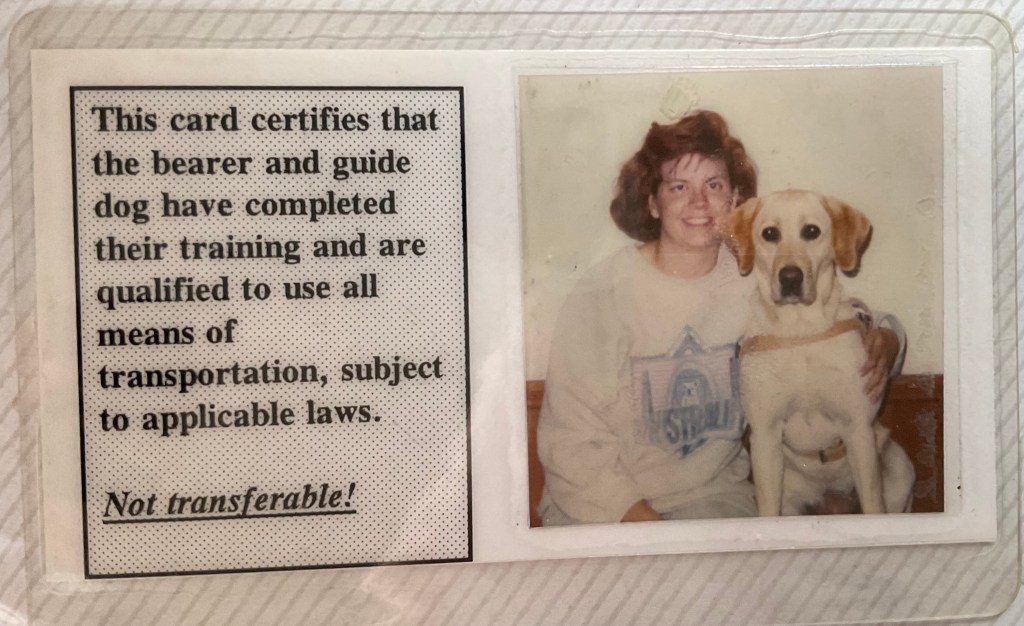
My third ID card for Marra. I’m getting older still….

But first, a disclaimer about training staff:

I’ve already mentioned some trainers in this series by first name, and now I am going to go deeper and mention a few more. I want to be clear that I do not think these trainers are bad people. They are not the villains in my story. They are mostly hard-working folks that put in long hours and don’t get paid especially well. You don’t major in guide dog training in college. There is no real accreditation that sets universal standards. Most trainers are animal lovers that work their way up from jobs like kennel worker and put in years of apprenticeships. They generally try their best and want to help. Doug, Sioux, Mike, Dan, Kat, and Other Dan have been generally nice to me and seem sincere in wanting to do good work. I do not have issues with them, personally. I mention them only as a means to illustrate my first-hand experiences. What I am trying to bring to light through my story is more of the overall trends of lowering quality in the guide dogs that are being produced today and how there is no real quality assurance at all that is consistent. And that this issue affects us blind handlers the most, although we have the least amount of power to say anything about how it affects our real lives.

Sweet, Sincere, and oh So Very Soft Sully:

I met Sully in my house late at night after Nik took the train home from the airport. Sully was a sweet, squirmy ball of excitement, but Nik was exhausted. His trip home from the airport was more akin to the one I talked about in Chapter 1 of this series, though not quite as bad as no excrement, barking, or blood made any appearance. Still, it was a tough go for them.

Nik and Sully after first meeting at the dorms of GDF.

Nik had asked for Doug to train a dog for him, but Doug was doing more field work now and so a compromise was reached. Nik went to the training center for two weeks and had Dan as a trainer. Doug was going to come to our city in a couple of days and finish off the training with the two of them for an additional week. This was a time period when all the schools were trying different models to reduce the 26-day training period to just a couple of weeks. Nik spent two weeks with Sully and Dan at the center, then Doug was to spend one week with us working with them at home.

Dan was a young, nice guy, very affable and good natured. Very proud to work as a guide dog trainer. Smelled horribly of cigarette smoke to the point where you always knew he was coming from 50 feet away. Dan’s dogs had a reputation of being very well behaved and had a high level of decorum indoors. Sully had impeccable manners. He always sat still, he never begged for food, barked, was incontinent, or chewed up anything. I noticed right off that he was of different stuff than the squirrelly, puppy-like GDB dogs. He would eventually become our business’s honorary receptionist and everyone loved visiting Sully.

Sully, however, was not a very good guide dog. I started noticing things early on. He didn’t get the gist of the job. He was trained with food rewards and was rarely, if ever corrected with a harsh leash correction. He always had this sort of expression of confusion the whole time. Once, we were in Vancouver, BC and he practically gave me a heart attack because he took Nik out on this road where cars had started coming around a corner (he had the right-of- way, but went at a steep angle that drew him into the other lane.) So, cars were coming around from a sort of blind corner, and Nik was trying to straighten Sully out, and Sully was so flustered that he pooped in the middle of the road. The cars were coming, they weren’t going to be able to see them until the last second, and Sully is in a squat with a confused look on his face. I pretty much stopped completely trusting Sully as a guide from that point on.

To be fair, Sully dealt with a lot of situations with aplomb. Here, Sully is guiding Nik who is driving a stroller behind him. Up ahead, the twins and their father race ahead. I remember this day, we all went to a restaurant after one of my kids was in a play. Sully was always polite and well behaved in restaurants, even when we had to figure out a wheelchair lift and had 3 kids running around.

Nik took a lot longer to get that Sully couldn’t guide well. Nik has excellent O&M skills with excellent echolocation. Nik can pretty much walk around without a dog or a cane without too much difficulty if he is familiar with the area. Once, our Christmas Day got snowed in, so my twin’s father, the wheelchair user, was stuck in his house. So we packed up our whole Christmas–all the presents and the food and everything–and walked down to his apartment a few blocks away. Nik was carrying so much stuff, and he walked right down the middle of the snowy street perfectly with no cane and no dog. (There were no cars and it was easier to walk in the street than the sidewalk, as it had been cleared a lot more.) Nik is too skilled for his own good sometimes.

When you have some vision like I do, the guide dog trainers stress that you need to trust and follow the dog even if you can see something coming at you. But when you are totally blind, they just figure they don’t need to worry about you “leading the dog” too much. But Nik did not have a good fix on when Sully was guiding him and when he was guiding Sully. So, even though I could tell that Nik was doing more work than Sully was, I do think it was genuinely hard for Nik to tell.

So, what was Sully’s problem and why did he make it through training? There are many theories.

  1. Sully was puppy raised by a very famous actress. He was sponsored by a big corporation. He was named after a celebrity (Sully Sullenberger, the pilot who famously landed the plane in the Hudson River) and had some ties to related organizations. There was a feeling that Sully couldn’t fail. He was a beautiful golden retriever. People said he looked regal. He was also super empathic and sweet. But he never struck you as being particularly smart. He might have been a great PTSD dog or therapy dog, but maybe he did not have the brains to be a guide dog. Did the pressure to have him succeed get in the way of quality standards? We wondered if Sully was “passed through” when he should have failed because of his famous and high level sponsors.
  2. Was Dan just not a good guide dog trainer? He did well with Sully on the behavior side of things, but not the guiding. In the years after I got Barley, guide dog schools started doing massive staff layoffs. Supposedly it was a cost cutting strategy. Get the older, more experienced trainers out before they rack up the higher salaries and pensions and get new, young trainers in. Guide Dog schools laid off entire training staffs and hired untrained young folks. They were eager and meant well, but they didn’t have the same level of mentorship and apprenticeship that was common in the past. Sully just didn’t get the level of training he needed.
  3. Doug ruined him unintentionally. Doug came from old school leash correction philosophy. If you remember, Doug was the one who would put his hand over mine and show me how hard to yank on the leash. In the few days that Doug came out after Nik had brought Sully home, they worked on street crossings while pulling a stroller. In an attempt to teach Sully to use the curb cuts, Doug did a strong leash correction with Sully. I wasn’t there, but Nik said Sully just dropped to the ground on the road and wouldn’t move. He was crushed in a way we had never seen a dog react to correction before. Since then, Sully seemed to start pulling way out into oncoming traffic in a wide arc instead of crossing the street straight. He took the lesson, but got it wrong. instead of aiming for the often 45 degree angled curb cuts, he thought he was supposed to arc way out into traffic. And he lost a bit of his spirit after that. From then on, Nik–well all of us–completely changed the way we crossed streets to accommodate Sully. We would always cross the street so that Sully was on the outside of Nik and the intersection, so he could not go into traffic. This might have meant we crossed an intersection three ways instead of just one to keep Sully on the outside from the intersection. All of the ways we walked with Sully were a strategy to accommodate his behaviors. When I got Marra, I often walked in front so he would just have to follow her. We walked on certain sides of the street and went certain routes all to accommodate him. Nik was guiding the guide dog.

Sully was a very soft dog. He was the product of the newer philosophy to make dogs easier to handle and to need less leash corrections. Doug came out to work with us again, and I think he saw how sensitive Sully was and how leash corrections did more harm. When talking about the old dogs vs. the new, Doug had said something to the effect that he told them (the breeding staff) that they were going to have just as many problems with the soft dogs than with the former, hardier dogs. He also told Nik that Nik was doing more for Sully than Sully was doing for him and that Sully had pretty much “washed out” which is an expression that trainers use when a dog has just decided “fuck this shit! I am not guiding anymore.”

Sully did enjoy walking with Nik, just not guiding. And Nik loved Sully as we all did and was in denial. It came to a head one day when we had all gone to a Dairy Queen. Nik had to leave early to catch a bus for work and the kids and I were finishing eating. Ten or 15 minutes after Nik left, I started noticing a bunch of people looking out a window and exclaiming things like “what is he doing? Is he blind? Is that a guide dog?” I love it when non-disabled people spend more time gawking than just asking someone if they need help. I quickly gathered up the kids and went outside. Sully and Nik were wandering aimlessly in the parking lot, completely disoriented. Parking lots are hard for blind people, and it was way too big of a job for a dog like Sully. Nik was pissed because he missed his bus, Sully was just sad and confused beyond any kind of usefulness. I put my foot down. I said, “you have to retire this dog. He can’t guide and you cannot get mad at him for not doing something he has demonstrated for years that he cannot do. If you are going to take him places, you must not use him as a guide, you must always have your cane.”

Nik let Sully come with him when Sully wanted to, but shortly after that, Sully started refusing to work sometimes. We would go to my kids’ father’s apartment every night to help him out on alternating days. Nik would call Sully and Sully would pretend to be sleeping and not move, even though his eyes were moving around and his ears perked up. It was hilarious. But he mostly still liked to go to work with Nik during the day. He would go in harness, but he really had very little guide “duties” that he was held to. He retired like this around 7, after about 5 years of trying to work with him and getting trainers out to work with him. He spent the rest of his life just hanging with the fam and going on low-stress walks. He died last year at the age of 13. I still miss him. He was such a sweet dog. But sometimes I think he missed his true calling in life. He should have been a PTSD dog for a veteran or something.

I agree with Doug. What I have observed with the issue of “soft dogs” is that they do not seem as smart as the hardier dogs like Mara and Jats. I don’t pretend to be any type of expert on breeding, so I honestly don’t know if this is a breeding issue or a training issue. But this is what I observe:

  1. Soft dogs don’t seem to roll with mistakes as well as the tougher dogs. This is very important, and I think there is an aspect of this that trainers don’t have enough experience to understand. When you are blind, you WILL make mistakes with your dog, especially in the beginning when you don’t know them so well. It is sometimes hard to tell whether your dog is screwing around or when they are trying to tell you that there is an obstacle in the way. As a blind person, you at times WILL scold your dog when they are being entirely correct in their behavior, and you will praise your dog when they are screwing around. Hopefully it doesn’t happen too often, but it will happen, especially in the beginning. If a dog can’t roll with that and bounce right back to doing what they were doing before, they lose their training and their will to work. A blind person needs a dog who doesn’t take things too personally, will bounce back quickly after a bit of confusion, and who blows you off when you make mistakes. Basically, a confidence in themselves and what they are doing that goes beyond “perform a trick, get a reward/avoid punishment.” The older dogs had this, the newer ones are less likely to. I recently had a conversation with a guide dog trainer about this and she was defending the newer dogs and saying the old dogs were kind of bullies. Well, maybe, but you NEED a confident dog that knows when to say “screw you, I’m right and you’re wrong.” The new dogs are too sensitive and try too hard to please you to do this. Sully was crushed–CRUSHED–any time he didn’t do the thing Nik wanted him to do, even if Nik was wrong. He got confused. He had trouble bouncing back. He did not have the confidence to think on his own. He washed out early largely because of this.
  2. Related to this, newer dogs don’t really do intelligent disobedience like the older dogs did. This is when a dog will refuse a command because it is not safe. Doug used to tell us to tell the dogs to go forward at a street corner when traffic was rushing right in front of us, but they wouldn’t budge. Now, the dogs can’t do this. (I’ll talk more about this when I talk about Mia and Cobey.) They have lost that for the most part. This was a most important skill. Sully literally walked INTO traffic with cars coming at him because he thought this is what Nik wanted him to do. He feared displeasing Nik more than he feared being crushed by a car. He was so overtrained that he lost even basic self preservation. I would take a bully dog over that.
  3. The newer dogs lost the overall context of the job. They are so into pleasing their handlers that they look at each task as an individual trick rather than using strategy and context to understand the over all job. YES, dogs CAN generalize, understand context and strategize. I’ve seen it again and again. All dogs are different and this will be true to varying degrees, but it does seem like the newer dogs don’t do this as well. They get overly distracted by food rewards to the point where they lose the overall gist of their skills in different situations.

I’m not saying that we should go back to severe leash corrections, but I do think there is a compromise, and I think I found it in Marra.

Marra’s Training:

It’s sort of a no-no to pretend that any trainer is better than any other trainer and to ask for a particular trainer, so it has to be done a bit on the down low. A little nameless birdie may have told me when Mike would be up for class and that he was the best trainer. So I asked for him and was lucky enough to get him. I was a bit worried to go back to GDF after Sully. It was now 2014, and two years earlier, the entire GDB training staff–the largest in the country–had been laid off due to cost cutting measures. These folks scattered across the county among the guide dog schools, and several had landed at GDF, including the new training director. I saw from other people’s experiences with guide dogs that GDBs methods were getting spread out everywhere. The right hand leash issue, the squirrelly, young dog issue, the low expectations, the route trained dogs that were dependent on routine memorized routes rather than thinking. This was another issue with Sully. He was very, very routine dependent. He did ok for 5 years mostly because he memorized routes. But he also did not want to deviate from those routes. He would get very stressed to go off a route that he was familiar with and it was a problem. It looked like it didn’t matter where you went, that GDB low-end assembly line philosophy was spreading everywhere.

Mike and Marra and I working in the practice blocks on campus. Mike was tickled that Marra guided me around rain puddles. She understood her job!

I had met Mike briefly in 1993, when other trainers would wander through the dorms occasionally. So the main thing I knew about him was that he had been there for at least 21 years and was not a GDB import. I had an extensive interview with Mike in about June of 2014. We probably talked for about an hour, and it was the most extensive interview I had ever had. Because of my past experiences with Mara, Barley and Sully, I felt like I really had a good grip on what I wanted and didn’t want. I wanted a dog who was well behaved in public like Sully and Mara. I wanted a dog that was not routine dependent like Sully and to an extent, Barley. I wanted a dog who could target things and could be taught to target things easily like Mara and Jats. It was a nice conversation that I thought was incredibly thorough and I felt like I had been heard.

In training, Dan and Nik had had some kind of good natured conflict about Nik going off to a deli on his day off. It was still like that in guide dog school, you couldn’t set foot outside the dorms on your own. Nik eventually went to the deli with Dan following behind, but Dan was probably supposed to have the day off that day or something. I can’t remember the whole deal. So when I got there, I was asked if I was going to go rogue like Nik had. (Had my “mad escape” from GDB– where I ran 50 feet as fast as only a pregnant blind person can–preceded me? Were we now the couple that couldn’t stay put?) I decided to be straight up about it. “You guys know guide dog school is like a benevolent prison, right?” I said. “I admit, I struggle with this. I am never going to trust you completely with myself. I will always have an ID, a credit card and the number of a cab company ready to head. I will always be searching for the escape route and planning my route back to where I can control things. I will always feel smothered, surveiled and like you all need to just get away from me. But in general, my plan is to be compliant and do the training.”

And that is how I got the “little freedoms” I got from Mike. Meaningless little things like that I could go out on my own at night around the several acre campus and practice with my dog on the practice blocks or walk in the now defunct garden that I was barred from 21 years prior. Or that I would be allowed to go explore a mall or walk to a coffee shop when my training partner was on his walks with Mike. It was a bit of freedom theater, but it helped.

Marra was a delight. She was happy to meet me and was engaging and had very little issues in the dorm room. She was relaxed and friendly. I did the same walk with her on leash to a dining room chair that I had done before with Mara. This time, it was still a bit nerve wracking, but I knew it would get better quickly. (The name was total coincidence, by the way. I about fell off my chair when I heard it. In fact, when they told me her name the first time, they said it like Mara. Mara was pronounced like Maura Tierney. Marra was pronounced like Sarah.) The next walk was on a park path with no curbs or obstacles. But Marra stopped at each path and looked up at me, showing me where it was and asking me if we wanted to turn there. I did choose to turn on a few and not turn onto others. “Oh, my goodness!” I exclaimed. “She is showing me the paths and asking if I want to go on any of them. This is almost as good as having a cane!”

“Well, you asked for that, right?” Mike said. Then he explained to me how after our interview, he trained Marra to my requests. I talked a lot with Mike about the training process itself and how he was trying to change with the times but keep the standards high. He talked about how he always had to be a bit more creative than some of the other trainers who were larger in stature and did a lot of strong leash corrections. As a smaller guy, he always had to get the dogs to respond to praise more than they did. When food rewards became a thing, he tried to use them where it made sense but not depend on them entirely. He knew that I did not want food rewards for Marra, so he trained her both with them in the early stages, but then without them after she learned a skill. He asked me to compromise, and use food rewards for a few days, to get her more focused on me than on him. I did that, and then by the end of the first week, we had completely left food rewards behind. When I got home, I used them at first to teach her a few new things, and every once in a while brought them out just for fun, but generally we used them very seldomly. Marra came ready to go with many target words already known. She could target elevators, trash cans, chairs, doors, etc. We even worked with the trainers at their sister program, called America’s Vet Dogs, to do some signaling for when there was a knock at the door.

I would take Marra down to a corridor in the basement and we would work on obedience lessons and then just run around the hallways and play. Here Marra is waiting for me to let her out of her “stay” position down at the end of a hallway. I needed to have time where I was not surveilled.

There were about ten people in the class, but there were 5 trainers. Each trainer had two students and mostly did their own thing with the two students, although some days we would all go to the same place together. I was with a student from Brazil who did not travel independently at all. He could not do street crossings independently. He was a professional in law, I was told, and he had drivers and assistants to do everything for him. I asked Mike how he could qualify for a dog. Mike shrugged. He said they try to select people who will benefit from having the dogs, but sometimes the benefits may be more social than navigational. For my Brazilian partner, it was likely more of a social bridge to acceptance for him. Hmmm, okay. I know that there are serious cultural barriers in some other countries for blind people and maybe that is worth it. But it also seemed like a waste of a trained dog. A person like that might do better with a dog with good obedience skills and decorum, but no guiding skills. (a dog like Sully?) It made me wonder if they trained dogs at different levels specifically for how people will use them. At what point is a dog still a guide dog?

The way they seemed to train dogs at that time was kind of interesting. They seemed to adopt some of the short kennel time of GDB, but still keep training standards high (at least for Marra. I did not see a lot of the other dogs this trip because of the 1:2 ratio thing.) Although I am sure the dogs are well cared for, being in a kennel for months on end is not good for the dogs. It stresses them out. It can be boring, it separates them from people and home life. It IS a prison. Mike indicated that GDF was trying to give the dogs as few transitions as possible and keep them in the kennels as little as possible. Marra went from her dog mother to her puppy raisers, to Mike and the kennels and to me. Her kennel time was low, only about 12-14 weeks. Mike had her the whole time, with his string of about 4 dogs, he was then in 2 classes for the month training with his 4 dogs to their blind handlers, and then he started the process over again. And a very well trained dog came out of that 12-14 weeks, with one trainer doing 4 dogs at a time. Maybe best of all, you trained with the trainer who had been with your dog for the last 12 weeks and knew exactly what they knew. And they could overlap and ease the dog into the new relationship.

The Facilities

This was the same campus I went to in 1993, but the entire dorm building had been remodeled. We all had single rooms now. It was a bit less like a house and more institutional, but overall it was fine. Basic, but fine. We still utilized the practice blocks they had on campus, and took the bus or vans to other locations. We worked in Smithtown, and Huntington mostly, but also went to Queens to do subways and the like. They still had no other “waiting” places, so we stayed in the vans a lot when it wasn’t our turn. With one trainer and two students with close by places to train, we took about 4 walks a day with the dogs. The waiting time was usually never longer than 20 or so minutes.

Level of Custodialism:

It was a little better than in had been in 1993. No longer were we barred from rooms of other classmates and no more separation of genders by wing. I, of course, had a bit more freedom than my classmates, basically because I asked for it and they let me. But you were still stuck there and there was a night babysitter of course, but she pretty much let you be. My training partner highly valued access to alcohol, so it was procured for him but weirdly, they made him drink outside of his room. So sometimes I would see him in the little snack lounge drinking beer and listening to Portuguese music.

Although Mike didn’t really do this, there was still a habit for staff to say that anything you did independently was because you had vision. I highly doubt I had the best vision of the group. In fact, I know I did not. But it was constantly said that I got to do some of the things I got to do, (like work my dog at night on campus without supervision) because I could see. This was funny to me because I am really night blind, and I actually asked to work at night because I knew I would have more of a challenge working at night than during the day. In any case, there were people who could see better than me who did not get these “little freedoms.” But it is probably because they didn’t ask.

I did have to try to back Mike off on standing right there and telling me every little thing. I don’t mind this on the first day or two when you are just getting used to the dog, but by the third day, you really need to work on trusting the dog and trying to see what it feels like when they are telling you things. So, for example, Mike would say “There is a set of four stairs coming up in about 15 feet.” Well, thanks for telling me, now it doesn’t matter what my dog does because I already know what is coming. When I asked him to back off, he did a bit, but seemed surprised I didn’t want all of this visual information. But Mike! I won’t have you with me when I go home! How will I know how it feels when this dog is telling me we’ve hit stairs if I anticipate them now? Again, this comes back to the traditional vs. structured discovery style of O&M. Guide dog trainers are largely not trained in O&M, at most they’ve been to a few CEU classes–likely taught by sighted traditional O&M instructors. They do spent some amount of time with each dog under blindfold, but are never left alone without another sighted trainer with them telling them everything that is ahead of them. They don’t really have a good idea how a lot of us travel.

One thing that was a definite improvement was that upon graduation, I was able to take ownership of my dog. This has been a hard fought for right of blind guide dog owners. I first was able to own my dog when Mara was about 8 years old. They had changed their policies and sent me an email that gave me the option to sign ownership papers. I was at work and I cried. I sent back the email indicating I wanted to sign the papers and got down on the floor with Mara and hugged her. She was really finally mine! Some schools act like it shouldn’t matter, but I’m sorry. It does. Again,why do they vet us so heavily but yet not trust us to own the dogs after we graduate? Do they not trust their own program? With Marra, I was given ownership papers upon graduation, which is how it should be.

She’s MINE! Marra was the first dog I got to “own” upon graduation. Yes, it matters.

There was one thing that really bugged me, though. One of my classmates was a staff member there. She worked in client support services (which is where every single blind staff member who works at guide dog schools is placed.) I thought she was treated horribly. On the one hand, I get that this is her own time and they wanted her to have time to concentrate on her own dog training and be off the clock–which is totally fair. But you would get into a discussion about guide dogs with her and from across the room, a staff member would cut her off and say in a condescending tone “Now, Jane (not her real name), you know you are not allowed to discuss guide dogs with the clients.” She who was on her third or fourth dog couldn’t even tell a story about a past guide dog. And you would ask her a simple question having to do about say, purchasing a new leash (like would I come to you or have to contact the training staff) and they would rush in and be all, “are you asking Jane questions??? She can’t answer any questions!” But the worst thing was that she said she wanted to be promoted but she had a–shall we say–a sighted glass ceiling she could not break through. The next promotion up required that the staff member stay over night with the students occasionally. And they would not let a blind person do that, and she could not get past that requirement. I understand the babysitter thing to an extent. I get why you don’t just let 10 random people have the run of your entire campus alone overnight. But really? a blind person couldn’t babysit us? To GDB’s credit, they had blind people in these roles. It really hit home that these people really do think of us as second class citizens.

Graduation:

Again, graduation at GDF was a reception with only puppy raisers, sponsors and handlers invited. They did have a filmstrip of us that they had taken throughout the training there, and they showed it to us twice. Once before the guest arrived so that they could describe it to us, and then once when the guest arrived we sat through it in silence. I thought it would have been better to describe it to us with the guest there, because it would be good modeling of accessibility and it might have been more interesting for everyone to have some back story. My puppy raisers were a lovely family with children, and they did get to visit with Marra this time. I think it is important to see how much your dog is happy to see the puppy raisers. It shows her past, and that she had a life before you, and that there is some hurt and loss involved during these transitions. That is important to keep in mind and that gets put in your face when you see how excited the dog is to see the raisers and how sad she is when they leave. The family was very respectful about it and I enjoyed meeting them. Overall, the graduation was casual and not very much inspiration porn at all.

Bringing Marra Home:

The main transitional problem Marra had for a couple of weeks when I first brought her home was that she chewed through about 4 leather leashes. And to be fair, I should have mentioned this in my first chapter on our airport trip. She did chew through her leash in the airplane on her way home. So it wasn’t completely uneventful. But think of it this way, I guided her from the airport to the hotel without a leash. She chewed it in half down too short to be useful. I only had the harness to hold on to, so I could not drop the harness handle, do any leash corrections, give her a little nudge, anything. And we still did ok making it to Nik’s hotel, including meeting Sully! This was a good guide dog! She chewed her leash and a couple of shoes in the first few weeks, but that was it. We really had no other problems.

One of my favorite pictures of Sully and Marra, here with two of my children. They always got along.

But she was an energetic, young dog. She would get too excited and pull too hard sometimes. I specifically remember having her down in Pioneer Square in Portland during a Christmas event. So this was in the first couple of months that I had her. There was a lot of excitement and she was sniffing around with her head down and getting on my nerves and so I finally gave her a fairly hard leash correction. And she dropped like a sack of potatoes. Oh! MY! These dogs are soft! I felt bad and I vowed to never do that hard of a correction again, (and I don’t think I really have.) But here is the kicker. Unlike Sully, who would have been useless and sulked for hours, after I squatted down and gave her a few pets, Marra bounced right back to it and was fine. All was forgiven and we moved on in life. I realized both that I did not really have to do very serious leash corrections with her (a small little tug to pay attention was all that was needed when she got distracted.) I also realized that this dog has some wherewithal to get on with it and bounce back. She has confidence.

Mike told me that what we are asking guide dogs to do is easy. The hardest part is to keep them interested and motivated to do it. He had high expectations for the dog and at least understood that blind people are all different and come with a variety of skill sets.

Marra was still not as savvy as Mara. We’ve gotten into a few jams that she just couldn’t figure her way out of in the way that Mara would have. But overall, she has been an excellent guide who came very well trained both as a guide and with good decorum. She came to me healthy mentally and physically and was very “finished off” as far as being ready to hit the ground running as a guide and work right into my life with very little work that I had to do at home. She eventually developed hip issues and leg tremors, but I had many good years with her before she retired.

NIk and I with Sully and Marra walking in Skokie, Illinois. Sully scraped by his last few years of guiding by following Marra a lot. She was fine with that, she preferred to be in front and call the shots. (Oh, and I had a broken foot, that is why I have two different shoes on!)

Marra’s timeline:

Born: April 3, 2013
Puppy raisers: June 2013 to June 2014 (13 months)
In for training: July 2014 to mid October 2014 (14 weeks in kennels)
In class: October 15, 2014 to October 31, 2014 (16 days,age 1 year, 7 months)
Working Guide: November 2014 to October 2023 (9 years)
Retired: October 2023, still living with us as of this writing.
Died: November 30, 2023 (10 years, 8 months). Marra suddenly and unexpectedly died just days after this post was written. She died of hemangiosarcoma, a spleen tumor that is hard to diagnose.

Final Impressions:

It’s probably not entirely fair to compare Dan vs. Mike in the context of Sully vs. Marra and how successful they were. The data pool is way too small. And again, I liked Dan, he was a nice person who did seem to take a lot of pride in his job. But he was in my class, too, in 2014 and I watched him with the other students. He was not as experienced as Mike and did not at that time have a real knowledge of how blind people traveled or worked dogs. In every profession, there are younger, less experienced people who need time to learn and grow with the job and should be fostered to do so. What I noticed at this round of GDF, though, was that Mike was holding up an old standard and it was not being held up throughout the rest of the staff. In this way, how can one blame the Dans when they aren’t being given a lot of guidance in how things could be done better? When I was there, another older trainer named Barbara was there. She was soon to retire and she came to visit me a couple of times. She wanted me to meet with John. Remember John from 1993 who called Nik “fat boy?” I was not a fan of John’s back then. But Barbara was very excited and insistent for me to meet with John as he had retired due to Alzheimer’s. He was still on staff as “Head Trainer Emeritus” but I don’t think he had any duties. I agreed to meet John and I brought a picture of our class (as seen in the last chapter of this series.) I don’t know if he remembered me but he seemed to remember Nik. I only visited with him and Barbara for a few minutes, but there was a very wistful, “it ain’t like it used to be” vibe. I hugged him and he said, “back then, we trained good guide dogs. You were trained well, too. You know how to do it and you need to keep it up.” The idea that he seemed to be trying to get across was that he taught us the right way, so no matter what was going on now with the newer guide dogs, I had been trained well and knew how to keep that information alive and pass it on, as well as make sure my own dogs still lived up to it. I felt like I had won the jackpot with Marra as one of the last old school guide dog with one of the last old school trainers. We are still very fond of Doug, who is a very nice man who has been very helpful to us over the years. But Mike is hands-down the best guide dog trainer I have ever worked with.

In our house now we have three dogs. I will talk about our new dogs, Mia and Cobey in the next chapter. But Marra remains the Head Guide Dog Emeritus.

What’s the Matter with Guide Dogs? (Chapter 3: The Strange Story of Barley)

See also:

What’s the Matter with Guide Dogs? (Chapter 1: What Happened at the Airport?)
What’s the Matter with Guide Dogs? (Chapter 2: Mara and Jats: The Gold Standard)

A Brief Interlude on Orientation and Mobility:

In the past, I’ve used the term “low skilled traveler” to describe some blind people’s travel behaviors, and I don’t really like that term because it sounds judgmental and it isn’t meant to be. So, I came up with some new terms:

Minimal travel: the type of travel where a blind person mostly utilizes sighted guides and door to door transportation much of the time. For example, a person might choose to take paratransit from their door to work, then get escorted by the driver into the workplace. This is the type of travel where a blind person does not walk independently much, perhaps only indoors or for short distances like from a car to a building.
route travel: the type of travel where a blind person has memorized a route, most often with the help of an O&M instructor or other sighted person. Whenever possible, they stick to these approved routes.
freestyle travel: the type of travel that is done without having done it before or have been walked through before with a sighted person. Sometimes questions are asked and research is done before-hand, but mostly a person just explores their space with their tools and senses, and figures it out as they go.

These are just rough categories and most blind people do a bit of each of them depending on the circumstances. For example, I was a minimal traveler when I had a broken foot and was on crutches. I depended on ride share and the help of others to walk with me because I had no hands free to use a cane or dog, and no stamina for much else. Now that I am more hearing impaired than I was in my past and have kidney disease that exhausts me, I do more routes that I know than freestyle. But I learned in a freestyle method and still enjoy just going out and exploring when I have the time and energy. My husband, Nik, is very much a freestyle traveler, but even he has routes he memorizes from time to time, albeit often after freestyling the route and teaching it to himself.

There are many reasons why any individual blind person might predominately be one style of traveler and not the others. Other disabilities factor in to how people travel. Different personalities and preferences factor in to how much one might prioritize or not prioritize a certain way of traveling. Finances and the environment in which one lives and travels also plays a part. People have the right to choose how they travel, and there should be no judgment about what one chooses.

That being said, freedom of movement is a fundamental right. And we should all have the opportunity to learn and choose what type of travel is best for us in any different situation. Too many times, people fall into the first or second category not by free choice but by a lack of opportunity to learn and develop the skills to have a full range of choices available to them. A choice is only a choice if all the options are known and available. For many blind people, this is not the case.

I have written about this many times, so I will be brief here. But there are different “philosophies” of non visual travel. The traditional O&M method teaches (in a nutshell) that people who travel with limited or no vision travel with a massive deficit of information that can only be filled by a sighted person, usually an “expert” in orientation and mobility. This expert teaches predefined routes by walking the blind person through it and filling in all the necessary visual information. The sighted person has then “approved” the route for use, and the blind person memorizes the route and does not deviate unnecessarily from it.

Another philosophy is the Structured Discovery method, which was developed by blind people for blind people. This philosophy states that although vision is extremely efficient and convenient for travel, it is not inherently necessary to safely travel. Using other senses and your brain are a safe way to explore the world and move through it. The built environment is set up in a very visual way, which does present real challenges to moving through the world non visually, but if a blind person develops skills like mental mapping, detecting clues via other means and senses, and exploring, they can pretty much go anywhere they want to go. The structured discovery instructor helps the student develop their own detective skills and exploration skills and confidence through a socratic questioning method–that and as a role model as someone who has spent countless hours traveling non visually.

Most “freestylers” come from the structured discovery method. (Nik was more self taught, though, and there are a lot of self-taught “freestyler’s” out there. Or I should say, “informally taught” with help from other blind friends.) I came from a structured discovery program.) And interestingly, most freestylers do not use a guide dog because a cane is such a useful tool in exploring your environment while a dog sort of moves you through it without exploring it. Traditional cane travel still dominates, especially in K-12. And that means that the average blind person is a route traveler most of the time. Based on personal experience? Freestyle travel is a lot more fun and makes for a lot more of an interesting life than does route travel and certainly more than minimal travel. In fact, I have observed that many route travelers are so keyed into their perceived necessity that a sighted “expert” needs to approve their route, that they literally have developed anxiety disorders from this style of teaching and sometimes are too afraid to go “outside of the lines” because they have been so conditioned to the premise that a sighted person needs to approve the route for them first.

Again, I want to reiterate that people have every right to choose how they move through the world. No one should be judged for these choices. However, I would like to see people have more opportunity to learn different methods of travel than route travel. I do think that barring other disabilities, the average blind person can learn the skills to “freestyle” and the average level of blind travel could increase if more people had more opportunities to build these kinds of skills.

And for those totally blind since birth: I do appreciate that there is more involved brain-wise for folks who have never had vision at all and whose brain likely has developed differently because of that. Especially those who are older and came from a time when little blind kids were not given canes and were discouraged from free movement as children. More research is coming out that spatial skills can be developed by congenitally blind kids when they are given the freedom to move and explore and use tools like canes when they are very young. I recognize that being blind from birth does affect travel in a unique way, but I also think that it is 100% possibly for these individuals to develop the skills that allow for a more organic, freestyle type of travel. I’ve seen plenty of folks who have proven that it can be done.

I think this is from my ID card, which I can’t find. It is Barley and I sitting outside on a bench in the North Park blocks at PSU. Barley is a yellow Labrador.

All this is leading to what I started to see at the guide dog schools when I went to get Barley, my second guide dog from Guide Dogs for the Blind.

Why I picked this school:

In the 2 years that my first guide dog, Mara, was in her retirement and died, I had a dying mother, a very sick partner, and eventually twin babies. Getting a new guide dog was not in the picture for me. When my kids were 4 and mostly walking on their own and were very good at stopping at curbs and not rushing out into the street, I started thinking about getting another guide dog. My decision to go to Guide Dogs for the Blind (GDB) was entirely about proximity. Their father was a wheelchair user and could care for them at some level and my father was there, and he could…lets say if there was a fire he would get them out and maybe make them some Mac and Cheese for dinner, but that was about it. I felt like between the two of them, my kids wouldn’t die. But I also felt like I should be nearby if the whole thing blew up. GDB had a campus about 30 miles from where I lived. I just thought, “how different can the schools be?” and applied.

Looking back, there were plenty of warning signs I chose to ignore. First, I noticed in Portland that guide dogs kind of had a bad reputation, unlike in the midwest where I had moved from a few years earlier where guide dogs were highly respected. I remember talking to a VR counselor about job interviews and she told me not to take my guide dog because it would hurt my chances. This seemed totally weird to me. Guide dogs are great in interviews. They are ice breakers. They can gracefully follow the interviewer back to the office, they can find your seat elegantly, they will just sit quietly after that. How could that be bad, unless you had the very bad luck of interviewing with a dog hater? But the counselor was like, “no, you will be just fussing with your dog the whole time instead of being interviewed.” I didn’t understand this and passed it away as just VR counselor weirdness.

Then, I was in a mall with Mara and rode up the escalator with her like I had done many times before. And some woman started yelling at me. She said, “I know guide dogs are not supposed to go up escalators!! I’m going to report you to your school!” I told her my school TAUGHT me to go up escalators, but she assumed that I had gone to GDB, and they didn’t allow it. Weird. I thought. But didn’t think too much about it.

Another time, I was asked to walk this young blind high school student and her new GDB dog from a building close to my house to the nearest light rail. She had not had her dog for very long, and her dog was absolutely OFF THE RAILS the entire time I walked her the few blocks to the train. Like, left right behind her crazy all over the place. It full on went Cujo when we attempted to pass a neighborhood dog and she lost complete control of it. I had never seen a guide dog act this bad, even my Mara who did early on have dog distraction issues. At first, I said nothing, thinking I need to give her space to deal with it. But despite her efforts, she could not get him under control. Then I suggested that she might talk to her trainers about it. And she said she had, and they just said this is how it is in the beginning. Then I told her, “this is not how it is in the beginning. It’s not this hard, or it shouldn’t be.” And she said that everyone from GDB says this is pretty typical. And it kind of was. When I had been to advocacy meetings where a lot of GDB dogs were there, they were up and wriggling around much of the time. It could get quite distracting.

Then, when my GDB interviewer came to see me, she wanted to take me for a walk to see my cane skills. I told her I had to drop off my kids down the street to their dad’s house and then we could walk solo. So, I got my kids in their little wagon I had been using. It had two seats facing each other and I pulled it behind me. She told me how I could NOT do that with a guide dog because it wasn’t fair to the dog and they wouldn’t understand how to do it. But this is basically how every blind parent does it! I exclaimed. My other dog could do this and I was even taught how to do this with a grocery cart. I even showed her a picture on the front page of the GDF website that had a mom pulling her kid behind her in a stroller with a guide dog.

The last bit of weirdness was that I got rejected by them at first. Why? because a year prior, I had been visiting Nik in Toronto and we had dinner with a GDB guide dog user. At this dinner, we discussed whether I should move to Toronto. It was all hypothetical. I couldn’t move, I had kids whose father lived in Oregon. It was just a casual conversation. Well, this guide dog user mentioned it to a GDB field rep who told the admissions staff that I was moving to Toronto and hadn’t reported it. It was like a bad game of incestuous, gossipy telephone. And instead of maybe, calling me and asking me about it if they were concerned, they decided to reject me based on third or fourth hand information they heard about a conversation I had at a social gathering a YEAR before I even applied. I got that straightened out, but it did not give me a lot of confidence in this organization.

The twins and I with Barley and her awful stick-up harness handle by the Willamette River in downtown Portland. This was taken on our 1 day off when the kids’ father (wheelchair user, Dwight) brought them down to visit me. We were free to travel around downtown Portland with the dogs on our own if we desired.

In a complete turnaround, I was then asked whether I wanted to participate in a pilot program they were doing. Instead of going to the campus, 4 of the students in the class (who were “the most independent”) were going to stay in the dorms of Portland State University in downtown Portland and do all of our training from there. Did I want to do that?

Absolutely, yes I did! Now I was only 12 miles from my kids. In a dorm in the city! How much jailing could happen there? I mean, if I wanted to, I could just walk to the light rail station and go home. Not that I was planning on it, but just knowing I could made me feel better.

The Training:

I met Barley in my PSU dorm room. She was wiggly and friendly and I loved her instantly. I believe I got her the second day of this 14 day program. I sat on the floor with her and we threw a nylabone around and she crawled into my lab and licked my face. It all seemed not unlike the first meeting I had with Mara. Very cute and exciting and happy. I first started noticing differences when the four students were supposed to meet in the lounge area with our dogs. The dogs did not sit quietly like they had in my last class. They were squirmy and they wrestled with each other and wriggled away and were just like a litter of little puppies. I thought they were just excited on their first day, but I thought it was weird that the instructors said nothing about it.

The second weird thing was the harness and the leash. I was taught not to put the leash around my wrist but to tuck it under my first two fingers of my left hand. I wonder why? It was awkward and felt like I could lose her if I used my left hand for anything. But it soon became clear why. They used the leash as a hand signal for the dog. To get the dog to walk forward, you took the leash in your right hand and gave it a little tug forward, past the dog’s face. You did the same thing for left and right. The leash was the physical sign for the dog to move. I felt a sense of dread. Why? Why not just use your right hand, or you know, WORDS. I have small children, I need a free hand. I can’t be doing this. I asked how I was supposed to hold a kid’s hand or carry groceries, and the trainer said, “have your family members do it.” I live alone! I don’t have family members there all the time for this. This isn’t going to work. I started to make a mental list of things that would have to change.

The harness handle itself was this weird white handle that connected to the harness via a sort of rubbery male connection in female socket thing. it had no give like the metal rings of my old harness, so no gentle tugging to get a dog’s attention. And it stuck up and got stuck EVERYWHERE. Under the restaurant table, in the van, under a desk chair. Everywhere it stuck up obnoxiously and got stuck. So many times I was under the table at the pizzeria wrestling that harness handle out of tight places while Barley pulled desperate to be free.

Then there was the food rewards. Food rewards were a new thing after the strict all food forbidden way I was taught at GDF. But food rewards have taken over guide dog training, so I should talk about the good and the bad here, because there is some of each.

No one likes leash corrections. It is rather abusive. And in the ABA lexicon that is dog training, positive behavioral supports work better and are more pleasant for all. The problems schools were having was that some people, including me and little old ladies and what have you, were not physically strong enough to leash correct a dog in a way that would make the dog care. It also looked very bad from an image standpoint to have blind users jerking violently on their dogs. Schools got calls about blind handlers abusing dogs, when they were doing exactly as they had been taught. So, a couple of things had taken place since I had gotten Mara. Guide dogs were being bred to be smaller and “softer” to control. They had also been switched to food rewards to work.

I was in support of decreasing or even eliminating leash corrections. And a smaller dog was fine with me. (We will get into the issues with “softer” dogs when I talk in the future about Sully.) And I can totally see how food rewards could be used to teach new skills. Where I objected, though, was that I as a guide dog user would have to use food rewards for the long term rest of my life. It’s not practical or doable. You can’t be a professional and wear a pouch of treats all the time and have your hands constantly smelling of dog saliva and again, not have full use of your right hand. For short term or limited uses, fine. But this could not be the only reason a dog works.

Only guide dog users get what I mean when I say this, but guide dogs need to understand and want to do their job. They can’t just do isolated tricks for food. I don’t mean that they understand that I am blind and they are my navigational aid. I mean that they understand that overall, it’s a good thing for them to walk around without me, their handler, falling all over them and making a lot of racket. They get the overall strategy. And they also get that finding things is fun and makes me think they are a wonderful dog. Any dog can learn to stop at a curb and get a treat. A guide dog should eventually realize that stopping at a curb prevents them and their handler from getting smashed by a car. It’s self-preservation with a wide berth.

What happens to some dogs, especially very young dogs, is that they get so into getting the treat, they are not really able to think about anything else. They don’t care about the job or get the overall objective, which is to have a nice walk. They perform for treats. This can be dangerous. I would be with Barley down town and she would not walk up the sidewalk when she reached the curb until she got a treat. So our butts are out in the street and cars are brushing past us and she does not care. She is all about Treat! Treat! Treat! I could go ahead and pull her up the curb, but that is not really a guide dog, is it? It’s a dog who is distracted by treats just as much as they could be distracted by dogs, or an interesting smell on the ground, or a homeless person on the side walk. There is no difference. It is a problem behavior.

So there was the right hand leash issue and the food issue and the squirm issue. The squirm issue in that class was high. And the trainer expectations were low. We would go to restaurants and the dogs would be messing with each other and up and down and walking away and it was constant. And the trainers acted like this was normal. It was hard to eat. You constantly had to retrieve your dog. And when the four of us would be together, like back in the dorms, the dogs were constantly at each other wrestling and playing and growling and barking. And the trainers acted like this was normal. We had a guest that came to visit us in the dorms with a young guide from the Seeing Eye. And the dogs were all nutty except for hers. And she was like, “why are your dogs doing this? This is not how they act in my class.” And I agreed that it hadn’t been my experience at GDF either. And the trainers kind of acted like we weren’t really telling the truth.

The low expectations continued to things like finding things and backchaining, a method of teaching a dog a target. I learned to teach my dog about a particular coffee shop door. I didn’t understand why we had to learn it this way. We had to teach them the door in like 20 steps. First a treat right at the door, then stand a foot away and treat them when they got to the door, then stand 1.5 feet away, etc. etc. until we were about 20 or 30 feet away. The dog at this point is just like, whatever…more treats for me! In the past, the way I did this was to go up to the door, point to it and pat it, Name it something “Coffee shop!” Then tell the dog in a happy excited voice “Good coffee shop! You found the coffee shop! Good girl!” or something like that. Then, you could go like around the corner and do it again, or just the next two or three times you went there, you would do the same thing, depending on how often you went. It took all of 30 seconds each trip. Done. After 3 or so times, you would just round the corner and say, “Find the coffee shop!” and they would find it. And then you would praise them.

I told my trainer this and it was like she didn’t believe me. I also told her that my dog could find bus stops. She took me out to a bus stop and we did the back chaining. And she said, “so I’m just showing you how to do it because you probably won’t use this bus stop too often.” I asked her if she thought it wouldn’t transfer and generalize if I did it a few more times at a few more bus stops. She said that no dog could do that. But they could learn one or two bus stops. I felt like I was being called a liar. Like Mara could, and Jats could. No, not perfectly every time, especially if the bus stops were really different looking. And no, I don’t think they could find the bus stops in a different city that looked different. But in our area, they were distinct. They were hexagonal blue poles with half circle signs. And most of the time, our dogs found them for us if we were in about 1/2 block or so. But they said these guys couldn’t do it.

She kept asking me if I liked the dog. Of course I liked the dog. She was a friendly goof ball. I was just trying to figure out what she knew and didn’t know, and how I could work with her at the same level as my past dog. Was it possible? if so, how? And why didn’t the trainers seem to think the dogs could do anything? Had the “softer” breeding affected their brain power? I’m just trying to figure this out. Either she was so unaccustomed to any questioning she mistook my questions as a criticism of the dog itself, or it felt like a veiled threat. “Don’t you like the dog? Because if you don’t, we can just quit the partnership and remove you from the program. If you don’t want that, then stop asking critical questions.”

Barley and I with one of my sons and their father on the GDB campus on the graduation day right before we went home.

The last few days were spent at the actual training center in Boring, Oregon. We had no air conditioning at the dorms, and one of the students had a health condition that made this hard. We all took a vote, and of course you can’t be a selfish asshole and vote against a sick person who is suffering. But I didn’t want to leave downtown Portland. At the dorms, I noticed that the whole level of training and expectations took a dive. The 4 pilot program participants were indeed much better travelers and more independent than some of the rest of the students. In my first GDF class, I had this idea that to get into the class, you had to be a really good traveler. None of the people in that class had many issues just doing the routes. Now, I was with students who did not know the direction of the door to the dining room they had been in at least 3 times for the last 10 days. I wondered how they would even use a guide dog effectively. I remember that we had an A team and a B team in the dining room, which were alternating days you could take your dog with you to meals because if there were too many dogs, they would get too squirrelly. I thought about the GDF dining room, a third of the size, with all of the dogs and rarely did any make a peep. In the GDB dining room there was constant fussing over unruly dogs. The other thing I found amusing was that one day we were going to practice going through a buffet line with the dogs. This is a difficult thing to do. I did it the way I learned it, holding your plate or tray in front of you while your dog guided by leash on your wrist. But here, we just walked through the line and people got our food for us and carried it to our table. So I couldn’t figure out the point.

The last few days were the toughest. Once, I did take a walk on their nature path (without my dog) and then found myself in a big field. I just started running. Not running away, just enjoying the freedom of the wide open space. But literal alarms had gone off when I left the property, unbeknownst to me. I didn’t know that I literally could not leave the property for a few minutes. Somehow, several staff members came for me. The first was just a kennel worker and she was nice, and just told me that they were looking for me and I should head back, which I did. But the next guy apparently lived in a house close to the field I was running in. At this point, I was walking TOWARD campus. . But instead, he stopped me and yelled at me for 10 minutes about how he deals with blind people all day long and he shouldn’t have to deal with them on his off time and that I just need to be out of his face. It was very pleasant. I kind of felt like saying, “if you hate working with blind people so much that you can barely stand to have one in your line of sight for 10 seconds on your day off, maybe don’t live RIGHT NEXT TO WHERE YOU WORK!” But I didn’t. I went back and then talked to 15 other staff members about how I shouldn’t have gone off and walked a mere 50 feet away from campus. In my head I’m thinking “I AM and adult. This is ridiculous. I did not do anything illegal. I walked on earth. I go all over the place on my own. I have children. I have a job. I AM an adult.” Guide dog school does weird things to you.

Level of Custodialism:

At the dorms at PSU, it was great. On our off time, we could go to the coffee shop or the Chipotle’s in our building. We ate across the street at a dorm cafeteria and could go anytime we wanted during their hours and when we weren’t training. The first few days, we were not supposed to be gone long and were not supposed to take our dogs, but after a couple of days, they said we could go pretty much anywhere we could walk to. They did not make us check in or ask permission or anything. We also paired up with another student often and did routes together and even though one of the two instructors were several feel or up to a half a block behind us, they pretty much let us do what we wanted. I remember once, my classmate and I were a bit lost. But we worked together and figured it out and no one intervened even though I know they were following us and listening to our conversations about it.

But, all was not what it seemed. The two instructors were nice enough, but they lived way out in the country nearer to the school campus and they hated coming all the way in everyday. (Even though normally they would have had to drive to work on campus and then pile us into a van and then drive in.) And they took turns staying overnight. Like all guide dog trainers, they had a million pet dogs at home, so this was a challenge for them. I understood this, but I assumed that if the pilot would have been made permanent, they would not have required this and maybe would have hired some PSU blind student to do it or something. (There was a blind resident manager (aka night time babysitter) at the main campus.) So–and this came to me thirdhand what actually happened–they sort of plotted against us.

The infamous Cheerful Tortoise photo. We were probably a little dumb to agree to this. Can you guess which is the pregnant mom, the Mormon, the fitness nut, and the mild mannered mom? None of us ever got drunk.

We often went to a local bar next door called the Cheerful Tortoise. Here is the group: I was 4 months pregnant by this time. I don’t normally drink much but I was not drinking at all. My other classmates were a Mormon who did not drink, a fitness/body builder guy who might have 1 beer but was loath to put any extra calories in his body, and a professional mom-type who was more of an occasional glass of wine for dinner type. No one got drunk, no one was unruly, no one spent too long at the bar. It was actually the trainers who suggested we all go there, and it was more of an after work hang out thing. We stayed maybe an hour and then left. But the trainer made a really big deal about getting a picture of us all. And then she made a really big deal about getting this picture blown up. We even went to Fedex Office as a travel route to do this. I didn’t get the whole thing at the time, I just went along with it. But apparently she took this photo to the boss and said “Imagine how wasted and dangerous everyone is going to get if we do this program. This was just one night.” So, even though we were all fine and responsible, that was apparently the end of that. I mean, you go through a YEAR of screening for these programs. Doctors visits, references, multiple interviews. Home visits. It’s more work than getting into college. But with all that vetting, we still couldn’t be trusted to be responsible adults who could have a training event near a bar.

The GDB dorm life was hard for me because I was pregnant and they fed us at 8:00am and then at 5:00pm and then you went 15 hours without food. There wasn’t much to do either, or anywhere to go. I was STARVING and dizzy by breakfast. A note about my pregnancy. It never occurred tome to tell them I was pregnant. When I did my medical, I wasn’t pregnant, and then when I was pregnant, it just seemed like what all women do. Do woman not work during pregnancy? I was still working. Do woman not walk during pregnancy? I was still walking several miles. I was only 4 months along by guide dog school. I was just a few miles from my OB if anything happened. It seemed irrelevant to me that it would matter. It didn’t matter. (Besides, I figured the field rep from Toronto could fill them in. Heh.) This pregnancy was easy for me because it was just one baby compared to twins. And Nik and I were straightening out our immigration stuff, and I knew he would be on parental leave by November, before the baby was born and two parents would be able to be in the house. So, nothing was said to me at the time of class about it, but it came back to bite me in the ass later. More custodialism to come!

Facilities:

The PSU dorm was fabulous. It had its own bathroom and kitchenette, but that hardly matters. The GDB facilities were pretty. nice. Not as nice (I’ve heard) as their campus in San Rafael, CA but nothing to complain about. At that time, the room we had at the GDB dorm was shared, but it was sectioned off by closets so we really only shared the toilet shower room, we each had our own sink in our room. There was two “lounge areas” that we also stayed in. One was in downtown Portland with some tables and chairs and the other was in Gresham. It had booths. We did spend some time in these and that is where we also interacted with the other students in our class. The PSU students did not have to spend very long driving in vans because we just spent time walking downtown. I thought we got a lot of walking time in this way. I did ask to go do train platforms, and I was surprised at how little they knew about them. There was really no training at all. We just stood there for a few minutes and talked about them. When Barley got on the train, she just stood there. I had to direct her to a seat and show her how to sit down under the seat. Another surprise for me after Mara.

Graduation:

The PSU pilot group’s graduation photo. It was too good to last.

I found graduation at GDB to be major cringy and awful. Barley’s puppy raisers were a very nice family and I enjoyed meeting them, and I talked to the daughter on the phone. But they have this big open-to-the-public graduation that was just over the top bad. I get that it’s a fund raising tool, and I don’t mind doing my part to fund raise. But I don’t think that fundraising should be at the expense of blind people’s civil rights. What I mean is, we deal with many misconceptions about us that cause people to discriminate against us. Instead of trying to dispel some of those misconceptions, GDB perpetuates them by painting a pitiful picture of blind people before their lives are dramatically changed with a guide dog that gives them back their dignity. I call total bullshit on that and I think the message is harmful. I will sit here and write a whole blog post and do a whole speech about how guide dogs can be great and are very helpful and do improve my life. But they do not give me dignity and I was not a pitiful, dependent thing without them. I have just as much dignity with a cane, even if it does take me longer to walk down a street. The way I move is not what gives me dignity.

So after wasting an entire day going through painful rehearsals. We then had to sit through a video showing our pitifulness. Then they took our dogs and canes away. They “sighted guided” us up on stage while our puppy raisers came to the stage with our dogs. Then there was a ceremonial handing over of the dogs, further rubbing in this image of how dependent we are until we get the dogs. The dogs are confused and like WTF? and you have to settle them down while you stand there and try to say something nice about your puppy raisers and thank everyone. Major points and encouragement for sob stories. One student said something like “I am not the same person I was 14 days ago” and she was on her third dog. I asked her if she really felt that way, and she said she didn’t know what to say so they gave her a prewritten speech. And I don’t know how many times they said “you’ll all need tissues after you hear our students’ stories.” I swear I was going to make my story as brief, deadpan and boring as humanly possible. I will thank people and talk about the good that guide dogs do. I am not your inspiration porn.

Other highlights include a couple of people’s dogs barking constantly and no one acting like they noticed. And a demo of a guide dog working but they used a sighted person to do it. Like, they don’t even believe in their own dogs.

Here is the weirdest thing that happened at graduation, though. I had two four year olds at home, and a quadriplegic in a power chair as a very frequent visitor and that I visited often. I told them this. Then the puppy raiser daughter tells me on the phone the night before that Barley got kicked out of her school and she said Barley doesn’t like kids. We just laughed it off. Then when I met the rest of the family on graduation day and they were really surprised to find out I had kids (and was visibly pregnant.) They said they told the school that Barley isn’t great around kids and didn’t seem to like kids. They thought she would go to a childless person. Weird, I thought.

Then, I got back to my dorm room and my roommate is there with a room full of people. Her guide dog’s puppy raisers. Her dog is excited running around to all the little kids and….to the teenager using a power wheelchair. Her dog was completely comfortable with this kids’ big-ass full tilt-in-space wheelchair with head rest and everything and loves the kids. Later, I find my trainer and I’m all, “hmm, so my family says Barley doesn’t like kids and I have kids and a member in a wheelchair and (roommate’s) dog was raised with kids and a kid in a wheelchair!” She goes, “hmmm, it’s as if you got the wrong dog.” and changed the subject.

(A couple of weeks later, I got what was supposed to be an 8×10 picture in the mail of me and the puppy raisers and Barley. They sent the wrong picture. It was of my roommate.)

What Happened with Barley:

I went home with Barley a little confused, but mostly happy. I did really like her and we had bonded in the dorms. After two weeks of me questioning how she (and all the dogs) were not as well trained as the GDF dogs, I was told that it is a difference in philosophy. Barley was very young when I got her and maybe had about 40 hours of training. GDB was a big school that put out a lot of dogs. They get them out fast and young with the very basics. Then people can work with them and customize them how they want to. The dogs are raw and need to be finished off. It’s better that the blind person do it, so we taught you how to train them. Ok, I could buy that. I don’t know if I agreed with that philosophy because blind people take off two weeks of work or school or life and you have to go back to work. It shouldn’t be such a reduction of function and such a mess of a dog to deal with every time you get a new dog. But, alright. Here I am. I’ll do it. When we left the school, Barley could basically guide with food rewards. She did not need too much correction and she did not know too many words that Mara had come to me knowing. But I was game to work with her and it never crossed my mind to end my time with her.

When I got home with the kids, all hell broke loose. My kids were not that bad, but they were four and I did have to back them off of just kind of smothering her with pets and attention. Then I bought her a crate so she had a place to go that they were not allowed to touch. But Barley was just unhappy in my house. She ripped up the carpet, she chewed on her paws and ate through her hair. She ate through multiple cushions in her kennel. She seemed constantly agitated and she never seemed to settle down and relax. At first I thought she would get over it in a few days, but it pretty much kept going on. She knocked my four year old down the stairs, not on purpose but just because she wanted to get away from him. He hadn’t done anything to provoke her. He was just dancing around the top of the stairs. I asked for advice, and was told to keep her on a leash. I thought that was ridiculous for a guide dog, but I did it. But it is really hard to function with a dog who is unhappy and doesn’t settle around your wrist all the time. About 2 months in, with no improvements, I decided to return her.

I was terribly sad. I was crying. And the woman who came to get her was completely unsympathetic and blamed the entire thing on me not telling them I was pregnant and not being able to handle a dog when I’m pregnant. I really did not think that factored in all that much, except that if she didn’t like my 4 year olds, what would she think of a baby who might actually hurt her by pulling her hair or something? That woman was one of the the most condescending woman I have ever dealt with and made an already hard event more horrible. Guide dog schools seem to always blame the handler and never think it is anything they could have done. They gave me a dog with a known problem with children. But yeah. The problem is that I am pregnant.

I called the next day to see how she was, and was coldly told that I could not ask about her anymore because I gave her up and had nothing to do with her. I was hoping maybe she could be placed with someone who didn’t have kids. But I knew that I might never find out what became of this dog I had loved and worked with and spent countless hours with for over ten weeks. Thankfully, about three or four weeks later, her puppy raisers told me that they had taken her back. She had been recareered.

Why? I asked.

“They said she barked too much,” said the puppy raiser.

I had never heard her bark, and she hadn’t either. Barley lived a good, happy life at her puppy raisers farm home. She died a little bit ago.

(I don’t have quite as clear of a time line on Barley. She lived with her raisers until she was a little over a year old. She was in training for 3 months. She was my youngest dog, at 1 year 5 months when I got her.)

This is a nice picture of Barley and my dad in my back yard.I don’t have too many pictures of her at home.

Overall Impressions:

I learned that all guide dog schools are not the same. I also learned that people have very little to compare to except some word of mouth because there are no hard and fast stats out there to show any quality indicators. I wanted to know things like: How many hours are these dogs in training for? What is the drop out rate before matching? What is the recidivism rate? What is a list of behaviors and commands/tasks that a dog should be expected to have upon graduation? What rights does a person have in regards to owning/returning the dog? It felt like, because we are the recipients of charity, we are not allowed to question. We are not allowed to complain. We are not allowed to have an opinion. Our job is to be grateful and be a ray of sunshine and have a tissue handy for our pitiful little tears.

But I also started to see a trend of trainers that just don’t have very high expectations for the dogs or the blind people handling them. The dogs seem to be trained for a very low-middle level traveler, a route traveler whose dog will only walk straight to the curb and avoid obstacles. They will learn routes and that’s about it. It all of the sudden was cruel to expect more from a dog, like that they could handle when you pulled a suitcase or a stroller, or that they might have to freestyle it and use more of an over-all cognitive, problem solving approach to mobility rather than just do some tricks for food. I thought at the time this was just a GDB thing. But something would happen soon that would spread the GDB philosophy all over the country.

What’s the Matter with Guide Dogs? (Chapter 2: Mara and Jats, The Gold Standard)


See also:
What’s the Matter with Guide Dogs? (Chapter 1: What Happened at the Airport?)

To understand why I am concerned about what is happening with guide dogs now, you have to have some understanding of what my experiences have been in the past. I have now been to guide dog training 4 different times and 3 different schools. I’m going to review these experiences one by one to enable a little compare and contrast each school, but also to look at changing trends over time.

My ID card from GDF for Mara, my first guide dog. From 1993, this is just a laminated card with a law statement on it with a glued in photo of Mara and I.

My first experience with the guide dog life as a blind person was 30 years ago, when I got my first guide, Mara, from Guide Dog Foundation for the Blind (GDF) in 1993. This is also where I met my husband, and where he got his first guide, Jats. Thirty years ago is a long time to remember things, but since this was our first guides and the experience was such a huge one in our lives, I actually remember quite a lot of it. I have also looked up some information using old records, pictures and journals.

Why I picked GDF:

I actually sort of approached this like I was choosing a college. I wrote to every school and got information. I threw out the ones that were too patronizing and custodial at the get go. For example, Guide Dogs for the Blind said that I needed to find a volunteer (perhaps a Boy Scout) to walk with me up to a mile a day for the three months preceding my class to get me in shape. I already walked probably 3-5 miles a day just walking to my college classes on UNL east campus from my apartment on 51st and Vine Street in Lincoln, Nebraska. I then called each school and interviewed them. I also called and interviewed people who had dogs from the schools and listened to other word of mouth. One couple said good things about their school but everyone else said their house was full of dog piss and shit stains. So that was out. No one said anything bad about GDF. I ended up applying to two schools, Guiding Eyes for the Blind (GEB) and GDF. Guiding Eyes sent a rep out to visit me, which I found annoying but I complied. I remember him saying my apartment was so clean, and I was like…where must you go to think this is that clean? GDF sent out no one, and that made me happy. I had a telephone interview.

The Training:

Back then, the training lasted 26 or so, days. We didn’t even get our dogs until the third day. What I remember most about the training was how thorough and tedious it was. Every single thing you did had a procedure to it. The first thing I had to do after meeting my dog was to walk down a hallway and sit in a chair. It took FOREVER! And I wondered if I would ever get up from that chair. But my dog was nice and clean and beautiful, happy and friendly. I fell in love with her right away.

There was a lot of downtime at this school. There were ten students in the class and two instructors. John was the director of training and was obviously the boss. Doug was new, just off of his apprenticeship and this was his first class. The class was divided in half, so a 5:1 ratio. Nik and I were assigned to Doug. The first few days we stayed at the campus and trained on their training blocks. Then we would pile into two vans (a John van and a Doug van) and go off to different places every day. The tasks spiraled out from simple to more and more complex. The commands used and the procedures were consistent among all of us and were explained in detail. There was a way to open a door, get in a car, ride an escalator, take your dog out to the bathroom, use the leash, etc.

These dogs used no food rewards. In fact, except for their meals, any food was strictly prohibited. All work was done with commands and tone of voice. There were some hand gestures, too. And leash corrections. Lots of leash corrections. A leash correction uses a choke chain and you do a sharp, quick jerk on the leash that snaps the collar around the neck of the dog. The dogs were 70-80 pound labradors and had super strong neck muscles. I was constantly being told my leash corrections were too wimpy. Doug, who was probably 6 foot something, would hold his hand over mine and yank HARD, snapping the leash quickly and tightly. Mara would immediately respond to his corrections, and only sometimes respond to mine. Not every misbehavior needed a severe leash correction like that. You could do just a little tug to get the dog’s attention, or even just a small shake of the harness handle would do it. But if your dog was off the rails, you would-in one movement-drop the harness handle and yank quickly and strongly back with your wrist on the leash. This dropped handle and snap would definitely get the dog’s attention.

Everything was done with the left hand. The leash went around your left wrist and you held the harness with your left hand. Your right hand was always free. If you dropped the harness, even accidentally, you would still have the dog’s leash around your wrist. Leash corrections were taught as a last resort. The first resort was the tone of your voice and lots and lots of praise and pets. Then you might move to a stern voice and a little leash tug, then you would go all out leash correction. The dogs were big and strong.

The dogs were also taught to guide without harness. The first few days, we went around in the building with our dogs guiding us on leash only. The commands used were consistent whether your dog was in harness or not. Leash guiding was not something you would do for long periods or all the time, it was more of an indoor thing or a “just to the mailbox” thing. So the dogs had some context for when they were off leash and not working vs. guiding on leash. You held the leash close to the dog’s neck when guiding on leash. Nik loved this, I never gave it much thought until this year.

But they were wicked smart, too, and they liked to guide. They did intelligent disobedience very well. This is when the dog overrides a command of a blind person because the command could put you in harms way. They were not all that sensitive in that if you scolded them, they recovered quickly and moved on. They all could find things–or “target”–already when we got them, and this seemed like magic. They were great and helping you find the door outside, because they always were glad to go outside. I thought this would be great if I was ever in a fire. They found curbs, of course. But also chairs, doors, elevators, stairs and “left/right” which is when they find a path you are looking for on the left or right. We moved from walking on little park paths to going to subways and walking on sidewalks in Queens.

The expectations for the decorum and manners of these dogs was super high. My dog barked one time, when a random person on a tour came into my room suddenly. I had trainers come running in concern and asking why she barked and what was the matter because it was so rare. I was scared she would get into trouble, but because the circumstances were so weird (a total stranger busting into my room) they let it go. But these dogs never barked. They never fought with each other. They laid almost perfectly still under you at meals and at our class meetings, never bothering any of the other dogs. They would get on the bus and go right under the seat without you even doing a thing. They were not perfect and made mistakes, but in general, this is how they came to you at training.

This is our class picture.I am at the far right and Nik is 6th from left. John and Doug and hiding behind us and the house behind us is the dorm we stayed at. Right in front of the driveway in the foreground was a strip of grass and a fence where I would do my zoo animal style pacing.

The Facilities:

I have laughed at people who only go to the schools with the nicest resort-like facilities rather than worrying about the quality of the dogs, but I have seen how facilities can play a part, so I will talk briefly about them. The GDF dorm facility at that time was like living in a large house. There was a living room when you walked in the front door, there was a dining and kitchen there, a basement with sort of a rec room in it and a TV, and two wings with 3 bedrooms each. They were divided into a mens and woman’s wing, and we each had a roommate. Each bedroom had a bathroom and a door to the outside where you took your dog out. The grounds had a couple of practice city blocks, a small dog run, and a garden. There was also a kennel and an administration building. The facilities were perfectly acceptable but not fancy. It felt a lot like a house. The two vans were just like Chevy passenger vans and we spent a lot of time in them. There was no other facility that we spent time in. When we were out, we either stayed in the vans or just outside of them in folding lawn chairs, or we had arrangements to stay in nearby buildings, mostly church basements with church volunteers who would bring us snacks.

The Level of Custodialism:

The custodialism back then was rather high. We were not allowed in each other’s rooms or in the case of gender, in each other’s wings. The overnight babysitter was nosy and lurked around, getting on Nik’s and my case for being up later than about 10pm, even if we were just sitting quietly talking in the basement. We were not allowed to use our canes at all, even in the first few days when we didn’t have dogs. Nik was moved the last few days to John’s van because they thought we were too close. (I admit, Nik and I spent a lot of time together probably making googl-y eyes at each other and being annoying, but we showed up for every training thing we were required to, listened and did what we were told, did not have a sexual relationship–cuz no privacy whatsoever!–and did not go into each other’s rooms or interfere with each other’s roommates. We were exceptionally good kids.) When I say there was no privacy, I mean it. Once I jumped out of the van and headed for the shower because I was hot and sweaty and thought we were done till dinner. It turned out there was something we were supposed to do in the living room that I hadn’t heard about. I stepped out of the shower and a male trainer was banging on my bathroom door–I don’t even think our bedroom or bathrooms had locks–and was telling me to get down there already, even if I was naked. John started calling Nik a “fat boy” and upsetting him with little insults about his weight and his accent. A classmate of ours brought his dog back to retire with its puppy raisers, and I have never seen a more brutal scene than them taking the dog from him harshly and unceremoniously from the van when he arrived from the airport, never to be seen again. That was what made me decide that I would NEVER give my dogs back to these people. We were not allowed to go out of the house without permission. and we really never got permission. It was one of my first experiences with feeling really jailed and like the walls were closing in on me. I used to do stuff that probably looked batshit. I would put on headphones, listen to music and ASL sign the lyrics, while pacing back and forth in the front yard area by the fence in a kind of trance, trying not to jump the fence and make a run for it.

On the other side of that, though, was that after the first few days of individual training walks, we started going out as larger and larger groups. So, with that 5:1 ratio, we were able to have some time and space to ourselves to figure out how to trust the dogs and learn their mistakes. The trainers would be “around” but all ten of us were going on routes by ourselves with just each other to check in with and the trainers might come around and ask how things were going every 10 or 15 minutes or so. I walked a lot more by myself this training than I ever would again. I think that was great for really building trust with the dog.

Initial Problems:

Every guide dog comes home with some adjustment issues. There are always a few problems to work out. A couple of things stand out from my experience with Mara. The first was that she threw up all the time the first few weeks. She threw up in Target, in the mall, in the movie theater, in my house, on the street, everywhere. In the first couple of weeks, once a day at least, she would throw up. The vet couldn’t find anything wrong with her. She had not changed foods. It could have been anxiety, the water, an allergy, who knows? After a while, this problem took care of itself and she stopped throwing up.

I also had a bit of an issue with my apartment building. I lived in a big complex where there were several buildings surrounded by idiosyncratic parking lots. There was no way to tell her where to go to get out! They never taught us to walk from your door to the street through a bunch of mishapen parking, cars and buildings. I could do it with a cane, but was trying to follow all of the rules and procedures so had no idea how to do it with a dog. I ended up just teaching her a path with my cane. Which is when I decided that canes and dogs can make great combinations and their whole cane prohibition was bunk.

The other problem she had that we dealt with a lot in the first year were dog distractions. If she would see a dog on the street, she would slide off the cracker. She was actually, at times, hard to control. Again, I had to work hard to do leash corrections that were strong enough for her to care about them. I would say it took us maybe a good year to eliminate most of her issues with dog distractions. She only wanted to play, but it would throw me off course. It was also embarrassing to have to be that violent with her to correct her that strongly. People would think I was a terrible person. But I was doing what I was taught.

Graduation:

GDF did not have an official graduation ceremony. We had a day near the end where we met in a reception-type event at the house with our guide dog raisers and sponsors. It was very casual and light food was served. The dogs did not attend with us, which was a bit weird. I absolutely do not mind meeting with puppy raisers and thanking them, and I understand the need to show sponsors the end product of their contribution as well and show gratitude. Although meeting new people is a bit awkward, I felt like this event was fine. We had an exit interview with the CEO.

I believe this was the picture they sent to the puppy raisers. I’m sitting on a bench with Mara outside.

Guiding with Mara and Jats:

Both Nik and I will say objectively that Mara and Jats were the hands-down best guides. They had wonderful decorum. Despite their couple of weak spots, they hardly ever needed correction. They did not need to be told a lot of information to know what to do, and they were very keen on the context of the situation and generalizing from one situation to another. They learned how to find bus stops and classrooms after only 2 or 3 lessons. They were sharp until the end. They were friendly but not over sensitive. They understood their job and liked to do it. We had so many adventures with them and went to so many places and travels. Yes, they made mistakes, but mostly we were able to travel anywhere we wanted to go with them.

Nik and Jats in the “living room” of the dorms at GDF.

Mara’s timeline:

From the best that I can put together today (it might be a bit off…):

Born: September 15, 1991. From what I recall, puppies stayed with their mothers at the school’s puppy center for about 9-12 weeks.
Puppy raisers: November 1991 to February 1993. Puppy raisers attended obedience camp at the school every Saturday and had assignments throughout the week.
In for training/kennel: February-June 1993. Her trainer was Tim. He had her the whole time until class. She spent about 3.5-4 months in the kennels.
On class: June 1993. She was 1 year 9 months when I got her.
Working Guide: July-1993 to about September 2002. 9 years, 2 months, although modified schedule in 2002. Retired due to hip/orthopedic issues.
Died: June 4th, 2004. 12 years, 9 months. Euthanized due to uncontrollable hip joint pain and lack of joint function.

Overall Impressions:

Although I found out I do not enjoy the constraints of guide dog training, this was the most thorough, complete and organized training I had ever had. There were some annoying aspects of it, like when we would have to sit around FOREVER to “learn” how to assemble and disassemble the harness when I could do it by feel immediately in 2 seconds. some others couldn’t, which is often caused by blind folks never getting opportunities to do anything mechanical with their hands their whole lives. I understand that all people are different, but some things were taught at the lowest common denominator. If you said anything, they would say “oh well, you can see. Other’s can’t.” While I do understand that usable vision does give me some advantages, blindness does not make you a bad mechanical person, lack of opportunity does. Nik, who is totally blind, could also figure out the harness in seconds. So that got old. But overall, the training was concise, consistent across dogs and trainers, the dogs could do a LOT of things and there were very high expectations of the dogs. No one balked at the idea of pulling a stroller or grocery cart behind you. In fact, that is where I learned to do it. No one excused the dog’s bad manners or squirrelly behavior. Expectations were very high for the blind handler and the guide dog to work together at a high level and be very presentable doing it. Even though I have made modifications, mostly in vastly decreasing leash corrections, this training was the basis of all of my guide dog work for the rest of my life.

What’s the Matter With Guide Dogs? (Chapter 1: What happened at the airport?)

Mia, a black lab guide dog, is a sweet girl with a lot of potential. Despite our crazy airport trip, I am very far from giving up on her yet. Although this was way more work than I expected to have to do or have ever had to do before.

Nine years ago exactly on this day, I took a direct flight from New York to Portland with my brand new guide dog, Marra. She shook a bit in fear on the take-off, but after that, settled right in to her floor space for the rest of the 6 hour flight. When I got off the plane, I had to maneuver my way through the airport (that I knew quite well) get my luggage from baggage claim, find the light rail stop, and take the train a few stops to then walk to a new hotel I had never been to, where I had planned to meet my husband and his guide dog, Sully. It was around midnight, which meant that I could not see at all with any of my remaining vision. We planned the hotel rendezvous where my husband had been presenting at a conference so that I wouldn’t have to go so far at night and so the dogs could meet on neutral territory.

Marra was excited, and a little distracted. She had only known me for 14 days, but it had gone pretty well. She impressed me with her skills of guiding and finding seats and doors and elevators when I had been to guide dog school with her in New York at Guide Dog Foundation for the Blind. It’s common for new guide dogs going home to a new place to be a little nutty as they adjust. So, that is why we made my first totally solo trip alone with her relatively easy. Find the same train I have found a million times before, go a short distance, walk about two blocks. If I got stuck anywhere, my husband said to text him and he would come find me and walk me in. But even though she was excited, Marra guided ok. I remember stopping a couple of times just to calm us both down and collect ourselves. I was dragging a suitcase behind me, but she was fine with that. We went a little bit slow and made a few minor wrong turns when trying to get to the train station. She had not been there before so it was expected. But she guided me there and I got there ok. When she met Sully, they were both very excited at first. We met on the street, and they completely lost it and were jumping around each other in their harnesses. But within minutes, we got them both to heel and went to the room. In the room, we let them off their harnesses and they went crazy, running around the room, rolling around with each other and making growly noises. After about maybe 10 minutes of this, Nik and I had had enough of it and were afraid it was too loud. We told them both to cut it out and they did. That was that. We all went to bed. Nothing of interest really happened the rest of the way home the next day as far as guiding. Marra just guided. I taught her a few new things during the next few weeks, and she settled down some, but that was it. We were a successful guide dog team.

Fast forward to this last weekend. I brought Mia home from a 6 hour flight from New York, where I had spent the last 2 weeks learning to work with her at Guiding Eyes for the Blind. I was nervous about the flight because I was nervous about Mia in general. It was obvious she did not have the same skills and good behavior as my other two GDF dogs. But I wanted to give it a go. My husband also got a new guide dog with me at this time, and he had some of the same reservations. But his dog was so friendly and good natured that it was hard to not fall in love with him. The flight experience with these dogs was totally different.

It started out when we got to JFK in New York. Our driver did not give us a lot of extra time for all the stuff that is required when you are blind traveling with guide dogs, so we had no time margin when we got there. I had to try to follow her and my husband to keep up. My husband was using her as a sighted guide, had his dog and his roll bag. I had my dog and my roll bag and was trying to follow them. My dog was just not guiding. She was weaving and darting all over the place. I had no hands to spare to give her food rewards, a leash correction, or anything, and no time for do overs or stops. I had to keep going or I would lose my guides. I felt like I was just walking into nothing…or chaos. Like think of walking in a super busy airport but with your hands tied behind your back, something is jerking you around and off course that you can’t control, you have very little vision and very little hearing–oh, and you have to hurry and follow people in front of you. While people are walking between you and yelling. And while your guide dog has never been taught to “follow,” one of the most useful commands out there. And then, for the best part? Your dog decides to stop in the middle of JFK and take a shit right on the floor. All I could do was stand there and yell for my husband. I couldn’t believe this is what they thought was acceptable to send a person home with a guide dog. Although our staff person cleaned up the poop for me, she said very casually, “oh all the guide dogs do this when they get here. They are just so overwhelmed! hahaha!” This made me really furious. It came from a person who probably gets complimented all the time for the wonderful work she does for the blind. It came from someone who has never had any experience being scrutinized as a blind person, and a guide dog user by people critical of dogs. I cannot have my dog pooping in the middle of an airport and get away with it. That is not how blind people are treated on average. I cannot just laugh it off.

We were just in time to walk on the plane, and the plane ride was fairly ok. The dogs both did alright, although my husband’s dog was a bit needy for attention. We also had to wait an extra hour at the tarmac for an open gate in Portland, so by the time we got off the plane, the dogs had been sitting there for nearly 8 hours. Our first priority was to get them outside for break time.

If there had been an airport assistant there, I would have used them, but they weren’t there. And as every blind person knows, you can wait up to 45 minutes for an assist. Since I have gotten myself out of this airport countless times before without any trouble whatsoever, we decided to go ourselves. But our dogs were absolutely bananas. Like more bonkers than any dog I had ever had, including my guides and my childhood miniature dachshunds. They were not guiding, they weren’t even walking, really. We thought that getting them outside was maybe the thing that would just let some of their pressure off and get them back to being under control. Right away, my dog darts with all her strength over to a man playing live piano. I did a hard leash correction and in my meanest dog voice, commanded “leave it!” But my dog either does or doesn’t know “leave it” (no one at the school was sure.) So it did not do any good, for my dog. But it freaked the piano player out so much he stopped playing and darted off his piano bench. I have not done such a public and violent leash correction on a guide dog since the early 90s (more on that in another post) but I had not forgotten how embarrassing it is or how much it makes you feel like an asshole. I apologized to the piano player and assured him it was safe to get back to his piano.

We walk through the airport and I think it is going relatively ok. Since Nik’s dog does not know how to follow either, I am playing the part of yelling directions at him. But then he yells, “Lisa, Wait!” And I turn around and a woman is pulling tissues out of her purse and administering first aid to my husband’s head. Cobey, his dog, had just rammed him into a cement block wall. Blood was dripping off of his forehead. I know from experience that Nik is a bleeder. a small cut produces a large amount of blood and it takes 20 or 30 minutes to clot with pressure. I knew it probably looked way worse than the actual cut was. Still, we needed to stop the bleeding, it’s a mess, and the dogs still need to go outside. I asked him what he wanted to do, get to a bathroom? Find a paramedic? What? He said he just wanted to get the dogs outside so maybe he could get a guide dog back and maybe get a cane or something because this wasn’t working.

The woman with the tissues, who was beyond worried about our predicament and could not believe that our guide dogs were actually real, walked with us outside. The dogs both relieved themselves, and we tried to settle them down a bit. But they were still not really guiding. We decided that Nik would wait where he was with both dogs and I would go in to baggage claim to get our bags with a white cane. Then, instead of taking light rail and walking a half mile to our house like we always do, we would take an uber.

So, I went back into the airport, found a few people to help me find the right baggage carousel, and waited until there was almost no more luggage left so I could easily find mine. Since I had a cane and two roll bags, I could not walk back myself without help. So I asked another person to assist me and we walked back to where Nik was standing. Before we got there, the man exclaimed “Jesus Christ!” in alarm. And then explained to me that Nik had more blood running down his face.

Nik looked like an absolute horror show. And people were starting to balk at the sight of us and our black dogs that were busy just wrestling with each other. I can only be thankful it was Halloween season and maybe people might have thought we were doing a prank or a costume or something, but people really stopped wanting to help us. This is a dangerous place to be as a blind person, it starts the alarms of people calling the cops on you. We just wanted to get out of there. Nik had been trying to find out where to catch an uber in the airport while I was gone, and we made our way to ground transportation looking for the ride share pick up area.

But when we got where we thought we were going to be, a van pulled up and some people got out. The driver came back to the van and we asked him if we were in the right place for ride share pick up. He said this was hotel shuttle pick up. He just drove some people in from a hotel. We were asking him about directions to ride share when he said, “I don’t mean to be insensitive, but I’ not sure ride share will pick you up based on how you appear right now and with these dogs.”

We knew he was probably right. One dog is iffy with ride share, two are worse. two that are not behaving well is a catastrophe, and add a blind man who looks like he has been ax murdered and you are not getting in anyone’s car. I was so done, though and this man had been pretty nice to us and listened as we explained our crazy situation. I asked him if his airport hotel would take us there and then we could regroup. “You mean you want to get a room?” He asked. The thought of a room with a bathroom and a nice warm bed just a few minutes away was more than I could resist. “yes,” I decided. “We will rent a room.”

“Ok, I am going to run you over there but only you (he points at me) can go into the lobby, ok?” Deal. Anything. Fine. Just please get me out of this airport. So we loaded up and he drove us there, He opened a little side door to a stair well and we put all of our stuff there with Nik and the dogs, then he put me back in the van and drove me around to the front lobby. It was all very clandestine and by that time, I was even laughing a little. I got us a room and the key and then took about three trips to get us and our stuff and our dogs to the room.

Nik washed up and changed his clothes while the dogs went nuts in the room. Mia started barking a lot, so we had to tie them down on separate ends of a couch, both of us sitting with our respective dogs on the floor and talking in soothing tones while petting them gently. They did finally calm down and were quiet. We laugh/cried about the last time I brought a brand new guide dog to a hotel and how different this was and how basically excruciating and confusing this whole guide dog trip had been. Then I slept for almost 17 hours, except for a couple of breaks to take those dogs outside and eat.

And that is the story. It really happened. It’s here so that someday I will look back and laugh at it.

Someday.

But for now, I have FEELINGS and THINGS TO SAY about what is going on with guide dogs and guide dog schools. It’s always a little scary to say anything at all negative about guide dogs, especially when you are at the mercy of the schools and don’t officially own your dog yet. So, I am also going to document my journey with Ms. Mia on instagram (@guidedogmia) so that there is no doubt that she is being well cared for and loved and I am working with her to improve her adjustment and get her skills up.

I am mostly confused by it all, so I don’t claim to have the answers as to “what’s wrong.” I just know something is and I can only speculate on the what and the why. I can only share my own experiences and thoughts and am quite familiar with Nik’s experiences and a bit familiar with many other blind guide dog user’s experience. I don’t know if it is just certain programs or if it has more to do with the passing of time and younger guide dog trainers not having the same skills as the older ones did. I do think that they don’t know a lot about blind folks and how we travel, live and use guide dogs and other navigational and mobility aids. I don’t think there is one “villain” in this story. I think there are many trainers, volunteers, and staff who are nice people who mean well and do the best they can, but are not getting what they need to do a good job. I think the problem is something overarching. Some has always been around and others are new. I don’t even know that I can find the answers.

But I do know that I am not the only one who has had these experiences and I do know that it is incredibly hard for blind guide dog users to speak up. We are almost powerless in this equation of guide dog staff, donors and sponsors and users. We are not the consumer, we are beneficiaries of charity. We are the product and the poster children that are used to raise funds to keep people employed and schools open and dogs produced. We don’t have a lot of say in any sort of accountability for these largely unregulated nonprofits that we depend on to provide guide dogs. Guide dogs that, if not trained correctly, can get us kicked out of housing or public accommodations, get us excluded from getting a job opportunity, and literally get us injured or killed.

I am going to take a few posts in the next few weeks to share my experiences with all my guides and the schools they came from. I invite anyone who has anything they would like to share to feel free to share in the comments or write me privately if you’d rather. I don’t know if any grand conclusions or solutions will come of this, but I do think that people need to start talking about it or it’s only going to get worse. Our airport story is a little dramatic, but we were put in a situation that no blind person should ever be. I will talk about why I think it happened, including what we could have done differently or better as well. But the two experiences I have had getting home from New York (I’ve actually had 3 in total) show the stark differences between the initial training of my guides over the years.

As for Mia, I am still Team Mia and still committed to working with her. I will talk more specifically about her later and what I theorize has made her like she currently is, but she is a nice, sweet and smart dog who I believe has a lot of potential. Although I would have never believed in a million years that our first lessons home would be “house breaking” as she has already had more accidents than any guide dog I’ve ever had in the past *combined.* But we are going to try to work through her adjustment first and then see how far we can take her guiding. She will be loved and cared for no matter what.

Writing Homework Series: My Visit to the PT House

This assignment was supposed to be a fish-out-of-water, visit to another culture type of description. I actually had just been to the PT House, a hotbed in the Deafblind community, a few weeks prior so it was perfect. Even though I am DeafBlind, I did not grow up in the culture and I do not yet have the skills to thrive in the community. But I always enjoy my visits there and I am always grateful to be invited and accepted there when I get the opportunity.

The PT House is famous in my world, and although I had met with individuals from this culture, I had never actually been to the PT House itself. But I was in Monmouth, Oregon for another event and had gotten myself invited to a party there. I had a headache, and I was nervous. I knew communication would be a struggle and I did not feel well, or that my brain was in it’s a-game. Still, curiosity got the best of me, and I was in town. I forced myself to go.

I had set a marker on the address, so as I walked down the street, I knew I was getting close. But my guide dog assertively turned up a driveway toward a house. She had never been there, but she knew I was looking for something and she felt very, very strongly that this is the house we wanted. I was surprised by her absoluteness on this, but then I would find out there were other guide dogs inside, and I swear, guide dogs know the aura of other guide dogs more than even regular dogs. In any case, she was right, it was the right house. 

Someone opened the door but there was no sound. Just some shuffling around sounds and a few different currents in the air shifted as people walked by. I sucked in my bravery and signed in my extremely basic ASL and finger spelling, “Hello! My name L-I-S-A, and here (I gesture to my blind husband) partner name N-I-K.” 

Did anyone even understand me? Or know I was there or who I was? I didn’t know. I worried about Nik, who was totally blind and knew barely any ASL and although I had taught him to finger spell like 3 or 4 times, he always forgot. The figure in front of us put an arm on my shoulder and started walking. I grabbed Nik’s hand and like a train, we followed her through a pleasant suburban house. 

When we got into a sort of open area, she left us and we both stood there, kind of not knowing what to do. There were a lot of people in there and they were all clustered together in small groups. There was almost no sound, but you could hear an occasional vocalization or a deaf accented word or two; sometimes the silence erupted with laughter. Our bearings were further shifted suddenly when my guide dog, who was still next to me on her leash and in harness, was bombarded on all sides by three different dogs. I was thrown a bit off balance, as was she. I reached down and there was just a swarm of soft furry goofiness. One dog was calmer and older. It had the guide dog aura, and its fur was stiffer and thicker. The other two, though they felt like Labradors as well, were moving like young puppies and were soft and floppy. I started laughing and loudly said something like “PT Dog Party!”

This was loud enough to make some of the people aware that new arrivals were among them. All of the sudden, I was surrounded by people who had their hands on my shoulders or who had grabbed my hands. It felt physically overwhelming and my instinct was to recoil a little, but I did not want to practice “distancism,” a word Deafblind folks use to criticize how anti-touch our society is. Even though I am very much a product of that society, I understood their need to touch me was their only way to communicate. I was on their turf and I will do as they do. I took a deep breath and made myself calm down. I signed “wait-minute-wait” and she let me have my hands back. Another person was tugging on my coat, and after a minute I understood that she was inviting me to give her my coat. I slid it off and handed it to her. She reached out to my hand and signed something I could not understand.  I guessed through context that it had something to do with where she would put my coat, so I just signed “thank you” into her hand. That seemed to satisfy her and she left me. I could not keep track of what had happened to Nik by this time. I knew he would be a little deer in headlights here, but he could deal. I knew I did not have to babysit him and he would figure something out to communicate with people. He was good that way.

The dogs were all still a bit nutty. I was reaching down to see what was what and someone took my hand and signed something into it that I didn’t get. I didn’t know what to say back so I just was still for a moment. The man took my hand and put it on my dog’s harness. He made a slight tug on it. Ok, he was telling me it was ok to take the harness off and let her run free in the house with the other dogs, which would make things easier for me. I don’t let my dog go free in people’s house unless I get permission. And I decided this was permission. I took her harness off and she and all the other dogs shot off into the darkness. A burst of laughter could be heard as the ball of dogs ran through the clusters of people. The man took my elbow and led me through the room. We stopped and he placed my hand upon the wall, then slid it down to a sort of baseboard that was about 2/3rds down the wall. We were both bent over by this time with our hands on the wall. He guided my hand around where I traced the baseboard around. It made a rectangle about 12 X 18 inches. Then, he picked up my hand and placed it in the center of the rectangle. I felt a plasticky vinyl panel that swung open both ways. I could feel the cold winds of the February air when I pushed it out. “Dog door!” I signed into his hands. He reached for my forearm and patted it, which in ProTactile means, “yes.” Ok, he is showing me that my dog can go outside. I wanted to ask him if outside was fenced, but I couldn’t think of the sign for fence. So I took his palm and fingerspelled F-E-N-C-E and then made a ? sign on his palm. Another pat on my arm. I signed “yes, ok” in his palm. 

All this was communication, if not that complex, so I was like…ok. I can do this, but I feel like I am using every brain cell. Every time I moved, another deafblind person would reach forward to me at chest level, looking for my hands. My breasts were being swiped more times at this party than a 1960s stewardess passing out cocktails. But to be fair, I had swiped a few sets of breasts myself accidentally, and no one was yelling “Me, Too!” here. It was all just accepted. It was intimate, but it did not feel sexual in the slightest. 

Here, I was the anomaly just like in the regular, sighted hearing world. But the difference was that these folks did not shun me, they dealt with me. The vast majority of Deafblind adults have Ushers syndrome. They were born Deaf and grew up in Deaf culture with ASL, then they started losing their sight in their teens and 20s. They had come together and developed their own language, which they called PT or ProTactile. It was first developed by Jelica Nuccio, a Croatian-born deafblind woman who got tired of deafblind folks having to communicate with each other through ASL interpreters. In Seattle, where she was the head of the Deafblind Services Center, she threw out the “terps” and made everyone figure out how to communicate directly with each other. At first, this was a version of tactile ASL. Over time, the more visible aspects of ASL, like placing a sign in different spaces in the air, became tactile signs. PTASL became a different dialect of ASL. But after two decades, PT has developed into its own language. Jelica owned PT House in Monmouth, where I was. She had designs to develop a Deafblind community of PT communicators in this little town without much traffic and where Deafblind folks could safely walk around. PT House had certain rules: Touching anything was ok, PT reigned supreme, and there was to be no interpreters and distantism. It was a bit of an insular clique. It was the “cool kids” of Deafblindness in the country. Jelica, who had spoken openly against Helen Keller National Center for being an overbearing, patronizing monopoly who paid high salaries and did very little actual programming for their constituents (much like Canada’s CNIB!), wanted the PT folks to take care of their own. Jelica was a legend.

I had known Jelica for over 20 years and I had always admired her. She was charismatic and self-determined and smart. But I was not in the PT clique. I was the rare breed of being born blind then lost my hearing. People like me and the culturally deaf folks got along and were allies, but we did suffer a communication and cultural gap. We had all the great blindness skills, but no ASL or PT. They had all the good tactile communication skills, but sometimes were still baffled by blindness. Jelica had always been kind to me, but I wasn’t “OF” her people exactly. The fact that I got invited to this felt like a bit of a test. I think they wanted to see how I would do without an interpreter and on her terms. I had warned her that I wouldn’t be anywhere close to perfect, but that I would absolutely try my best and not give up.

Now, in her house, I had not given up. But I did sometimes feel like I was drowning. I had part ASL, part PT, part print on palm, part voice/speech conversations with many people. It was ok, but it was hard to get past the simple small talk of when you first meet someone. “My name L-I-S-A, how you how?” I said over and over. “I good, happy here meet you” I signed. Then…it went a little cold. And even that was taking all of my energy. I decided I needed a little break and found the sliding door to an outside deck. I decided I should check on my dog.

I stepped out into the cool winter air with no coat. But it had been so hot inside with all the people in close proximity, it felt good. Dogs came running up around me, and I felt relieved that these particular party guest just expected me to be able to speak dog. Amongst the wiggly fur, I managed to find my dog’s familiar wiggly fur, and she seemed happy. But my reprieve was not for long. A set of soft hands touched my arm. I braced myself for another broken conversation. I turned toward her and fingerspelled my name into her hand. She started printing big block letters on my palm. D-A-N-A. I wasn’t sure why she did print on palm instead of finger spelling, but I had heard that some PT folks reject ASL altogether and only want to do things the totally deafblind way. I just went with it. But then she signed “dog” to me, which was a tactile version of ASL, a snap in my palm, so who knows? She did the snap in my palm again, and I patted her arm. Yes, dog. I understand. Then she took both of her hands and she ran them rapidly all the way up my arm and on my upper chest and down the other side, then she stretched out my arm and made her hands go into a big wiggly pile in that hand. She removed her hands and took one and made it into a claw shape and put it on my shoulder and did kind of a scratchy thing with it, which I knew meant “laugh” in PT. I could tell she actually was laughing. Oh, I get it. She is describing to me how the dogs are running around the yard and ending up in a big pile, which she thought was funny. I wasn’t sure if she was actually seeing or hearing or just imagining this, but it was accurate to what the dogs were probably doing. This was a large backyard by Portland standards, which are mostly postage stamp sized. I only knew what the dogs were doing when they occasionally rushed up to the deck by me and I could feel their claws tapping on the deck and waking up the deck boards with their happy dance. I could imagine it too, and it was funny.

Dana and I eventually got cold (she takes my hands and shivers them back and forth) and went in. I decided to see how Nik was faring, and he had managed to get out his braille display and iphone and was having whole conversations with people like that. He had earbuds in his ears and would use braille screen input on his phone (a way of writing braille with a virtual keyboard) and his words would show up on the braille display which people would read, then they could type back to him on the braille display and he would hear it in his airpods. I decided I could get deeper conversations if I did this, too, but he had my stuff. 

It took awhile to get him to give me my stuff and for me to set it up. People there expected that your hands would always be available to talk to them so it could be hard to get a moment to even pair my devices and turn them on. I had an iPad with an external QWERTY keyboard and a braille display. But I could not just listen to what they typed like he did. So I either had to pass the braille display back and forth or see if they would “type blind” on the QWERTY. It seems they were not used to the type of braille display I had, a cheaper one called an Orbit has a bit of a different button configuration. So much time was spent trying to figure out how to teach them which button was backspace and pan and things like that. There were moments when I was using ASL, fingerspelling, print on palm, speech and braille at the same time. My brain about exploded and I could feel the energy being sucked out of me. But eventually, I was able to have a conversation with a few people that way that went beyond “how are you? Good, and you?”

What I always appreciate most about the “capital D-Capital B” DeafBlind community, even when I don’t communicate all that well with them is that they always will engage with you and they never give up. They will try anything and will keep trying. They don’t just cast you aside because communication isn’t easy and within “normal” social rules. They are the epitome of inclusive. I need to take breaks and do parties like these in short bursts until my own PT skills get better. But I hope to return again to PT House. 

I

Why I Hate “Good Manners”

A 3D cartoon depiction of an old man walking with the assistance of a walker.


I watched her point and roll her eyes and look embarrassed. It was a crack in her usual façade of impeccable properness and good manners. She was irritated that her 80 year-old partner, who experienced some incontinence was dribbling a bit while he tried to rush to the bathroom, frantically pushing his walker ahead of him in this losing race. “He does that on purpose,” she said inexplicably. As if he had some master plan to make her life more difficult by getting a few drops of urine on his pants. In truth, it was so ingrained in her that men don’t piddle their pants, that she needed to make an excuse to let everyone know she knew better. She needed to separate herself from him. She was no longer his ally since he could not perform proper good manners. She needed everyone to know that she, unlike her partner with the enlarged prostate, was a proper person who would never make such a social faux pas.


In truth, under the properly dressed and coifed exterior and the good manners, she was still just that immature mean girl from middle school. And it was coming out as her partner became more and more disabled. Her manners that she depended on to get her through any situation in life with grace, were failing her. And there wasn’t too much left underneath.


This is why I hate manners.


But lets get a few things straight, first. Manners are social norms and rules that should not be confused with kindness, compassion and consideration. It may be that the Venn diagram between “manners” and “kindness” overlap at times, but they are not the same thing. I am not against kindness and consideration. I am not against manners when they are used as tools to be kind and considerate. But they are tools. They are not moral qualifiers.


Manners are almost entirely social constructs. There is really no universal “good manners.” They are not static and evolve with time and place. Manners used to mean that woman wore corsets, gloves and petticoats when going out. They no longer need to do this. It used to mean a black person gave up their seat for a white person. We now see this not as good manners but as oppressive behavior. Manners in different cultures and geographic locations are also different. Many Muslims do not shake hands with their right hand. Swedish folks are less likely to find kindness in a total stranger’s uninvited small talk than we do in the U.S. Chinese folks line up ahead of getting on the bus instead of clamoring on willy-nilly like we do in the US.

These types of manners and conventions have their place in society. They help people to connect more comfortably and to know what to do and what to expect in new situations. Manners make it so every new interaction isn’t as if you’ve met an alien from another planet with no idea how to behave. They can bring people together, show respect, and smooth social awkwardness. Manners and social conventions are constantly being negotiated by society as a whole. They change slowly, and they often change when someone breaks convention and gets socially punished for it, until everyone slowly accepts the new convention and finds it’s actually preferable to the old way. All of this is normal and culturally healthy.


But “good manners,” like anything, can be abused. Sometimes people lean on good manners and proper convention so hard, they become weaponized instruments of exclusion and oppression. Manners are tools, not moral imperatives like kindness.  Many times, the ones who are hit hardest by the weaponization of good manners are those already marginalized. It used to not be good manners to socialize with a person of a different race. This issue was life threatening to black Americans. People were murdered over it. Women in some cultures are still murdered if they walk down the street and talk to another man without a father, brother or husband escorting them. Transgender and nonbinary folks still face violence today for using certain pronouns, wearing certain clothing or going to the “wrong” bathroom. Weaponizing manners and norms sometimes have life or death consequences.


But I’d like to talk about how “good manners” harm and exclude disabled people, because that is the community I know best. Disabled people have a long social history of being hidden away in institutions or almshouses because they did not look or act conventional. “Ugly Laws” in several states were on the books as recently as 1974. They made it illegal for those who looked or acted in unconventional ways could be arrested just for walking down the street. Blind folks did not move correctly, folks with facial deformities were deemed illegal for just being seen. People who maybe could not behave with conventionally—aka with proper manners—could be arrested. Proper, well mannered people were not to be subjected to any social unpleasantness. And this unpleasantness was conflated with low morals and even thought to be inspired be Satanic and evil forces.


Today, it is much harder to arrest folks for how they look or if they act unconventionally. However, I still see examples time and time again of disabled folks being excluded and harmed by people who lean in to their good manners as if they hold some kind of moral high ground.


As I talked about in my last post, blind people are often accosted on the street for merely walking. I am not talking so much about well-intentioned people who just ask us if we need any help, although that is how some of it starts. I am talking about people who do not listen when we say we are fine, grab our bodies and pull us around obstacles, yell that we shouldn’t be out alone, even call the police on us. This is not because of some well-intentioned worry for our well being, this is because people don’t find how we MOVE to be proper. We do often move differently, tapping a white cane into an obstacle and walking around it, reaching out to feel for a door, or using our feet to find the start of a flight of stairs. We move unconventionally, and so people who see themselves as the arbiters of what is proper and well-mannered don’t want to see us on the street.


I have heard of blind kids who want to be in a school play, but are told they can’t because they won’t be able to hit a mark on the stage. But we can hit marks, we just have to do it in the unconventional way in which we move. But that would upset the audience, so kids are often excluded from drama. This is not because they are blind, this is because of people’s over sensitivity to manners.


The same goes for kids with autism who may flap their hands or have poor eye contact or not use vocal communication in the conventional way. People exclude them not because an autistic person can’t enjoy or benefit from a particular activity, but because social convention and manners calls for a way of behaving that will not make anyone even slightly uncomfortable. I know people with cerebral palsy, which can cause unconventional movements, getting denied jobs because their bodies and how they moved would be “upsetting to customers.” And make no mistake, being uncomfortable at difference and using that as a reason to exclude is a social convention-a manner- that we have chosen to accept as a society. We could choose to look at difference as a chance to learn and get over our discomfort. But that is not the manner we have often chosen. Society has decided that it is a better convention to just exclude those people.


Disabled people can even hurt themselves by being too bogged down by manners. There are many disabled people, a large amount are elderly, who just stop participating in life when they can no longer function in ways that ensure to the outside world that they have good and proper manners. I’ve seen elderly folks shut themselves in because they can no longer wear make up or do their hair like they used to be able to. Or, go to the bathroom in the usual way. They refuse to ask for help or find alternative ways to do things or simply change their priorities. They often say they have lost their “dignity.” Dignity is not about how you walk, dress or do your hair. Dignity is about being the best person you can be. People are born with inherent dignity. Disability cannot take dignity away.


I am constantly shocked by how  what method is used to go to the bathroom is so conflated with “dignity.” And how often “dignity” is confused with “manners.” Often, this is the issue cited when people talk about assisted suicide. We all need to relieve ourselves. That just is. There is no morality to it. As a society, we have an infrastructure set up to use toilets. That is one way to do it. There are many others. Leaking and incontinence can be very inconvenient and physically uncomfortable. That is a physical reality. It should not be so fraught with emotional baggage. Thankfully, there are products and systems that help deal with incontinence. Once the right solution is found, it doesn’t have to be a big issue anymore. Even then, every once in a while there might be an accident. It is not a moral failing. It is not an embarrassment. It has nothing to do with dignity. Beyond hygiene, it has nothing to do with manners. It is either caused by a temporary illness or a permanent disability. It should not be cause for an inability to live life to the fullest and certainly shouldn’t be a cause to institutionalize someone or to end their life.


When I heard the woman make constant polite yet passively cruel comments about the elderly man and his incontinence, there was a part of me that said “what a bitch” under my breath. But soon after, I just felt sorry for her, because she is aging, too. It is 100% guaranteed that she will also lose her ability to maintain her good manners in the future, and it will be hard on her without some real foundation in love and kindness to back it up. They could throw out convention and good manners, accept where things are in life without being saddled with some false morality about it and enjoy life as much as possible—finding solutions and getting help when they need it. But instead, she is holding on so hard to her idea of what is proper and her good manners that she is going to fight an uphill battle that they won’t win, and make every second of it harder than it needs to be.


Good health and ability is always fleeting. It will never last. There is always disability and illness to deal with. That can be hard enough. There is not reason to bog it down with useless social conventions and false morality. We need to change our “good manners” to be not so much about making things look polite and proper so no one will ever feel uncomfortable. Manners should not be about using the proper fork or knowing what Mrs. Manners would say in every situation by heart. Those things are just an empty drama in a bad play. We need manners to that accept difference and a little awkwardness as normal, and to work through issues with honest communication and compassion. We need our good manners to not be shallow conventions with nothing behind them. The Venn diagram between manners and kindness and consideration should be overlapping circles. Good manners should never be about appearances, but about truly being kind and considerate in everything we do, even when—especially when—we are faced with difference.

Wading into the Murky Alien Waters of Event Accommodations

My UO Duck! A thin, blond 18 year old man in jeans and a blue polo shirt standing in front of a huge (like 9 feet high) toy wooden duck in the lobby of the Graduate Hotel after he finished his orientation for college called IntroDUCKtion.

When I attended the University of Oregon’s IntroDUCKtion (get it?) new student orientation with my son this past weekend, I had a fundamental misunderstanding of what it involved for me, as a parent. I went to support my son, of course, as he went through a series of workshops and social activities with other students. I didn’t think it had much to do with me. I was just there to accompany him down on the Amtrak and check in to the hotel with him as 18-year-olds are still not allowed to check into too many hotels themselves with someone else’s credit card. 

I knew there was some such something or other for parents and families, but in my head, I could only possibly imagine that this might be some 1-to-2-hour seminar on how to pay the bill correctly or how to make sure your kid had health insurance that worked at the university health center. I mean, going to college is not about me, it’s about my kid, right?

So, for me, the stakes were low. And that is why I admittedly did not put much work into making sure I, as a person with multiple disabilities, was appropriately accommodated. Still, I filled out the registration form and shot off an email asking for what I thought I would need for an afternoon on campus where I would be listening to speakers and moving around from room to room. I sent one follow up email a few days before the event and called it a day. I was not the focus of this event, I would not be tested over it or have to present it to my colleagues, I figured much of the info was available online anyway. A registration form and two emails were enough.

In reality, I struggled for two whole days and missed a lot of stuff. Since the stakes for me, personally, are so low, I thought I would take you through the murky, uncertain waters of being a disabled person at one of these types of events. Before I start: here are a couple of disclaimers:

  1. I am not mad at the University of Oregon. Technically, they did all that I asked. Some of it did not work out. Do I think they, and all event organizers could do better? Absolutely. But this post is not about ragging on UO. I’m just using this experience as a way to show how muddy the waters get when you ask for accommodations.
  2. I did not do everything I could have done to get better accommodations. I know that so you don’t have to tell me that I should have spoken up about this or I could have planned better about that. This is all true. But partly, I would like you to appreciate the amount of work it does take to plan and speak up about all these little things. Also, how there is a rate of diminishing returns on how you will be treated based on how many things you ask for.  How much work should disabled people be expected to do to wrangle accommodations for themselves when the nondisabled participants are being accommodated left and right without even trying?

I have multiple disabilities. I am both vision and hearing impaired. I also have kidney disease which was exacerbated this month due to a very low hematocrit (anemia) and a constant slew of graduation and social events in June that had left me exhausted. Furthermore, I am dealing with a temporary, but frustrating issue of adhesive capsulitis in both shoulders (frozen shoulder syndrome) so my arms are puny and painful noodly appendages that are prone to cramping fits of pain. Oh, and my guide dog is 10 years old and although she is still a very good dog, we are in those months of asking each other how long this partnership can go on as she is getting more tired and distractable as she ages. It’s a day-to-day thing, and I thought about not bringing her but decided she would be happier going. 

The Ask

I only asked for accommodations for vision and hearing stuff. Mostly because there was nothing anyone could do about everything else, but I do think I underestimated how the “everything else” affects the vision and hearing stuff. Thinking this was only an afternoon of seminars, I asked for 1) digital copies of handouts and slides; 2) preferential seating up front; 3) use of an ALD (assistive listening device); and 4) assistance in navigating to different rooms or buildings I needed to travel to. I did receive (somewhat) all those things.

But one of the big problems I see at these kinds of events is that you are only supposed to have like 1 disability to accommodate. Any more than that and you are going to confuse the system too much. I have even filled out forms with checkboxes for accommodations (i.e., ASL interpreter, wheelchair accessible seating, braille handouts, etc.) and you can only check 1 thing at a time. If you need wheelchair seating and an ASL interpreter, well-choose which one you like best. Do you want to understand the words, or do you even have a place to sit at all? Is the wheelchair seating in a place where you can actually SEE the interpreter? Or is it on a platform at the second level left hand side of the auditorium when the terp will be on the lower level, right hand side? These are the things that event organizers don’t consider. 

The other struggle I and others often have is that we are always in transition. Our disabilities aren’t stable. Needs change in real time. For example, what if your vision is worsening and you can kind of see large print but you are learning braille? Optimally, you’d like both large print and braille. Your braille is too slow to keep up so the large print can kind of orient you to a page and give you clues to its content, but you can only read headings, not the details, so you need to use your rather slow braille skills to read some of the details in time to make it relevant to the discussion at hand. But you can only check 1 mode of accommodation, not two. This type of linear thinking about disabilities that are actually dynamic put forth barriers to inclusion. Especially for those with multiple disabilities.

The Execution

I did receive the digital handouts and slides in the afternoon before the orientation. But problems arose almost immediately. First, the documents were in One Drive. So, I had to get an access code and then I could not download the documents into my own files. This limited what type of scanning I could do with them. Which I needed to do because some of the documents, like the schedule, were graphics, not readable by my screen reader. Giving blind people inaccessible (or barely accessible with some manipulation) documents is very common. Then I must decide how much I am going to try to take each document and try to OCR scan the text and make sense of it all or try to teach the event planners how to make accessible documents. This can take hours and hours of work.

Y’all, my plan was that I was going to do the afternoon of family workshops and then take the other day off. I packed a swimsuit. I was tired. I wanted to just chill at the hotel, sleep in, get some food door dashed, maybe hang at the pool, and call it a day. But when I finally was able to OCR the schedule, I found that there was a WHOLE DAY of events for families. I still could not exactly read it, it was all out of order, with the times listed first all in a row and then the events listed later. So, my assumption was that Thursday was my day off, except for dropping off my kid, and Friday was the day of these events. However, I was still wrong, because I later found out that the schedule they gave me was completely a different document than the print schedule that they gave everyone at the event itself. There were 2 whole days of events for parents, and I had no access to a schedule for any of them. Giving blind people the WRONG version of a document is also super common.

There are many things that happen at events like these where, as a disabled person, you sort of start to feel like an alien. I mean, this is not the biggest of deals and you can’t take these things too personally, but they are little things that happen all day long. 

The first is the assumption that everyone comes in a car. We came the day before on Amtrak, then took the local bus to campus. So, when we walked up to the line to enroll, we did not know that we completely bypassed the car drop off and park location, where people were directing students to this line and parents to this other line. We just got in a line. Slowly, it became apparent that this line was for students only and the parents were nowhere to be found. Not wanting to cramp my kid’s style, I backed out of the line and went to sit on a bench to regroup. I went back to the litany of emails I got about this event and reread. I often skip the 3 paragraphs where they give people driving and parking instructions. Sure enough, buried in one of these paragraphs, I learned the place where parents had a separate check in. I decided that I would start looking for middle aged Gen Xers and see if I could follow them over. And I was successful at this, thanks to some other parents I caught a hold of.

Through the line I go, until a young girl tells me, go to table one. Table 1 is where? But she is already on to the next person, and I lose her. So again, no idea where to go. I just wander around and start asking folks and eventually find my table. (Remember, I still think at this point that I am just going to drop my kid off and hit the pool.) But I am told when I check in that I should go to the Pathways meeting. This is a financial aid meeting that is not for every parent, so it isn’t on the agenda. Where is this meeting? I ask?

“Over there.” 

Uh huh. Ok, so I work with this kid who does not know which way west is or what the name of the street is that this building is on. It’s the last building over there, he gestures. He points to a map I can’t see on the back of a card with a schedule I can’t read. I work with him a bit, but I can tell that he does not have the capacity to give good, blind people directions, so I decide to go it alone. But first, I need to get out of this courtyard I am in. The way out is—you guessed it—over there.

I walked a ways, trying to use google maps, but it was a no go. I had a time issue, so I decided to go back to where I had come from and ask for help. I met my temporary buddy—a nice kid named Jerry—to walk me all the way to the building I needed to be in. On the way, we collected a few other parents. 

I walk into almost pitch blackness (to me, that is just the way my eyes work) and did not know if I was in a hallway, a regular classroom with 4 walls, an auditorium or what. I lost Jerry for a bit as I wondered in while a speaker seemed to be talking. Was this a class going on? Was it my group? Should I avoid this speaker or go towards him? I had no clue. But Jerry found me again and did take me to a front row seat. I mostly sat and recovered from my last 30 minutes of having to figure stuff out. Using your brain to constantly process broken and incomplete information is extremely tiring. Several people come up to me and whisper things to me. I don’t hear them or know what they are saying. I just need a minute, so I nod and smile. Everything is fine. I’m sitting and I don’t have to do much now. Let that be for a minute. Slowly, I realize I can hear some of what the speaker is saying, and I start to listen.

On the way out an hour later, my dog gets distracted and promptly runs me into a pole. Everyone gasps, but I am not injured, and I take it in stride. (And she went out of her way to avoid that pole the next 20 times I walked by it.) Jerry walks me all the way to lunch, helps me through the lunch line, and helps me find a seat. Awesome. My son is there with me now, and I don’t even need Jerry to do this, but it’s good to set a precedent because I feel like he is my point man. When in doubt, Jerry will “appear” as if by magic at my elbow and I will have a comrade in this day. I know that with Jerry’s help, I will save on much fatigue and anxiety. 

Knowing Jerry would get me through was good in that I found out at this lunch that my leisurely time at the hotel was all for not. My son helped me read that full schedule that was completely different than mine, and I found out I was not only there all afternoon, I was there all of the next day as well. Oh my goodness! That is a lot of processing my brain was going to have to do. Little did I know, though. I was about to lose my new best friend, Jerry.

The Dump Off

One thing that happens to disabled folks is that people cannot seem to handle that our lives are not absolutes. If I ask for visual help and then I appear to see something, the visual help stops. If I ask for a person to write to communicate with me because I can’t hear and then they hear me talk in non-deaf accented speech, they stop believing that I really can’t hear. If someone in a wheelchair gets up to walk a few steps, all of the sudden people don’t think they need the wheelchair accommodations at all. This is what I suspect happened to me and my escort assistance. 

Because I went to take my dog to poop. Ok, all guide dogs have silly idiosyncrasies that we work with. Mine is that my dog likes to poop in private, alone, away from everyone. I could not find a place for her to go that morning, so I knew we were reaching the desperation point and her guiding would decline dramatically the longer I left this matter unsolved. So, I walked away from the outside lunch area to try to give my dog her required private moment alone. Then afterward, I had to get her to help me find a trash can for said successful deposit. We had to go a couple of blocks before she located a trash can. By the time I came back, I was lost and my black shirted buddy was gone. 

I was supposed to “find any staff member wearing a black shirt” if I needed anything. This is a prospect I always find funny as a blind person. Blind people are excellent at social engineering their way around. We talk to anyone, ask anyone and get help from anyone. It doesn’t work all the time, but we try. The task of finding someone wearing a black shirt is not something I can either be successful at or spend energy on. So, when Jerry or any other blackshirted staff member did not appear at my shoulder, I had to go it alone. Could I have planned and asked for them to come find me? Well, no. Because I only just learned minutes earlier that I was staying for the afternoon. In any case, once I took it upon myself to find the next building on my own, (I used a combo of looking for my middle-aged friends and a navigation app put out by Seeing Eye), none of the staff ever magically appeared to help me again. I had done something independently, and so therefore (I am guessing) it was decided that I needed no more help. This is pretty common, sometimes you try to rectify it. Sometimes, you are tired and don’t want to make a big deal, and you don’t.

The Clumsying Around with Tech Accommodations

So, back to the digital handouts and presentations I go. But I totally lost access to my digital slides and handouts. Because One Drive would not let me download, even into my own One Drive account (because it wasn’t’ issued by the institution that gave me the files, the University of Oregon) I had to get an 8 digit passcode emailed to me each and every time I wanted to access a file. I use voice over, which by design takes longer to use. I had to go to mail, read down to the number, copy the number, and get it back in to the text box in the web browser. I think in normal circumstances I could have done this, but sitting in a chair, balancing my stuff, dealing with an earpiece ALD, listening to voice over in the same ear, I couldn’t get it done before it timed out. I did try several times before I just gave up. 

My usual preference is to use my own ALD mic that goes to my hearing aids. I clip the mic on the speaker and it bluetooths directly to my hearing aids and I can turn it off and on myself. But the tech people convinced me that because of multiple speakers, I should use their own ALD receiver. This is a little box with an earpiece. Since I had to use voice over and hearing aids to hear ambient sound, the best way for me to use this was to balance the ear bud near the microphone on my hearing aid. This is located at the top of my Behind-The-Ear hearing aid. Then I would take the earbud cord and wrap it around my hearing aid a couple of times to keep it in place. This worked marginally well if I didn’t’ move much. Too much movement and it would either fall out or deliver high pitched feedback in my ear. But when it worked, it did improve my comprehension of the speakers.

The Orientation and Mobility Digression

At the end of day one, I walked out a door….and there was no one. Everyone else was probably going back to parking lots anyway and I needed to get to a bus stop, so it likely didn’t matter much anyway, but here I was and I needed to get back to the bus stop and had no idea where I was or which way I was facing. This is nothing new and not a U of O issue. But although I am not a newbie at navigating while blind, I am a relative newbie at navigating while blind and having kidney disease and significant anemia. The mental resources are harder to come by these days.

The Seeing Eye nav app helped me get to the bus stop. But here is what I notice I do these days. I talk to myself. I become my own orientation and mobility instructor. I’m sure this looks wildy weird to anyone watching. I’m also less patient. So, I mean, I’m already talking to my elderly distractable guide dog, and it isn’t like I’m yelling loudly. But this has become a new thing I do? These nav apps are maybe 70% accurate on a good day. They will sometimes tell you to turn left, when turning left is directly into a hedge or a building or what not. These are things a guide dog is not wont to do. They like their clearly defined streets and sidewalks. Normally, I would try to find the next sidewalk going left, and I would let the app recalculate.

But I have no patience. So, my verbal narrative is something like this: “Turn left? FINE. Let’s go, Marra. We can do this. It’s ok. We are just going to go through the trees and over this bush and through this alley between these two buildings and oh, there is a dumpster there, we won’t be smelling that. Let’s go. We can do this. Ok. Turned left, and now we have Agate Street in 40 meters, wonderful! See? We got this, Marra! Now, Agate street here and we need to turn left again. Ok, turn left here and cross. Ok cars. Y’all need to stop for us. Use the force. You WILL stop for the blind lady and her dog. Ok, crossed the street. Almost to Franklin. Use the OKO app to cross this busy street. Right, now it’s got the signal in its sights. Ok, now forward, Marra, Good girl. Now we go right to the station. And here we are.”

All good! 

Except!

I cannot see nor hear the bus stop screen or announcements. I knew I had to go five stops. All I had to do was sit close enough to a door on this bus rapid transit vehicle and count 5 stops. Then I walk 3 blocks and am home free. Rest at my hotel (my son was staying in the dorms this night.) I count three stops. And then…

Yelling on the PA system. I don’t pay attention. It is never directed at me. I am just a polite middle-aged mom. The bus driver is never mad at me. More yelling. The bus doesn’t move. Even more yelling. I start to get concerned. 

Then there is a dude in my face. “Ma’am! You have to get OFF the bus! This bus is out of service! Go! NOW!”

Oh, OK. I didn’t know that. Can you tell me where we are though?

Silence, he is gone. 

I step off the bus. Logic about bus systems tells me that we are at the main city bus station because that is where buses go out of service. That is not too far from my hotel and I can just walk. But first I need to figure out where the hell on the block he just left me off. 

Back to the app, back to the talking myself through the navigation. After a couple of wrong turns at the get-go, I’ve got it. It’s hot, I am in pain. People either banging doors in my face that my puny arms couldn’t catch or holding them open for me and then wanting me to hold them open for the next person have made my shoulders just burn with pain at this point. I’m miserable, my dog is miserable, but we make it back. I feed and water my dog, water myself and then collapse on the bed in a fit of laughing tears. It is both relief that we have made it back and exhaustion at how hard it all is. And I have to do the whole thing again tomorrow.

I avoided a family reception in the lobby, waited to get door dash and went to bed and kept waking up dreading the next day. But MANDATORY (is it, for me? Could I skip?) No, I need to go. One thing about being disabled is that people notice when you are not there. I was afraid it would be blown into a big deal if I didn’t show up. Besides. I did want to learn something about health insurance and find out about my kids’ day. I could do this.

The Next Day

Getting there the next day was uneventful. Back on the bus, and back to the building. I made one wrong turn but corrected myself with the app. I found parents coming back from some type of morning coffee and pastries thing that I didn’t even know was a thing. I still don’t have access to an agenda. Although I avoided the family reception the night before, I might have gone to this because I didn’t even have coffee or anything as I wanted to give myself extra time for getting potentially lost. 

The ALD earpiece situation and the slides/handouts situation was the same. Except today I noticed something. There were 3 huge screens on the stage. I could sort of see them but not really. I started noticing that along the bottom was a black area with something moving in it. The pattern of the movement felt vaguely familiar. Then it dawned on me. 

Captioning! They were captioning this thing? Could I get me some of that? I could not tell if it was mediocre auto caption or whether it was live CART captioning. But for about 2 hours, there was captioning. Captioning is something I like to have to reinforce what I can hear, but it usually requires such prep work and balking about the costs from event organizers that it is really, really hard to get. And here it was, but I couldn’t see it or hook it up to a braille display. And it’s not like I could work this out now while I was sitting there in the dark and people were talking. I hadn’t even brought my braille display that day because since I couldn’t get the files to work and my shoulders were killing me, I took out all extra tech from my bag to lighten my load and just had my phone.

I also noticed that the speakers had a largish monitor on the floor in front of them with captioning. If I could only have access to the monitor and a braille display of my own to sit on my lap, I would have had total access to this thing for the most part. But weirdly, the captioning went away after a couple of speakers, never to return. 

By lunch time, I became determined to find a staff person to get me through the lunch line. But with 300 people standing around a large quad area, I had no hope. I didn’t know where to stand or what line to get in or if I was in a line, so I started asking random folks for assistance. People are always surprised when I say that when you do this, it will take you several tries before you find someone willing to help you. Some people go “deer in headlights,” some walk off, some give a cursory answer and run away, some act like they don’t understand or give you the wrong information. I finally found a line and figured that there would be a staff person up at the buffet to tell me what food there is, like there had been yesterday. But when I got there, there was nobody. I realized that the day before I had been in the special diets line because my son is vegetarian, and the person was there to answer questions about dietary restrictions and the ingredients. I could not hear anyone anyway, so I just reached around feeling carefully for a spoon or tongs and took a small bit of several things, not really knowing what I was going to be eating. 

Thankfully, another mom came up to me by the time I got to the end of the line and helped me the rest of the way and to find a seat. She also helped me later find the building again. Thank you, Mom from California with Blond Daughter!

The Deafblind Bored Diversion into One’s Own Head

I heard a bit of each of the day’s lectures. Some I heard very well, others, like the public safety guy’s, I couldn’t understand well. I drifted in and out of understanding what was being said and letting my thoughts drift. Here were some of my thoughts:

On having people in college that “look like you” in terms of diversity:

I get this and support this, but its always about BIPOC and LGBTQ folks, and never about disability. I have NEVER, and I mean NEVER walked into a college classroom and faced either a teacher or student that “looked like me.” I did not even meet another Deafblind person in person until my 30s, and I have never ever met someone with Deafblindness and kidney disease. With social media, I know a lot of Deafblind folks now. It is hard for me to even conceptualize the advantages of having people like you around because  I’ve never had it. Not to play oppression Olympics, but at least most BIPOC folks get to go home to a BIPOC family. I mean, I am in total support of diversity. I just have trouble figuring out what it would be like when you are sitting in a college class and hearing all the bad stuff about blind people that I heard and what if you had some teacher or student that had your back when you spoke up about that instead of looked at you like you were from another planet? Wow.

On public safety escorts at night:

I mean, it’s good, right? I have no problem with it. But then I think, while this police officer is talking about getting escorts whenever you want to, I think how hard it was for me to get an escort around campus. I also think, my 13-year-old is at this moment on a bus in a major city without an escort. How much of this is theater? Or am I just a horrible mother? My kids grew up on the bus and trains. They have ridden themselves since they were 13 or so. We are always just a text away to come rescue them in an Uber if need be. But these parents kind of make me feel like I’ve neglected them when they are talking about driving their kids everywhere. Yet really? Are cars any less dangerous? No one thinks twice about putting their kid in a car where they are more likely to be killed. Again, another planet.

On kids these days being immature:

Everything they said kids can’t do yet and we are supposed to teach them, my kids can do. My kid has called the doctor for their own appointment. My kid does budget his own money. My kid knows he needs health insurance. My kid does handle his own classes and has at community college since he was 15. I helped him only the first quarter. Oh my god! My kid is weird!!! I have parentificated him! I hardly ever had him do anything to “help his blind parents,” but did I make him do too much? Is he TOO responsible? Have I failed? Have I robbed him of his childhood? On the other hand, I’m sitting here going, why am I here? Why are you giving us like this parenting 101 lecture? You need to be taught NOW how to support your kid? When they are 18? Why not tell the kids about health care and public safety? Aren’t they supposed to handle this now? AM I???? Am I from another planet? Why is my kid way more capable than you are acting like these kids should be? 

On moving in:

Yadda, yadda, yadda, cars cars cars. Drop offs. Parking. Parking. Parking. See, here is my plan. We are ordering bigger stuff (comforters, towels, etc.) to be shipped here. We will take the train with his clothes in suitcases. We will go to target on the bus and get the little things like shampoo and stuff. We will show up with some shopping bags and then pick up our packages. We will not need a huge cart to move up the stairs. And a drop off point to unload. We will bring what we can carry. Bedding, towels, clothes, toiletries, a laptop. Done. He can get a few things to decorate the walls on his own. What? Am I forgetting something? Why should he have a carload of stuff that needs to be unloaded in a cart? Am I making him go without? Am I from another planet?

On the Accessible Education office:

Unimpressed with this woman. She is phoning it in. Why are all these disability offices this dull and unimaginative? She is screwed up with her slides, I can’t even see them and I can tell she is unprepared and screwed up. And guess what else? I was able to look at all the slides later. I got slides from every speaker EXCEPT the disability services office. I am SO. NOT. A BIT. Surprised. Why can’t the disability office be like the multicultural office or LGBTQ office and celebrate diversity? Why are we acting like this is a shameful thing where we have to ask secret questions in the hallway? Some of these parents have overshared to the point where I know the size of underwear their kid wears and their annual income and what’s in their financial portfolio, but no, disability is shameful, and we can’t ask even generic questions about it. No, I’m not the person from another planet, here. I know these offices like the back of my hand and I know how they should and shouldn’t work. She is the alien this time. She doesn’t know my people or what we need. 

The Return to my Planet

…and that is just it. I am not an alien from another planet. I represent one type of diversity, and my family is one of many, many types of families out there. But we are not considered too much at events like these. My kid will get hit with this still, as a child of disabled adults, and he will have to wade through it like the other marginalized kids, but no one will even get that he is marginalized in some ways, too. I can try to help him, but in the end, he will likely be a bit alone in this. There is no office that celebrates disabled kids and/or kids of disabled parents here.

I skipped out on the last 2.5 hours of programming where different offices were having some kind of open house things, I guess. Without an agenda or quicker help to navigate, I could not make heads or tails of it so I just headed back to the bus stop. I texted my son to let him know, with instructions that he could stay as long as he wanted before heading back to the hotel. It gave me a chance to rest for a bit before he came back, which allowed me to take him out to dinner and ice cream. He did tell me that he felt like many of the kids just came from a different place than him and didn’t seem to be quite in the same headspace as him. I encouraged him to give it longer than 24 hours, and that it would take time to get to know these kids so that they didn’t seem like a homogeneous monolith of white boys. And we talked about being proud of who you are and where you came from, but balancing that with being open to others’ experiences, too. He also wanted to know what I learned in my sessions, and repeatedly commented “why didn’t they tell us about that?” Why, indeed. He went to a session of the accessible services office as well, as a kid with a 504 plan, and mentioned that they weren’t on their game and lamented whether it was worth using them or not since they usually gatekeep so hard. We talked about how it would be better to go to set up a precedent in advance so you can choose when to use accommodations instead of doing nothing and then hitting a wall with no recourse. He laughed at me, “Did you hit the wall today, mom?’

“Yes, I guess I did,” I laughed.

I realize that I could have done much more to get myself accommodated here. It is hard, though, to describe the level of fatigue I deal with now. Many times, I suppose I could have gotten up and asked someone for more help. But I was tired and conversations when you are hearing impaired take a lot of energy. Many times, I sat quietly in my seat and just needed to recover. From the heat, from the pain in my body, from the brain power it took to travel and communicate and find the bathroom and the trashcan and the file and the earpiece. Disabilities interact with each other in different ways at different times. There is no cookie cutter solution. In much of this event, I could only sit quietly and recover and that was the best I could do.

I know I missed a lot, but of the things that I heard and read from the handouts and slides, I knew pretty much 95% of what they talked about already. And this is because I read. I read everything because I know there is much that I miss in meetings and presentations. Reading on my own time is how I can best get the information in these situations. Other families might have members where reading is difficult, and this type of presentation format is where they get the best information. And so, I am fine with the fact that they offer this, but diversity is about offering information a lot of different ways. UO has an extensive and informative website. They did fairly well to have accommodations set up and they did offer up many of the things I asked for. They also did not offer any push back or resistance to what I asked for. They seemed willing to make it work. They cannot be mind readers about every need, just like I can’t foresee every need I might have at an event I’ve never been to before. 

I would have had to spend hours and weeks in conversation and planning with the staff at UO to get the type of accommodations that would have really worked well for me. I did not elect to take that amount of time to do this in this particular event. I might have to in other situations.  

The Recommendation

My main point in describing this experience is to get people to see the gap between the little check box accommodations they provide and the work someone has to do to get real, dynamic and complex accommodations that work for them. Lots of folks think that if a disabled person just has an interpreter, or just has a ramp or just has a large print document, that is all it takes. They will have an equivalent and inclusive experience to those whose accommodations are set up en masse (the nondisabled and their folders and their PowerPoint screens and their parking passes and their direction signage.) But there is a lot more to inclusive experiences than that. When someone does have multiple and complex disabilities like I do, I know that it is going to take a lot of effort from me to set up accommodations that will work for myself, and that I might not even know what will work until I am there. 

Event planners need to be open and willing to work with participants to make their events more inclusive, but also not put all the responsibility on the person involved. Have some respect for the time and energy it takes to constantly have to educate people on how to be inclusive. Learn on your own what makes a digital document accessible. Offer CART and interpreting without being whiny about how much it costs and look at different delivery methods for getting those captions out to people. Embrace universal design. Build in as much accessibility as you can before people even ask for it. Describe what the event will be like up front, the schedule, setting, etc., and what accommodations are already built in so people better know what to ask for. Build in time for customizing accessibility to people with complex needs so you aren’t throwing stuff together at the last minute. Celebrate disabled people in your diversity, equity and inclusion movements as well as BIPOC and LGBTQ folks. Be flexible and open to solving problems as they happen as well. Don’t think if someone doesn’t need you one time, they may not need you again.

I was there for my kid, not really myself. So, this is not too big of a deal for me. But even so, when I think how hard I worked each second to be there and how lonely and disorienting it was for me, I think about how it must be for the disabled kids (especially those with low incidence or multiple disabilities) that come in and have to do introDUCKtion. I went to three colleges and have two degrees, back before the ADA was even a thing. I KNOW how it feels to scratch and claw your way to a degree with not much meaningful belonging and social life outside of academics. That was…30-35 years ago. It should be so much better now. College kids with disabilities shouldn’t have to feel like aliens anymore. They should be celebrated. They bring so much more to these institutions than people ever give them credit for. 

Assistive Technology is Terrific, But It Doesn’t Erase Your Responsibility to Be Inclusive

Graphic shows pixelated image of several hands reaching up from the bottom of the screen to various icons representing different kinds of technology. Intercepting arrows represent relationships between many types of technology accessed by all the hands below.

My fingers pounded on the keyboard angrily as tears of frustration ran down my face. A call service for an organ transplant coordinator had just hung up on me for the second time that day. This was after weeks of trying to get in touch with her on MyChart and finding that my message thread was expired. I can’t initiate conversations with her, she can only initiate them with me. After 30 days, the thread is gone. When I do get a chance to communicate that way, several items have accumulated, and I rush to get them all in. But there is a character limit. So I spend an hour cutting back niceties and prioritizing, letting some things fall to the wayside. When I send in my carefully crafted, concise list of questions, days may go by before I receive an answer and then only one of my 3 questions is addressed and I start over again. (I once participated in a hilarious online discussion where autistic folks complained about how neurotypicals can only handle written communication in very small one-issue chunks and how they had to accommodate the “typicals” on this issue lest they think the autistic folks were mad at them. I related. Disabled people work nonstop to cater to the needs of the mainstream culture.)

Written communication is all I have, though. And I was not being given any consideration of this fact. At this moment, a question I needed answered for weeks went unanswered again and I was at the end of my rope. I felt helpless. I feared the inability of the medical profession to accommodate my communication needs was going to cause my premature death.

I am a Deafblind person with end stage kidney disease. I am biding my time carefully, waiting for a kidney transplant. I am also the co-owner of an assistive technology training company. Because of this, I am in a much better position than many other deafblind people with a chronic disease to communicate with medical staff. I have access to the latest and most advanced assistive technology. I am a relatively affluent and educated user of this tech. I am also lucky that my spouse and business partner is one of the most knowledgeable and prominent assistive technology experts in the country, so I have built-in assistive technology customer support at my beck and call nearly 24 hours a day. I have more braille displays, smart devices, and assistive tech software than I care to admit available to me. I am a strong believer and a constant user of assistive technology.

Yet, I couldn’t communicate with my medical providers.

My usual means for talking to most people was to use texting. I am a “blind first” Deafblind person. A rarity as most Deafblind people have Ushers Syndrome, which causes deafness at birth and diminishing vision later in life. I was born with Alport Syndrome, which causes diminishing vision, hearing and kidney function. So, I am not culturally Deaf. I know a rudimentary level of ASL, but I am very proficient in braille and in using digital braille displays. Although I have some vision and hearing, I am most comfortable with the written word via braille. Texting and emailing works for many things, as well as using the texting functions in apps like Uber and OneCapApp for captioning. This covers a lot of communication ground for me, but there is a wide communication abyss in the medical field. Part of this is due to the privacy regulations of HIPAA, which many medical professionals interpret as not being allowed to email or text. (Ironically, faxing is still a mainstay of medicine. As if your medical records sitting on the desk of some receptionist in the waiting room is somehow private.) When I was younger and had fewer medical needs, this was all a minor inconvenience, but now, I feared…this lack of accommodation could end up killing me.

So here I found myself, furiously crying and angrily pounding out a desperate email to Chad Ludwig, the Deaf director of Bridges Oregon, a nonprofit that advocates for the civil rights of Deaf and Deafblind folks. I wrote:

I am really frustrated right now, and I am looking for solutions for myself and thought about this program. I’m not sure if you know that I have kidney disease and am waiting for a kidney transplant. There is a lot of communicating I have to do in healthcare and healthcare has always presented a special challenge for me in regard to deafblind communication. There is no emailing or texting allowed due to HIPAA. I communicate a lot via MyChart and TTY relay. It sometimes works fine, but it sometimes just completely breaks down to the point where I really feel my health is compromised. MyChart only lets me initiate conversations with certain people so others don’t get my messages. There is a character limit and message threads expire after a few days. TTY relay has its problems in that people are afraid of it, hang up on it and don’t really want to talk a lot on it so I get incomplete information. I’ve also had some weird communication breakdowns on it. Once I was almost kicked out of the program because they said I told them that I refused to wear a mask. I don’t even remember being asked the question of whether I would or not (of course, I would.) Today, I tried to call a transplant coordinator using a Compilot (ALD that connects to my hearing aids) and She couldn’t hear me, then she called back, and my compilot wouldn’t pick up the signal, and its just been a big mess. I am very worried that I will miss a call to get a transplant because of some stupid communication issue and I will just get passed over.

A few years ago, Chad had asked me to make a public statement to the state legislators in support of a bill to provide Communication Facilitators to Deafblind folks to help them make phone calls. This is a live person who can act as an intervenor on behalf of Deafblind folks when using the telephone. Although the bill passed, a lot of people didn’t get it. When talking to others in the Assistive tech field about this bill, the first question they all asked is, “Why is that necessary? There are all kinds of tech solutions for this.” Putting aside for the moment that there are always going to be people who don’t have access to or can’t use assistive tech, this seems like a good point. There is plain texting like anyone does. There is video relay where an interpreter relays the signs and voice between deaf and hearing people over video. Text relay (sometimes called TTY), where a relay operator types out the voice for the deaf or deaf blind person and voices what is typed for a hearing caller is what I have come to use often. I read the text with a braille display, a device that turns what is written on a computer screen into braille. In a pinch, I will blue tooth my hearing aids to my phone to amplify the sound. It is not a great solution for me because I have to work extremely hard to hear the conversation anyway, and after a few minutes it becomes physically painful to my ears. I mostly use this for my dad, who is too old to not be easily confused by the other methods, but when all else fails, I will give it a try. But in the medical setting for me, it was all failing on a regular basis. Appointments took weeks to set up. Miscommunications occurred often. More times than not, I was just being ignored.

Assistive technology is fabulous. For those who do not communicate typically, it can be the bridge between us and the rest of the world. But I have come to find, it only works well if others–and by others, I mean the nondisabled…I mean YOU–are willing to be flexible enough to work with it. As I go around in my work and advocate for disabled folks to have access to assistive tech devices and software and to be trained to use them…I am starting to see that I am missing a huge piece of this. Assistive tech only works when they are also understood and valued by the nondisabled as well as the disabled. Assistive technology helps us to meet you halfway, but you have to come halfway to us. You have to do your part to include us by understanding how we do things. I don’t mean that you need to understand every little aspect of how to work a braille display with a speech reader and a TTY operator, but you do need to be open, curious, and flexible in working with us and our tech solutions. You have to work with us to work with you and make it work. You have to be more “Can Do” than a lot of you are. It can’t always be about your convenience and comfort all the time.

I see this inclusion gap in other areas besides healthcare. We have clients are offered jobs where they will need a screen reader to access the computer. My company’s role is to come in and install the software and provide customized scripting, if needed, to make the screen reader work at maximum efficiency for the employee. (And often our services are provided free to the employer through funding from a vocational rehabilitation or insurance agency.) This is a process that may take a few weeks. But often we run into employers who put up barrier after barrier to getting this (free!) service, that can not only help this employee but others in the future, and even customers! Companies won’t give us security clearance to install proven technology on their system, or they don’t want to wait for the scripting to be done. We also come in sometimes when an employer has updated software so the scripting has to also be updated. But rather than wait for a few hours’ work to get done for an experienced, loyal, and hard working employee, they dismiss the employee.

People expect assistive technology to just turn on and work perfectly, and that it will in effect make the person using it nondisabled. That is just not how it is. Many years ago, I told my new boss that I was in the middle of getting new hearing aids because my current aids were broken and to please be patient as I wouldn’t get them for a couple of weeks. He spent the time making comments like he was counting the minutes until I would no longer be hearing impaired. Seeing a need to adjust expectations, I explained to him that my new hearing aids would be an improvement, but I would still be deaf, and he knew I was deaf when he hired me. When I got my new aids, he was disappointed that they did not make me magically hearing. I still needed amplified phones. I still needed captioning for some meetings. And he still had to repeat things to me. Assistive technology is not a “Get Out of Accommodating Free” card. It is a means, but it does not let the nondisabled off the hook or get them out of a responsibility to provide disability accommodations.

As we have all learned a lot about remote work and video conferencing over the last few years, the use of assistive technology has opened a lot of doors for people with disabilities to participate. Live captioning on zoom calls has helped more Deaf people be included in work and social events that they have been historically left out of. But again, the tech is only as good as the people who accommodate the tech. In a zoom call that is captioned, the captions are never going to be as fast as the speaking. They also cannot transcribe 6 people talking over each other. In order for all people to be included, a meeting facilitator has to run a tight ship. There needs to be rules about only one person speaking at a time. Extra wait time needs to happen to that all people can catch up and comment or ask questions. If someone uses alternative/augmentative communication, there needs to be wait time for them to have a chance to have their voice heard. Yes, that may mean a few moments of awkward silence. Believe it or not, this won’t hurt you and you will get over it. The tech only works if the participants have an inclusive attitude.

Another classic example is website and app accessibility. If websites and apps are not developed following accessibility guidelines, people are left out. If your videos don’t have captions and transcripts, or if your buttons are all labeled “button” so a screen reader can’t discern any different between the functions of these buttons, if your forms are not formatted so the fields are labeled and people know where their name goes and where their address goes, you will lose people who can’t access your site.

In looking for a better solution for my health care issue, I ran across an app called AlloCare by CareDx. It is especially made app for transplant patients. It has a means to keep track of medications, test results, text communication with medical staff and other important functions. But I couldn’t even make an account on it. I got to an incorrectly coded checkbox that I had no way of checking with my braille display. And boom! The app has just excluded every single blind screen reader user. When I reached out to the company, they seemed receptive at first but also said they had to “check with legal” and then I never heard from them again. I still can’t use that app. There are doctors that are implanting insulin pumps in blind diabetics who can’t even use the apps to monitor and adjust the pump! An easy bit of debugging and adding a few accessibility features would make these devices accessible and life-saving, instead of a detriment to health.

Assistive tech is often expensive and takes diligent work and patience to learn and use. This is a burden that disabled folks take on and fight for because technology can be a godsend and open a world of possibilities. But skills and tech can only get us so far if others don’t participate in meeting us halfway and doing their part. I can have my TTY, computer and braille display all set up, but if I constantly get hung up on because people either don’t understand or are uncomfortable with TTY relay, or if they refuse to set a time with me to communicate (as I cannot just BE in constant vigil for your call in front of my computer, relay app open and hands at the ready on braille keyboard) then I am excluded and all the work I have done to get the proper tech and learn it is for nothing.

I always remind people that accommodations are not just special things for disabled people. Everything human-made is an accommodation for someone. When your employer provides you a chair, desk and computer with monitor, that is an accommodation. The fact that some of us need a screen reading software instead of a monitor is not a “special need,” it is a different accommodation to access the computer. A doctors office provides a building, a door and a seating area. All accommodations. By having an automatic door and a ramp, they have widened their net to accommodate more people. If a presenter provides a stack of slides on a projected screen, that is an accommodation. It is not that much more difficult to describe those slides and provide them as an email attachment ahead of time to a deafblind person. Nondisabled peole often balk at providing “special accommodations” for disabled people while ignoring the enormous amount of accommodations that are always ready for them without even having ask for them. This entitilement gets at the heart of the Diversity, Equity, and Inclusion that organizations say they believe in promoting. DEI takes work, and this work includes not only providing assistive technology solutions, but understanding them and participating in their success.

Chad Ludwig informed me that Bridges Oregon has just signed the contract for the Communication Facilitator program and hopes to have it running by late summer. I’m happy, but it seems like yet another (in this case, high cost and low tech) thing I have to manage to accommodate others. Even though I have all the assistive technology I need to communicate with people, their refusal to participate in my tech solutions mean that I will have to get a facilitation communicator when they become available in my state. I will have to forgo my privacy and find, hire and train a facilitator and organize and set aside time to work with them just to make phone calls. In the meantime, I finally asked my husband for an hour of help out of his day once a week; which equals lost wages when you own your own business. I got more done in one hour with him than I have gotten done using my assistive tech in the last 8 weeks. Just because people were willing to talk to him when he called them.

Maddeningly, I have yet to come up with a solution for the most important phone call I may ever receive. This is the call to tell me that an organ is available to me that will save my life. I will have less than 20 minutes to respond and an hour to get myself to the hospital. Of course, there are solutions. The tech is all there. Vibrating pagers, texting, etc. But pardon me for being absolutely paranoid that someone’s ignorance or refusal to deal with me on a TTY relay or someone talking on my behalf or hang up when I call them back. When I have expressed my concerns, I have just gotten shrugs. People don’t seem to understand that this isn’t just happening once in a while or just “by accident,” It is a systemic civil rights violation. It is baked into the policies, attitudes, regulations, and procedures of organizations and it is discriminatory. It is constant and pervasive enough that worrying that I will miss the organ call is very real. Working with people who use assistive technology is part of DEI, and it’s about you just as much as its about me.