My Decade of Trying to Get the Door Open to the Unitarian Universalist Church (aka Ode to Sara Cloe)

A stylized UU Chalice with a small red heart in the flame.

I have been working on cleaning up and fixing my computer that I hadn’t used in over a year and found this essay I wrote maybe 2-3 years ago for a Beacon Press publication on the disability experience in religious organizations. I was told that the editors/authors got so many contributions, they changed their strategy to just include side bar pull quotes from the contributor’s essays. After reading it, I thought, “yeah, that is pretty spot on about what happened back then. What the hell. I’LL publish it.” I will say that my last interactions with the church were probably around 2017 or so. I do not know much about what the UUA or any individual churches have possibly done to be more inclusive of diverse members since then.

The first time I ever went to a Unitarian Universalist Church, the door was locked. 

I am blind and hearing impaired and at that time was pregnant with twins, and my parenting partner, Dwight, has quadriplegia and uses a wheelchair. We were excited to get up on Sunday morning and have this new experience. Both of us were new to the neighborhood, and really wanted to find a positive and supportive community with which to raise our children. I had researched Unitarian Universalism online and it looked exactly like what we wanted. A church community low on dogma, open to diverse families, and high on doing good deeds to make the world a better place. We had noticed a long, triple level ramp that had been built on the backside of the building as we had walked by in previous weeks and took it as a good sign that disabled people were welcome there. But when we arrived and climbed the long ramp on that first Sunday, the door wouldn’t open. We knocked but got no response. After waiting a few minutes, I told Dwight to wait there and I grabbed the underside of my protruding pregnant belly, as I had come to find was the only slightly comfortable way to walk anymore. I went back down the three levels of decline, worked my way around the church, and up the flight of stairs at the front of the building. I was welcomed when I entered the door, but not knowing the building myself, I had to ask several people to help me get to the back door where my partner waited so I could let him in. 

In the ten years that I participated in Unitarian Universalist church congregations and activities, my family and I faced a lot of locked doors—both real and metaphorical. We worked hard to open them. Sometimes we had success, sometimes we did not. Sometimes it even seemed as if our work only caused the doors to get additional, sturdier locks. After years of this exhausting work, slowly my family gave up. I was the last hold out, but finally I didn’t know why I was there anymore, either. This is my story of being a UU failure. And how the UU church failed me. 

My disability is a bit hard for people to understand. I have some vision and some hearing. Sometimes, it might have seemed like I had no problems at all hearing or seeing what was going on, other times I was unable to use my vision and hearing effectively without alternatives and accommodations. I have always understood that no one, not even my closest friends and family, can truly understand when I can or can’t see or hear something. They would regularly misinterpret when I needed accommodation or what kind. This has always been understandable to me, and I have never expected perfection. I never expect everyone I meet to be experts in ADA accessibility or in how blind, deaf or otherwise disabled people do everything. What I and most other disabled people like me hope for is to be included. We want to be welcomed and seen as contributing members just like anybody else. If something isn’t working, if we can’t access something, we want people around us to be willing to work it out with us until it works. To be adaptable to change and to prioritize inclusion. 

This is why we were not too phased when the accessible entrance door was locked. Maybe someone just forgot today or didn’t grab it yet. No problem. It barely raised concern for us, and we enjoyed the service and afterwards, a few people came up to us and politely welcomed us. So far so good. But then it was locked the next week, too. And a few after that. It was locked approximately half the time we went. When we finally brought it up to the minister, we just thought it was a procedural problem. We knew there were a rotating number of volunteers that probably got the church ready on Sunday morning. I thought it just needed to be added to a checklist and the problem would be solved. I was shocked at the response we got.

The interim minister was very defensive. He told us that the door was not being kept locked to keep us out on purpose, but that the door got stuck a lot. This didn’t quite make sense to me because I was often the one who went around and physically unlocked the latched door, but I do suppose it was possible. We told the minister that we did not think the door was being locked or stuck shut on purpose to keep us out, but that the effect was the same. We couldn’t get into the building. I had newborn twins at this time, and between the wheelchair, the twins in car seats and their stroller, and my poor vision, it was quite a difficult task to get in the church. And it also meant that Dwight, or anyone else who needed ramp access, could not get in on their own. We asked that a solution be found, not that blame be sought. The problem got marginally better over the next few years, but never completely got solved. Even when we did get in that entrance, there was no on there to greet us, or give us an order of service like at the other entrance. In an old church, we understood the difficulties of architectural accessibility. Again, we did not expect perfection. But it would have been nice to feel welcomed on Sunday mornings instead of worrying what rigamarole we might be faced with to even get in. 

If it was only the door, I think we could have managed it. But many other things became as much of a barrier as the locked door. It was a little bit like death by 1000 paper cuts–isolated incidences don’t individually seem that dramatic, but taken collectively, they wore us down. I have a severe/profound hearing loss and use hearing aids. I tried to mitigate my problems hearing the sermons by sitting up front. But it seemed to cause problems with the flow in the aisles when Dwight’s wheelchair blocked the aisle. There were spaces for wheelchairs in back, but then I would really just be sitting there, cut off from both the visual and audio aspects of the service. I found that the sermon transcripts were available to read after the service. This made me have an idea. Could I possibly get the sermon sent to me beforehand in an email? Then I could read along with it by having my laptop speech reader read it to me. A very kind woman asked the minister if he could do this. He declined, saying there was no way he could remember in time and have it ready even 5 minutes before the service. This was a different minister than the one who we discussed the stuck door with. These kinds of responses almost physically hurt, like punches to the stomach. They made me feel like I was asking for too much, like I didn’t matter, and like I wasn’t really wanted there. 

The reason I stayed so long and kept trying were because of two things: One, this response to disability is not rare, it is universal in many places, so why would it be any different in this community? And the most important reason, because Dwight and I had champions there. There were a few people who always stood up for us and always tried to make things work with us. These were both individual congregants and sometimes staff. Our biggest champion in our early UU days was the Religious Education Director, Sara Cloe. If not for Sara, we would not have lasted more than maybe a few months. But Sara helped advocate for an assistive listening device for me and other hard of hearing folks, she advocated for the parish house to have a ramp, she sometimes advocated for rides for us when off grounds activities were occurring that we couldn’t get to on our own. She even advocated for a covenant group to be made to help specifically include us.

One of our problems was that when activities, such as covenant groups happen at people’s houses, we couldn’t go because the house would not be wheelchair accessible or on a bus line. Sara made it so a covenant group happened at the church, she even arranged childcare. She called it the “Family Covenant Group” and we did make friends with those families that I still care about and keep in touch with to this day. It was one of the lasting gifts that came out of our UU experience. 

Another example about how things aren’t always perfect but can be made to work if people work together is our experience with the UU Family Camp. There was no way Dwight could go to family camp due to the inaccessibility of the sleeping arrangements and bathrooms, but my young twins and I went. Sometimes, when a disabled person has never experienced something, it is impossible to know what you might need as far as accommodations. I had never attended anything like a church camp before. This was also the first year that this camp was put on by the church, so kinks were inevitable. On the first morning, I went down with my kids to eat breakfast in the dining hall and then went back to the room I was staying in for just a few minutes to drop off some things and let my newly potty-trained toddlers hit the rest room. When I came out, everyone was gone. I didn’t know where they were so started walking around. Then my kids started happily playing in the sand volleyball court. So, we just stayed there and played. I didn’t really know what I was supposed to do. When lunch time came around, the people were back in the dining hall, so we returned there, and I got so busy just trying to figure out what the food was and help my kids through the buffet line that no one really talked to me and I didn’t get a chance to ask questions. Then, in the afternoon, everyone was gone again. Poof! So, we played on a nearby playground and just entertained ourselves. I was getting really distraught, though. It was just exhausting to try to figure out this campground and keep track of my toddlers and just figure out my own way around. And no one seemed to notice or care that we were struggling through the buffet line and all by ourselves all day. I ended up calling Dwight and asking him to come pick us up 2 days early. I made some excuse and left. 

I felt like I failed but I didn’t exactly know how or why or what to do to prevent it. It wasn’t until a year later that I found out that there was a print agenda of activities with a map of where they would be that I was never given nor told about. They were all off doing different camp and religious activities and I was left behind. I did not know there was going to be formal activities that people would all go to together. Sometimes you don’t know what to ask! Again, it was Sara Cloe that came to my rescue and gave me the courage to try again. I told her what would be helpful to me. Could someone tell me what food is in the buffet line and perhaps help my kids and I get through it? Could someone just let me know what is on the itinerary and walk me to the activities? Sara and her two teenaged daughters completely came through for me that next year and the following year as well. The girls were always there the instant I came into the dining hall to grab a plate for one of my kids and tell me what food was being served. I always knew what activities were going on and where they were. I was able to participate in many activities and we all had a very good time. I was also able to help clean up when I was given the chance to be shown where to put things. 

It was important to me that I was able to contribute to the community as well. A teacher by trade and training, I very much enjoyed teaching different religious education classes and working on the religious education committee. Sara was always willing to work with me. Sometimes, we would still be excluded, though. In each church service, we were told that if we wanted to be members, we should talk to a board member to take the next steps. Over the years, I asked to become a member on at least four occasions, but no board member ever followed through with me to tell me what it was that I needed to do. Sometimes, several people would go to an indoor playground after the service together so their kids could play, but we could not get there without a car. I understand that not everyone has a place in their car for 4 or 5 extra people, but when I suggested a different indoor playground that I could easily get to by light rail, I was told they didn’t like that one and they were sorry we just couldn’t go. I didn’t care so much, but it was hard on my children who heard through the kids about the plans and knew they weren’t going to be invited. 

When my kids were about 5, several things changed in my life. Dwight and I were and still are friends and parenting partners. We never had a romantic or marriage type relationship. We were a family unit, albeit untraditional. I came to marry my now husband, Nik, and we had a child together. Around this same time, Dwight had become less interested in the UU church. He went largely because of me, and although he did try to stay engaged for several years, he tired of the exclusion. Because of that and due to additional health issues, he no longer wanted to put forth the energy to go. I kept going, but I imagine it looked as though I swiped out Dwight for Nik. Nik is totally blind andhas some facial deformity. When Nik started going to church with me, the tone seemed to change for many people. It felt like we were even more excluded. At first, I thought it might be that it looked like I divorced Dwight and quickly married Nik and it was just odd for people who maybe had some loyalty to Dwight, who was no longer around. But he was around in MY life, and so I tried to explain that to people in the nicest way possible. I did not toss him out for another man! We are all still co-parenting together! Its good, no worries!

But then another church member had a very public and contentious divorce. And I saw how people supported both her and her ex-husband. It did not seem like people were too judgmental about divorce here. So, what was wrong? People barely said “hi” to us. They didn’t engage us hardly at all anymore. It wasn’t everyone, but the climate had changed. I had also noticed it with the kids’ school as well. Nik is as outgoing and as friendly as they come, so what gives? I slowly came to the conclusion that it was because of how we now looked. Before, Dwight just was a basically good-looking guy sitting in a chair. With Dwight, my disabilities were somewhat more hidden because since he could see, he helped me out a lot. With Nik, he was Capital D-Disabled! There was no denying it. He looked different, he moved differently, and he was no help to me visually, so all of my low vision quirks were in full view. I had caught the disability cooties from Nik, and we made people much more uncomfortable than we seemed to when I was “coupled” with Dwight. One time, a person whom I had been acquainted with for years came up to me and started telling me about another blind mom who used to come to church with her husband who used a wheelchair. It took me a second to realize that he was talking about me and didn’t realize I was the same person. This slammed home for me that the change really had nothing to do with any “divorce” people may have assumed I had. Some people just really never saw past the disability at all. 

This was when we changed churches, just to try something new. We went to a much larger UU church in the downtown of our metro area. Some things were instantly better here. They had assistive listening devices that mostly actually worked. At the old UU church, they were either broken, low on battery power or those speaking refused to use the microphones. The new church had braille orders of service and large print and braille songbooks. Instantly, we felt like we were considered and that we were welcome. There were a few people who were genuinely kind to us, one was again the religious education director. But the luster soon faded to a grey confusion. 

On one of our first visits, a congregant came up to us and wanted us to join his group for disabled UUs. We were delighted. He was also vision and hearing impaired and was struggling to fit in. We also met another man who used a wheelchair. This man had also formerly gone to a smaller church. He said he quit going when he had gone to an evening event and had to knock on several windows before anyone would open the accessible door and let him in. (“Ah! That is familiar,” I shared.) He told a story about how he was out in the cold and rain and was literally having temperature issues and getting ill waiting and pounding on the basement windows while his wheelchair got stuck in the mud. That was his final straw at that church. We met and exchanged all kinds of ideas about how to make the church more welcoming to parishioners with disabilities. All of us had stories like these, and all of us sensed this defensiveness that occurred when we talked to the powers that be in the church about these issues. Most importantly, all of us had tried to find community and make friends but had mostly had the experience of just not getting past a very basic polite “hello” with most people. People were rarely openly mean, but barely said more than “hi” to us. 

We decided that our approach should be to be more proactive. Instead of waiting for things to become problems and then be constantly put in the position of complaining, the UU Disability Committee (which we had invented on our own) would serve the church by helping it to become more accessible. We could do an accessibility audit and suggest changes to be made, and when disabled people had accessibility issues, they could come to us and we would help them work it out. We would also offer educational programs and events for the church and invite them into our world with fun events. We were excited to take this on. All we needed next was to make it official with the endorsement and support of the minister and board. 

We couldn’t even get a meeting. Months went by and the minister was always too busy to meet with us and finally told us it wasn’t a priority at this time. Even though essentially we would be doing all the work, they didn’t want us to proceed.They felt it was too much of an undertaking. They were not even willing to put a blurb in the newsletter saying that we were a committee who could help with accessibility concerns.  There was only so much we could do on our own. 

And then one day I was in my son’s RE classroom and Nik had attended the service. When we met afterwards, he was upset. He said that he really enjoyed the sermon. The minister had talked about growing up black in America and the oppression he faced. Nik identified with a lot of it because of his own experiences as a blind person. As disabled people, we are a minority group that faces rampant oppression and civil rights violations. Although not identical, we face some of the same types of things as racial and cultural minorities, LGBTQ+ populations, and others. Nik greeted the minister on the way out and complimented the sermon. He said he found some common ground with it and identified with it. The minister, Nik reported, acted disgusted by what he said. He said, “I don’t possibly see how being blind is anything like being black,” as he walked off. He refused to shake Nik’s hand. 

I know that one has to be very careful not to give the impression that because you may share some experiences of oppression, that does not mean you know what it was like to be black if you are not black. Or that you know what it is like to be disabled if you are not. It is also very important that we do not play Oppression Olympics, comparing who has the worst form of oppression as if it is a contest. But minority groups do share some common experiences that could strengthen and unite us if we could find those and work together. I did not hear the conversation, and I suppose it is possible that Nik’s wording was jarring. He is an immigrant and English is his second language. But he is also extremely mild mannered, and I have rarely ever heard him say anything offensive. I felt like at the very least, the minister could have talked to him about it and told him why it had offended him. Maybe he was just having an off day. But that conversation, coupled with the fact that this minister refused to meet with our disability committee, turned Nik off completely. After several years of trying, first Dwight had given up on the UUs and now Nik was also done.

But I kept going. I had another round in me. The answer to my prayers had dropped in my lap. A group from the Unitarian Universalist Association was looking for a project manager for the (now named) Accessibility and Inclusion Ministry (AIM). It was exactly what we were trying to do at our church, but on a national level. Modeled after the Welcoming Church certification that aided churches to implement steps to make them be more welcoming to congregants in the LGBTQ+ community, it laid out a series of steps for congregations to be more welcoming and accessible to people with disabilities. The team were largely disabled folks, and they were wonderful to work for. I felt like I had real allies who had some power and influence, and this project was exactly what the UUs needed. 

My job was to support 7 pilot congregations who had volunteered to go through the program. We were also modifying the program as it went along based of the experiences of these congregations, as well as trying to learn where the challenges were. Within the 7 congregations were some highly committed individuals, both disabled and nondisabled, who wanted to make their churches more accessible and inclusive. I would talk to them on a weekly or biweekly basis and help them through each step of the certification process. They would work on ADA assessments of their programs, church sermons that centered the disability experience, and classes that helped educate about best practices in accessibility and inclusion. The idea was not for each congregation to become perfectly accessible, but to have a plan to constantly prioritize and improve access and inclusion on an ongoing basis. 

Some of the congregations had real challenges, like churches on the historical register that could not be easily architecturally modified. Budget was always an issue as well. But often the biggest challenge seemed to me that no one really cared, beyond the committee. Most of the tension was between the committees who wanted to implement the AIM program and the church staff and board of directors. Some challenges were just based on silliness. One church had a large lower and small upper parking lot. The larger lower parking lot had a long flight of outdoor cement steps to get to the church entrance. The smaller upper parking lot had no such barrier to entrance, but it was reserved for the minister and staff. It seemed easy enough to me to change at least some of the upper parking lot into disabled parking. But the ministry refused to do that, because then the entire staff wouldn’t fit up there and they wanted that perk. They chose to close off their church to disabled and elderly people to keep their parking perk. Many times, it isn’t that something can’t be done, it is that it is just not important to anyone. 

Another issue that came up often was the issue of disability accommodations being seen as “extra” and “special” such that they were funded by much smaller discretionary “pastoral care” funding rather than incorporated into the operating budget. People with disabilities do not have special needs, their needs are the same as everyone else. Everyone needs accommodations to be able to participate in church life. How narrowly or widelythe church decides to throw out a net to accommodate people has more to do with politics than disability. When disability accommodations are framed as “pastoral care,” it says a lot about what type of people are prioritized as being welcome in the church. If printed orders of service are an operating cost, why would braille or digital orders of service not also be an operating cost? Both are accommodations. If parking lots are operating costs, why would there need to be a special fundraiser to make accessible parking spaces? If PA systems are an operating cost, why aren’t Assistive Listening Devices? Why are accommodations for nondisabled people expected but those for disabled folks are optional and “extra?” Many of them, when integrated from the ground up, don’t even cost any more than more typical accommodations. Budget restraints are difficult everywhere, but people with disabilities should not always be the group that is sacrificed, burdened, and excluded by those budget restraints. Singling out one group for these types of burdens is the very definition of systemic oppression. 

Because of some personal, health and job shenanigans in my life at the time, I found myself working four part-time jobs. I needed to lose one. I chose to quit the UUA AIM project, even though I really thought my colleagues were first rate and the project was an important one. But I was just exhausted and disheartened by the UUs. It had been a decade, and those thousand paper cuts, of which only a small fraction are explained here, were starting to really burn. And now I saw them everywhere, on a national level and it was overwhelming. When I quit working for the UUA, I pretty much faded out of the church altogether. It was too tiring, and as a Deafblind person, I had also to advocate for myself in health care, in my children’s education, in my career and in just walking down the street being Deafblind. It was exhausting. Dealing with the UUs was optional; the others often weren’t.

But there was something else. On the whole, the UUs I met were not any better or worse than the general population as far as how they chose to include disabled people. But there were a couple of differences that were hard for me to take. The first is that there is no ADA or other disability civil rights laws to fall back on when dealing with religious organizations. There are some elements of the ADA that churches need to follow in regard to employment, but other than that, they are exempt. This means that all efforts to make their churches welcoming and meet basic legal guidelines for accessibility are voluntary. And it appears that they largely just didn’t want to. Whenever I hear anyone say that no one is against the disabled, and people just don’ t know any better and are confused about the ADA, I think of the UUs. The UUs could have voluntarily done a lot to include disabled folks, had a lot of resources and help to learn how, and simply chose not to. 

The other thing that is different about the UUs than the general population is the defensiveness and hypocrisy that I saw over and over again. Once I wrote about my confusion about the UU church in a blog post titled, “I Think I Am an Alien.” Somehow, it got to the minister. I was just about to have my twins dedicated in a UU church service when he wrote to me asking how I could want to have my kids dedicated if I hated the church so much. But I never hated the church. I felt like the church hated me and people like me and I didn’t know how to change it. I broke down and cried, I was so confused. When I tried to make things work for me, I was met with such defensiveness and derision that I wasn’t grateful enough for the little things someone might have already done for me. I just didn’t understand how to “be” in the church, nor how to take seriouslywhat they proclaimed. This is the church that believes in the inherent dignity and worth of each person. This is the church that promotes justice, equality and interdependence. This is the church that promotes acceptance of one another. To see these principles over and over, and yet to feel like there is no place for you in this church hurts. To have worked so hard to try to help the church become welcoming and to be cast off as unimportant hurts. It hurts a lot. 

There are a lot of nice, good people in the UU church. As I write this, I imagine that maybe some people reading knew me in the church and were even nice to me and tried to include me and my family. And some really did and I appreciate them. There may be others who may remember me and my family a bit and think that they didn’t try very hard to know me, or didn’t really think about me at all. And I get that and that is ok, too. We have busy lives; we can’t know everyone and help everyone. I’m certainly not the center of the universe. Some may be reading and might be thinking, “I had no idea anything like this happened in my church.” And here is where we might find the crux of the problem. 

When I think back on my ten years of UU experiences at multiple different congregations and levels of leadership, I have both good and bad memories. Again, there are a lot of good people in the church. But as I try to find the running theme through what I experienced and what many others with disabilities experienced, the common thread seems to beleadership failures. People didn’t know about my issues because they were never told, nor did they see any action taken by leadership to mitigate them. Time and time again, on all levels, congregants, both disabled and nondisabled tried to improve things in big and small ways, but when they went to leadership, it fell through. I can only theorize about why this might be the case. 

The only thing I can come up with is this story I remember from early on in my UU experience. We had a service where the minister answered anonymous questions that people had submitted to a box the week before. He picked out a question and read it to himself and sighed. The congregation laughed. I wondered what difficult question this could be? It turned out that it was my question. I had asked why there were not more racial minorities and disabled folks in the congregation or UU at large and what could be done to be more inclusive? He paused a minute and then answered. 

“This is up to you,” he said. “There is nothing leaders can do about it without you all. It has to come from you.” And he shoved the question away and picked another one.

In a democratic organization of associations like the UUA, individuals do have a lot of responsibility for what happens within. And it does take everyone to do the work of change and to make an organization more inclusive of all types of people. But leadership has to lead. In all of my work within the UU organizations, I always had individual supporters. I had Sara Cloe, and Rev. Patti Pomerantz was a great supporter in her all-too-brief temporary tenure at one of my churches, as were many individual congregants. People wished us well when we tried to have the Disability Committee and the AIM project. Individuals offered support. But often, it stopped with leadership. We were cast aside by the leadership who were often “too busy” for people with disabilities and the budget was “too tight” to touch. Leaders are put in these positions by voters to lead and to see the big picture and help set priorities, organize and direct action and set a standard. It is hard to reach the correct balance of being directed by constituents and over-directing them. It isn’t always going to be perfect. But when a concerted effort needs to happen to effect change, leaders need to stand up and set the standard. It feels to me like in the UU organizations; the balance was always off. The leaders only reacted to what they felt was the hot social issue at the time. Disability inclusion was never a hot issue to them. 

It has been several years since I effectively ended my participation with the church. I hope that perhaps changes for the better have been made in those years. But I was disheartened to find out that my former AIM project, which I had such high hopes for, has ended its certification program after only four congregations became certified after a decade of work. I still feel that there are a lot of well-meaning people in the church who do want to see congregational life that is more welcoming and inclusive of people with disabilities and other minorities.But they have not been able to effectively organize for more immediate action because they do not appear to have much support from their leaders. One thing that attracted me to the UUs and that I also enjoyed while there was this notion that everyone is choosing to be here, everyone has come together to do good, to be a good person, to feel good and help others feel good. That is very powerful and can be a huge motivation for change. But only if the need to be seen as good doesn’t become a barrier to actually doing good works. 

This reminds me of one more “gut punch” story I will share. Once, a very nice woman from church helped me out when I was in a bind by babysitting my children for an afternoon. A few days later, I was at the church for an RE meeting and I saw her in a pastoral care committee meeting. I stopped in and said hi to the women there and thanked her again for babysitting for me. I told her that my kids enjoyed their time with her, and that my son had drawn her a picture, and I would bring it in for her on Sunday. Another woman in the group said, “Aw, that’s what happens when they get too attached.” They all laughed and went on to talk about how they have to be careful when they help “those people” and set boundaries, so “they” don’t have unrealistic expectations and depend on pastoral care too much. I froze; the wind seemed to leave my lungs as I listened to them talk about me and my family, along with others who might have received pastoral care in the third person right in front of me. I had not known I was a “project” for them. I thought my family and I had just made a new friend and someday, we would of course return the favor back to her like friends do. I felt like I would never be seen as a fellow congregant who had gifts to contribute. It felt like my only role for them was to be needy so they could feel like they had done good deeds.  I felt very much “othered” and I vowed that I would never seek help from the church for anything anymore. 

There are many disabled people out there that are willing to help, even willing to lead the way. They have the skills and knowledge to not only help to make congregations more accessible but have gifts to offer in every aspect of UU life. Some are teachers, accountants, computer programmers, tech folks, et cetera, that have material skills that can assist congregations. Others will be counselors and spiritual leaders. Instead of being fearful of what we will take from you, let us also give to you. When we are ignored and we spend all of our time trying to knock down the barriers preventing us from joining you, all of Unitarian Universalism missed out on a rich and vibrant community of people. 

It’s all there for you if you will just unlock the doors. 
So Long and Thanks for All the…Crazy Weather?… Styrofoam? …Booze Invites? …Solid Organs?

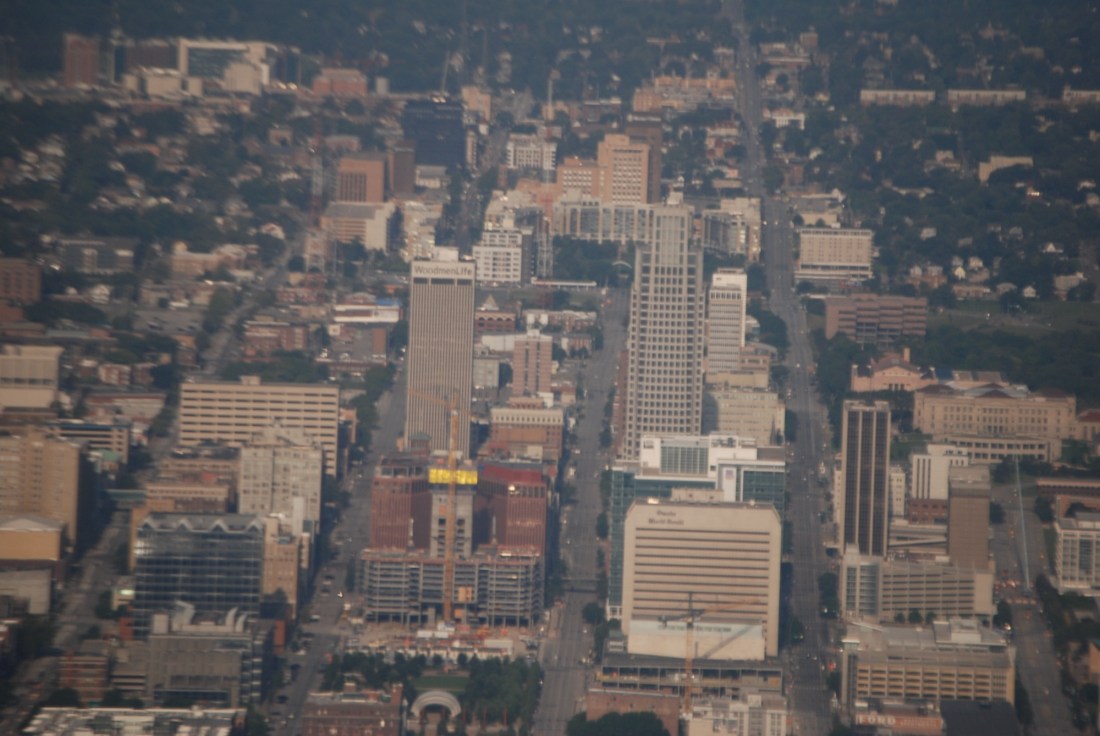
View from (Avery’s) plane flying out of Omaha.

My ode to my year back in the heartland is hard to sum up into one experience. It’s been a weird year.

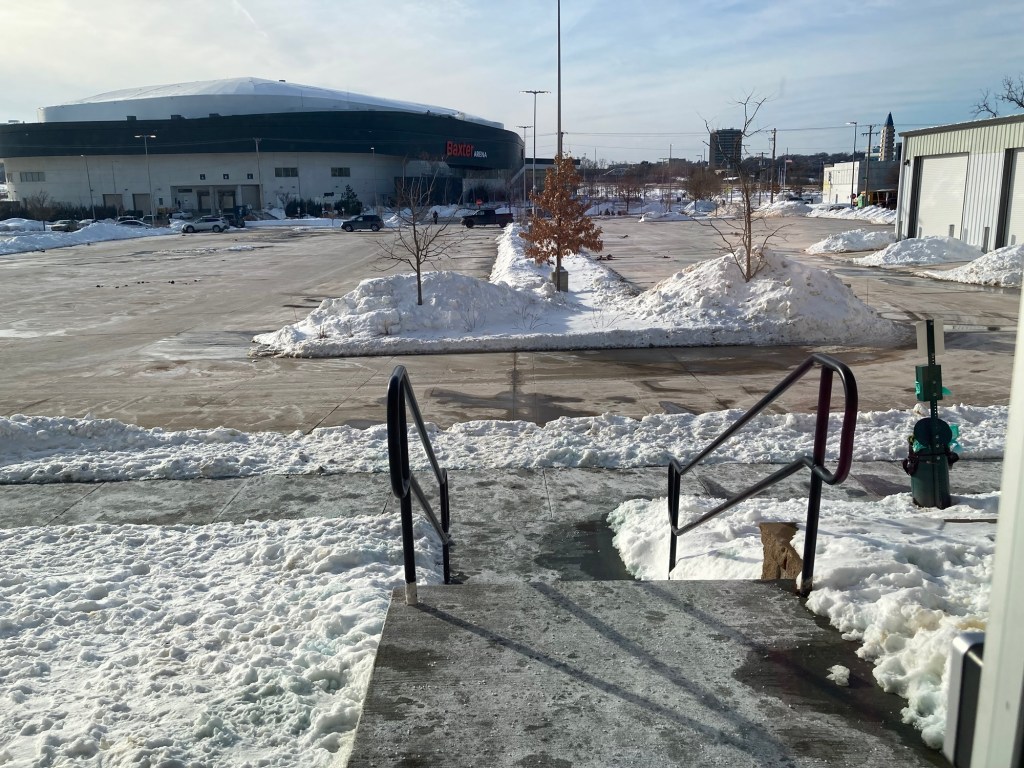
But yesterday, Nik and I went to Bruegger’s Bagels for lunch. After a bit of shenanigans trying to find the door from a steep downhill with majorly F-ed up sidewalks (typical of Omaha), we walked into the place having never been there before or knowing how it worked. Do we sit down? Order at a counter? Where is the counter? Are there seats or is this mostly a drive thru?

But this dude-bro kid who worked there had us covered. He greeted us when we walked in and directed us to the counter. He went over menu items with us and when Nik ordered coffee, he offered to make it behind the counter for him rather than having us make it ourselves at the coffee kiosk. He took Nik’s card, swung the point of sale thing around and tapped it himself. He offered to bring out our food to the table, and then when he did that, he offered to look and tell us which bagel was which. Instead of dealing with five or six minor struggles as blind folks in that place, it was chill.

“That was so Omaha,” I remarked.

“What do you mean?” Asked Nik, who has spent far less time here than I had.

I explained that that kid probably hasn’t had any particular training about blind people specifically. He was probably in high school. But he actually looked at us as people and thought for a couple of seconds about what we would have trouble doing in that setting and thought of quick solutions, communicated them, mostly by asking if this is what we would want, and then just did them if we agreed that it would be helpful, and didn’t if we said ‘No, thanks. We’ve got it.”

I’m not going to say that NEVER happens in Portland. It does sometimes. But it is not the norm. It doesn’t always happen in Omaha, either. But it is more the norm. The difference was really obvious. And also…it took me back to my life in the Midwest before. I had lived in the my first 27 years—half my life—in “The Heartland.” Iowa for 11 years, Kansas for about 4, and Nebraska for about 13 (now 14).

In fact, if I hadn’t come to Omaha this year, I would have crossed the threshold of having lived on the west coast longer than I lived in the Midwest. But alas, now I missed it and will have to wait another year before I hit it again. I did not notice the change in how I was treated as a disabled person in Portland as compared to here when I moved there at age 27. It took years before I could look back and see it. It isn’t like Portlanders are mean. Some are very nice and many have been very helpful. It is mor that they are unintentionally oblivious and keep to themselves. They don’t get too into your business. They largely don’t judge you. But there is kind of an “arms length” unwritten rule. It’s very live and let live. It was weird to think that I used to live with this amount of consideration all the time and never really thought about it.

It was also a great deal of comfort that when I basically crashed into Omaha with no notice, I had a myriad of extended family and high school friends—some of whom I hadn’t really spoken to much in 30 years—who were willing to step in and do just about anything to help. There is something to be said for having family close by, and I haven’t had much of that in Portland. Although there have been friends in Portland who have gone above and beyond at times when there have been emergency situations.

People talk about Nebraska as a red state, and a backwards state. And I will say that there is a bit of feeling like I’ve gone back in time here. For example, I have not been served take out in styrofoam containers since 1997. It’s also a bit weird to see plastic grocery bags. But its also nice to see that it doesn’t smell like weed everywhere and—although there is DRINKING here (ahem, no shortage of that)—there is not too many people who you are trying to deal with while they are stoned. (Full disclosure: I have seen a couple of people on the local buses who were kind of nodding out or doing the fentanyl fold. It’s not like it’s pristine here or anything. And there are homeless folks here, too. They are just better hidden. And there are a LOT of people who are not technically homeless but who are barely making it. The poverty here is pretty visible. Or maybe I’m just someone a lot of people who are upon tough times like to talk to.)

Blue dot yard signs were very prevalent throughout Omaha before the election.

As far as the red state thing, well, Omaha is blue mostly. I did get to hang out with the Douglas County Dems a bit and was on their message group. I was limited in what I could do because I am not a registered democrat in Nebraska, but was able to help with voter registration a bit. When you are blue in a red state, there is more unity and more cooperation. My sister brought this up (she is a precinct leader in Kansas, also a red state with blue pockets.) In a predominately blue state like Oregon, there is not much to lose so then you get in-fighting over HOW blue you need to be and hair splitting commences. In Omaha, with the split electoral votes and the “blue dot” campaigns this year, there is a cohesiveness you don’t find as much in Oregon. They don’t have time for divisiveness. (And even though the overall election did not go as they had wanted, the Douglas County Dems did bring home that blue dot they worked so hard for. They did a good job.)

I’ve had the nagging feeling lately that I didn’t do enough here. Like I didn’t take full advantage of my time. I should have hung out with friends and family more. Traveled to my other Midwest spots like Lincoln and Lawrence, KS. Gone out to more neighborhood spots or I did spent an awful lot of time alone in my apartment reading books, listening to podcasts and watching movies. It may sound a bit sad, but it was mostly great. Yes, there were times I did get bored and I always knew that this was not real life and a person cannot go on forever like this, but as long as I kept it to just this little weird slice of my life in Omaha, I thought it was ok and mostly fabulous, actually. I came from a household, the last 2 decades, that had anywhere from 5-7 people living in it and 2-6 animals as well. It was never quiet. I was never alone. I think mostly it was a house full of joy and love, but there is something to be said for down time. Maybe Omaha was catch-up for the last 20 years.

But I started looking back at old pictures and sort of taking stock of what I have done in Omaha this year. It’s not a packed schedule every day, but it was a good amount of stuff. This might not be of interest to anyone but it helps me to sort of collect all of the experiences I’ve had here in one place. (No, I promise I won’t list every book or podcast I read-I read podcasts!—but there were some really interesting ones.)

  • I flew here with about 4 hours notice and got a kidney transplant
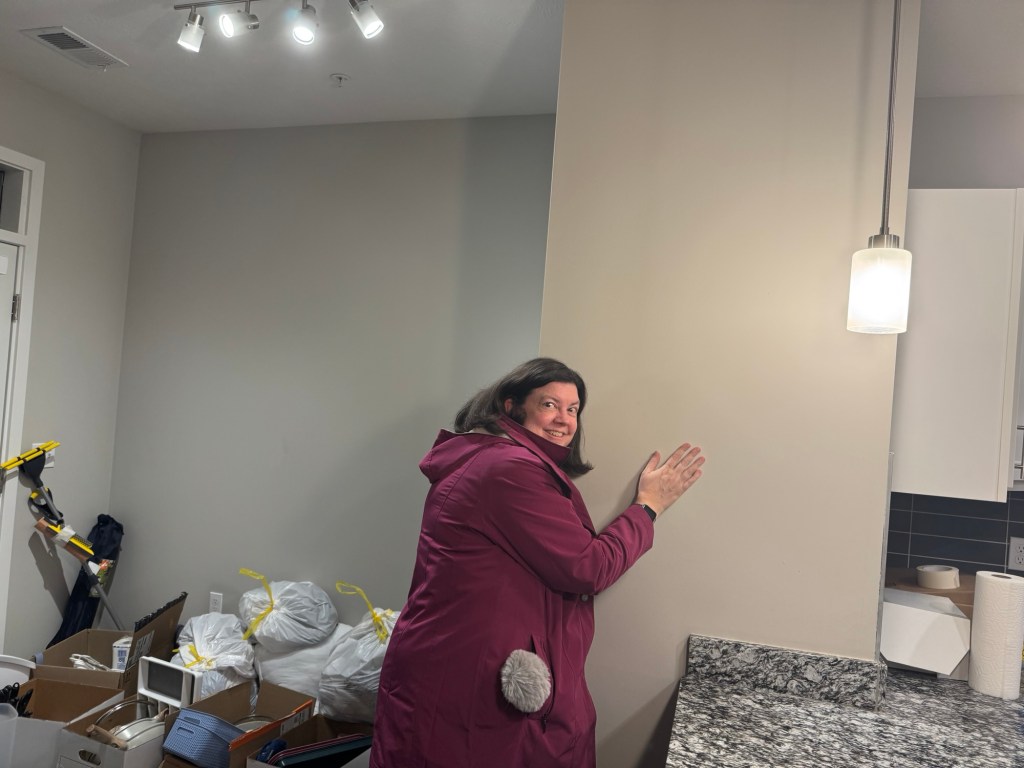
  • I got an apartment arranged right quick (the process was already started, but I had to make adjustments) so my poor husband and child did not have to spend a 20th day in a hotel.
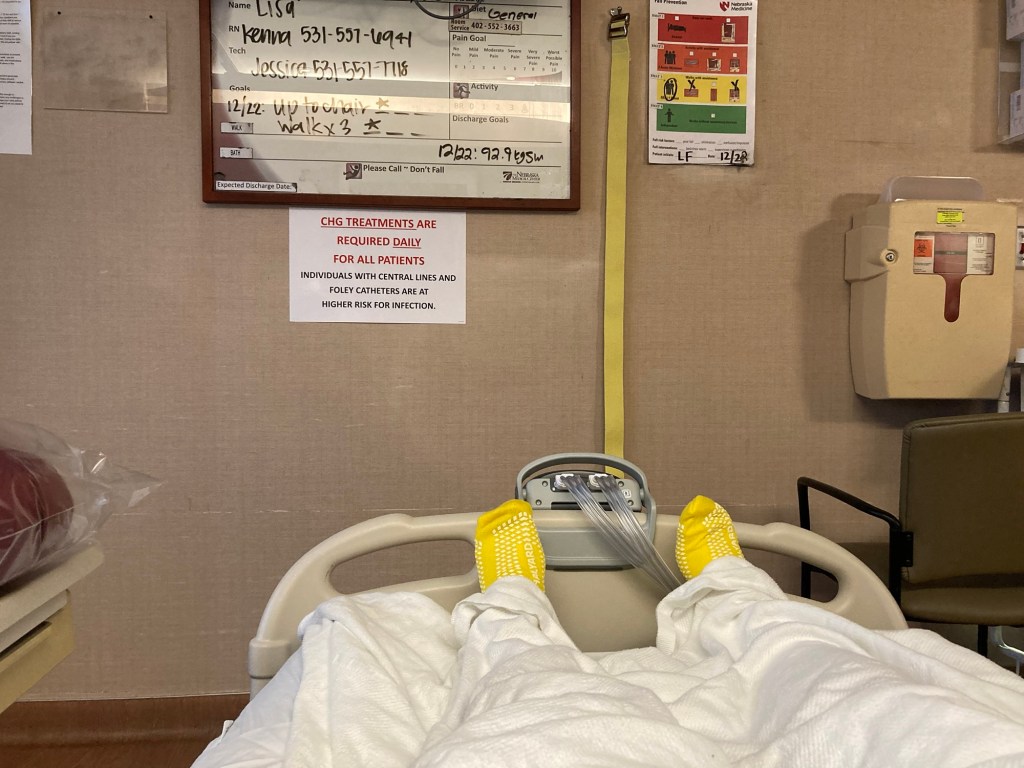
  • I went to the ER, had a blood clot, and spent a couple of nights in the ICU. (Dwight Lay and his cousin, Karen Guilfoyle kept me company on the phone while I was flat on my back and miserable.)
  • Among all of that, I filled out my 2 college kids’ FAFSA, which last year was a flippin’ dumpster fire of a mess that took weeks. And, hey! I’ve already finished this year’s, which was much easier.
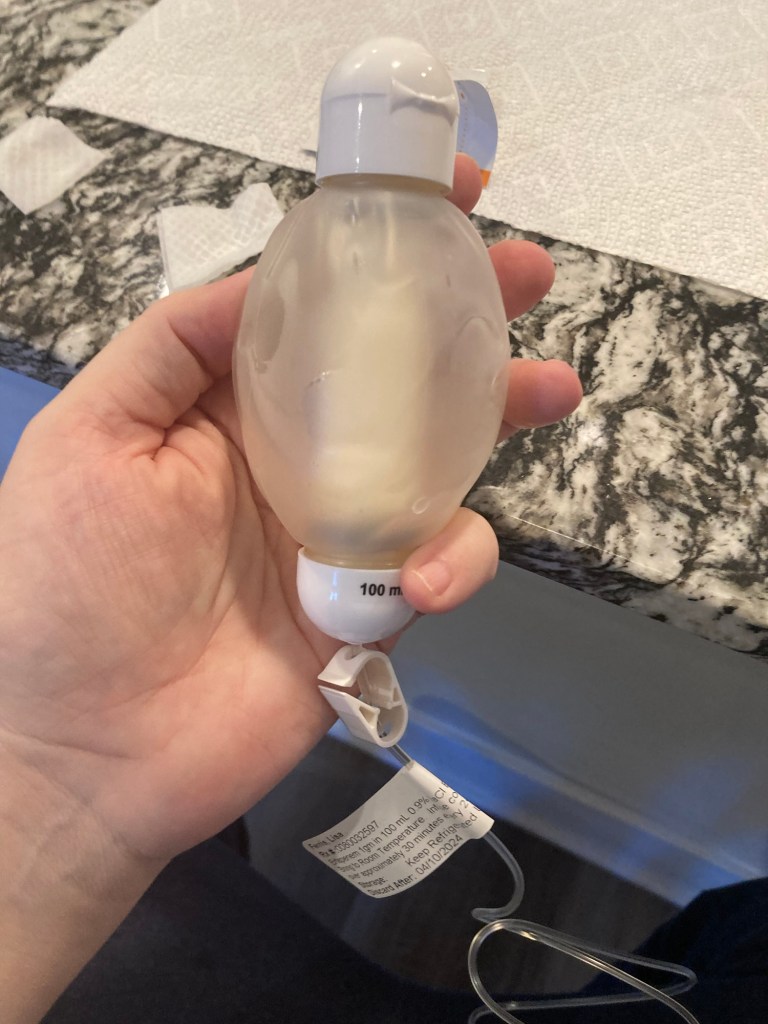
  • I went in the hospital a few more times until they figured out why my kidney wasn’t working. I had to swap out oral meds for IV meds…for the rest of my life. I got a port.
  • The one kid that got suddenly left at home quickly slid right off the rails and crashed to the ground and almost flunked out of high school. Myself (and a lot of other people) swooped in to help her do damage control and get more situated.
  • I was able to visit my dad twice before he died in March.This was also with the help of a lot of people.
  • My dad died. So there was that. There was also a complicated estate process, that my sister has been dealing with and is still not quite through. Even though I didn’t really bear the responsibility of it, the whole thing was stressful and maddening.
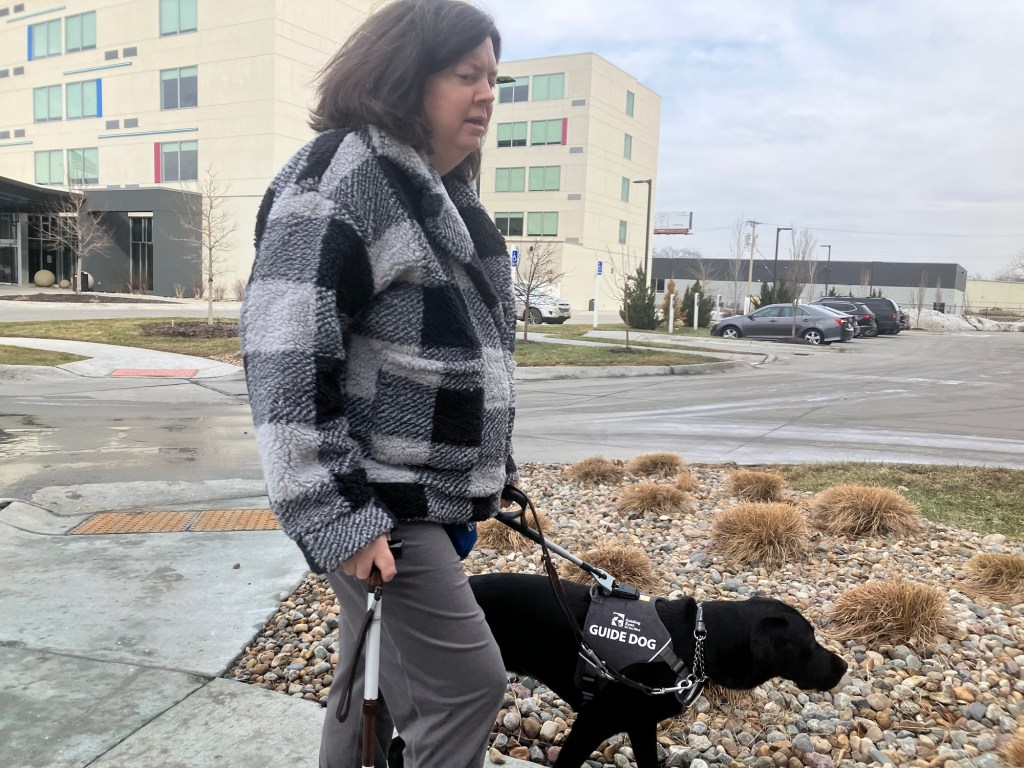
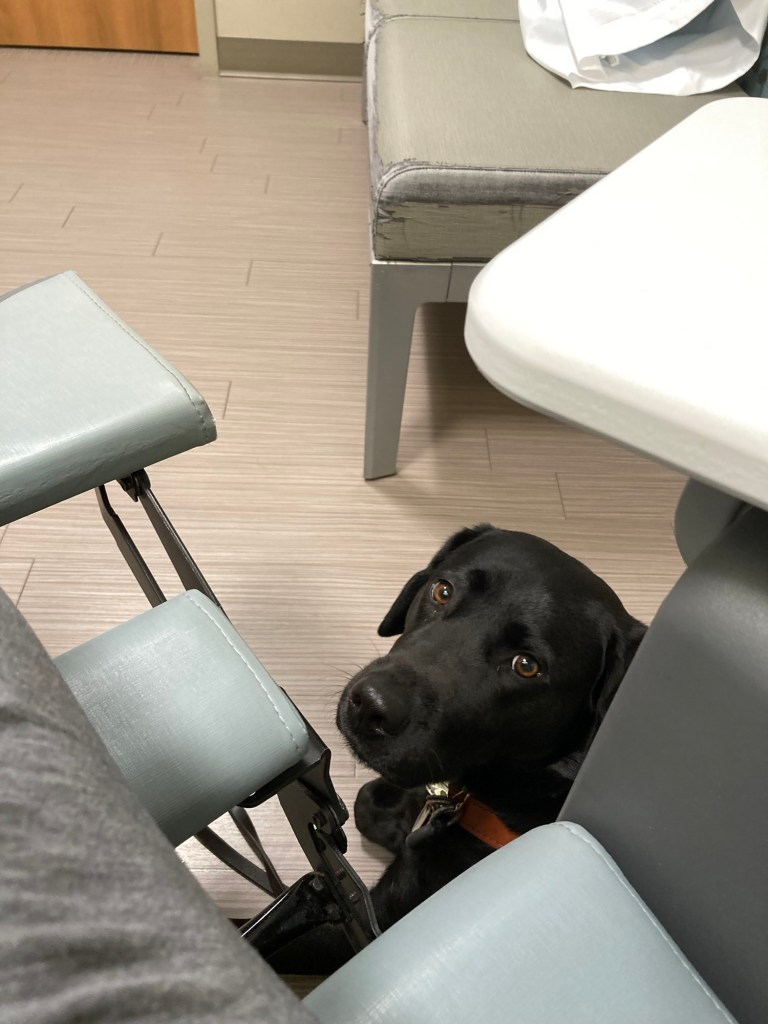
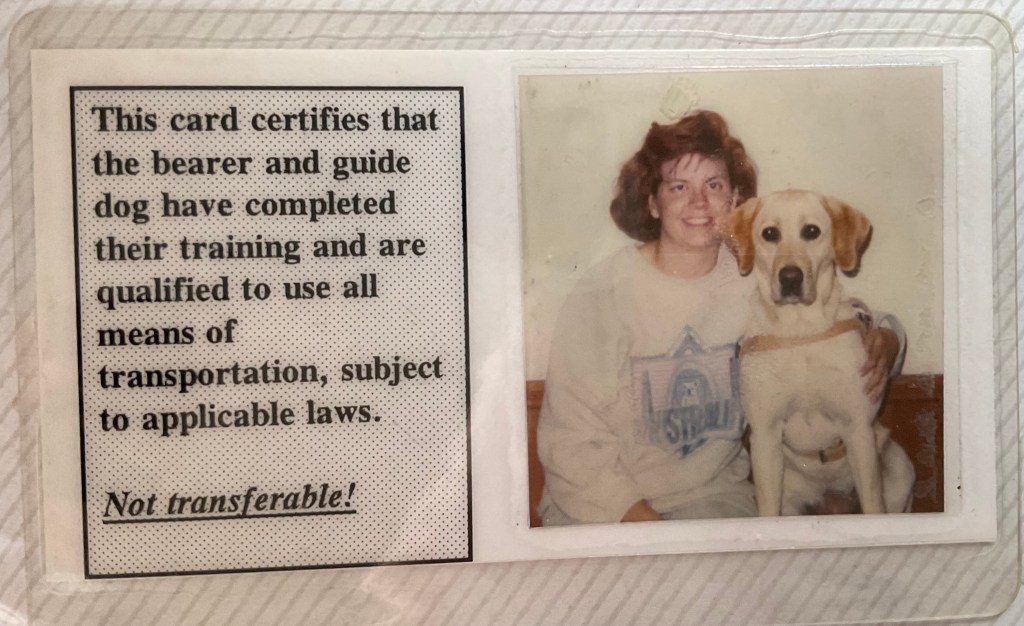
  • I spent hours upon hours upon hours not only exercising and walking for my own recovery but working with my guide dog. Like, this was one of the predominate things I did every day. I did sit down exercises, I swam, I walked the halls, I walked miles outside and worked with that dog.
  • I worked a lot to get my kid graduated from high school (yes, that kid) and worked with her on college applications, scholarships and financial aid, housing, graduation, orientation (although Nik actually went with her) and moving in (again, I helped organize, Nik did the physical work).
  • I got my youngest kid into public high school and arranged all of his testing and stuff he needed to come into public school with no official records.
  • I got the taxes done.
  • I went to see Stevie Nicks and CHI Health Center, I went to the Henry Doorly Zoo, Lauritzen Gardens, Illuminarium Science Center, Jocelyn Art Museum, and walked the Heartland of America Park.
  • I walked the Bob Kerry Pedestrian Bridge, went to the UP museum, General Dodge House, Rails West, the Brigant House, Omni Center, Bayliss Park and the 100s block in Council Bluffs. I also went to the courthouse and got my birth certificate and ate good BBQ there. I did drive by my childhood home as well.
  • I got new skates and skated numerous times until the last couple of months.
  • I had lunch with friends and relatives a handful of times and ate at several good and new to me restaurants.
  • I visited Crescent, IA and my paternal grandparents homes and graves with Nik and my kid (who wanted to go there)
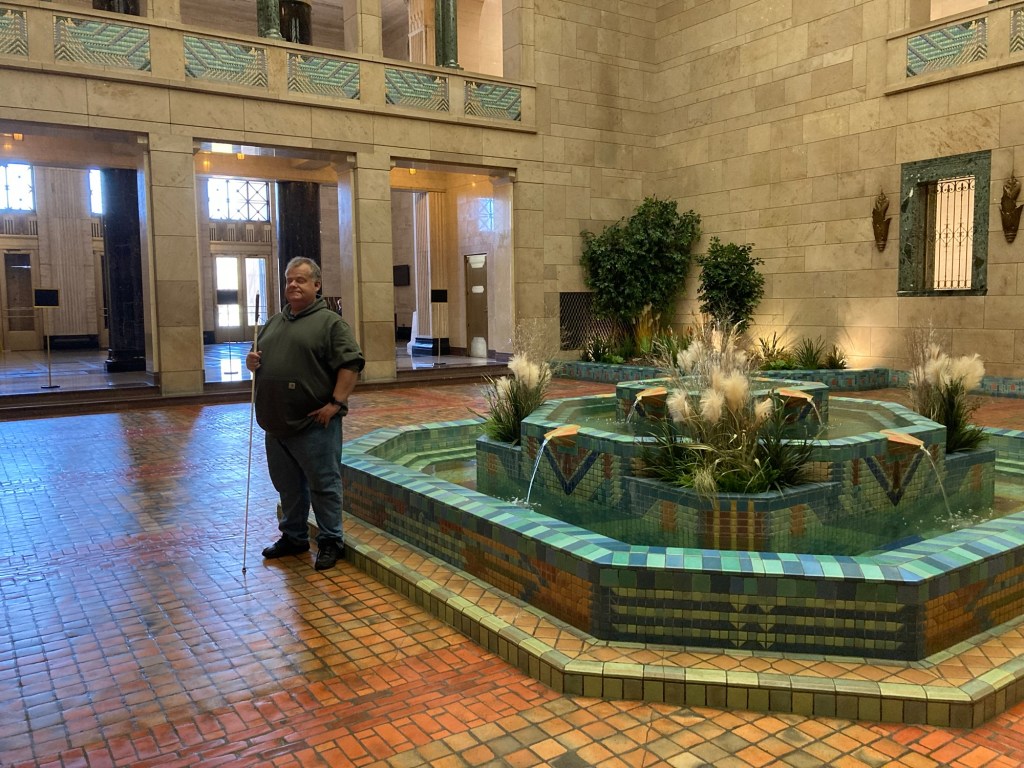
  • I visited (at least walked around the outside of) my high school and elementary school, my Omaha childhood home, Zorinsky Lake, the Westroads and Regency Malls, the Taco Bell I used to work at, the Mutual of Omaha I used to work at, and other such places.
  • I caught up on all my dental work which I was behind on. I have healthy teeth now.
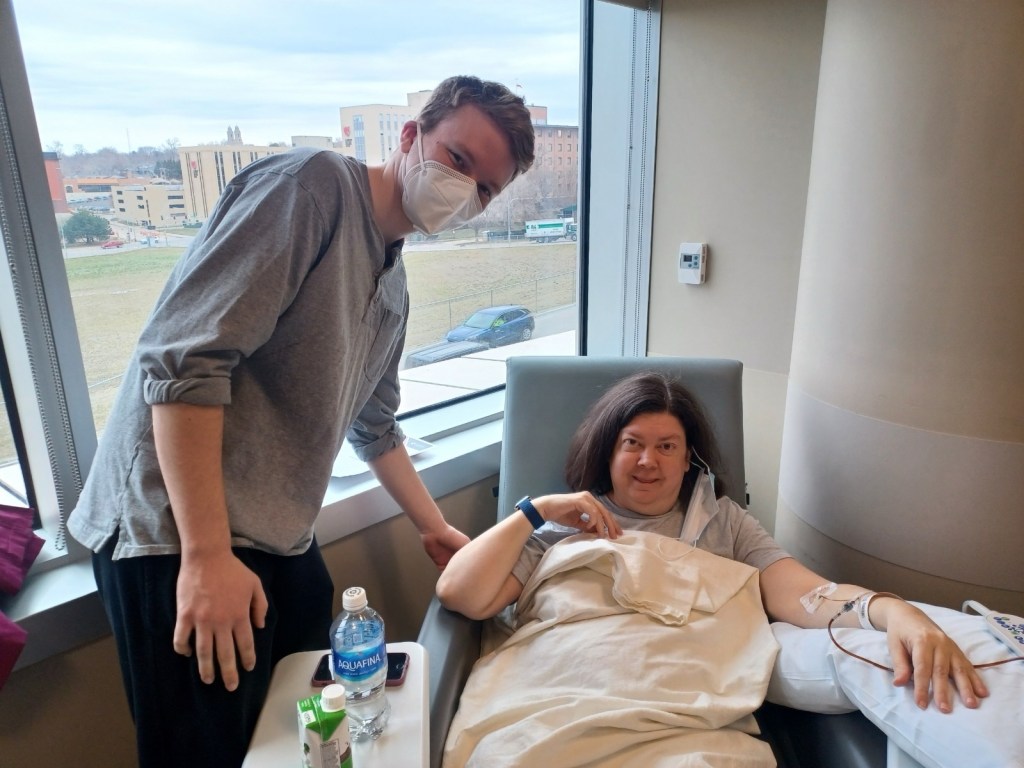
  • I did a fuck ton tremendous amount of blood tests, doctors appointments, infusion visits, minor procedures, MRIs, cancer screenings, Covid/flu tests and vaccines, etc. There was rarely a week that went by when I did not have a medical appointment.
  • Although the bulk of this was Nik, I did occasionally help out with the business, consulting and signing off on client plans, getting paperwork together for taxes and bookkeeping, and helping when our main contractor moved on and we had to hurry up and hire new folks to replace him.
  • I did a deep dive into trans issues. I read a ton. I would never reject my trans child no matter what, but it was important that I really understand all sides of the issue, medical implications, best practices, etc.
  • I talked to my family nearly every day. I kept up with all of their goings on, new schools, new jobs, moving ins, having enough money, paperwork signed, etc.
  • I organized and packed up (with Nik’s help packing) my move out and extraction from Omaha.

Starting in about early October, I started having some medical complications again. I was sick with a cough that wouldn’t go away. I had a UTI that was treated with antibiotics, I have an ongoing issue with an abdominal wall hernia around my kidney that I’m going to have to get surgery for. I had a bit of a cancer scare where I had to keep going back and do more mammograms and U/S and they came up questionable. (But that appears to be resolved for now.) So, I think I’m feeling like I haven’t done enough because I was on a good trajectory and then it kind of died off and went splat.

It was a bit depressing and I felt like I was kind of failing at everything I tried. (I did, in fact, visit Lincoln, but had to almost immediately turn around and come back due to health issues.) I had to cancel on family member’s invitations. I never did get to vote in Omaha, but did manage to vote via mail in Oregon. But the last few months especially have felt kind of gloomy. I had hopes that I’d come back healthier than I had been in a long time. But the honest truth is that right now I’m sicker than before transplant. It’s not like there was any other option, because I was headed nowhere but down without a transplant, but you always hope for the best outcome and have high expectations. I’ve had to adjust, and all my problems are coming home with me for further sorting into what can be mitigated and what has to be dealt with as a new reality. No super pigg for me…yet. You never know.

So, heading out of the big Omaha to go back to the Big Oregon is a needed change and push to just keep going. I haven’t seen one of my kids in 4 months, the other in 8 months, and the third (yes, that one) since December 21, 2023 at 2:00am when I waved at her in her upstairs bedroom window as I got into an Uber to go to the airport for my transplant.

I’m going home December 21, 2024.

Hugging my little apartment good bye right before the truck taking my stuff came and I left to go babysit the dogs in the kidney hotel. It served me well.

I look forward to green trees and nature i can get to, quiet neighborhoods, being able to go on a bus or train every 15 minutes, Drivers who stop at stop lights and realize pedestrians exist. Christmas since I totally missed it last year, having the option to visit my kids in college or go to the coast or the mountains when I want, talking to my family for as long as I want and not on a little screen, just all that incidental stuff that happens in real life in families, and moving on with my life to its next chapter, even though this post transplant chapter will never be over.

But I am forever grateful to Omaha/Council Bluffs and all the people here. The University of Nebraska Medical Center and Lied Transplant Center. My donor, whomever they may be and their family for making the decision that allowed me a continued quality of life, whatever that may be. I’m still here and can figure out ways to be comfortable, kind to people, and maybe even contribute something. My friends and family who reached out even when I didn’t always reach back in any sort of timely manner. All the interesting weather. Freezing, snow, tornadoes, rain, heat, wind, more wind, humidity, big blue skies, and wide open spaces.

The Midwest has its issues, which makes it extremely difficult for me to return permanently, but it’s also just very good at heart. Do not even ever try to fuck with me about the flyover states and the corn and the red and the hickness and the flat boring plains and all that noise, cuz I might have to cut a bitch. The people of the plains—of which I am one—were here for me in ways the west coast never has been. They probably saved my life. It’s always home for me.

And with that, I and my new Midwest kidney bid my farewells to my childhood home. But I will be back.

Some pics from my time in Omaha:

It’s Not You, It’s Me…and, Well, Everyone and Everything (A Brief History of My Ongoing Social Dysfunction)

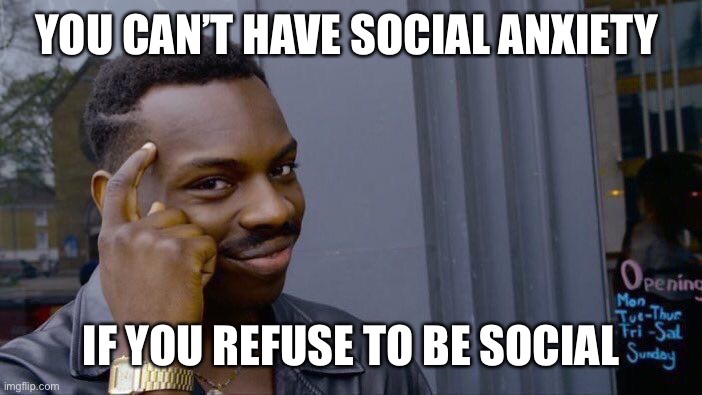
The image is a popular meme featuring a man with a thoughtful expression, pointing to his temple with one finger. The text on the image reads: “You can’t have social anxiety if you refuse to be social.”

I sit here in this weird sabbatical in my Omaha enclave, everyday basking in the wonderfulness of being alone with hardly any responsibilities as I improve my health. The only thing nagging at me is that lots of people I like are reaching out to me, and I’m not so good at reaching back. Which gives me guilt. But in my aloneness, I’ve had time to think and overthink and analyze why the hell I am such a social procrastinator and dreader when I really don’t have reason to be. And I guess someone could name it some pathology like agoraphobia or social anxiety disorder. And that might be accurate. But again, I think—like I do about many such pathologies—this implies there is something inherently WRONG with me. Not saying there isn’t. But to me it feels more like a natural response to what’s wrong out there.

So here is a brief history of how I got here by decade. (Like as if you’d believe I can be brief. Bwahahaha!)

The 1970s

I was a fairly quiet but normal kid. I had school friends, neighborhood friends. Occasionally saw cousins, etc. I was never super extroverted. I never got in trouble at school for talking or being loud or anything. I was just a kid.

One thing that I remember that was significant about the 70s was that in 4th grade, I got these crazy glasses. I had worn glasses since I was 18 months old, but these glasses were very weird and unusual looking. When I got them, I was late for school because I had been to the ophthalmologist that morning. I walked in the room wondering what everyone would say. My teacher, Ms. Hopper, looked at me as I sat down at my desk. She immediately addressed the whole class. ”Lisa got some new glasses that help her see better, which is the most important thing. Everyone needs to be supportive and friendly and tell her how nice they look.”

I kind of wanted to sink under the desk, but for the rest of the day, kids came up to me and said,, “I like your glasses.” And they never teased me about them or anything. I was self aware enough to know they looked weird. But I think people knowing me from before, being used to me and Mrs. Hopper setting the tone immediately stopped any teasing in its tracks.

The 1980s

Which all went to hell when in 6th grade I moved to Omaha and went to a different school. I was teased relentlessly about my glasses, first at my elementary school and then in 7th grade when it started all over again in middle school.

Thus began my practice of becoming invisible. The more invisible I was, the better my fate. Although I had skipped school a few times in 5th grade, this also started my skipping habit and realizing that literallly no one cared if I was at school or not. No one noticed. Not teachers or kids or anyone. Unlike my contemporary, Ferris Bueller, this Ferris did not worry about having to barf up a lung to miss another day. This was a victory for me. Also around this time was the start of my segregation with the other special ed kids for some parts of the day. I was pulled from PE class and put in the resource room. There was a stigma of going on that walk down the hall, but once you were inside the room, it was a relief. I had fun with those kids, although often we had nothing really in common except for having an IEP. We hung out together at lunch and at other times not so much because we liked each other so much (although it wasn’t like we didn’t like each other, but it was more a friendship of survival than really coming together on common interests). We were using each other for strength in numbers, and we all knew it implicitly.

High school was better but largely because I continued to be as invisible as possible. I had the long stigma walk to a different resource room at the end of the hall, where I remember things like this guy in there saying he wanted to marry me but only if I got a job and supported him because he wasn’t going to work for a living. I said, nuh uh, so he upped the offer by promising to cook and clean for me. It was stuff like this. I had no interest in him and he had no interest in me, but we knew we were at the same status in the school hierarchy and we had to accept each other no matter what, because it was not coming so much from outside that room.

There were things that were just perceived by me to be out of the question of participating in. I would not go to something like homecoming or prom or whatever because the stress of that, and the possible visibility of it was just something I didn’t have the energy to deal with. And to be honest, I wasn’t that interested.

In my junior and senior year, I joined more stuff like journalism and “rifle squad” where we twirled rifles with the band. Rifle squad was ridiculous for me to join. I had gotten out of PE because of the risk of retinal detachment if I was hit in the head, but then I joined a group where I was throwing essentially a large, blunt instrument 2 inches from my face. I had basic competence with the rifle, but I caught the rifle in a way that was wrong and I could never correct it. Instead of just having it land in my hands, I reached up and “cheated” the last half turn. I bring rifle squad up because it was an example of how I seemed to purposefully pick the most impractical, underdog group or activity out there.

In rifle squad, we wore cute short skirts, but we were not on the same level as the cheerleaders or the drill team. People made fun of rifle squad, so it had to be right up my alley. We would perform at pep rallies and if anyone would drop their rifle, it made this huge BAM! BANG! BAM! on the gym floor and everyone would hate cheer. Then, if it was you, for the rest of the day you would be mercilessly teased about it. I got demerits from our captain once because I dropped my rifle and laughed. She thought I did it on purpose. I did not, but I could not help laughing at the whole half cheer/half boo response to it all. I had long ago developed a hard shell about being made fun of, and I didn’t care. It was just such a funny reaction. Being in rifle squad was like being in the resource room. There was safety in the group, and even many of the very popular drill team girls, who we shared 6am practices with, were usually nice to us, and sometimes that alliance helped outside practices in the HS hierarchy. But we were not popular outside of that. This was becoming comfortable to me as a place to live. Barely visible Freaks and Geeks or what have you.

Journalism was better and became a safe place, in regards to the physical rooms that journalism was in, I was accepted there and could hang out there safely. But I did not really hang out outside of school with them. I think I was too invisible. They were nice to me but just didn’t think about me that much. Looking back, I probably could have tried harder but never bothered. To me at the time, I had to be very careful to stay in the narrow zone I was given to walk the halls in peace and so that meant staying pretty low-key. But I liked journalism and it certainly made my last two years of high school more tolerable.

The 1990s

The 90s were when I was the most social of all. Granted, it was largely (though not entirely) with blind and disabled folks—which meant it was disregarded by some others in my family, etc. (Why can’t you find a siiiiiiiiighted guuuuuuy to date so he can taaaaake caaaaaare of yooooooooo??? I heard a thousand times.)

I spent my freshman year at Baker University, a private Methodist liberal arts college in Baldwin City, KS. There were only about 1000 students, so less than half the size of my high school. Besides the other blind student who was a year ahead of me so everyone called me her name all the time, I mostly hung out with the girls on my wing in my dorm here, went to a lot of frat and some sorority parties, went to games, activities and what not, and was more or less accepted by people there. I probably have other blind girl to thank for this, actually. She had paved the way. But also, I had grown into my blindness by this point and had started using a cane and thus sort of “outed” myself as blind and proud for the first time. So, unlike high school, I didn’t think there was any great thing wrong with me anymore. I learned how to effectively take the blows, looks, treatment, etc. that happens when you are a non passing blind person with a cane. My thick skin came in handy and I just let all that stuff roll off my back.

Baker was not a good fit for me financially or academically, so I transferred to the only school I could afford, the University of Nebraska in Lincoln. This is where my blind friends were and my boyfriend was, and so although I had a lot of friendly acquaintances with roommates and classmates at UNL, I largely hung out in the blind community. When I started establishing my childcare business with disabled kids, I would reach out to organizations like the ARC and met more adults and kids with disabilities. Back then, the nascent disability services office was just starting and so that was another place I was required to hang out to do tests or use the computer. Since we were kind of winging it because there wasn’t well established services, the disabled students who met in that office traded services. So, I might carry books and walk with a person with cerebral palsy and they might read for me. I got rides from a quadriplegic woman and in exchange I cleaned her apartment for her. Stuff like that. We were very much in it together.

One thing people don’t realize is how much disabled people are segregated into sort of being forced to hang out together. From the resource rooms at school to separate housing in dorms to taking tests separately in class to being seated in the gimp section at concerts and events. You are always put with other disabled people so that is who you meet, befriend and get comfortable with. In these years, I started to see how my social life was diverging from the mainstream. I got along with nondisabled people ok, but it’s a different culture and you find yourself sort of code switching. Which you literally have to learn to do to make good in the world. You have to try to keep one foot in the nondisabled world and not completely surrender yourself to the crip world. But it does get exhausting. You have to know how to keep nondisabled people comfortable all the time and understand how they feel, educate them about disability stuff in a nice way, be self deprecating, laugh at their dumb jokes you’ve heard 80 million times and patiently answer their questions. It’s not like you don’t like nondisabled people, and the vast majority mean no harm and are just trying to connect the best way they know how. But it’s like, when you go back to the disabled crowd, it is just like…sigh of relief. My people!

For example, one of the reasons I think I was so social in the 90s was because in college, a lot of people don’t have cars and college campuses are very walkable. So, I was able to come and go as I pleased for the most part, which gives not only myself, but other’s who might have felt the obligation to drive me more freedom to do what we wanted when we wanted. The disability community does not give a shit if I take the bus to meet you somewhere or take the bus home after midnight because I am tired. The nondisabled community acts like this is a fate worse than death which makes it awkward all the time.

When I went to KU for grad school it was more of the same. I was put in the gimp basement with the other disabled people and we hung out. I got involved with the Blind Students Division so befriended more blind folks. One interesting thing that happened was that a professor was really pushing me to be friends with these couple of women in my class (in grad school you have class with like no more than 8 or 10 people and you sit around a conference table with the same 3-4 professors, so it was a small group.) These women were nice enough, but they sort of treated me like a charity project. Again, I gravitated towards the student with CP that typed with her toes and the student with a hearing loss caused by a cleft pallet which still left some disfiguring of her face. There was again the assumption that I should socially “do better” as if I should drop the disabled friends and “marry up” to some nondisabled friends. I think her motivation might have been more inclusion/less segregation. But again, I was put my entire life with disabled people in all the rooms and seating and dorms. Every single day of my life I had to walk into the classroom, grocery store, workplace, etc. as the only disabled person with all eyes on me. You need time off from that. The flipside of that was that all these nondisabled folks were spared exposure to us as well and we became like a novelty to them. It is hard to create genuine friendships under those circumstances, even if everyone has the best of intentions. We all got along ok, it was just never a very deep friendship.

When I moved to Oregon and was looking for work, I started substitute teaching, which brings up another thing that happens socially to disabled people with very visible and stigmatized disabilities. Every time I went to a new school, I was afraid of what would happen when they found out I was blind. What saved me with subbing was their desperation to have an adult body in the room at the very last minute. Subs were assigned via an automated phone system, so no one knew I was blind till I got there. But in other areas, I did not have that leverage. I think every disabled person carries around a low level (and sometimes high level) of anxiety about what kind of social barriers they may run into. It doesn’t happen all the time, but happens just enough to make you always worry about it. When I go to the doctor, will they help me with the paperwork or kick me out? When I go to the parents meeting, will anyone talk to me? Will I be able to participate? Will they bother with the accommodations I asked for? When I go to the skating rink, will they let me skate? Will they call me a faker? When I cross the street, will they stop for me? When I go shopping, will someone help me find my item? When I go to the bar, will anyone bother to tell me where they are sitting and ask me to join them? It goes on and on and every time you leave your house, there are always these things to consider.

I ended up getting a job at OHSU and worked on grant-funded projects that provided research about and some service to adults with disabilities. There were a handful of my colleagues that had disabilities as well. Mostly it was good there, but sometimes I felt like they pulled the disabled people out and hid them away like props depending on whether they thought it politically advantageous or not to have us around.

At my job performance reviews. I got good reviews for my work. But I also got that I was not friendly enough. “You just don’t care,” said my supervisor. I shut myself in my office and didn’t go around and talk to anyone like I should to built rapport. It was not true that I didn’t care. I certainly did not want to hurt anyone’s feelings or be an inconvenience for anyone, but I think this was more of a logistical issue for me.

By this time, I was starting to be a real deafblind person instead of just a blind person. As an accommodation, I had my own office because I was on the phone a lot and my phone was really loud and it was easier for me to hear without background noise. Also around this time, I was starting to have kidney issues. I was in and out of the hospital and was on some medication. I was FREEZING in that office ALL the time. Like wore my coat freezing. Another coworker who was quadriplegic needed it to be cold. So the compromise was that since I had an office, they gave me a small space heater and I shut the door. All I wanted to do was be in that office with the heater on and the door closed. It was not meant as a snub to anyone. Anyone was welcome to come in my office and I talked to them when they did. But generally, it was becoming exhausting to talk to people all day, I was on the phone for my job enough, I was cold and sick, and I was not making a grand social statement. Just trying to get through the day really. But I guess people read into it that I didn’t care and was antisocial. So then I made myself do a twice a day tour of the side of people’s desks. Thank god I had my guide dog, Mara, to socially intercede for me in these sort of contrived interactions. Everyone loved the dog, so face it. That’s probably what they really wanted.

The 2000s.

I had started skating in the late 1990s in Oregon when the #adultsskatetoo movement was just starting. I noticed here that a shared skill or interest can sometimes trump a disability. That was the majority of my social life for many years, adult skaters. None of which were disabled. Well, I did have a friend who worked at the skate rental desk who had Down Syndrome. I needed him to watch my dog as I skated and we had a whole thing where he called me his sister and I called him my brother and Mara, my dog was our little sister and what not.

One of the adult skaters I was friends with said, “wow, you are so comfortable with him, how do you do that?” And I was like, because he is a person and he’s funny, and he takes care of my dog—what? I told him he needed to get over himself and he needed more exposure to disabled people. I asked him if being around me made him more relaxed around other blind people and he said, well, I don’t think of you as blind. You can skate! Here is another thing that happens with nondisabled people. It’s this trying to classify you as anything else than just an equal person along side them. Maybe, like this guy, they would get it in their head that you are not really disabled. I can skate. Blind people can’t skate. Therefore, I must not be blind. I told them that there are other blind skaters who have no vision who skate. I have some vision, but I can’t drive a car, I can’t see at night like at all, I can’t really read print, I am always working and strategizing out on the ice to not run into people and it does limit my progress as a skater. But his version was just to not think of me “like that.” He meant well, and we were friends for many years before losing touch.

The other versions of this are to either put you up on a pedestal (“you’re so amazing that you skate”) or put you down as an object of pity (“I’m so sorry for you, here, let me hold your hand every minute on the ice and hover.”) Both may come from good intentions, but neither put you on a level playing field. The problem there is that you never get past the acquaintance phase of friendships. It gets stuck. People don’t see you as someone they can relate to if you are up on a pedestal or down in a pity pit. But mostly, I had good relationships with the fellow skaters because despite whatever they may have thought about me being a disabled skater, we didn’t talk about it. We talked about skating.

For a while, when I became a parent, this seemed to be the case, too. I was involved with mom groups at Gymboree, or at the UU church or at my kid’s homeschool coop. For a while, momming or homeschooling seemed to be enough of a shared interest to trump the whole disability thing.

Then, the most flippin’ bizarre thing happened. And Nik and I have talked about this, so he knows what I am about to say. I had worked for 6 years, with some success, to build communities for my kids. When Nik came into my life in late 2009, it all collapsed. Like instantly and unequivocally. It was bananas. People who I’d talked to for years stopped talking to me. People who I had volunteered with and for did not want me to volunteer any more. It was sudden and always happened soon after the first time they met Nik. Whatever tolerance they had for me before, as a mostly normal looking, low vision/low hearing person was tipped over the edge to intolerance and ablism when Nik, who is totally blind and very visibly blind with eye abnormalities, came along. Instead of being Lisa, the mom who has trouble seeing and hearing sometimes, we became that blind couple who are really, Really, REALLY fergin’ disabled. So disabled that it’s freak show time.

Which pissed me off. Here I was in all of these supposedly liberal communities that are all about acceptance and tolerance and inclusion and it was all virtue signaling crap. DEI, my ass. . It made me not want to deal with any of those people anymore, although in every group, there were always a few nice people who were not like that, it was annoying and you never quite knew what you were going to get. Even when Nik won some of these people over because he is such an extrovert networker, they still scaled back to the sort of acquaintance/tolerance stage. I had volunteered in childcare for years with no issues, and now I had people coming in to watch me and criticize that I let the kids be too loud, when it was the same as always. We even saw people get up and leave when we sat down at a shared table. We became outcasts, because I married a guy.

A problem that many disabled people have, especially in the mom social economy, is the problem of reciprocation. Before Nik’s appearance apparently marked me as TOO disabled, I had participated in the sort of mom economy where we share childcare or rides or food or birthday party invites or cupcake bringer or what not. I did favors for others, they did favors for me. After Nik, I was effectively kicked out of that economy. (To be fair, I had always had trouble with this issue, but for a while, the mom thing seemed to trump the issue. It may have been a case, like skating, where if I was a mom, it meant I wasn’t blind, because blind people aren’t moms. But then Nik proved my blindness bonafides to a level they couldn’t ignore). Suddenly, even though I still offered to watch kids, bring cupcakes, etc. I was no longer asked to. When people perceive you as not being able to offer anything to the community, they largely stop sharing with you as well. Sure, there are exceptions, but everyone who drives can get the occasional ride to work or to the airport because implicitly, they know they can ask for that favor in return. If you can never drive them to the airport someday, and they don’t even perceive anything else you could do to be worthy enough, you are knocked out of the shared community economy. It doesn’t matter how inspirational they think you are, you are not one of them and you are not included. So, after a while, I just kind of gave up the stress of even trying much in these communities. (I mean, it had been YEARS of trying.) I started not setting foot in my kids’ school unless it was a very special event they were involved in. They seemed to fare better that way.

This is also why “asking for help” is such a bloody minefield for disabled people. First of all, I can’t tell you how many times I’ve asked for help and been told no, or gotten a reluctant yes but with the caveat that they can’t do it all the time (I had not asked them to do it all the time.) But there is this idea that if someone gets dragged in to helping a needy disabled person, they will set a precedent to be burdened for life. OR they want loads and loads of thanks and appreciation (beyond reasonable appreciation) and it becomes sort of a white knight thing where they are pushing help upon you not because you asked for it, but because of how it makes them look. Or if you ask for help, you will be percieved as being incompetent. For example, if you ask someone to help you look at something on your child’s skin, all the sudden stories will come back to you that you can’t really properly raise your child because you needed someone to look at a thing on your child’s skin…when that was exactly what you were doing to take care of your child. The person saved you an unnecessary trip to the doctor maybe, they did not save your child from you. Or they may help you once with dinner and then go and talk about how they cook dinner for you all the time because you are blind, and never think that you cooked all the other dinners yourself that month. On the other side of that, if you don’t ask for help, you must have a chip on your shoulder. You must be an angry gimp who “has too much pride.” You can’t win this no matter what you do with many people. You learn that people are going to think whatever they want to think, and asking for help when you are disabled is not the same thing as asking for help as a non-disabled person. The whole asking for help thing can be a rather insidious tightrope to walk.

The 2010s

The irony of Nik’s effect on my social life is that he is the most outgoing, extroverted person who literally does not give a shit if you don’t like him because you think his eyes, the way he moves, his weight or whatever makes you uncomfortable. He networks with everyone, all the time without any reservations whatsoever. For me by the 2010s, between a combination of anxiety about the odds of which person is going to exclude, reject or put barriers in front of me and my decreasing means of being able to communicate in the usual nondisabled ways, I started throwing a lot of the social communication responsibility onto Nik.

Nik was making all of my medical calls, school calls, etc. If I couldn’t do it via email or online application or text, I threw it to Nik. But as he got busier with work, it became a problem when I would have to wait 3 days to have him make a doctor’s appointment for me or return the school’s call about a field trip or something. So I know I was going to have to find effective ways to communicate on my own.

At that time, my deafness had increased a lot and I didn’t really have a workable method of making phone calls. Or sometimes, even talk to people in person in loud situations. I looked to the Deafblind community for advice. Say what you will about the evils of social media—which I get—but for some communities like the DB community, social media opened up a whole new world of connection for them. Deafblindness is extremely rare and before social media, it was extremely difficult for any one DB person to talk to any other DB folks. Now there are DB communities of several varieties online, and DB people can directly communicate with each other, which they often couldn’t do before without the use of multiple interpreters.

Deafblind people communicate in a variety of ways depending on their background and skills. Many come from the world of ASL and ProTactile and might not have good written English or read braille. Some, like me, come from the blindness world without a strong background in ASL, but a good background in Braille and written communication. I took my cues from people similar to myself, like Haben Girma, who communicates with a braillle display and a QWERTY keyboard that she hands off to the person she wants to communicate with. That person types, she reads it on her digital braille display, and then she is able to vocalize back a response, as am I.

Since everyone texts now and no one hardly calls anyone, changing up my communication to text based and TTY based for the phone did not seem like it should be that big of deal. Nik and I spent countless hours practicing with different keyboards and braille displays and apps to find out what would work. I made a concerted effort to work to improve my braille reading speed and accuracy. I started taking over some of my communication tasks from Nik. First by doing my own phone calls with TTY. (TTY works via online app. A relay operator talks to the person I am calling and types what their response is to me,which I can then read and respond.) I was a bit excited to try to get back into the world again with my new adaptations.

>>>>record scratch<<<<<

From the time I was a kid with funny glasses, to when I started using a cane, then a guide dog, then a guide dog 2.0, then marriage to a capital B Blind person, then TTYs and Braille, I have noticed the difference in the ways people perceive you as to them, you come off as more and more disabled, even if you can—using accommodations—effectively do the same things you’ve always done. You are essentially the same person, maybe with a couple more accoutrements, but the same person you were yesterday. Yet their whole perception of your ability and worth as a person keeps circling the drain deeper and deeper into the toilet.

The way I was treated when trying to explain to people that I either needed to text or use TTY or hand them a keyboard to communicate was nothing short of appalling. Although my actual physical disability was gradually changing as such a minuscule rate as to barely be noticed, adding one more thing, like just explaining that I need to text, or message via MyChart—things people largely did anyway—took the ablism I faced to a whole new level. One of the reasons I am sitting here in Omaha, with an Omaha transplant team is largely because my first interactions with OHSU during the height of the pandemic when no one was meeting in person and I was communicating via TTY with them. They about lost their shit, and never seemed to fully recover, even though I eventually was able to meet with a couple of them in person and use voice communication.

So, this was another set of anxieties for me. Every time I communicated, it had the possibility of turning out disastrous where doors would be slammed tight instead of opened. In all these situations, it is never everyone. There are always people who are cool and who just adapt quickly, and work with you. But there are always just enough to create that anxiety about every interaction. Is this interaction going to be positive, or workable at least, or a dumpster fire of ablism?

The anxiety causes me to try, somewhat subconsciously as I’ve done a lot in my life, to *Pass* as nondisabled as I can pull off. This then becomes sort of another reason to be anxious. Because trying to see and hear and act like sighted hearing people do is REALLY HARD WORK. And often it doesn’t work so you miss a lot and then have to use your brain to figure out what you are missing and fill the holes and think of a proper response. The responsibility always falls to me to make the other person more comfortable, not the other way around. The deal seems to be that I have to meet people all the way, straining as far as I can, because if I can’t or won’t do that, I will fall into their category of too disabled to deal with.

The 2020s

My ability to communicate in traditional ways is limited by time before my brain gets too exhausted to do it. It’s like, if someone was throwing math problems at you, you could probably sit there and do them in your head effectively at first. But after hours of it, your brain would fatigue and you would just start flaking off and you might get headaches or stimulus overload or something.

As I’m dealing with this brain and auditory/visual stimulation fatigue, I’m also well into stage V kidney disease and on the transplant list by now. This brings in what I will call physical anxiety in social situations. Especially as a person who cannot drive. If you have a serious chronic illness, you become high maintenance. Maybe you need a bathroom, or a source of water at all times, or a chance to lay down and rest, or less noise or light or access to pain meds which may make you dopey or you h ave good days and bad so it is hard to commit to anything. All of these things make going out to socialize kind of scary. When you have to depend on someone for a ride, it becomes more out of control and more anxiety ensues. Again, I’d rather take the god forsaken bus than have to worry if I can go to the bathroom because my ride has gone off somewhere or whatever. Or if I will have to bow out early because I’m just too tired. So these physical aspects became Very Big Deals in the last few years and basically overtook much motivation and energy to try to socialize.

…and finally here we are in Omaha…

At six months post transplant, I’m still trying to figure out what my body is capable of. I am not cured, I was given a bit of a reprieve from running towards death. I seem to have more good days and more energetic days thus far, but I still have bad days. I have been able to improve my hearing aid situation in the last couple of years which now allows me to make short phone calls and hear a bit better. There is also new technology like automatic live captioning, which is far from perfect but can help to the point where I don’t need a relay operator for many calls. I still have communication fatigue, and I still have “holy shit, is this next interaction going to be positive or hit the fan” anxiety.

Nik went back to Portland to be with the kids but also specifically because he knew that I needed to not depend on him so much and see what I can do. (The irony there is most people assume by looking at us that he is the most disabled one who depends on me, That was never true, but it the last few years, it couldn’t be farther from the truth. He has really taken on the role of caregiver, and I’d like that to stop or at least significantly decline.) In the first few weeks without him, I was struggling to do the basic things to just take care of myself and my dog. Cooking, laundry, taking the dog for walks, getting myself to my own appointments without his navigational and communication help was all I could concentrate on. I have gotten much better at it, but it took a while.

Lots of people have reached out to me. People who I like and who I want to connect with. And I have ignored a ton of them. I have sat there and spent days working myself up to replying to a simple text. Then I think, I’ll just do it already. Then…they text back and I have to reply!!! Oh NO!!! The relief was short lived. I know it’s ridiculous. These people who are reaching out to me are not people I need to worry about much or be scared of. They are the old crew who’s been around for years. And then I still have to talk to people I don’t even really want to, like the pharmacy financial office who CAN’T DO ELECTRONIC PAYMENTS LIKE ITS 1989 and can’t fathom that its hard for me to pay by phone because I’m deaf and blind so can’t read the card easily and OMG can’t your caregiver do it for you??? ongoing bullshit ad nauseam. So, then that means that I’ve worked up all my mojo to deal with their asses so someone I actually like got put on hold for another day. Still, that is where I’m at. I guess the grand very obvious conclusion from all this is, DUH! I guess I have developed social anxiety disorder for SOME reason. <shrug>

So, I’m trying. I have a list of people. I’ve not forgotten anyone. And THANK GOD for my online friends who’ve known me for like 20 years and never expect me to show up in person or talk on the phone. Thank you guys! Decades long online friendships are the best, it’s the new normal, right? But to everyone else, it really isn’t you. It’s me. That and my above mentioned 15 paragraphs of shit.

And also? I’m good though, besides this. I love my little solitude in my little apartment more than is probably healthy too. But I will be going Back to Life, Back to Reality soon and taking whatever nerosies want to come along with me.

What’s the Matter with Guide Dogs? (Chapter 4 Old School and New School Diverge: Sully and Marra)

See Also:

What’s the Matter with Guide Dogs Chapter 1: What Happened at the Airport?
What’s the Matter with Guide Dogs? Chapter 2: Marra and Jats-The Gold Standard
What’s the Matter with Guide Dogs? Chapter 3: The Strange Story of Barley

After my experience with Barley at Guide Dogs for the Blind in Boring, Oregon, I thought the issue was that particular school just wasn’t putting out high quality dogs. They were putting out too many, too young, too raw and too fast. So, schools are different. Huh. Okay, then let’s go back to where it all began at Guide Dog Foundation for the Blind. It didn’t happen right away, though. I had pushed to get Barley in the window that was 5 months before I gave birth, Nik moved down from Toronto, we started our immigration journey, and he got a job. When Barley was retired early, I lost my window. Although Nik was able to get Sully in 2011, I would not go back to get Marra until 2014. Our experiences the second time at GDF were a bit of a mixed bag. I got a really great dog with the best trainer I had ever had. Nik got Sully, and Sully is a complicated issue.

My third ID card for Marra. I’m getting older still….

But first, a disclaimer about training staff:

I’ve already mentioned some trainers in this series by first name, and now I am going to go deeper and mention a few more. I want to be clear that I do not think these trainers are bad people. They are not the villains in my story. They are mostly hard-working folks that put in long hours and don’t get paid especially well. You don’t major in guide dog training in college. There is no real accreditation that sets universal standards. Most trainers are animal lovers that work their way up from jobs like kennel worker and put in years of apprenticeships. They generally try their best and want to help. Doug, Sioux, Mike, Dan, Kat, and Other Dan have been generally nice to me and seem sincere in wanting to do good work. I do not have issues with them, personally. I mention them only as a means to illustrate my first-hand experiences. What I am trying to bring to light through my story is more of the overall trends of lowering quality in the guide dogs that are being produced today and how there is no real quality assurance at all that is consistent. And that this issue affects us blind handlers the most, although we have the least amount of power to say anything about how it affects our real lives.

Sweet, Sincere, and oh So Very Soft Sully:

I met Sully in my house late at night after Nik took the train home from the airport. Sully was a sweet, squirmy ball of excitement, but Nik was exhausted. His trip home from the airport was more akin to the one I talked about in Chapter 1 of this series, though not quite as bad as no excrement, barking, or blood made any appearance. Still, it was a tough go for them.

Nik and Sully after first meeting at the dorms of GDF.

Nik had asked for Doug to train a dog for him, but Doug was doing more field work now and so a compromise was reached. Nik went to the training center for two weeks and had Dan as a trainer. Doug was going to come to our city in a couple of days and finish off the training with the two of them for an additional week. This was a time period when all the schools were trying different models to reduce the 26-day training period to just a couple of weeks. Nik spent two weeks with Sully and Dan at the center, then Doug was to spend one week with us working with them at home.

Dan was a young, nice guy, very affable and good natured. Very proud to work as a guide dog trainer. Smelled horribly of cigarette smoke to the point where you always knew he was coming from 50 feet away. Dan’s dogs had a reputation of being very well behaved and had a high level of decorum indoors. Sully had impeccable manners. He always sat still, he never begged for food, barked, was incontinent, or chewed up anything. I noticed right off that he was of different stuff than the squirrelly, puppy-like GDB dogs. He would eventually become our business’s honorary receptionist and everyone loved visiting Sully.

Sully, however, was not a very good guide dog. I started noticing things early on. He didn’t get the gist of the job. He was trained with food rewards and was rarely, if ever corrected with a harsh leash correction. He always had this sort of expression of confusion the whole time. Once, we were in Vancouver, BC and he practically gave me a heart attack because he took Nik out on this road where cars had started coming around a corner (he had the right-of- way, but went at a steep angle that drew him into the other lane.) So, cars were coming around from a sort of blind corner, and Nik was trying to straighten Sully out, and Sully was so flustered that he pooped in the middle of the road. The cars were coming, they weren’t going to be able to see them until the last second, and Sully is in a squat with a confused look on his face. I pretty much stopped completely trusting Sully as a guide from that point on.

To be fair, Sully dealt with a lot of situations with aplomb. Here, Sully is guiding Nik who is driving a stroller behind him. Up ahead, the twins and their father race ahead. I remember this day, we all went to a restaurant after one of my kids was in a play. Sully was always polite and well behaved in restaurants, even when we had to figure out a wheelchair lift and had 3 kids running around.

Nik took a lot longer to get that Sully couldn’t guide well. Nik has excellent O&M skills with excellent echolocation. Nik can pretty much walk around without a dog or a cane without too much difficulty if he is familiar with the area. Once, our Christmas Day got snowed in, so my twin’s father, the wheelchair user, was stuck in his house. So we packed up our whole Christmas–all the presents and the food and everything–and walked down to his apartment a few blocks away. Nik was carrying so much stuff, and he walked right down the middle of the snowy street perfectly with no cane and no dog. (There were no cars and it was easier to walk in the street than the sidewalk, as it had been cleared a lot more.) Nik is too skilled for his own good sometimes.

When you have some vision like I do, the guide dog trainers stress that you need to trust and follow the dog even if you can see something coming at you. But when you are totally blind, they just figure they don’t need to worry about you “leading the dog” too much. But Nik did not have a good fix on when Sully was guiding him and when he was guiding Sully. So, even though I could tell that Nik was doing more work than Sully was, I do think it was genuinely hard for Nik to tell.

So, what was Sully’s problem and why did he make it through training? There are many theories.

  1. Sully was puppy raised by a very famous actress. He was sponsored by a big corporation. He was named after a celebrity (Sully Sullenberger, the pilot who famously landed the plane in the Hudson River) and had some ties to related organizations. There was a feeling that Sully couldn’t fail. He was a beautiful golden retriever. People said he looked regal. He was also super empathic and sweet. But he never struck you as being particularly smart. He might have been a great PTSD dog or therapy dog, but maybe he did not have the brains to be a guide dog. Did the pressure to have him succeed get in the way of quality standards? We wondered if Sully was “passed through” when he should have failed because of his famous and high level sponsors.
  2. Was Dan just not a good guide dog trainer? He did well with Sully on the behavior side of things, but not the guiding. In the years after I got Barley, guide dog schools started doing massive staff layoffs. Supposedly it was a cost cutting strategy. Get the older, more experienced trainers out before they rack up the higher salaries and pensions and get new, young trainers in. Guide Dog schools laid off entire training staffs and hired untrained young folks. They were eager and meant well, but they didn’t have the same level of mentorship and apprenticeship that was common in the past. Sully just didn’t get the level of training he needed.
  3. Doug ruined him unintentionally. Doug came from old school leash correction philosophy. If you remember, Doug was the one who would put his hand over mine and show me how hard to yank on the leash. In the few days that Doug came out after Nik had brought Sully home, they worked on street crossings while pulling a stroller. In an attempt to teach Sully to use the curb cuts, Doug did a strong leash correction with Sully. I wasn’t there, but Nik said Sully just dropped to the ground on the road and wouldn’t move. He was crushed in a way we had never seen a dog react to correction before. Since then, Sully seemed to start pulling way out into oncoming traffic in a wide arc instead of crossing the street straight. He took the lesson, but got it wrong. instead of aiming for the often 45 degree angled curb cuts, he thought he was supposed to arc way out into traffic. And he lost a bit of his spirit after that. From then on, Nik–well all of us–completely changed the way we crossed streets to accommodate Sully. We would always cross the street so that Sully was on the outside of Nik and the intersection, so he could not go into traffic. This might have meant we crossed an intersection three ways instead of just one to keep Sully on the outside from the intersection. All of the ways we walked with Sully were a strategy to accommodate his behaviors. When I got Marra, I often walked in front so he would just have to follow her. We walked on certain sides of the street and went certain routes all to accommodate him. Nik was guiding the guide dog.

Sully was a very soft dog. He was the product of the newer philosophy to make dogs easier to handle and to need less leash corrections. Doug came out to work with us again, and I think he saw how sensitive Sully was and how leash corrections did more harm. When talking about the old dogs vs. the new, Doug had said something to the effect that he told them (the breeding staff) that they were going to have just as many problems with the soft dogs than with the former, hardier dogs. He also told Nik that Nik was doing more for Sully than Sully was doing for him and that Sully had pretty much “washed out” which is an expression that trainers use when a dog has just decided “fuck this shit! I am not guiding anymore.”
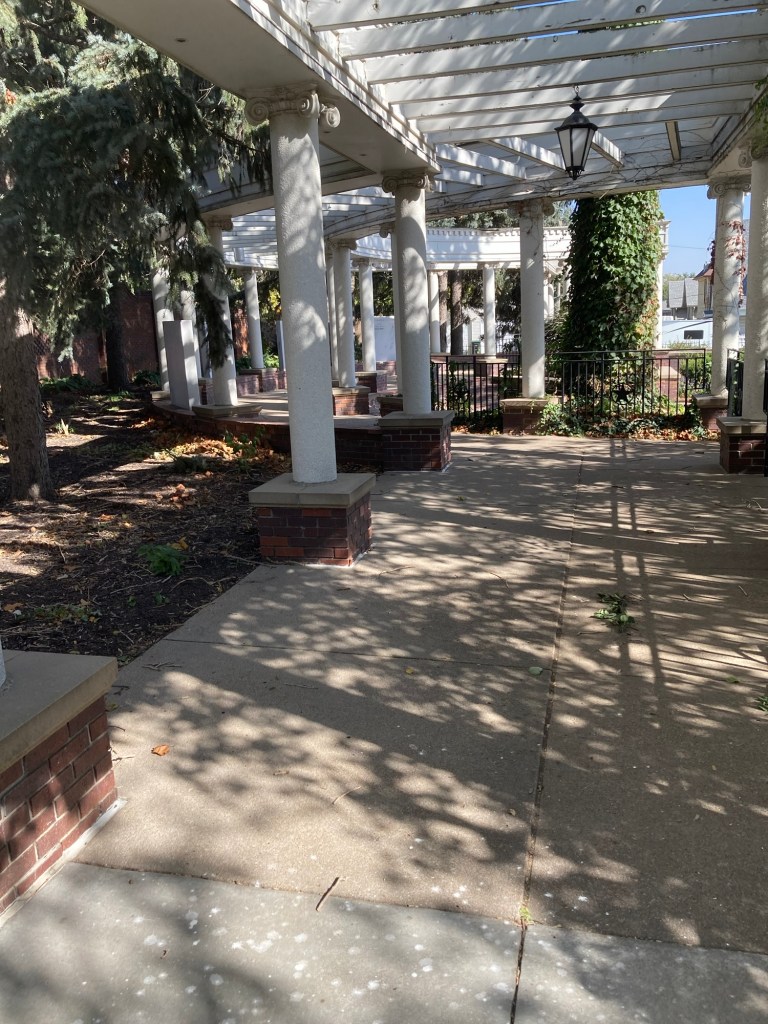
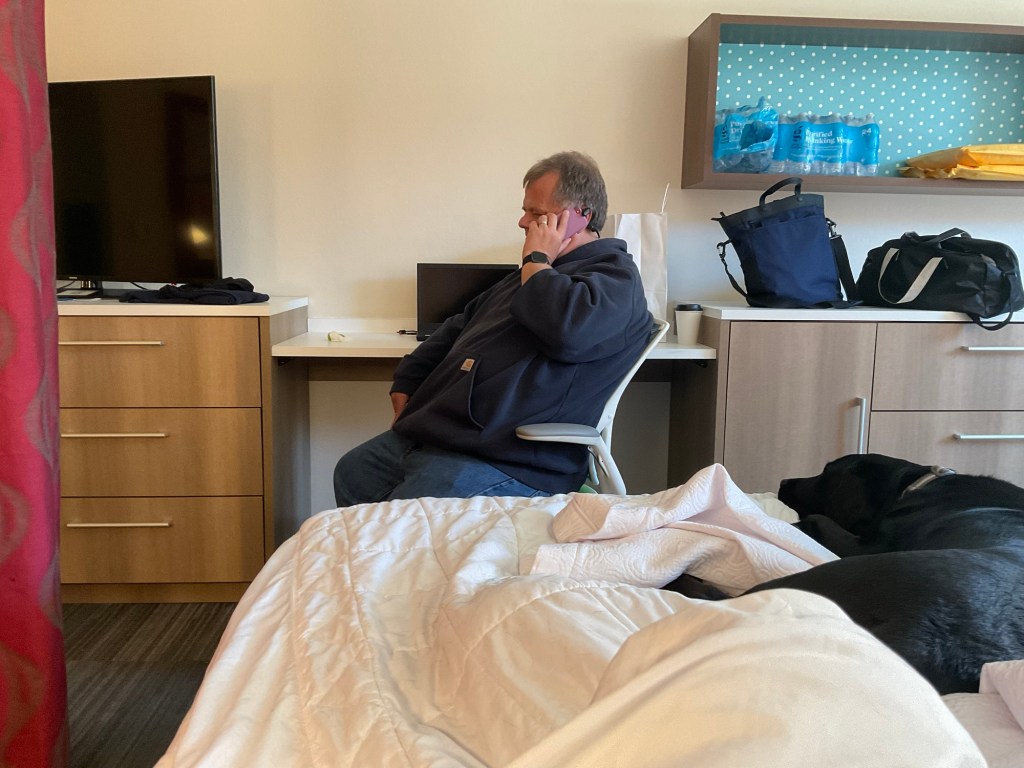
Sully did enjoy walking with Nik, just not guiding. And Nik loved Sully as we all did and was in denial. It came to a head one day when we had all gone to a Dairy Queen. Nik had to leave early to catch a bus for work and the kids and I were finishing eating. Ten or 15 minutes after Nik left, I started noticing a bunch of people looking out a window and exclaiming things like “what is he doing? Is he blind? Is that a guide dog?” I love it when non-disabled people spend more time gawking than just asking someone if they need help. I quickly gathered up the kids and went outside. Sully and Nik were wandering aimlessly in the parking lot, completely disoriented. Parking lots are hard for blind people, and it was way too big of a job for a dog like Sully. Nik was pissed because he missed his bus, Sully was just sad and confused beyond any kind of usefulness. I put my foot down. I said, “you have to retire this dog. He can’t guide and you cannot get mad at him for not doing something he has demonstrated for years that he cannot do. If you are going to take him places, you must not use him as a guide, you must always have your cane.”

Nik let Sully come with him when Sully wanted to, but shortly after that, Sully started refusing to work sometimes. We would go to my kids’ father’s apartment every night to help him out on alternating days. Nik would call Sully and Sully would pretend to be sleeping and not move, even though his eyes were moving around and his ears perked up. It was hilarious. But he mostly still liked to go to work with Nik during the day. He would go in harness, but he really had very little guide “duties” that he was held to. He retired like this around 7, after about 5 years of trying to work with him and getting trainers out to work with him. He spent the rest of his life just hanging with the fam and going on low-stress walks. He died last year at the age of 13. I still miss him. He was such a sweet dog. But sometimes I think he missed his true calling in life. He should have been a PTSD dog for a veteran or something.

I agree with Doug. What I have observed with the issue of “soft dogs” is that they do not seem as smart as the hardier dogs like Mara and Jats. I don’t pretend to be any type of expert on breeding, so I honestly don’t know if this is a breeding issue or a training issue. But this is what I observe:

  1. Soft dogs don’t seem to roll with mistakes as well as the tougher dogs. This is very important, and I think there is an aspect of this that trainers don’t have enough experience to understand. When you are blind, you WILL make mistakes with your dog, especially in the beginning when you don’t know them so well. It is sometimes hard to tell whether your dog is screwing around or when they are trying to tell you that there is an obstacle in the way. As a blind person, you at times WILL scold your dog when they are being entirely correct in their behavior, and you will praise your dog when they are screwing around. Hopefully it doesn’t happen too often, but it will happen, especially in the beginning. If a dog can’t roll with that and bounce right back to doing what they were doing before, they lose their training and their will to work. A blind person needs a dog who doesn’t take things too personally, will bounce back quickly after a bit of confusion, and who blows you off when you make mistakes. Basically, a confidence in themselves and what they are doing that goes beyond “perform a trick, get a reward/avoid punishment.” The older dogs had this, the newer ones are less likely to. I recently had a conversation with a guide dog trainer about this and she was defending the newer dogs and saying the old dogs were kind of bullies. Well, maybe, but you NEED a confident dog that knows when to say “screw you, I’m right and you’re wrong.” The new dogs are too sensitive and try too hard to please you to do this. Sully was crushed–CRUSHED–any time he didn’t do the thing Nik wanted him to do, even if Nik was wrong. He got confused. He had trouble bouncing back. He did not have the confidence to think on his own. He washed out early largely because of this.
  2. Related to this, newer dogs don’t really do intelligent disobedience like the older dogs did. This is when a dog will refuse a command because it is not safe. Doug used to tell us to tell the dogs to go forward at a street corner when traffic was rushing right in front of us, but they wouldn’t budge. Now, the dogs can’t do this. (I’ll talk more about this when I talk about Mia and Cobey.) They have lost that for the most part. This was a most important skill. Sully literally walked INTO traffic with cars coming at him because he thought this is what Nik wanted him to do. He feared displeasing Nik more than he feared being crushed by a car. He was so overtrained that he lost even basic self preservation. I would take a bully dog over that.
  3. The newer dogs lost the overall context of the job. They are so into pleasing their handlers that they look at each task as an individual trick rather than using strategy and context to understand the over all job. YES, dogs CAN generalize, understand context and strategize. I’ve seen it again and again. All dogs are different and this will be true to varying degrees, but it does seem like the newer dogs don’t do this as well. They get overly distracted by food rewards to the point where they lose the overall gist of their skills in different situations.

I’m not saying that we should go back to severe leash corrections, but I do think there is a compromise, and I think I found it in Marra.

Marra’s Training:

It’s sort of a no-no to pretend that any trainer is better than any other trainer and to ask for a particular trainer, so it has to be done a bit on the down low. A little nameless birdie may have told me when Mike would be up for class and that he was the best trainer. So I asked for him and was lucky enough to get him. I was a bit worried to go back to GDF after Sully. It was now 2014, and two years earlier, the entire GDB training staff–the largest in the country–had been laid off due to cost cutting measures. These folks scattered across the county among the guide dog schools, and several had landed at GDF, including the new training director. I saw from other people’s experiences with guide dogs that GDBs methods were getting spread out everywhere. The right hand leash issue, the squirrelly, young dog issue, the low expectations, the route trained dogs that were dependent on routine memorized routes rather than thinking. This was another issue with Sully. He was very, very routine dependent. He did ok for 5 years mostly because he memorized routes. But he also did not want to deviate from those routes. He would get very stressed to go off a route that he was familiar with and it was a problem. It looked like it didn’t matter where you went, that GDB low-end assembly line philosophy was spreading everywhere.

Mike and Marra and I working in the practice blocks on campus. Mike was tickled that Marra guided me around rain puddles. She understood her job!

I had met Mike briefly in 1993, when other trainers would wander through the dorms occasionally. So the main thing I knew about him was that he had been there for at least 21 years and was not a GDB import. I had an extensive interview with Mike in about June of 2014. We probably talked for about an hour, and it was the most extensive interview I had ever had. Because of my past experiences with Mara, Barley and Sully, I felt like I really had a good grip on what I wanted and didn’t want. I wanted a dog who was well behaved in public like Sully and Mara. I wanted a dog that was not routine dependent like Sully and to an extent, Barley. I wanted a dog who could target things and could be taught to target things easily like Mara and Jats. It was a nice conversation that I thought was incredibly thorough and I felt like I had been heard.

In training, Dan and Nik had had some kind of good natured conflict about Nik going off to a deli on his day off. It was still like that in guide dog school, you couldn’t set foot outside the dorms on your own. Nik eventually went to the deli with Dan following behind, but Dan was probably supposed to have the day off that day or something. I can’t remember the whole deal. So when I got there, I was asked if I was going to go rogue like Nik had. (Had my “mad escape” from GDB– where I ran 50 feet as fast as only a pregnant blind person can–preceded me? Were we now the couple that couldn’t stay put?) I decided to be straight up about it. “You guys know guide dog school is like a benevolent prison, right?” I said. “I admit, I struggle with this. I am never going to trust you completely with myself. I will always have an ID, a credit card and the number of a cab company ready to head. I will always be searching for the escape route and planning my route back to where I can control things. I will always feel smothered, surveiled and like you all need to just get away from me. But in general, my plan is to be compliant and do the training.”

And that is how I got the “little freedoms” I got from Mike. Meaningless little things like that I could go out on my own at night around the several acre campus and practice with my dog on the practice blocks or walk in the now defunct garden that I was barred from 21 years prior. Or that I would be allowed to go explore a mall or walk to a coffee shop when my training partner was on his walks with Mike. It was a bit of freedom theater, but it helped.

Marra was a delight. She was happy to meet me and was engaging and had very little issues in the dorm room. She was relaxed and friendly. I did the same walk with her on leash to a dining room chair that I had done before with Mara. This time, it was still a bit nerve wracking, but I knew it would get better quickly. (The name was total coincidence, by the way. I about fell off my chair when I heard it. In fact, when they told me her name the first time, they said it like Mara. Mara was pronounced like Maura Tierney. Marra was pronounced like Sarah.) The next walk was on a park path with no curbs or obstacles. But Marra stopped at each path and looked up at me, showing me where it was and asking me if we wanted to turn there. I did choose to turn on a few and not turn onto others. “Oh, my goodness!” I exclaimed. “She is showing me the paths and asking if I want to go on any of them. This is almost as good as having a cane!”

“Well, you asked for that, right?” Mike said. Then he explained to me how after our interview, he trained Marra to my requests. I talked a lot with Mike about the training process itself and how he was trying to change with the times but keep the standards high. He talked about how he always had to be a bit more creative than some of the other trainers who were larger in stature and did a lot of strong leash corrections. As a smaller guy, he always had to get the dogs to respond to praise more than they did. When food rewards became a thing, he tried to use them where it made sense but not depend on them entirely. He knew that I did not want food rewards for Marra, so he trained her both with them in the early stages, but then without them after she learned a skill. He asked me to compromise, and use food rewards for a few days, to get her more focused on me than on him. I did that, and then by the end of the first week, we had completely left food rewards behind. When I got home, I used them at first to teach her a few new things, and every once in a while brought them out just for fun, but generally we used them very seldomly. Marra came ready to go with many target words already known. She could target elevators, trash cans, chairs, doors, etc. We even worked with the trainers at their sister program, called America’s Vet Dogs, to do some signaling for when there was a knock at the door.

I would take Marra down to a corridor in the basement and we would work on obedience lessons and then just run around the hallways and play. Here Marra is waiting for me to let her out of her “stay” position down at the end of a hallway. I needed to have time where I was not surveilled.

There were about ten people in the class, but there were 5 trainers. Each trainer had two students and mostly did their own thing with the two students, although some days we would all go to the same place together. I was with a student from Brazil who did not travel independently at all. He could not do street crossings independently. He was a professional in law, I was told, and he had drivers and assistants to do everything for him. I asked Mike how he could qualify for a dog. Mike shrugged. He said they try to select people who will benefit from having the dogs, but sometimes the benefits may be more social than navigational. For my Brazilian partner, it was likely more of a social bridge to acceptance for him. Hmmm, okay. I know that there are serious cultural barriers in some other countries for blind people and maybe that is worth it. But it also seemed like a waste of a trained dog. A person like that might do better with a dog with good obedience skills and decorum, but no guiding skills. (a dog like Sully?) It made me wonder if they trained dogs at different levels specifically for how people will use them. At what point is a dog still a guide dog?

The way they seemed to train dogs at that time was kind of interesting. They seemed to adopt some of the short kennel time of GDB, but still keep training standards high (at least for Marra. I did not see a lot of the other dogs this trip because of the 1:2 ratio thing.) Although I am sure the dogs are well cared for, being in a kennel for months on end is not good for the dogs. It stresses them out. It can be boring, it separates them from people and home life. It IS a prison. Mike indicated that GDF was trying to give the dogs as few transitions as possible and keep them in the kennels as little as possible. Marra went from her dog mother to her puppy raisers, to Mike and the kennels and to me. Her kennel time was low, only about 12-14 weeks. Mike had her the whole time, with his string of about 4 dogs, he was then in 2 classes for the month training with his 4 dogs to their blind handlers, and then he started the process over again. And a very well trained dog came out of that 12-14 weeks, with one trainer doing 4 dogs at a time. Maybe best of all, you trained with the trainer who had been with your dog for the last 12 weeks and knew exactly what they knew. And they could overlap and ease the dog into the new relationship.

The Facilities

This was the same campus I went to in 1993, but the entire dorm building had been remodeled. We all had single rooms now. It was a bit less like a house and more institutional, but overall it was fine. Basic, but fine. We still utilized the practice blocks they had on campus, and took the bus or vans to other locations. We worked in Smithtown, and Huntington mostly, but also went to Queens to do subways and the like. They still had no other “waiting” places, so we stayed in the vans a lot when it wasn’t our turn. With one trainer and two students with close by places to train, we took about 4 walks a day with the dogs. The waiting time was usually never longer than 20 or so minutes.

Level of Custodialism:

It was a little better than in had been in 1993. No longer were we barred from rooms of other classmates and no more separation of genders by wing. I, of course, had a bit more freedom than my classmates, basically because I asked for it and they let me. But you were still stuck there and there was a night babysitter of course, but she pretty much let you be. My training partner highly valued access to alcohol, so it was procured for him but weirdly, they made him drink outside of his room. So sometimes I would see him in the little snack lounge drinking beer and listening to Portuguese music.

Although Mike didn’t really do this, there was still a habit for staff to say that anything you did independently was because you had vision. I highly doubt I had the best vision of the group. In fact, I know I did not. But it was constantly said that I got to do some of the things I got to do, (like work my dog at night on campus without supervision) because I could see. This was funny to me because I am really night blind, and I actually asked to work at night because I knew I would have more of a challenge working at night than during the day. In any case, there were people who could see better than me who did not get these “little freedoms.” But it is probably because they didn’t ask.

I did have to try to back Mike off on standing right there and telling me every little thing. I don’t mind this on the first day or two when you are just getting used to the dog, but by the third day, you really need to work on trusting the dog and trying to see what it feels like when they are telling you things. So, for example, Mike would say “There is a set of four stairs coming up in about 15 feet.” Well, thanks for telling me, now it doesn’t matter what my dog does because I already know what is coming. When I asked him to back off, he did a bit, but seemed surprised I didn’t want all of this visual information. But Mike! I won’t have you with me when I go home! How will I know how it feels when this dog is telling me we’ve hit stairs if I anticipate them now? Again, this comes back to the traditional vs. structured discovery style of O&M. Guide dog trainers are largely not trained in O&M, at most they’ve been to a few CEU classes–likely taught by sighted traditional O&M instructors. They do spent some amount of time with each dog under blindfold, but are never left alone without another sighted trainer with them telling them everything that is ahead of them. They don’t really have a good idea how a lot of us travel.

One thing that was a definite improvement was that upon graduation, I was able to take ownership of my dog. This has been a hard fought for right of blind guide dog owners. I first was able to own my dog when Mara was about 8 years old. They had changed their policies and sent me an email that gave me the option to sign ownership papers. I was at work and I cried. I sent back the email indicating I wanted to sign the papers and got down on the floor with Mara and hugged her. She was really finally mine! Some schools act like it shouldn’t matter, but I’m sorry. It does. Again,why do they vet us so heavily but yet not trust us to own the dogs after we graduate? Do they not trust their own program? With Marra, I was given ownership papers upon graduation, which is how it should be.

She’s MINE! Marra was the first dog I got to “own” upon graduation. Yes, it matters.

There was one thing that really bugged me, though. One of my classmates was a staff member there. She worked in client support services (which is where every single blind staff member who works at guide dog schools is placed.) I thought she was treated horribly. On the one hand, I get that this is her own time and they wanted her to have time to concentrate on her own dog training and be off the clock–which is totally fair. But you would get into a discussion about guide dogs with her and from across the room, a staff member would cut her off and say in a condescending tone “Now, Jane (not her real name), you know you are not allowed to discuss guide dogs with the clients.” She who was on her third or fourth dog couldn’t even tell a story about a past guide dog. And you would ask her a simple question having to do about say, purchasing a new leash (like would I come to you or have to contact the training staff) and they would rush in and be all, “are you asking Jane questions??? She can’t answer any questions!” But the worst thing was that she said she wanted to be promoted but she had a–shall we say–a sighted glass ceiling she could not break through. The next promotion up required that the staff member stay over night with the students occasionally. And they would not let a blind person do that, and she could not get past that requirement. I understand the babysitter thing to an extent. I get why you don’t just let 10 random people have the run of your entire campus alone overnight. But really? a blind person couldn’t babysit us? To GDB’s credit, they had blind people in these roles. It really hit home that these people really do think of us as second class citizens.

Graduation:

Again, graduation at GDF was a reception with only puppy raisers, sponsors and handlers invited. They did have a filmstrip of us that they had taken throughout the training there, and they showed it to us twice. Once before the guest arrived so that they could describe it to us, and then once when the guest arrived we sat through it in silence. I thought it would have been better to describe it to us with the guest there, because it would be good modeling of accessibility and it might have been more interesting for everyone to have some back story. My puppy raisers were a lovely family with children, and they did get to visit with Marra this time. I think it is important to see how much your dog is happy to see the puppy raisers. It shows her past, and that she had a life before you, and that there is some hurt and loss involved during these transitions. That is important to keep in mind and that gets put in your face when you see how excited the dog is to see the raisers and how sad she is when they leave. The family was very respectful about it and I enjoyed meeting them. Overall, the graduation was casual and not very much inspiration porn at all.

Bringing Marra Home:

The main transitional problem Marra had for a couple of weeks when I first brought her home was that she chewed through about 4 leather leashes. And to be fair, I should have mentioned this in my first chapter on our airport trip. She did chew through her leash in the airplane on her way home. So it wasn’t completely uneventful. But think of it this way, I guided her from the airport to the hotel without a leash. She chewed it in half down too short to be useful. I only had the harness to hold on to, so I could not drop the harness handle, do any leash corrections, give her a little nudge, anything. And we still did ok making it to Nik’s hotel, including meeting Sully! This was a good guide dog! She chewed her leash and a couple of shoes in the first few weeks, but that was it. We really had no other problems.

One of my favorite pictures of Sully and Marra, here with two of my children. They always got along.

But she was an energetic, young dog. She would get too excited and pull too hard sometimes. I specifically remember having her down in Pioneer Square in Portland during a Christmas event. So this was in the first couple of months that I had her. There was a lot of excitement and she was sniffing around with her head down and getting on my nerves and so I finally gave her a fairly hard leash correction. And she dropped like a sack of potatoes. Oh! MY! These dogs are soft! I felt bad and I vowed to never do that hard of a correction again, (and I don’t think I really have.) But here is the kicker. Unlike Sully, who would have been useless and sulked for hours, after I squatted down and gave her a few pets, Marra bounced right back to it and was fine. All was forgiven and we moved on in life. I realized both that I did not really have to do very serious leash corrections with her (a small little tug to pay attention was all that was needed when she got distracted.) I also realized that this dog has some wherewithal to get on with it and bounce back. She has confidence.

Mike told me that what we are asking guide dogs to do is easy. The hardest part is to keep them interested and motivated to do it. He had high expectations for the dog and at least understood that blind people are all different and come with a variety of skill sets.

Marra was still not as savvy as Mara. We’ve gotten into a few jams that she just couldn’t figure her way out of in the way that Mara would have. But overall, she has been an excellent guide who came very well trained both as a guide and with good decorum. She came to me healthy mentally and physically and was very “finished off” as far as being ready to hit the ground running as a guide and work right into my life with very little work that I had to do at home. She eventually developed hip issues and leg tremors, but I had many good years with her before she retired.

NIk and I with Sully and Marra walking in Skokie, Illinois. Sully scraped by his last few years of guiding by following Marra a lot. She was fine with that, she preferred to be in front and call the shots. (Oh, and I had a broken foot, that is why I have two different shoes on!)

Marra’s timeline:

Born: April 3, 2013
Puppy raisers: June 2013 to June 2014 (13 months)
In for training: July 2014 to mid October 2014 (14 weeks in kennels)
In class: October 15, 2014 to October 31, 2014 (16 days,age 1 year, 7 months)
Working Guide: November 2014 to October 2023 (9 years)
Retired: October 2023, still living with us as of this writing.
Died: November 30, 2023 (10 years, 8 months). Marra suddenly and unexpectedly died just days after this post was written. She died of hemangiosarcoma, a spleen tumor that is hard to diagnose.

Final Impressions:

It’s probably not entirely fair to compare Dan vs. Mike in the context of Sully vs. Marra and how successful they were. The data pool is way too small. And again, I liked Dan, he was a nice person who did seem to take a lot of pride in his job. But he was in my class, too, in 2014 and I watched him with the other students. He was not as experienced as Mike and did not at that time have a real knowledge of how blind people traveled or worked dogs. In every profession, there are younger, less experienced people who need time to learn and grow with the job and should be fostered to do so. What I noticed at this round of GDF, though, was that Mike was holding up an old standard and it was not being held up throughout the rest of the staff. In this way, how can one blame the Dans when they aren’t being given a lot of guidance in how things could be done better? When I was there, another older trainer named Barbara was there. She was soon to retire and she came to visit me a couple of times. She wanted me to meet with John. Remember John from 1993 who called Nik “fat boy?” I was not a fan of John’s back then. But Barbara was very excited and insistent for me to meet with John as he had retired due to Alzheimer’s. He was still on staff as “Head Trainer Emeritus” but I don’t think he had any duties. I agreed to meet John and I brought a picture of our class (as seen in the last chapter of this series.) I don’t know if he remembered me but he seemed to remember Nik. I only visited with him and Barbara for a few minutes, but there was a very wistful, “it ain’t like it used to be” vibe. I hugged him and he said, “back then, we trained good guide dogs. You were trained well, too. You know how to do it and you need to keep it up.” The idea that he seemed to be trying to get across was that he taught us the right way, so no matter what was going on now with the newer guide dogs, I had been trained well and knew how to keep that information alive and pass it on, as well as make sure my own dogs still lived up to it. I felt like I had won the jackpot with Marra as one of the last old school guide dog with one of the last old school trainers. We are still very fond of Doug, who is a very nice man who has been very helpful to us over the years. But Mike is hands-down the best guide dog trainer I have ever worked with.

In our house now we have three dogs. I will talk about our new dogs, Mia and Cobey in the next chapter. But Marra remains the Head Guide Dog Emeritus.

What’s the Matter with Guide Dogs? (Chapter 2: Mara and Jats, The Gold Standard)


See also:
What’s the Matter with Guide Dogs? (Chapter 1: What Happened at the Airport?)

To understand why I am concerned about what is happening with guide dogs now, you have to have some understanding of what my experiences have been in the past. I have now been to guide dog training 4 different times and 3 different schools. I’m going to review these experiences one by one to enable a little compare and contrast each school, but also to look at changing trends over time.

My ID card from GDF for Mara, my first guide dog. From 1993, this is just a laminated card with a law statement on it with a glued in photo of Mara and I.

My first experience with the guide dog life as a blind person was 30 years ago, when I got my first guide, Mara, from Guide Dog Foundation for the Blind (GDF) in 1993. This is also where I met my husband, and where he got his first guide, Jats. Thirty years ago is a long time to remember things, but since this was our first guides and the experience was such a huge one in our lives, I actually remember quite a lot of it. I have also looked up some information using old records, pictures and journals.

Why I picked GDF:

I actually sort of approached this like I was choosing a college. I wrote to every school and got information. I threw out the ones that were too patronizing and custodial at the get go. For example, Guide Dogs for the Blind said that I needed to find a volunteer (perhaps a Boy Scout) to walk with me up to a mile a day for the three months preceding my class to get me in shape. I already walked probably 3-5 miles a day just walking to my college classes on UNL east campus from my apartment on 51st and Vine Street in Lincoln, Nebraska. I then called each school and interviewed them. I also called and interviewed people who had dogs from the schools and listened to other word of mouth. One couple said good things about their school but everyone else said their house was full of dog piss and shit stains. So that was out. No one said anything bad about GDF. I ended up applying to two schools, Guiding Eyes for the Blind (GEB) and GDF. Guiding Eyes sent a rep out to visit me, which I found annoying but I complied. I remember him saying my apartment was so clean, and I was like…where must you go to think this is that clean? GDF sent out no one, and that made me happy. I had a telephone interview.

The Training:

Back then, the training lasted 26 or so, days. We didn’t even get our dogs until the third day. What I remember most about the training was how thorough and tedious it was. Every single thing you did had a procedure to it. The first thing I had to do after meeting my dog was to walk down a hallway and sit in a chair. It took FOREVER! And I wondered if I would ever get up from that chair. But my dog was nice and clean and beautiful, happy and friendly. I fell in love with her right away.

There was a lot of downtime at this school. There were ten students in the class and two instructors. John was the director of training and was obviously the boss. Doug was new, just off of his apprenticeship and this was his first class. The class was divided in half, so a 5:1 ratio. Nik and I were assigned to Doug. The first few days we stayed at the campus and trained on their training blocks. Then we would pile into two vans (a John van and a Doug van) and go off to different places every day. The tasks spiraled out from simple to more and more complex. The commands used and the procedures were consistent among all of us and were explained in detail. There was a way to open a door, get in a car, ride an escalator, take your dog out to the bathroom, use the leash, etc.

These dogs used no food rewards. In fact, except for their meals, any food was strictly prohibited. All work was done with commands and tone of voice. There were some hand gestures, too. And leash corrections. Lots of leash corrections. A leash correction uses a choke chain and you do a sharp, quick jerk on the leash that snaps the collar around the neck of the dog. The dogs were 70-80 pound labradors and had super strong neck muscles. I was constantly being told my leash corrections were too wimpy. Doug, who was probably 6 foot something, would hold his hand over mine and yank HARD, snapping the leash quickly and tightly. Mara would immediately respond to his corrections, and only sometimes respond to mine. Not every misbehavior needed a severe leash correction like that. You could do just a little tug to get the dog’s attention, or even just a small shake of the harness handle would do it. But if your dog was off the rails, you would-in one movement-drop the harness handle and yank quickly and strongly back with your wrist on the leash. This dropped handle and snap would definitely get the dog’s attention.

Everything was done with the left hand. The leash went around your left wrist and you held the harness with your left hand. Your right hand was always free. If you dropped the harness, even accidentally, you would still have the dog’s leash around your wrist. Leash corrections were taught as a last resort. The first resort was the tone of your voice and lots and lots of praise and pets. Then you might move to a stern voice and a little leash tug, then you would go all out leash correction. The dogs were big and strong.

The dogs were also taught to guide without harness. The first few days, we went around in the building with our dogs guiding us on leash only. The commands used were consistent whether your dog was in harness or not. Leash guiding was not something you would do for long periods or all the time, it was more of an indoor thing or a “just to the mailbox” thing. So the dogs had some context for when they were off leash and not working vs. guiding on leash. You held the leash close to the dog’s neck when guiding on leash. Nik loved this, I never gave it much thought until this year.

But they were wicked smart, too, and they liked to guide. They did intelligent disobedience very well. This is when the dog overrides a command of a blind person because the command could put you in harms way. They were not all that sensitive in that if you scolded them, they recovered quickly and moved on. They all could find things–or “target”–already when we got them, and this seemed like magic. They were great and helping you find the door outside, because they always were glad to go outside. I thought this would be great if I was ever in a fire. They found curbs, of course. But also chairs, doors, elevators, stairs and “left/right” which is when they find a path you are looking for on the left or right. We moved from walking on little park paths to going to subways and walking on sidewalks in Queens.

The expectations for the decorum and manners of these dogs was super high. My dog barked one time, when a random person on a tour came into my room suddenly. I had trainers come running in concern and asking why she barked and what was the matter because it was so rare. I was scared she would get into trouble, but because the circumstances were so weird (a total stranger busting into my room) they let it go. But these dogs never barked. They never fought with each other. They laid almost perfectly still under you at meals and at our class meetings, never bothering any of the other dogs. They would get on the bus and go right under the seat without you even doing a thing. They were not perfect and made mistakes, but in general, this is how they came to you at training.

This is our class picture.I am at the far right and Nik is 6th from left. John and Doug and hiding behind us and the house behind us is the dorm we stayed at. Right in front of the driveway in the foreground was a strip of grass and a fence where I would do my zoo animal style pacing.

The Facilities:

I have laughed at people who only go to the schools with the nicest resort-like facilities rather than worrying about the quality of the dogs, but I have seen how facilities can play a part, so I will talk briefly about them. The GDF dorm facility at that time was like living in a large house. There was a living room when you walked in the front door, there was a dining and kitchen there, a basement with sort of a rec room in it and a TV, and two wings with 3 bedrooms each. They were divided into a mens and woman’s wing, and we each had a roommate. Each bedroom had a bathroom and a door to the outside where you took your dog out. The grounds had a couple of practice city blocks, a small dog run, and a garden. There was also a kennel and an administration building. The facilities were perfectly acceptable but not fancy. It felt a lot like a house. The two vans were just like Chevy passenger vans and we spent a lot of time in them. There was no other facility that we spent time in. When we were out, we either stayed in the vans or just outside of them in folding lawn chairs, or we had arrangements to stay in nearby buildings, mostly church basements with church volunteers who would bring us snacks.

The Level of Custodialism:

The custodialism back then was rather high. We were not allowed in each other’s rooms or in the case of gender, in each other’s wings. The overnight babysitter was nosy and lurked around, getting on Nik’s and my case for being up later than about 10pm, even if we were just sitting quietly talking in the basement. We were not allowed to use our canes at all, even in the first few days when we didn’t have dogs. Nik was moved the last few days to John’s van because they thought we were too close. (I admit, Nik and I spent a lot of time together probably making googl-y eyes at each other and being annoying, but we showed up for every training thing we were required to, listened and did what we were told, did not have a sexual relationship–cuz no privacy whatsoever!–and did not go into each other’s rooms or interfere with each other’s roommates. We were exceptionally good kids.) When I say there was no privacy, I mean it. Once I jumped out of the van and headed for the shower because I was hot and sweaty and thought we were done till dinner. It turned out there was something we were supposed to do in the living room that I hadn’t heard about. I stepped out of the shower and a male trainer was banging on my bathroom door–I don’t even think our bedroom or bathrooms had locks–and was telling me to get down there already, even if I was naked. John started calling Nik a “fat boy” and upsetting him with little insults about his weight and his accent. A classmate of ours brought his dog back to retire with its puppy raisers, and I have never seen a more brutal scene than them taking the dog from him harshly and unceremoniously from the van when he arrived from the airport, never to be seen again. That was what made me decide that I would NEVER give my dogs back to these people. We were not allowed to go out of the house without permission. and we really never got permission. It was one of my first experiences with feeling really jailed and like the walls were closing in on me. I used to do stuff that probably looked batshit. I would put on headphones, listen to music and ASL sign the lyrics, while pacing back and forth in the front yard area by the fence in a kind of trance, trying not to jump the fence and make a run for it.

On the other side of that, though, was that after the first few days of individual training walks, we started going out as larger and larger groups. So, with that 5:1 ratio, we were able to have some time and space to ourselves to figure out how to trust the dogs and learn their mistakes. The trainers would be “around” but all ten of us were going on routes by ourselves with just each other to check in with and the trainers might come around and ask how things were going every 10 or 15 minutes or so. I walked a lot more by myself this training than I ever would again. I think that was great for really building trust with the dog.

Initial Problems:

Every guide dog comes home with some adjustment issues. There are always a few problems to work out. A couple of things stand out from my experience with Mara. The first was that she threw up all the time the first few weeks. She threw up in Target, in the mall, in the movie theater, in my house, on the street, everywhere. In the first couple of weeks, once a day at least, she would throw up. The vet couldn’t find anything wrong with her. She had not changed foods. It could have been anxiety, the water, an allergy, who knows? After a while, this problem took care of itself and she stopped throwing up.

I also had a bit of an issue with my apartment building. I lived in a big complex where there were several buildings surrounded by idiosyncratic parking lots. There was no way to tell her where to go to get out! They never taught us to walk from your door to the street through a bunch of mishapen parking, cars and buildings. I could do it with a cane, but was trying to follow all of the rules and procedures so had no idea how to do it with a dog. I ended up just teaching her a path with my cane. Which is when I decided that canes and dogs can make great combinations and their whole cane prohibition was bunk.

The other problem she had that we dealt with a lot in the first year were dog distractions. If she would see a dog on the street, she would slide off the cracker. She was actually, at times, hard to control. Again, I had to work hard to do leash corrections that were strong enough for her to care about them. I would say it took us maybe a good year to eliminate most of her issues with dog distractions. She only wanted to play, but it would throw me off course. It was also embarrassing to have to be that violent with her to correct her that strongly. People would think I was a terrible person. But I was doing what I was taught.

Graduation:

GDF did not have an official graduation ceremony. We had a day near the end where we met in a reception-type event at the house with our guide dog raisers and sponsors. It was very casual and light food was served. The dogs did not attend with us, which was a bit weird. I absolutely do not mind meeting with puppy raisers and thanking them, and I understand the need to show sponsors the end product of their contribution as well and show gratitude. Although meeting new people is a bit awkward, I felt like this event was fine. We had an exit interview with the CEO.

I believe this was the picture they sent to the puppy raisers. I’m sitting on a bench with Mara outside.

Guiding with Mara and Jats:

Both Nik and I will say objectively that Mara and Jats were the hands-down best guides. They had wonderful decorum. Despite their couple of weak spots, they hardly ever needed correction. They did not need to be told a lot of information to know what to do, and they were very keen on the context of the situation and generalizing from one situation to another. They learned how to find bus stops and classrooms after only 2 or 3 lessons. They were sharp until the end. They were friendly but not over sensitive. They understood their job and liked to do it. We had so many adventures with them and went to so many places and travels. Yes, they made mistakes, but mostly we were able to travel anywhere we wanted to go with them.

Nik and Jats in the “living room” of the dorms at GDF.

Mara’s timeline:

From the best that I can put together today (it might be a bit off…):

Born: September 15, 1991. From what I recall, puppies stayed with their mothers at the school’s puppy center for about 9-12 weeks.
Puppy raisers: November 1991 to February 1993. Puppy raisers attended obedience camp at the school every Saturday and had assignments throughout the week.
In for training/kennel: February-June 1993. Her trainer was Tim. He had her the whole time until class. She spent about 3.5-4 months in the kennels.
On class: June 1993. She was 1 year 9 months when I got her.
Working Guide: July-1993 to about September 2002. 9 years, 2 months, although modified schedule in 2002. Retired due to hip/orthopedic issues.
Died: June 4th, 2004. 12 years, 9 months. Euthanized due to uncontrollable hip joint pain and lack of joint function.

Overall Impressions:

Although I found out I do not enjoy the constraints of guide dog training, this was the most thorough, complete and organized training I had ever had. There were some annoying aspects of it, like when we would have to sit around FOREVER to “learn” how to assemble and disassemble the harness when I could do it by feel immediately in 2 seconds. some others couldn’t, which is often caused by blind folks never getting opportunities to do anything mechanical with their hands their whole lives. I understand that all people are different, but some things were taught at the lowest common denominator. If you said anything, they would say “oh well, you can see. Other’s can’t.” While I do understand that usable vision does give me some advantages, blindness does not make you a bad mechanical person, lack of opportunity does. Nik, who is totally blind, could also figure out the harness in seconds. So that got old. But overall, the training was concise, consistent across dogs and trainers, the dogs could do a LOT of things and there were very high expectations of the dogs. No one balked at the idea of pulling a stroller or grocery cart behind you. In fact, that is where I learned to do it. No one excused the dog’s bad manners or squirrelly behavior. Expectations were very high for the blind handler and the guide dog to work together at a high level and be very presentable doing it. Even though I have made modifications, mostly in vastly decreasing leash corrections, this training was the basis of all of my guide dog work for the rest of my life.

Why I Homeschool (Part 1): The Rise and Fall and Rise of My Teaching Career

Image shows colorful figures of three children, holding hands. The middle child uses a wheelchair. Inclusion only works when numbers are small enough for people to really know each other and meet each others needs.

Of the 5 children in my blended family, the three I predominantly raised were largely homeschooled. As the two oldest of these are getting ready to head to college in the next year or two, I’ve been reflecting on the whole experience and how it turned out. What worked and what didn’t, and what I can do with it all. My youngest will likely homeschool with me for 1-2 more years, and then I have already decided that I will not homeschool him for high school, but will give him a list of options that he can choose from. One of these will be, and has always been public school.

When people ask me what made me decide to homeschool, it is a complex answer. And it is also a decision that is ongoing. Every year, we asked the kids (and I asked myself) whether we still wanted to homeschool. There is not a simple answer. Homeschooling is a lifestyle choice beyond an educational choice and it is something that has to be an overall good for everyone in the family. I get so many questions about homeschooling that I thought it would be a good time to write a series about my experiences in a homeschool family.

I can say a couple of things right off the bat. I did not homeschool for any sort of religious reason. I am not a quiverful, young earth, dinosaurs roamed alongside Jesus person or anything. I am not afraid of anything my kids would have learned in public school.

I can also say that I am a supporter of public education as a concept. I think all kids have the right to a free public education and I realize that not all parents can or want to homeschool. I don’t hate teachers or administrators. I think most of the time, they are well intentioned and they work hard and care. I think they are also under tremendous pressure and in an almost impossible situation because of lack of support, political forces gone out of hand and outdated methodologies. But I don’t begrudge any teacher or parent who works within the public schools. I just couldn’t do it myself.

If I could pinpoint the moment I decided to homeschool, I have to go back a long ways. It was actually a time when homeschooling wasn’t even on my radar. I wasn’t even a parent. I did not say, “ok, homeschooling it is!” What I did say (inside my head) while sitting in the middle of a school meeting in my capacity as a teacher, was “this whole thing is fucking bullshit.”

I was in grad school training to become a teacher at the time. I was sitting in a tiny student chair, with another student teacher, a classroom teacher, a special ed teacher, and my university faculty advisor around a tiny table in a classroom I had just spent yet another day in the classroom watching everything go wrong. My faculty advisor was scolding the group of us. She said we didn’t have enough energy to do what needed to be done for our students. And she was right. There was not enough energy, time, opportunity, support, tools, resources, or good will among us to our jobs effectively. I was probably 25 years old, and already I saw that none of us had what it took to make students successful in this setting. And all of the sudden, as I sat quietly listening to the only person who had not been there that day tell us how we couldn’t cut it, I had almost a sort of out of body experience. I mean, not literally, just that I suddenly was able to grasp this big picture perspective where I could see the whole education system laid out before me, and I saw that it was wrong. Very wrong. And there was nothing any one of us could do in that room to fix it from where we were. We could not get there from here.

But let’s back up a ways, first. Before I tell you this next little story, please keep in mind that I was ages about 7-10 years old in it. Looking back, it is obvious I come off as an obnoxious little brat. I realize that and realize that most of my assumptions about my two first “students” are not based on anything realistic. Both of these two “students” of mine grew up to become well-educated, well-adjusted, career-having, nice guys.

I saw myself as a teacher since I was 7 years old and started taking care of a baby I will call Jack. He was my babysitter’s nephew, and she was his real caregiver even though I fancied him as my baby. I fed Jack, played with him, diapered him, rocked him to sleep, taught him to walk and talk, and spent hours with him teaching him all kinds of things. Of course he had his mother and father and other family and my babysitter, too. But to me, I was his main influence and I taught him everything. He was a smart, talkative and outgoing kid.

There was another little boy, a cousin of mine, who was nearly the exact same age as Jack. Let’s call this little guy Arnold. I only saw Arnold on occasion and I could tell that he was not developing as quickly as Jack. My 7 year old assumption was that this was because he didn’t have someone like me to teach him everything. I believe Arnold went to a daycare setting, too. When Jack and Arnold were about 2, I noticed that my Jack could walk, talk, jump, sing his alphabet, say his colors and numbers, and all kinds of little things like that. Arnold could walk, but he was very quiet and so if he knew these things, I never saw it. I plotted to help Arnold by showing my aunt the issue and how much Arnold needed my help.

I got my mom to invite both Jack and my aunt and Arnold to a trip to the zoo. And then as Jack ran around talking to everyone and identifying all the animals and Arnold…did not, I campaigned and pressured my aunt to let me be Arnold’s teacher and I could do for him what I did for Jack. She just needed to bring him to my house a few times a week and I would make sure he caught up to Jack. Because look! Look at all the things Jack can do that your Arnold cannot! See the problem? See? See?

I was surely beyond obnoxious. And she did not take me up on my offer to “catch Arnold up to Jack.” But she did take him for an evaluation and he did go to some kind of developmental kindergarten program, so my work there was done. (Clasps hands together, self righteously). I was a teacher! I educated Jack and got Arnold to an education.

(Of course, I am sure there were many things going on here that had nothing to do with me. I probably had little to do with either Jack’s or Arnold’s early childhood education. But that is how I saw it in my mind. I valued education from a young age and I thought I was rather good at providing it.)

So, I played school with the neighbor kids and thought I might be a teacher for a long time. But my own educational experiences were cluing me in to some of the problems in a free, appropriate public education.

When I went to Kindergarten, it was 1975. The year that PL 94-142, the precursor to the Individuals with Disabilities Education Act (IDEA) became law. For the first time, kids with disabilities had a right to go to school and receive a free, appropriate public education (or FAPE as it came to be known). By the time I was in 3rd grade, I had an IEP, large print books, a teacher for the visually impaired that came to see me twice a week, and my own table in the back of the classroom where I had magnifiers and ditto filters and bookshelves for my huge books. My teacher for the blind would make me do eye exercises and trace mazes and track white marbles on black paper and black marbles on white paper and other such mundane and pointless tasks.

It all seemed like it had nothing to do with me. At the time, and as the years went on, it seemed like these expert educators thought I could do things I struggled with and couldn’t do things that were easy for me. No one really ever asked me what I needed in the first place.

In 6th grade, I moved to a new district and my very thick, weird glasses that were mostly ignored in my old district were suddenly a big deal. I was relentlessly bullied. Ironically, at this school…I also had no IEP, no large print books, no table in the back, no marble exercises. But I was put into the dreaded “Friendship Group.”

The first time I went to Friendship Group I got how stupid it was. It was run by the guidance counselor and it was me, the fat girl, the girl with spina bifida, the mousy, nonathletic boy, the kid that smelled like pee in old soiled clothes that probably had a nightmare family life. Oh, I see, I thought. It’s all the kids that everyone bullies. And the counselor thinks the answer is that there is something wrong with us, not them. That WE are the problem. We were determined to need “friendship skills.” But, I had never seen anyone in this group be mean to anyone before. Although they were all kind of quiet and unassuming in that way that the kid that nobody likes has to be to survive, they were all nice kids. The counselor made us watch filmstrips about “warm fuzzies” and “cold pricklies” and got some popular kid–one of our tormentors as a matter of fact–to be our “peer model.” She relished the role. She was supposed to give us points to win prizes if she saw us giving other kids “warm fuzzies” and take points away if she saw us giving people “cold pricklies.” Instead, she just used her power as a reign of terror to humiliate us and our rates of bullying only increased.

Even then, at age 12, I thought the guidance counselor was about as stupid as a box of rocks and I could do better if I were her. For one thing, I would get the bullies into friendship group-as punishment! And I would do things to elevate the status of the different kids and give them opportunities to shine. I would quite glorifying the mean kids and giving all the opportunities to them. I would listen to the kids to see who needed help from bullying and who needed to be stopped from being a bully. I started to see how I could be a better teacher than a lot of my own teachers.

I thought of being a teacher, but I also thought of being a lawyer, or a journalist, or an occupational therapist or nurse. By the time I got to high school, I could hold my own as far as bullies go, but I still struggled academically in math and science. This was almost 100% because I had difficulty seeing and hearing the teacher and the lessons. But I got a reputation, like so many other special ed kids, as someone with “lots of ability who just doesn’t apply myself.” Either that or that I “just did not have a mind for science and math.”

So, when looking at college majors, my mom would literally look at the math and science requirements in the catalogs and see which required the least amount of math and science. The requirements that were always the easiest were teaching majors. So, she told me to major in education and become a teacher. Thinking I was too dumb for other majors, I agreed. (I have since discovered, when science and math are presented accessibly to me, I understand it just fine.)

At the University of Nebraska, I double majored in elementary and special education. Elementary ed classes were a joke. There wasn’t much to them. There was some mildly useful classes in educational and developmental psychology, but the methods classes were practically like going back to 3rd grade again. We would each just teach each other a 3rd grade level lesson. And then we were supposed to save these lesson plans “for our files.” The idea being, we would build files of content to have on hand for when we had our own classroom. But when we would go in to the schools for student teaching, I could see that the files we worked for years to develop were going to be nearly useless. The curriculum was all strict and planned out for us. There were these overwrought teachers manuals provided by McGraw Hill or Pearsons that were scripted with everything you were supposed to do. The harder thing about teaching was classroom management and all the procedural stuff you had to do. I could see that school was more about babysitting that really teaching like I used to teach baby Jack, where I would get down on the floor with him and find ways to teach him new things as we played.

Special ed made a bit more sense to me, and the classes were harder and more interesting. There I learned statistics and standardized tests and ceilings and basals and some sign language and some augmentative communication and things like that. It seemed more relevant and I met more interesting people. I also noticed that no one wanted to hire a visually impaired person to teach in typical classrooms, but I had developed a business of babysitting for kids with multiple disabilities and I found these kids had lots of personality and were very enjoyable. I was always amused at the school districts who did not want to hire me for typical ed, but who were just fine for me to teach their toughest, most challenging kids that no one else wanted to teach. So when I got an opportunity to go to get a graduate degree in education of students with “severe and profound disabilities and deafblindness”with a good financial aid package and a work study built in, I jumped at the chance.

The University of Kansas had one of the top special ed programs in the country. My professors were good hearted and supportive and progressive. They promoted the concept of “full inclusion” where all kids should be mainstreamed in the classroom pretty much full time. Even our kids with “severe and profound” disabilities. This was ahead of its time, as our kids had traditionally been put in special schools and self-contained classrooms. So, a student who used a wheelchair and had cognitive disabilities would go to math class and might work on, say passing out test papers or sorting and counting while the rest of the class worked on long division. The kid would be integrated throughout the day, not segregated away, unseen by the masses. It was supposed to be good for everyone. And for some kids in some situations, it was.

A great thing about the program was that we were in the schools every semester for several hours a week. But that also lead to a great disconnect. What we talked about in class; all these wonderful ways we could include kids with pretty significant and complex disabilities into the typical classroom was nearly impossible to implement in the real classroom. For one thing, you had to have everyone on board. The classroom teacher, the parents, the one-on-one paraprofessional, the students, the special ed staff, the administrators, even the janitors and admin staff had to buy in to this. As a part-time student teacher, we had almost no clout. People would literally laugh us out of the room at how our plans did not fit their reality. Yes, much of this was just pure ablism. They had very low expectations for the students and didn’t see the point. And it was our job to change their hearts and minds about this. But almost none of our carefully thought out and task analyzed plans got implemented when we weren’t there, and not too much of it got implemented when we were there. But still, as student teachers, we were expected to carry them out and enlighten all of the stakeholders to our vision of beautiful and meaningful full inclusion.

As a visibly disabled person at this point, I had years of experience with trying to change hearts and minds and combat ablism and low expectations. I knew it took something more like decades or generations, not semesters to get some people on board. And as a person who had spent many a chemistry or algebra class sitting completely unengaged, doing nothing, staring into space because I could neither see nor hear the classroom goings on, I knew how demoralizing and boring it must be for these kids to be in this environment when absolutely nothing about it was made for them. They did not have generations, decades, or even semesters. They needed more intense education, not less. Sitting around, waiting for someone to find little places to include them in little tasks, was largely a waste of their time.

As for the teachers, most especially the classroom teacher but also the actual special ed teacher, I saw how impossible their task was. The teacher had too many kids and too many things to get done to have to wait the extra time it took for a student with CP to pass out pencils. It’s not that they didn’t care, they just couldn’t have time to care. Special ed teachers saw them for minutes a week as they dashed all over the district to see students and spent hours and hours in meetings and doing mandated IEP paperwork. The front line person was always the paraeducator, a person who had almost no training and who got paid just above minimum wage. It was often a transitional job and people didn’t stay long. Especially the good ones that really cared. They went back to school or got moved out or went to a higher paying job. Many of them just tried to get through the day with as little conflict with the teachers or students as possible. They helped our kids get where they needed to be, they helped with their bathroom needs, feeding and needed medical procedures, behavior issues and disruptions, and lifting them in and out of wheelchairs, and other basic care. It could be a physically labor intensive job that tired people out. Educational goals often went by the wayside.

The day I sat on the little chair having my lightbulb moment, several things happened that made me uncomfortable. My job was to implement a calendar box system with a totally deafblind child that I will call Alfonso. This is where objects are used and exchanged to help develop language and routines. For example, before lunch, I might hand the student a spoon to symbolize that it is lunch time. Or he might hand me a spoon to say he was hungry. Alfonso’s one on one para was one of those who didn’t really believe he could do anything and just wanted to get through the day. Alfonso had almost no formal, symbolic language. He was about 9 and mostly communicated in tantrums and rolling around on the floor. He also wasn’t too happy about changes in his routine that he did not understand, so as a new person coming in, I was a threat and likely to cause a tantrum. His para really just wanted me to stay the hell away so that she could avoid dealing with a tantrum.

I tried to give them space and just talk to the para and make suggestions as to what she could do with him, but she wasn’t really interested in anything I had to say. So, I started getting pulled in to the rest of the classroom. When teachers have too many kids to deal with, they are happy to have any adult around to pick up some of the need and that is what was happening in this classroom. I worked more with the other kids than I worked with Alfonso. I helped with math problems, I helped with spelling words. The classroom teacher would always thank me profusely.

On the day of the meeting, I watched as the kids were all sitting on the floor for a group activity. They were supposed to stay within the boundaries of a rug. Alfonso’s para had not managed to wrestle him over to the rug, and it would have been a loud wrestling match, so they sat together on the floor, off to the side. The para was flipping through a clothing catalog trying to catch a little break after a very physical PT session, while Alfonso was laying on his back half under a desk, rocking back and forth, self-stimming by pressing his fingers into his eyes and banging his elbows into the legs of the desk. With each bang, he would vocalize and giggle loudly. The classroom teacher ignored it, but she often had to repeat herself so she could be heard above his yells and giggles. When I had approached Alfonso and his para, she shot me a look and told me to let him be for a few minutes. Not wanting to argue, I complied. She had had enough of me and my silly lesson plans for Alfonso, who had just been wrestled through a session with a demanding physical therapist. She made it clear to me that I was just a guest there.

A girl in the circle was constantly getting poked by some boy, and she moved out of the boundary of the rug. I had helped her earlier that day redo a math worksheet that had almost every problem wrong. The classroom teacher stopped what she was doing and told her to get back on the rug. She didn’t move. She started protesting and the teacher interrupted her and told her to get back on the rug a second time. Alfonso was rocking, banging, yelling and laughing loudly. The room got tense, and it just felt like every one in the room was on edge and exasperated. Every time the teacher or the girl started to talk, it was punctuated by Alfonso’s roll, bash, loud giggle.

“Alfonso doesn’t have to sit on the rug! Why should I?” demanded the girl.

Roll, crash, yell, giggle.

With almost clenched teach the teacher said “Get. On. The. Rug. NOW!”

The girl sort of froze. She locked eyes with the teacher, it was a standoff. The class was silent.

Roll, crash, yell, giggle.

“Would it be ok if she sat next to me for right now?” I suggested, I was sitting just off the rug, Alfonso and his para were behind me. I was trying to give the girl a graceful out and de-escalate the situation. The teacher made a slight nod and the girl slowly scooted over to me. I gave her a little pat on the back as she choked back a few tears. The teacher took a small breath and continued on with her lesson. Alfonso continued to roll around and self-stim. Well, I thought, maybe I did something for someone today. But certainly not Alfonso.

These types of situations were more common than I think the KU professor and the special ed teacher really understood. The professor was an idealist, and we need those in the world. She was applying a high standard and trying to hold us to the expectation of what should be. The special ed teacher had no idea of the pressure the classroom teacher really had an impossible situation. She just wanted it all to be in compliance on paper. Don’t worry her about these problems, she has 40 other students across the district with problems. The para, who was a classified employee and not at this after hours meeting, was a dud. Or maybe she was burnt out of being kicked and hit all day long by a kid who was under stimulated and did nothing all day that had any meaning to him except maybe lunch. We were all failing. Full inclusion was a joke here, and we all knew it, but had to pretend we didn’t.

I kept thinking about the girl student, who I’d spent a lot of time with that day. She was not a special ed student, but she was also struggling to get her needs met. And then the obvious hit me. This situation doesn’t really meet anyone’s needs. Alfonso is wasting away here. He is not getting what he needs, but because we don’t want to segregate him, we go through the motions of full inclusion with him as he wastes away his formative years in this setting that is totally wrong for him. The one supposed expert in his care only sees him for minutes a semester and spends more time complying with paperwork regulations than teaching. The other kids are not getting their needs met by their teacher because she has too much to do, and she won’t say it aloud but Alfonso is just one more distraction that is falling through the cracks. He is physically present, but he is not really her student.

We can’t get there from here.

We can’t shove our special ed kids into this flawed system. No one should be in this flawed system, so why are we trying? When I say Alfonso doesn’t belong in that classroom, I am not saying that he should be segregated into a special classroom or school, I am saying that NO ONE belongs in that classroom. It doesn’t work, in different degrees, for any of them.

On the KU campus at that time, the special ed department where I worked was clear across campus from the regular ed department. There was little interaction between the two departments. We weren’t even included and integrated on campus yet we were trying to integrate out in these schools. I would sometimes meet fellow student teachers from typical ed out in the schools and I would ask them what they learn about full inclusion and I would get “what do you mean by full inclusion?” Typical ed wasn’t ready for us. And why should they be? The entire model was based on a one size fits most approach to education. The ones it didn’t fit, by definition fell into special education. And we are supposed to develop an Individualized Education Program and ram that into a world of Common Core, Standardized, Tracked and Age-based automated education. The whole idea of special education is an oxymoron.

Why?

Why aren’t the regular ed folks trying to be more like us? Why are we ramming our square pegs into those unforgiving razor edged, round holes? This is abusive! Why don’t they change their shape for us? They already know the round hole approach is ireperably flawed. Why aren’t they doing what we are doing and coming together with us, the experts in individualized and differentiated education, instead of acting like we don’t exist? The whole thing is just wrong.

Alfonso needed out of that classroom, not to be segregated, but to be appreciated. I thought about what I would do if Alfonso was my kid, and I thought. I’d take him home, or at least to a nice, homey space. And I would just have language language language everywhere. Calendar boxes, sign language, braille, musical vibrations, routines, free time, lots of things to do and feel, connection, continuity and love. And that is more or less a version of what the other kids needed, too. Because needs aren’t special, they just sometimes use different means. I’d bring Little-Girl-Who-Won’t-Sit-On-the-Rug with me, too. And I would bring maybe two or three others, and I would get to know them. and I would give them exactly what each of them needs. I would listen to find out what that is, I would see what their strengths are and have them help each other out when they could. And I would give them a custom education that was a perfect fit for each of them. Just like I did for Jack all those years ago, and numerous other children through the years. Because this, whatever this is, this is not teaching. This was mass childcare. This was warehousing. We had taken disabled kids out of the warehousing institutions of old, and we had just put them into a bigger, slightly more benevolent institution with a whole, diverse bunch of other kids.

Little did I know, this idea I had was already being done and studied across the world, and it was called homeschooling.

I’m So Vain, I Probably Think this Post is About Me

…but it’s not. It’s actually about disability activist, Norman Kunc. And disabled people, and women, and poor people, and you, and everybody.

Being blind, I’m not a big instagram fan, but I recently started a project on instagram called #picaday2020. Its one of those stupid things where you take a picture of yourself everyday and post it. I already hate it. Why? The requirement is that I have to be in the picture. First of all, this is hard because there are no photographers in  my house. Not me, not my blind husband, not my kids who, despite being the ones that made me think about this by commenting that there are hardly any pictures of me, aren’t really in to taking lovely, well-thought out photos of me everyday.

I hate, Hate, HATE the thought of myself in pictures. I know what I look like. I am nearing 50 years old, I am middle aged, overweight and have funky messed-up eyes and a puffy broke out face from kidney disease medications. My uniform of choice is yoga pants and a T-shirt, no make-up, straight hair stuck in maybe some kind of random hair thingy. If I think too hard about it (which I try to avoid) I am kind of grossed out by myself.

Nationally-known disability rights advocate, Norman Kunc speaking at an event.

But then I think of something Norman Kunc, who has cerebral palsy,  once said when I met him years ago at the University of Kansas. I am severely paraphrasing here, but he said something about how when he hears his caregivers (usually women) talking negatively about their own appearance or weight or clothing or hair. He thought, I wonder what they think of me and what I look like when they think this about themselves? How can they really treat disabled people whose appearance is not typical as worthy and equals when they are so critical of their own appearance?

It made me think. There is something that we don’t talk about much in the disability community or in any community, even though I think it severely affects how we have been treated. Beauty-bias. The appearance of us. Of course this bias goes beyond disability and cross-sections race, gender, class, etc. But I think it especially affects the disabled.

The disabled were disproportionately affected by the so-called Ugly-laws, where people deemed unpleasant to look at could be arrested off the streets and put into institutions and almshouses indefinitely. It was illegal to be ugly, deformed or otherwise unpleasant in appearance in public for many decades. One of the last places to still have and ugly law (till 1974- my lifetime) was in a place where I grew up, Omaha, Nebraska.

I first encountered the consequences of beauty bias when I was growing up there. I had one of those mothers who had perfect hair, perfect nails, a perfect wardrobe, and who would rarely go to the mailbox without being appropriately made-up. When I was around middle school age, my hair started a phase of growing into frizzy kinkyness. My mother hated it, and would make me chemically straighten my hair and wrap it in old fashioned curlers every night before bed. I would sleep in them all night long. Once, my mother and sister were going to go on a trip to visit my glamourous aunt in Arizona. I couldn’t go, she said, because there was no way to take all my hair nomenclature on the trip. “I’m sorry,” she said, “But your hair is kind of like a handicap.”

I am on the far right next to my sister and mother. This picture was taken sometime in the midst of the Contact Lens/Frizzy Hair Wars

Even then I knew that was crazy, but then I was less sure about  my actual “handicap.” I was in the midst of the years long Contact Lens Wars. I had very thick, funny looking glasses. My mother said they scared people, and so she wanted me to wear contacts simultaneously with more normal looking glasses. I had to wear two different pair for this to work. But I did look like a more regular glasses-wearing person. I never adapted well to contacts even after multiple tries. They were very painful and caused red rings around my pupils. But, the message was clear. My pain, how well I could see or function, how much money it costed, or trouble it caused paled in comparison to “looking normal.” This was the message I learned and did not question.

Once, in college, I went to a frat party with my “hot” friend. I had recently had eye surgery and I think my eye was extra wonky that day. Some frat guys we didn’t know shouted, “Hey Tracy Lords! Why didja have to bring Hatchet Face?” I did not understand the reference until I watched the zany John Waters movie “Crybaby.” Oh, I guess I am Hatchet Face, the ugly one with the screwed up face.  But I liked Hatchet Face (played awesomely by Kim McGuire) in that movie. I decided to make her my own. Hatchet Face had style and she did not give a fuck. And she had cool friends who also did not give a fuck. She and the overweight Ricki Lake were besties with the beautiful Johnny Depp and the hot blond Tracy Lords. I can run with that crowd. I can have that style. I can own Hatchet Face.

The cast of Crybaby.

So, I struck out on what I called the “Celine Dion” philosophy. My dad once said Celine Dion is unattractive, but does the best with what she has. (I don’t think she is unattractive, but I got his point.) So, I was going to do my best with what I had. I had great hair that I dyed different colors (I had learned to work with the frizz by then in more realistic ways than my mom had.)  I worked out and had a decent body. I had lots of cute clothes, jewelry and make-up. I abandon all contacts and glasses, but I replaced them with a cute guide dog. I still had funky eyes that didn’t focus quite right, with too many red scars in them from surgeries, but I was doing it all with what I had. It was fun.

Me sometime in my 20s when I was all about overcompensating and being cute. (Being in my 20s certainly helped with that.)

But then once I applied for a job. Business suit, professional heals, hair, make-up, etc. And I heard later from a coworker with connections that I didn’t get the job because of my bloodshot eyes. “He thought you were drunk or on drugs.” my coworker said, ” and when I explained about your eyes he said it didn’t matter, because other people would think you were on drugs so there was no way you could work there.” I wondered how many other jobs and opportunities I had lost because of this. Something I could do nothing about.

Over time, I started to realize how repulsed people are by the differences in appearance caused by disability. Once a person gave me a ride to work and saw my boss through the window, a man with cerebral palsy who uses a wheelchair. He went off on how gross the guy was and how it made him sick to look at him. Why? I asked. He is just an average looking guy in average clothes. What is the big deal? But LOOK HOW HE MOVES! he said, referring to his spasticity.

Just a few weeks ago, my husband and I went to a parent’s night event at my son’s school. As we sat down at those picnic style cafeteria tables, I said a friendly “hello” to the parents sitting across the table. The man said to the women, “I can’t eat here” and the whole family got up and moved down to the next table. My husband has what Independent Living pioneer Ed Roberts would probably call “buggered up” eyes. They are atrophied and it looks like they are shut or that he doesn’t have eyes. He has a large scar on his chin from the same motorcycle accident that blinded him, and some minor paralysis in his face that makes his smile look a little odd. Whatever Hatchet Face drunk eye look I have, he is often treated much worse than me by strangers. When we are together, we seem to be more than some people can take.

My beloved husband, Nik, who I find gorgeous in his own way. (Also pictures is our then 1 year old son and 6 year old son.)

Disabled people often have physical aspects that are not typical and beyond their control. Beyond whatever actual and real discrimination that all disabled people face, those with atypical appearances face much more bias and derision. Sometimes, when I hear about a blind person who has had considerable success, I make a guess that they are typical looking to good looking, and I am almost always right. Some blind people do not have atypical features and can be very typically attractive. And quite frankly, they can often be rewarded with better treatment, more opportunities and less bias.

So, we ask ourselves, what is our responsibility as blind people to make others comfortable with our appearance? Obviously, appearance means something and I used to cringe more than I do now when I met a blind person who had no clue as to how to do their hair or wear matching clothes (which has more to do with low expectations and lack of opportunity than appearance at its core.) There is the Stevie Wonder sun glasses look that was a hack many blind people used in the ugly law days. (Some blind people also wear sun glasses because they are very sensitive to light.) There are prosthetic eyes, a version of which can be worn even if you have eyes. I have had many friends that wear these hand-painted scleral eye prosthetics. There is plastic surgery. All these options can be very expensive, have health risks and can affect functioning.

At what point should people be expected to accept us? Sure, have your second look, your double take or whatever, but then…how hard is it to just get over it?

In about my 30s, other elements started to come into play in my decisions about how far I was going to go to please other people with my appearance. My chronic kidney disease became more of a thing. I had to ration my energy levels. I had kids, I worked multiple jobs. Taking a shower became a thing I had to budget my energy for. Certain things, like nail polish and cute clothes, went by the wayside. For a time, I had babies in diapers and a job cleaning urine and ostomy bags. I was a mess all the time. My motto became “neat and clean. All I can promise is neat and clean.” I bought a bunch of Hanes T-shirts and scrub pants. I showered daily, I changed clothes when they were soiled, multiple times a day. That was it.

Here I am in my caregiving role with my twins in my These Hanes T-shirts WILL BE CLEAN days.

And that remains to this day. I still like to dress up and wear jewelry and make up on occasion. I still understand and appreciate that other people have fun with it. But I have been fortunate to be able to arrange my life to work mostly from home. This allows me to be as productive as possible and free to do the things that I want to accomplish. But it also means that I am not going to spend two hours flat ironing my hair and doing my nails to just walk upstairs to the computer. With kidney disease being much more of a factor than blindness at this point, I have to ration my energy and that means that I cannot afford a large budget of energy for vanity.

And I know what this means in this era where everyone is online and looks fabulous. There has been a sort of beauty inflation going on. Now you don’t just paint your nails, you decorate them with works of art. Now you can’t just throw on some sandals unless you’ve had a professional pedicure. Now you don’t just pluck a stray eyebrow hair, you get them threaded. Now you don’t just dye your hair some natural color, you dye it a rainbow of colors regularly. Now Kim Kardashian gets her hairline lasered and everyone has breast implants, butt implants and wears Spanx. Now not just the odd celebrity has “work done” everyone is expected to. Now new boxes of clothes come once a month and you can’t wear anything twice.

But disabled people largely get left behind. They (along with other marginalized groups) cannot afford to spend X amount of hours in the mani/pedi chair and X amount of dollars on the newest 5 second fashion. Many cannot get “work done” or get things like prosthetic eyes due to health or financial barriers. My friend who is quadriplegic and sometimes does not have enough care hours available to shave and cut his hair, often says how much better he is treated by medical staff, caregivers and others when he is clean-shaven and with cut hair. Hard decisions about prioritizing energy and time can impact personal appearance, but instead people often look upon grooming differences as a lack of competence or a character flaw.

Function takes precedence over form when you are constantly trying to keep up your function in a world not made for you. I used to ride the bus crumpled up against strangers and then walk over a mile to work in the Oregon rain regularly. When I got to work, I was the one who looked like a drown rat in heavy boots while everyone else stepped fresh out of their cars. I did not have room or the ability to carry a whole new wardrobe to change into when I was already carrying a ton of adaptive equipment. Even when I tried my best, I still felt left behind in the world of appearance.

Mostly, I don’t care too much about all of this. I am much more likely to get pissed off when I see one of my friends getting treated poorly because of the way they look. But I would like to center for others and myself this idea that people have dignity and self-worth no matter what they look like or how they choose to decorate themselves. I do not want anyone to feel they have to apologize for not measuring up to some appearance standard. As a small statement of that, I wanted to put myself out there on instagram and not apologize for my own appearance anymore.

My life is really good right now. I have many blessings. And I wanted to somehow share those and appreciate them myself while also being bold enough to be the self accepting person that Norman Kunc expects and deserves. I am a middle aged woman who is deafblind and has kidney disease. My eyes are scarred with surgeries and my face is puffy from kidney medication. I’m a bit fat. I often can be found in yoga pants. But I am clean and neat. And I am being as productive as I can, while enjoying all the good things my life has to offer. This is what I look like.

This is the picture that inspired the project. I am HAPPY here. I have my kid and my dog and my husband and its Christmas and we have our house and presents and good food! But I can’t show it to anyone because I maybe look FAT!

In my instagram pictures, I have tried to highlight every day a “blessing” in my life. One day it was a movie with the kids, the next it was braille and the knowledge and equipment I am so lucky to have access to, another day it was my guide dogs, another it was that I still love to exercise and do things like yoga, and another it was friendships. I will try to improve on the photography but I cannot promise anything. But 25 years ago Norman Kunc told me I was being a hypocrite about my insecurity over my appearance, and I am going to finally stop that right now.

The One for Jo

Leora “Jo” Aughe (1923-2017)

Leora (Jo) was a life long resident of Southwestern Iowa, and was a member of the Council Bluffs community for the last 58 years. Leora was a stay at home mom who from time to time babysat other children to help make ends meet. Leora had a kind and nurturing soul, that influenced all the children she guided and cared for over the years. Leora’s smile, straight forward attitude, and say what’s on your mind nature will be forever missed.

The Daily Nonpareil

Its been two years since Jo died. Its interesting how obituaries can sum up a person’s life so nicely in one short paragraph, yet still be so lacking in the loss and grief that we leave behind. This is a lovely paragraph. It gets right exactly who she was very succinctly. She was 94 when she died. She had a long, good life and was ready to go. There are obituaries like hers every day.

But for me, I felt like there should have been a banner headline on the front page of the Nonpareil.

JO DIES!

End of an Era

All of Southwest Iowa should have shut down. People should have lined the streets. The MidAmerica Center should have been filled for her funeral. Its what happened a few days after her funeral when a police officer was tragically killed in the line of duty. Of course, I understood why it happened for him and not her. I understood why, after 94 years, only about 30 or so people were left to show up at her small memorial service. (and I also understood that it was her desire to keep the memorial service very low key and private.) But, this is how it felt for me.

It was a weird week for me to come back to Council Bluffs, Iowa for her funeral. I had not been back for 9 years. 2008 was the last time I saw her. We hugged when saying goodbye. Both of us not saying it but knowing it could be the last time we saw each other. It was. It was hard to get back for her funeral as I don’t drive, my family of origin had moved away years ago, and I didn’t even know how I was going to get to the small town of Glenwood for her funeral until thankfully, my sister drove up from Kansas to get me.  I was staying with a very sweet aunt who was driving me around. It was rainy almost the entire time I was there. One of the most painful moments was when my aunt and uncle drove me by Jo’s house (already sold) and I realized I would never again run up those stairs to the porch and swing on the porch swing, or step inside and see the one constant of my life for 46 years, Jo.

The last time I sat on the porch, in 2008.

Jo and my twins in 2008.

Jo and I are not related. She was my babysitter from the time I was born until I was around 10. But I had a lifelong relationship with her and my friends coined the term “Lisa’s fake grandmother” for her. Some of my earliest memories are of her and at her house. I arguably spent more of my baby-toddler- and preschool years with her than with my mother. I remember calling her “mom” for many years, because she was a mom-type person and that’s what you called the women who took care of you.

I have a hundred little bits of memories of Jo’s house. “Going to Jo’s” was just something you did. I remember her reading books to me as I rocked in her lap. There was always coffee (with powdered coffee mate) sitting on the floor and we were not to bump it. I remember that during 2:00-3:00pm, you had to be quiet and rest because the soap opera “Another World” was on. I remember being sent down to the corner grocer, Beirshank’s, to get a few items for her and having an extra few cents for sixlets candy or in the summer, a freezy. I remember how she would say these expressions like “Well, shoot a blind bug!” I remember digging for worms in the backyard, staying out of her garden, and riding around the block on my big wheel. I remember how we would just hang out on the large front porch and random people in the neighborhood would come up and sit down and talk for awhile.

Jo’s house on Benton Street. Its for sale again. I keep thinking I should buy it because it is such a sturdy house my kids couldn’t kill it. But how would we live in Council Bluffs?

I could go on and on with these little memories. But I think why she remained in our lives even after we got too old to be babysat was mostly because of my mother. I think my mother valued Jo’s family as our bonus extended family as much as I did. We did not have strong relationships with our biological grandparents. My paternal grandmother was a Jehova’s Witness and we were not. I believe she was a kind, well intentioned woman who felt that she must expose us to as much of the JW religion as possible. Thus, the time we spent with her was not really all of that enjoyable for us and the religious differences caused tension in the relationships within the family. Mostly, I don’t think we saw her that often.

My mother was not close with her mother. There was a history of domestic abuse, poverty and alcoholism there. I know that some of my cousins saw a different side to my maternal grandmother and became close. My feelings are much more neutral. I recall being in the same room with my grandmother at family events, but have very few memories of any sort of personal interaction with her whatsoever. One of the only ones I have is when, at my uncle’s wedding, she came up to me and taped a bow from a wedding gift on my dress. Then she walked off. I kept that bow in a tin box for years. But that is one of the only memories I have of her interacting with me, personally.

So, Jo’s family became sort of my first notion of the concept of a “chosen family.” And I think my mother nurtured those bonds. When I was 11, Jo’s husband, Irvin, died suddenly. I remember going to her house that day and it was filled with people. I remember Jo getting up from the table and coming over and hugging my sister and I and saying, “Can you believe it, girls?” which instantly turned us into tears. At his funeral, we sat behind the curtain in the private family area and my dad was a pallbearer. I had been to other funerals, but it was my first big loss. Afterwards, Jo took on quite a few more children, and my mother would drive me over to her house on the weekends and in the summers to help take care of the kids and keep Jo company. I enjoyed helping with the kids and it was one of the first notions that maybe I wanted to be a teacher when I grew up. I also remember one of those weekend visits, Jo suddenly announced we were going to Glenwood to visit Irvin’s sister. We went and visited (and I remember playing with a little dog) and when we left, Jo said, “I just couldn’t walk in here alone. I had to wait till I had someone to go with me.” And (it was either Edith or Virginia?) said, “Kids make it all seem a little better.” I was glad I was able to do something to help.

At Jo’s funeral, I realized how much I had been involved in these people’s lives through Jo. As a kid, I remember going around to little towns like Glenwood and Red Oak on memorial day with Jo and putting flowers on graves and visiting relatives. I remember visiting one of her sisters farms and playing in a lake in the back yard with inter tubes. I became friends with a girl my age named Shanelle, whose mother was Donna, Jo’s niece. We visited often and took sewing to her house. Once, we swam in a huge horse trough that they had in their backyard and turned into a pool. Other visits were with the Palser family, another of her nieces. Her niece’s son, John was a baby that I “got” when I was seven. He started coming to Jo’s house for child care and I took care of him like he was my own baby doll. I saw him almost every day for probably his first 4 or 5 years.  I know he doesn’t even remember me now, but I loved that kid.

Jo’s children, Roger and Carol were like rock stars to us. Roger had this long hair and was an artist. He painted this psychedelic mural in Jo’s basement that was in a room with a black light. I liked to turn on the black light and make that mural scare the crap out of me. It looked so creepy! Once, Roger and his wife, took my sister and I to his house on a secret mission to take pictures of us as a gift for our mom. We took some inside shots, but then we went outside and he took pictures of my sister and I throwing snow on each other. It was a lot of fun. He made a mosaic of pictures for my parents, and they hung it up on our wall for years. I’m sure my dad or sister still have those pictures somewhere.

Carol was so beautiful and glamorous. I thought she looked like Cher. I was jealous of my sister who got to be a flower girl in her wedding. Her husband at the time, Jim, always did magic tricks. We would sometimes go to their house to visit in Oakland, Iowa. It was the coolest house. It had three buildings, and a fountain on the patio and the upstairs had all of these little nooks and crannies to hide in. One of the buildings was a game room and had pool tables and foos ball and stuff. They also had a music room with an organ with all of these buttons to play. They were always kind to us and were lots of fun. My mom hired Carol one summer when I was about 12 to hang out with me, because I think she felt bad that I was all alone in the house over the summer. Carol and I would go to movies and different places. I remember going to see E.T. with her and also to Peony Park. I was at a really awkward age and was probably a pain to put up with, but she did.

My mom understood a child’s need to have other adults in their lives than just immediate family. Jo was always the “back up” parent. Both literally, like when my parents went out of town, and figuratively. My parents didn’t fight a lot, but once they fought about something and I got it in my head that they were going to divorce. I called Jo and said my parents were going to divorce. She listened to me, then said something about how everyone fights and she doubted they were going to divorce and to just let it go. When my sister became upset because a classmate’s mother died, I remember her being very worried that our parents would die, too. After trying to reassure her that my parents were not likely to die soon, Jo finally threw up her hands and said, “well, if they do, I’ll take care of you.” During my teenage years, we had moved to Omaha. There was a sign near our house that said “Council Bluffs – 17 miles.” To me, that sign meant it was 17 miles to Jo’s house. This didn’t seem that far to me. I figured if I ever needed to run away, I could go 17 miles and make it to Jo’s house. (As if that wouldn’t have been the first place my parents would have looked.) I never ran away, but Jo was my back-up plan.

One of the few pictures I have of Jo from my memories. Its my sister’s first day of Kindergarten, and I’m very sad about it.

Except I did sort of run away later on. In 1993, I had a very weird summer. I just got my first guide dog where I met my (now husband) Nik. He was from Sweden, living in Canada, and when I tried to figure out whether I could live in Canada, they rejected me because of my disabilities. Then, I had a bad kidney infection and ended up in the hospital. Then, I found out my university was refusing to let me student teach, even though I had good grades and good practicum reviews. Then, I lost my summer job at a Head Start preschool because someone’s parent didn’t like dogs. I felt defeated. It was all this discrimination socked at me at once. I called Jo one day and said, is it okay if I just show up and stay at your house for awhile? She said, “yes, when?” I said, “in about 2 hours or so.” She didn’t bat and eye. I took a greyhound and a cab and slept on her couch and walked around for a week. Then I went back to school, cut my losses with Nik and Head Start, and worked on getting a student teaching placement myself. It was a needed respite so I could get back in the fight.

Jo had a way of being sympathetic without pity; understanding but without accepting any drama or nonsense. She once had a friend named Opal who would call her and talk incessantly. Sometimes she would motion for us to call her and act like we were hurt or needed her so she could get off the phone. I asked her why she talked to her if she always wanted to get off the phone. She said that “Opal needs someone to listen to her but not put up with her drama.” That pretty much describes Jo. She would listen to you and be understanding, but she would cut you off if you couldn’t get over yourself or your problems and just tell you to get on with it.

Over time, as I moved on with college and my own life. I saw less and less of Jo and her family. But I would call her often and I would always get all the updates on the grandkids and neighbors and family members. At the funeral, I talked briefly with her four grandchildren and wondered if they knew that Jo gave me regular updates on their lives for the past 40+ years. “Is it ok that I know all about you?” But now, all the sudden, I no longer will.

The day after the funeral, I found myself in Lincoln, Nebraska on a Sunday. On Monday I had some work meetings and was going to visit friends. On this day I was going to just hang out and walk around my alma mater. But it was cold and pouring down rain, and I couldn’t get out of bed. I just laid there all day, surrounded by some pictures that Roger had given us at the memorial service. I had fits of crying and laughing. I tried to write something like this, but mostly I just laid there in a daze. At some point, I had a little Eureka moment. I realized that Jo was one of the very few people in my life where I was just “Lisa.” I was not the Deafblind one, or the needy one, or the perpetual baby of the family, or the radical one, I just was who I was.

Jo, Irvin and son, Roger before my time.

Pictures from the memorial service, on my hotel bed in Lincoln.

Over the last few years, it became really hard for me to deal with the phone with my hearing loss. And Jo was one of those older people who never really embraced the internet. It became a difficult thing to communicate with her, especially as she got older and sicker. Roger was a great help to me in this area as he would take my emails to her and read them. And he made a video of her for me where the first thing she said was the one thing I always knew. “Girls, you know I love you.”

Whether biological or not, the bonds we choose for ourselves and love unconditionally are the strongest. Grieving is having lost the direction to put that love that still exists. So we have memorials and plant trees and write long tributes. And we try to appreciate and perhaps carry on the gifts we were given that are still ours.

Leora had a kind and nurturing soul, that influenced all the children she guided and cared for over the years. Leora’s smile, straight forward attitude, and say what’s on your mind nature will be forever missed.