From JW’s “My Book of Bible Stories” Jezebel gets thrown out the window and eaten by dogs for making that face, I think. Women don’t fare well in this book. Or in religion in general.
This year is going to go down in the history of my life as just one of those strange years. Like 1981, or 1988, or 2004 which all were life changing years.
The first six months was pretty much all health stuff. Trying to survive the transplant, then doing all the stuff I was supposed to do to monitor it. Nik was here, we were just on autopilot going from appointment to appointment, hospitalization to hospitalization. My dad died in there as well so there were some visits and stuff but it was mostly a blur. When Nik left, I did need to take a few weeks to learn how to take care of myself. I was cooking and cleaning and taking the dog out and the trash out for the first time in over a year or two. I had to build up an endurance for those things and then that got easier.
Then I’ve been hanging out here with nothing much to do but go to infusion every 28 days and the lab every 28 days in between those, a couple of appointments here and there. I still spend a lot of time exercising and trying to improve my stamina and strength. I still work on my guide dog. I still do a lot of admin work for the fam and some for the biz. I pay college fees, enroll Avery in school and talk to his advisors, make sure everyone has their vaccination appointments, etc. I still go over some clients with Nik and we exchange ideas about how to mitigate their challenges and advocate for some of their issues.
But mostly, I have loved the quiet. Like, LOVED it. I go entire days without wearing my hearing aids. I go entire days without dealing with anyone else’s shit except my own family, who I generally talk to daily at least for a bit. I feel like I haven’t sat with myself, with time to think and just be in the quiet in years. Decades. Mostly because I haven’t.
I have gone out with some friends and family here and I have thoroughly enjoyed that. If they come knocking, I haven’t told them no, but I haven’t really reached out either. For no real reason except: It’s nice and peaceful here! I have only rarely been bored or lonely. Most of the time, I’m completely satisfied sitting here with my dog, reading or listening to podcasts while I cook or do yoga or fold laundry. If I was going to stay here forever, I’d have to snap out of this at some point and go do something. But since I know this time is finite, I’ve sort of given myself permission to chill and enjoy it.
Lately I’ve gone down a Mormon rabbit hole. It started when my son Avery wanted to go to Crescent and visit the cemetery there and I was reminded of my Jehovah’s Witness grandparents but also my Mormon ancestors. My Great Great Great Grandfather was a pioneer Mormon named David Wilding, who traveled from England with Brigham Young in the 1830s to Nauvoo, the area where Joseph Smith was trying to settle but then was killed and the Mormon’s expelled. They traveled across Iowa in the winter and came to this Council Bluffs/ Omaha area where they camped in what they called Winter Quarters before in shifts, they traveled on to Salt Lake City. David Wilding also traveled on, but returned after a falling out with Brigham Young over who was the appropriate prophet to follow Joseph Smith. .Wilding and many others felt it should have been Smith’s son. Brigham Young thought it should have been Brigham Young. So David Wilding and many others who either came back or stayed in this area started wards of the Reorganized Latter Day Saints Church (Now called Community of Christ Church.) Crescent, Iowa’s only church was started by David Wilding and many others in that area. Many of which are my ancestors. My ancestors were apostates.
It’s interesting that Joseph Smith Wilding, David’s son and my Great Great Grandfather, is buried just a few meters away from my grandparents, who became devoted Jehovah’s Witnesses. The apostates and the devoted, both who let religion split up their families.
In David Wilding’s case, his older children traveled to Salt Lake City as older teens or adults and became prominent, respected members of the LDS church. David came back to Winter Quarters with the younger kids, of which Joseph Smith Wilding who was the first child born in the U.S. in Nauvoo, was one. Those kids became RLDS and the family was split.
The story goes with my father’s family, of which there was 7 children, that my grandfather struggled with alcoholism and my grandmother was struggling to feed all the children. She made a decision to give the younger children up to the Christian orphanage in town and keep the two oldest girls. When she was getting them ready to go, two JW missionaries came knocking on her door. And they saved her. The church helped her with food and needed items for the kids, and helped get her husband into the church and deal with his drinking. Eventually, he became an elder and minister of the Kingdom Hall in Council Bluffs. The JWs saved them, but also helped to sever the family as well later on.
It also is probably the number one thing that turned me atheist.
I am not atheist in that I know there is no God or higher power. I am a puny human, and like an amoeba has no concept of me, I’m sure there are all kinds of things in the universe that I have no concept of. I am an atheist of the God in the Bible, however. I love science and don’t really believe in the God of the gaps, although I am sure there are fundamentally amazing and unknowable things in the universe. Although I would love to live long enough to know more and more and more till all gaps are filled, I know I won’t. Nor will human kind. And I am OK with the not knowing. I don’t need to fill gaps with stories. The gaps are interesting enough on their own.
I believe my mom and dad believed in God in a sort of nondenominational way. When they first got married, my mom tried to take classes with the JWs. We had “The New World Translations of the Holy Scriptures” in our home with little tabs and notes in it where my mom had studied it. But since my dad wasn’t putting in any effort (He had had enough church, more than we ever had, he always said), my mom stopped making t he effort. My dad never officially left the JWs, he just kind of faded out. It was kind of don’t ask/ don’t tell. On Christmas, we didn’t put lights up or talk about celebrating, although we did. Once when my grandmother dropped by, my mom and dad talked to her in the driveway for a while and didn’t invite her in because our house was decorated on the inside for Christmas. We did not receive presents from them on birthdays or anything. So, it wasn’t like they didn’t know we weren’t JW, but it sort of went unspoken.
My mom started taking my sister and I to the First Congregational Church in Council Bluffs. (Now United Church of Christ.) I remember feeling fairly neutral about it. In Sunday school, we cut and pasted a lot of pictures of Jesus on pages of a book. The boy who sat across from me was always drawing the cars from Starsky and Hutch or Dukes of Hazard and never did anything. Nothing happened to him so I kind of half-assed it, too. I remember doing something where we made a golden ruler, a literal ruler covered in shiny gold stickers. It wasn’t until years later that I came to understand what the Golden Rule was. Most of church went right over my head. Mostly, I was mad because I was too young to do the stuff my sister got to do, like be in the choir or be in the Christmas nativity or in the big kids room. By the time I was old enough, we had stopped going.
My mom stopped because the minister had pissed her off by making her feel bad about our imperfect attendance. I think she felt some of the people there were snobby, too. My dad never went to church, and I did have a Sunday school teacher that constantly asked where my dad was. I did stay long enough to be a third grader that got my own Bible, though.
Meanwhile, in the JW world…the world was going to end. In October of 1975, to be exact, the Watchtower had predicted that the world would end. My parents talked about this, in mostly incredulous terms, about how one of my aunts was selling her house and getting ready for the end times. I never understood this. What does having a house matter, or cash, or a bank account in the end times? Still, the notion of the world possibly ending freaked me out at five years old. Even though my mom told me it wasn’t going to happen, even the notion of the possibility frightened me. I did not know much about keeping track of the months, then. But when 1976 rolled in and everyone started talking about the Bicentennial, I breathed a sigh of relief.
My grandmother had stepped up her efforts to save us, though. And she convinced my mother to let her pick us up from our babysitter’s house and spend the afternoon at her house. She gave my sister and I our own JW “Book of Bible Stories” and would read from this children’s bible. She told us we should read it at home, too. And so I did.
That book freaked me the fuck out. Holy shit. A mean snake lies to Eve so she gets punished forever by God. Then God likes her good son, who killed this cute little lamb for him, but not her bad son who gave up some wheat? Lot’s Wife Looks Back and turns into a pillar of salt as she simply looks in sadness on her burning home? God plays with Job like a cat plays with a mouse before deciding to let it go? Stephen is Stoned? Abraham has to kill his son? I can vividly remember the pictures, done in that same colorful style that you still see in Watchtower and Awake! Pamphlets that the JWs leave on your doorstep. I remember pictures of the people drowning in agony in Noah’s flood. I remember not quite getting why Jesus was nailed to the stake (JWs put him on a stake with his hands over his head, not a cross.) Every story was written in this tone where look what this asshole did, YOU wouldn’t do something like that so God will come after you and KILL you, right? But then Jesus, we suddenly feel sorry for. He was the one who was nice? Right? Why didn’t God save him? God, to me, seemed like kind of an asshole. Jesus was nice, but look what it did for him? God didn’t save him and he is his son. The whole concept of Jesus dying for our sins went right over my head.
On the last two pages, Jesus comes down on a white horse with an army of horses behind him. There is an ugly battle. On the next page, a beautiful but sort of stepford-y white, blond, blue-eyed boy and girl sit in a lovely garden along side a lamb, a peaceful lion, and a baby deer. It was beautiful. and it was creepy as hell. I couldn’t see any blind people in that world. My grandfather would come to tell me that if I had a proposed lens transplant that was up for discussion in an upcoming eye surgery would mark me with the devil’s mark. Then he gave me a dollar. Hmmmm. I ended up not having the lens implant for medical reasons. But now I have a kidney transplant so we’ll see how devilish I will end up. Between that and going to the Kingdom Hall to watch 16 year old family members vow to obey their new creepy JW husbands.* I was out. Religion is too weird. (*To be fair, I never really got to know said husbands. They were very young, too. This is just my preteen interpretation of weddings where women had to vow to obey their head of household.)
At church Sunday school, when some kids tried to explain to me that Jesus died for my sins, I was just confused. “What sins?” Not that I was a perfect kid. But my concept of sins was like murder or stealing, and I hadn’t done anything like that. And I also didn’t get why God making someone die 2000 years ago had anything to do with me. God was an asshole. It just seemed like more of his M.O.
In sixth grade, my friend Mardra got to sing on a local children’s religious TV show. I was very jealous. I didn’t give a rats ass that it was a religious show, I just wanted to sing on TV. She asked me if I knew any hymns. I knew Jesus Loves Me and Found a Peanut. That was it. Not good enough, said Mardra. You don’t know anything about Jesus or God. You don’t go to church. You can’t sing on the show.
Still, I was coming upon adolescence and was rethinking everything. I decided to investigate religion on my own. It was partly from Mardra telling me I didn’t know anything about religion and part from reading “Are you there, God? It’s me, Margaret.” That book was a mirror of my life. We had just moved like Margaret’s family. All my friends and I did was talk about boys, bras and who would get their period first. My parents were religiously a little screwy, and so we were nothing. And my dad even had a bad lawn chore accident like Margaret’s dad. It made sense that I would take on the same type of religious exploration that she did.
So I started reading the Bible. In my bathroom. In secret. My family would think this is very weird. I started at Genesis and maybe read 2-3 chapters a day. I couldn’t stay in the bathroom too long. I don’t think I got past psalms, like I never made it to the New Testament at that time (I eventually read the whole thing in later years.) But reading it made me think the whole thing was bananas. It told one story then told another that contradicted the first. It had all of these nutty rules that no one followed. It had sometimes some pretty language, but it still made God out to be kind of a narcissistic asshole. I started to see how, like the 80s pop song lyrics my friends and I could totally make mean anything we wanted them to mean, that is what people did with excerpts from the Bible. It wasn’t anything that I found in it that was helpful or that I could really hang on to or believe in with a good conscience.
I also started asking kids at school about their religious and church experiences. There were a lot of Catholics, some Mormons, and a mix of Protestant religions. I also started learning and paying more attention to world history in regards to religious wars. It seemed to me that religion did not make people any better, it made them meaner and less moral. Kids who I talked to would get into arguments about religious differences between Catholics and Lutherans which to me were so minute and stupid, split hair level stuff that it caused animosity for no reason. I vividly remember listening to two girls in high school get into a heated argument about whether it was okay to speak in tongues. Does God really care about this? Does he care if we dance around and sing “Hungry Like the Wolf” or dance around, arms over our heads and sing words I don’t understand? What is really the difference? Does he really care if the Millard North Mustangs win their football game? Maybe there is some kid with cancer who he might need to hear more about but you are jacking up the frequencies with prayers about Midwest United States varsity football.
Meanwhile, my family had reconnected with my dad’s sister who had left the JWs and become Catholic. They were completely excluded from all family events. In fact, I did not know I even had these cousins until I was around 12. They became the family on my dad’s side that we became closest to. But it was very hard seeing them, say, excluded from my grandmother’s funeral in very harsh ways. I became VERY anti religious.
I mellowed out about religion as an adult over the years. I dabbled in a church here or there. I took a Bible history class at the University of Kansas which I found really interesting. It did more to solidify my atheism, even though it was taught by a cool catholic nun. I learned so much about all the politics and dealings about how the Bible actually came to be the Bible. You can’t learn all that and really think it’s inspired or written by God. I give that nun credit though, for her scholarly honesty. I think that is when I finished reading the whole Bible. I thought Jesus’s teachings were somewhat aspirational and mostly a decent code to live by, along with a bunch of others. I taught a course on Islam in the UU church. I had to learn everything as I taught it and I was able to visit a mosque. Islam seemed about as useful as Christianity to me. Same patriarchy, different day. I remember thinking that Islam had a problem with scale and that no one did the math when they decided on the Hajj. (Or predicted population growth.) and now the Hajj is becoming a huge problem and very dangerous. It’s the same as my thoughts on Mormonism and polygamy. That math just does not work unless you kill off 80% of the men.
But religious people seemed to me to be just like everyone else. Some used their religion for good. To comfort themselves and others. To give themselves strength and community. To reach out and have inspiration to be their best selves. This doesn’t bother me. I am fine with religious people who use their religion for good.
Others, just like in the outside world, use their religion as justification to hate, oppress, and vilify others. They use it in violence and in selfish power. This completely grosses me out. and I think as a world civilization, we need to really look at boundaries on this type of religion and religious zealousness. I don’t think religions should get tax exempt status. I do think there should be a strict separation between church and state. I think religions should not be protected from laws like basic civil rights laws. But I also believe that people are free to believe and worship as they want, as long as it doesn’t curtail other’s rights.
On a personal level, I don’t mind religious people of the first variety. During my kidney transplant, many people said they would pray for me and I appreciate that. I understand where it comes from. But I do appreciate being asked first. Like most blind and disabled people, I’ve had strangers on the street pray for me to get my vision back and that gets irritating. It would be like someone coming up to you and praying for you to be less fat or less ugly. I’m fine the way I am, thanks. When people ask me to pray for them, I actually do. It might not be the type of prayer they were thinking of, but I do commit myself to thinking of them, saying a few words on their behalf, committing my intention to them and that all good things will come to them. Putting some positivity there in the universe.
When I worked for 2.5 years as a child life volunteer in pediatric oncology, I was surrounded by praying and prayer requests. And I did whatever made those families feel better because that was my job. And many of the patients sadly died. I started informally kind of taking data. Which kids died compared to which kids were surrounded by the most prayers and telephone trees of prayer and clergy visits , etc. You can probably guess that the results were random. The kids who died had the harder to treat kinds of cancer, mostly. Or had gotten very weak on chemo and had that kind of complication. I would never tell a family whose child has cancer how to pray or not about their child’s illness. I have no issues with praying for kids with cancer if asked. But personally, I found actual solace in the fact that it was random. The randomness gave me comfort. It seems so much better to me to think that we (the doctors, nurses, family, friends, everyone) tried our very best with what we know as puny humans to save this child and randomly, sometimes it doesn’t work out. It’s terribly sad. But not as sad as hundreds of people praying for a child to live and God decides to not intervene. God’s ways are not that mysterious. It’s just a gap in our science knowledge. We can work our hardest to narrow the gap. Bad things happen to good people. Sometimes there is just no good reason for it. That is less unsettling than an all knowing God being begged by grieving people to help and he doesn’t.
A friend of mine recently lost her husband very suddenly. It’s really sad and I feel very bad for her. But she is doing this thing where she is trying to figure out why God is punishing her by taking him away. I know it is just part of her grief processes and she just needs to go through it. But I just want to say, “Oh, honey. Nothing. You did nothing wrong. This isn’t about God taking him away. It just really, really sucks. You don’t deserve this. No one does.” I hate that religion does this to people. Her husband’s death was a sudden cardiac event and it’s just sucky and random. That, to me, is better than “ I tried to be a good person. I prayed and prayed to god and he took my husband anyway.”
I think this quote is credited to Christopher Reeve, but I’m unsure if that is correct. He apparently said, “If I do good, I feel good. If I do bad. I feel bad. That is my religion.” That pretty much sums me up. I can see cultural and literal value in studying scripture and religion. But it is certainly not worth the break up of a family or fighting a war over.
I have faced mortality and lost a lot of young people in my life. People ask me if I’m afraid of death. Maybe a little, I mean. Not even death, I’m afraid of leaving stuff undone for my kids or my husband and them grieving and things like that. But I’m ok not knowing what happens after you die. Probably nothing. You make some fertile soil and feed the earth and the cycle continues. But if there is something else, I guess I’ll find out. But I don’t need eternity. And I’m not going to live my life for it. I’m fine with trying my best to be in the now. That’s all we have.
A grab of one of my kids last state required homeschool assessments where it shows said child performed above average in all areas of math and reading. On the one hand, I know these tests don’t mean a lot. They are normed on public school kids and all the socioeconomic bias inherent in them blah, blah, blah. On the other hand…NEENER NEENER all you doubters. With a special shout out to school administrators who wouldn’t hire me to teach even in special ed classrooms with just a few students at a time. I have always been proud to be a teacher. I have always been a teacher.
My homeschooling “era” of my life came to a conclusion with a whimper…or maybe a bang, depending on how yo look at it.
It wasn’t until today that I really thought about it being over. My 14 year-old that went to public high school this year (first time in public school) texted me and reported that he “totally got a 100% on his first Algebra test, of course.” It seems there is no reason to worry that whatever I and others and he, himself has taught him the past 14 years would put him behind. He reports that a lot of what he is doing now is “So sixth grade.” Hopefully, he is exaggerating a bit and he will be challenged and learn a lot.
He basically taught himself his eighth grade year after my life was interrupted by guide dog school, transplant, and Omaha. When he was with us in Omaha and I was at my sickest, I know that not a lot got done. But after that, he had to work through the summer to finish what I set out for him to do in 8th. We met mostly weekly over FaceTime to go over everything. I was there mostly for accountability and check in. He taught himself. I knew he found that kind of unmotivating and he was excited to go to school and have teachers, which I understand. So I’m hoping he gets what he wants out of high school. Every year my kids got to choose how to do school upon the options that were realistic for all of us. (Naim would have loved going to a posh private school like Catlin Gable, but it was not in the budget.) This year, Avery went for public.
Homeschooling families are under a lot of scrutiny and people about flip their shit when it’s a blind/disabled parenting family. There is a tendency to want to brag on your kids when they do well and go SEE? SEE? But it’s never all just you, the mom, who is responsible for the outcome. It is a complex thing that mostly has to do with the student themselves. The work they put in, the genetics they chanced to have. The environment they grew up in, which a parent only partly controls. There are always other teachers, too. From formal ones, like the many my kids had at Village Home Education Resource Center, to casual interactions with family and friends, to even YouTube.
I also can’t say too much because now I have 2 adults and one getting close to adulthood. Their privacy is always a consideration. We, of course, had some challenges along the way. But I feel like it isn’t fair to get too much into those stories. I had a kid with pretty significant dyslexia, I had another with not anywhere near the hardest presentation of autism to deal with, and there were challenges there. But I feel like I really shouldn’t go into these stories in great detail publicly. Trust me when I say that there were long, frustrating hours of learning letter names and sounding out words and finding ways not to flip math problems around. Trust me when I say that I have spent many hours crouched on the floor under a table with a kid who could not deal with the sound of the room, or the anxiety of the social expectations, or the weight of the personal essay writing assignment. Tears were shed.
So, my homeschool mom job fizzled out without much fanfare, but it also went off with a bang I just realized. They are doing so well and they are such good kids!
Naim is an RA this year, as well as a food services shift manager and has managed, which several scholarships and part-time jobs to pay his own way through college with no student debt. He even has had enough money to invest in some CDs. This should be his last year unless he goes on to grad school. He will be 20 when he graduates. He is usually always on the deans list.
Aaron is starting college next week! I am so excited for her. She finished her AA degree at community college in June. She did not get the same amount of scholarships as Naim, but did get some. She has been working at parks maintenance in our city and has a job lined up in food services at the university. We will end up contributing probably around half the costs of her college, but she will still graduate in 2 or 3 years with hopefully no debt.
Avery seems to be enjoying high school and I guess we will wait and see about his grades yet, but he has always been an easy kid to teach.
I have been proud that despite the twins challenges, we were always able to keep them progressing academically. It was not always at the same pace as public school kids, but as I’ve always said, no adult is going to ask you whether you learned to read at 6 or 12. It doesn’t matter as long as there is growth. All 3 of my kids (OK-1 bombed, 2 did mediocre) bombed their first standardized homeschool test. And then they increased theirs scores exponentially on the subsequent tests over the years as it all evened out. I honestly believe that 1:1 individualization basically erases a lot of “special needs.” Special needs reflect more about the needs of a school system then actual students. IDEA was designed to mitigate the failures of the K12 system. It is a very flawed solution to problem most people don’t even admit exists.
But when I really think about the best thing about homeschooling, it is that intangible closeness that it brings to a family. It is a lifestyle that affects the whole family. The time I got to spend with my kids from birth to age 14-15 is something I would not trade and was so lucky to have. It established a foundation that I still feel to this day. It was always a balance between trying to hit the right note between having too much parental hovering and togetherness and too much child freedom. People think homeschoolers are helicopter parented, but the 1 element I got questioned on the most is how much freedom they had to choose for themselves, get themselves places, make friends themselves, and have their own ideas. I’m not saying we always did it perfectly, but I think they became kind, independent, savvy, social young people. I like being friends with them.
The second best thing about homeschooling was keeping the love of learning alive in the kids and the fun I had relearning or getting a chance to learn anew stuff that I missed out on. I found that I am a really pretty good math teacher. And I STRUGGLED with math growing up because of all my vision and hearing issues. Shout out to Steve Demme from Math U See who was our math guide for all three kids. His curriculum was entirely with the use of manipulative and he taught the manipulative in videos. A lot of his teachers guides and answer sheets were available in digital format so I was able to reverse engineer some of the answers i didn’t understand. The first time I watched a sample lesson of his, it was on Algebraic Binomials, I think. And I almost cried. Three dimensional tactile math. I finally understood the what and why of Algebra. Math was never math, it was always “let’s go watch Steve” and get the blocks out. My kids KNOW math. And even though sometimes I was only one step ahead of them, and sometimes one step behind, I was able to gain a ton of confidence in my own math abilities. I’m not bad at it. And I CAN teach it.
One other Curricula I thoroughly enjoyed was “Story of the World” by Susan Weis Bauer. Its history told over 4 years, beginning to end in chronological order. Of course it’s not everything. Nothing can be. But after skipping around from unit to unit in fragmented pieces for my own education, doing four solid years of history in order was absolutely enlightening. I finally saw how all the pieces fit together on a timeline and the kids were able to pick up so many patterns in regards to issues like violence and causes of war, dictators, colonizers, etc. I don’t think you see those things as much with isolated units. I also loved reading all the books we read, all of the artwork we learned about, all the science we explored. Everyday was exciting to learn something new.
And we had so much fun! When I look back to all the travels and field trips and classes and science experiments and books read and ideas planted, I get teary-eyed. And in these last few months that I have been apart from them, they generally still always pick up the phone when I call, answer the text, call and text me, and we are still close. I am forever grateful that despite my mish mash of part-time employment I always pulled together over the years, there was always time available for family and kids. It was never rushed or sparse. It built such a tapestry of experiences and a foundation of family relationships.
I’m sure that growing up as they have, they have had a few awkward moments with their peers, but generally the friends they have are nice kids who I trust and enjoy. They always had to learn to walk into a classroom and make friends. They had probably a lot more opportunities to socialize than I ever did as a kid.
I did not advance in my career as I possibly could have if I had not homeschooled them. But as I mentioned in other stories on this blog, much of my situation was issues with childcare and transportation and K12 accessibility, which made homeschooling the way that I was able to parent in a way that fulfilled my kids needs as a disabled parent in the current world. When I chose to have kids, I chose that route to put my kids first, whether I homeschooled or not.
I totally understand some of the criticisms of homeschooling. I get that it is not economically viable for some families. I get that it is not what some parents want to spend their time on. I also get the criticisms that come from some families who do not teach real science and indoctrinate their kids into religion, or even use homeschooling to hide abuse. All of those are very serious. On a personal level, I never had to worry about whether I was going to teach my kids flat earth creationism or traditional gender roles or cult like religious lessons or lock them in the attic and abuse them of course. But I care about other children enough to know that outside accountability needs to happen. I have always been ok with having additional sensible checks and balances for homeschool kids. Sensible to me is stuff like semester/quarterly visits, a plan or goals for the year, a portfolio or other type of assessment on a regular basis, a basic guideline for what needs to be taught (reading, math, science concepts on a criterion referenced basis. Not a prescriptive curriculum or what needs to be done every day or logging every single hour spend on school. In homeschool families, it’s ALL school except sleep.)
But I also think so much of the good from homeschool could be brought to public school. I think if class sizes were 1:5 (perhaps a room of 10 kids with 2 adults) and were multiage, many of our ills would be reduced or eliminated. Most “soft” disabilities would be easily mitigated, kids would ALL have a true individualized education. So much more could be done with a teacher who stayed with an age range (1-3 grade, say) for the whole three years. Families who struggle, too could get more individualized help. Instead of traditional classrooms, school buildings could be more like community centers that have facilities like gyms and science labs, but would be more places to gather as a home base while students used the world as their classroom.
People say there is not enough money for that. I don’t think they understand the bulge that the issues of our current school systems face and have to pay for. There are layers upon layers of staff that do not work in classrooms directly with students. There are layers of specialists who spend some time with students but most of their time in meetings and on paperwork. Two of my kids would have/did qualify for IEP services. Both would have been at risk for failing classes, not learning to read, being tracked low, underachieving, maybe even being bullied. Nothing extra was needed for my kids except some patience, a little research, and meeting them individually where they were and stretching that a bit each day. There are cooks and janitors who could be reduced if students took over their own cooking and cleaning like in the home. (Or in Japanese and Finish schools). School would be more like an extension of family life and self directed learning. The teachers become facilitators of opportunities to learn. Not lecturers and classroom managers.
Even if this did cost more, so what? This is the kind of stuff that “Defund Police” is about. People misunderstand that term. It is not about just emptying the funds of law enforcement, it is about putting funds toward issues before they turn into criminalist problems. Does tax money need to go toward a small town buying armored vehicles and tanks for police? Or could it be used to pay for the salary of additional teachers and teachers aids and community resources for families?
Education is not rocket science. Sure there are some tips you will learn in college, but nothing I learned in college was that big of deal that made me a better teacher. And we have the internet now, so all that info is available to anyone who wants it. You learn systems in college, classroom management systems, curriculum record keeping systems, IEP reporting systems, a bit of statistics and assessment. You don’t really learn anything magical about sitting down with a kid and guiding him to learn.
I taught the little kids who were at my babysitter’s house when I was 7 or 8. I taught other people’s kids long before I had a degree. I was really always successful. This was because I only had a few students at a time, I had the opportunity to get to know them and try different things until something worked, and I could individualize everything and meet them right where they are. I would not have always been successful in a classroom of 35 people. I just wouldn’t have had the time or energy. I’m not special now and I wasn’t then. I do understand that some people can’t logistically homeschool. I understand that some people just don’t want to spend their time that way. That’s fine. But everyone who cares about kids and can be a bit patient can support someone to learn. Even if it’s just helping with something after school or spending time with kids, anyone can help a kid learn.
So, is this the end of my homeschool era? We will see…I’m in a decision making period right now after my transplant and as I get ready to return home later this year. Maybe I will work with the adults in our business more than I have in the past. We are looking at starting an entrepreneur group, like an incubator for disabled-owned small businesses. Maybe I homeschool other people’s kids who can’t. Like have a few in my home. Maybe I write and educate people that way. Maybe I do whatever CEUs I need to recertify myself as a K12 teacher. Maybe I become an O&M instructor and we expand into that area. I know I can’t really put homeschooling on my resume, it wouldn’t impress anyone. But I also know that it was not the lag in my career that people assume. I continued on and did a lot of what I always set out to do: Supporting people to be the best of who they are.
I’ve now had my guide dog, Mia, for just shy of 9 months. She will turn 3 next month, and Nik’s guide dog, Cobey, turned 3 in June. Although there has been a lot of progress, they are nowhere near where I would expect to have a dog that has been with us this long and who are 3 years old. Still, there have been lots of improvements.
I will start with Cobey, briefly because he is not my dog and so I can’t say I have a detailed knowledge of how he is doing, especially since Nik and I are now temporarily living in separate cities. Cobey remains a very loving dog and loves attention. I do think his desperate need for attention and to be touching a human at all times has gotten somewhat calmer. As far as guiding, 2 main things seemed to help a lot. The first was—except for meals, of course—discontinuing all food and food rewards. Food aggression has been an issue, in that although we usually have always fed our dogs together with their own bowls, Cobey was way too aggressive towards us and the other dogs when we did this so we had to start feeding them separately. Which is not that big of deal. But he couldn’t guide with rewards. He could do ‘tricks’ like the stop at the curb trick and stop at the stairs trick, but he lost his shit about everything else if there was food around. He was literally so focused on Nik and the food pouch that he would run into things (or run Nik into things) If I had food for Mia and Nik didn’t, his attention was entirely on me and he would ignore Nik entirely. Nik cut him down on food rewards gradaully over about 7 days or so and then cut him off.
Nik and Cobey standing in front of a Chilully glass art display at the Buffet Cancer Center where I get my IV infusions.
It was a changed dog. It wasn’t instant, it took several days before he stopped looking for food. But he started paying attention to Nik more and actually started to figure out the job of guiding. Since Nik will actually smash into things if Cobey doesn’t go around them, you started seeing him thinking ahead about obstacles in front of him. The other thing that helped tremendously was for Nik to stop using his body position and hand signals when crossing streets and to just use words at intersections. Before, when Nik would go up to an intersection and not be exactly aligned, Cobey would use where Nik’s hand signals went and where his body position was to cue him into what angle to cross the street at. By just stopping and doing nothing with his hands or body and just saying “forward” when the time is right, Cobey figured out the intersection for himself without following where Nik’s body went. It solved 100% of Nik’s intersection issues in just a few days. Now, Cobey just uses his little dog brain and aims for the other curb with perfect crossings. I have seen Nik be all askew at an intersection, walk out at a 45-degree angle, and Cobey just correctly straightens and walks to the opposite curb. The less Nik points with his hands, the better Cobey does. And yes, he understands English. Now, the main issue they are working on seems to be that Cobey walks incredibly slow. My best guess is that he has finally learned the overall job and is concentrating on it, and maybe as he gets more comfortable he will speed up? But I’m not totally sure what is up with that.
Nik with both Cobey and Mia at the infusion clinic. They are tucked under the little couch while I get my port set up, which we try to keep as sterile as possible.
So, Mia! Where to begin. I know there is talk about how it takes a year to get a new guide dog fully adjusted. I call bullshit on that. It should not take that long. I would say the most adjustment should be in the first 2-3 weeks, but then by 3 months, all should be fairly well and adjusted. At least that has been my past experience and the experience of many others. What I am doing now with Mia is an anomaly and really the only reason I am able to do it is because I am in the unique situation I am in now, where my kids are mostly grown, and I am stuck in another city recovering from my transplant. Basically, my responsibilities here are to take care of my health and recovery and to work with Mia, with a small amount of assistance to family and business administration issues. If I would have had to come home and start a 9-5 on Monday morning, there is no way I could have kept Mia and do what I am doing, which is to retrain her from scratch.
I mean, that isn’t totally accurate. It is not quite like I am training a new puppy that has no inkling of guiding at all. She has good obedience and sometimes I can see that something clicks with her that she has learned before, or she half knows to do something, but not quite in the way that makes practical sense. The other side of that is that I still can tell that she has been damaged for lack of a better word. One of the main things we have been working on is just simply bonding and for her to see value in our relationship, because she largely doesn’t care too much about people except when they feed her. She is in to DOGS.
Mia and I outside the Lied Transplant Center next to a sign that says Nebraska Medicine Lied Transplant Center Drop off/ pick up. The last two years when I had to come once a year, I had taken this photo with Marra. We joked that you could get your drop off/pick up kidney in the drive through because that is what the sign says.
Her bond with Cobey is one of the strongest I have seen. I don’t know if or how much time they ever spent together when they were kenneled, but since then, Cobey had her entire attention and interest. To the point where Cobey would come and hide from her at times. When Cobey left here in June, I grew concerned that I had set her back again with yet another thing she loved that was taken away. She did not spend much time with me voluntarily when Cobey was here. And when he left, she hid under my bed for much of the next week. She would come out for food and walks if I got down on the floor and coaxed her, but that was it. I spent a lot of time those first couple of weeks just laying on the floor and reaching way under the bed to pet the tip of her tail or a paw that I could reach. Slowly, she has come out more over the last few weeks and will now readily voluntarily sit with me and engage with me. Although it was not totally in the plans for my transplant logistics to be like this, I think us being alone in the apartment together was the best thing that could have happened to us. She is still very into other dogs and I try to give her dog time in appropriate places like our apartment’s dog run where there is never more than one or two other dogs. But now, she is being more personable with me and also with other people. Some of my relatives came the other day and she was all in to visiting them and getting pets from them. In the past, she might come for a second and have a sniff, but then she would revert to playing with Cobey.
Mia spent days and days under my bed after Cobey left and would not come out except for food or outside. It was reminiscent of when she wouldn’t come out of her kennel at guide dog school.
Our transition to Omaha for my transplant was not ideal for a new guide dog but I don’t think it was that devastating either. A few months after I got Marra, I broke my foot and was on crutches for two months. I was actually fairly stationary in my house because its almost impossible to go anywhere when you are blind and on crutches with no hand for a cane or dog. I asked my trainer, Mike, if I should worry that Marra would forget everything in her training and he said not to worry about it. I started using her again when I had a walking cast, so I was still walking a bit oddly and slowly. It was a nonevent. She just picked up where she left off. So, I figured Mia could handle a few weeks off. She had 2 changes of location. She went from Oregon to a hotel where she stayed for 17 days, and then to the apartment where she has been ever since. After about the first 24 hours, when they figure out that they have their food and water and outside time and a place to sleep, neither dog seemed too phased by the change in location.
One of the times Mia came to visit me at the hospital and I did my hall walk with her.
From December 21-February 2, I was in the hospital a total of 23 days. And when I was home, I could not use Mia. So that was the biggest break from work she had. However, her main caretaker, Nik, was a trained guide dog handler who also graduated from the same school. He did bring her to see me a few times in the hospital. Although I had a short 3 day hospitalization in early April and a weekend trip to visit my dying father where she stayed with Nik, she has been with me and we have done at least some kind of work on guiding consistently. In early February, it was just short walks around the apartment building outside and I had to use a support cane, too. But we built up over time. Starting in about mid March, I started using her as a guide dog to places I actually had to go, like doctor and lab appointments, plus additional walking. Because Cobey couldn’t deal with Mia getting treats without going cuckoo bananas, I often had to not use treats when he was with us and then walk by myself with treats without Cobey later in the day to work on guiding specifically. My point being, although not ideal, she had less time off guiding than Marra did when I broke my foot. I don’t really think our 43-day break, when she was still with me or another guide dog user, was responsible for the issues she has guiding, although I recognize that it did stall any progress we would have made during that time.
One of my early walks with Mia and my support cane. Mia pulls a lot sometimes, and at that time I was not strong enough or well balanced enough to stay upright when she was that unpredictable, hence the cane. It took me until about mid March before I was confident enough to use her on every day trips without the cane.
The first thing I noticed about Mia is that she can have decorum and stay nicely seated like on a bus or in a restaurant if I take a zero tolerance approach. She still gets up every time a waitress or nurse comes toward her—not to greet them, but to get away from them often. We are still working on that. But generally, I was a hard ass both in Portland last winter and here when I started taking her to the med center with me. I insisted on good behavior on the bus, in the waiting room, etc. It took a lot of just constantly having to be on top of it and not get distracted or set it aside, but she did develop good behavior. What happens sometimes is you get distracted with something and you let stuff go. Once, I was not paying attention at the coffee counter and a barista had offered her a “pup cup” of whipped cream. She put her front paws up on the counter. Absolutely unacceptable (as was the pup cup, but I don’t blame Mia for that one.) Lo and behold, I went to a completely different coffee shop later on and the first thing Mia does is jump up and put her front paws on the counter. So, then, we spend the next two weeks orchestrating trips to get coffee with her in a heel/sit position. She is doing good with it now, but with this dog, you have to be vigilant. In the past, except for rare occasions, my dogs were already doing this when I brought them home, so I never really thought too terribly much about decorum and manners. You could get distracted to the point of forgetting they were there. But overall, Mia’s decorum has been much improved.
The other biggest improvement is targeting behavior. This dog can target with about 3 lessons. Remember when the trainers told me she could find a chair in months and months? No, I’d say about 3 visits and she has it. She can also generalize. She brought with her from Portland (even with 43-day break!) targeting trashcans and pedestrian signals. I had her back to doing those in about 1-2 lessons each. Except for the bus (??) she can also find chairs and it did not take months and months. Pretty much anything new that I taught her she learns quickly. I do start a new skill with treats, but since she has bonded with me more this summer, she is doing more and more things without treats and with just praise.
Mia targeting a trash can. She has done all different kinds and flavors of trash cans, from dog waste bins to these street cans to the indoor cans at coffee shops. Mia targeting a pedestrian signal button. She actually learned this in Oregon, and it transferred to Omaha no problem, even though she had gone over a month without doing it and the buttons looked a bit different. In this pic, I am pointing to it because I took too long to get my camera out so had to make her do it again, but she does it on her own, normally.
Another vast improvement is a category I will call “finesse.” This is stuff like how gracefully your dog can get through doors or into a car or bus or under chairs or all the tight spots that you must maneuver with a dog. At first, she was a complete klutz. I was all…has no one taught you how to walk through a doorway? Most guide dogs stay on your left like it’s a religion. To walk to your right side is practically sacrilegious. Mia thought it was a good idea to walk behind me to my right side and get all tangled up. At first, I thought, did they teach you a different way to get through doors where you walk to the right? But this is definitely something I remember asking her trainer about and I demonstrated how I did it and Kat said I was correct in how I was doing it. Also, to me it seemed more like more of an “ADHD” thing than a method she was taught. She did it most when she was interested in something else, and she is often interested in something else. My way of teaching her when she got all tangled up was to just stand there and give the heel command and wait for her to get with it. She did not like not moving, so she was motivated to get in position for us to move again. “Finesse” is still something that is a work in progress. The other thing that helped was moving her back to the traditional harness instead of the unifly. I still like the unifly, but she can’t get so twisted up in the harness with connections to both shoulders. When I use the unifly and she is twisting herself into a pretzel by pulling my left hand behind me and pulling to the right, the unifly handle just gets twisted, too and gets all loose and my settings get undone. I have more control over her craziness with the traditional handle. Getting into cars or on the bus, sitting down in restaurants without a big production, etc. But there has been a lot of improvement in this area.
Another one of my earlier walks with Mia down a sidewalk near my apartment. I think this might have been my first walk without the support cane. Since Nik went home, I don’t really have anyone to take pics of both of us now.
What are our biggest challenges today? I hate to say it, but it is the most basic of guiding. Walking without hitting me into obstacles, stopping at curbs, Going left and right. Guiding properly on leash, walking a suitable speed. It’s wild what she doesn’t know. I mean, even Barley did a decent job with basic guiding. Ok, a couple of these she does well with food but screws them up without food (left and right, stopping at curbs), and others it seems like no matter what, she doesn’t get them. (Obstacles, straight lines, not going at curbs until I say so.)
Once a week, we do a walk I call Treacherous Tuesday. Tuesday is trash day around here, and so everyone has their dumpsters and trashcans blocking the sidewalks. In addition, the neighborhood is old and has bumpy, crappy sidewalks with lots of overgrown bushes and trees. Treacherous Tuesday is no fun, but it is an excellent time to work on obstacles. She does not naturally stop for things like large bumps in the sidewalk, tree roots, or even trashcans. I’ve had to teach her all these things. There are days now that she does beautifully, and days when—well, when I was on blood thinners for a few months—I had a ton of bruises because of her. It’s not that she doesn’t know how to do it, she does. She just doesn’t care. She gets distracted by smells and is constantly thinking about other things. Every guide dog gets distracted at times. You may remember my trainer, Mike, saying what we are teaching them to do is easy. It’s keeping them interested in doing it which is hard. It is hard to keep Mia interested in her job for very long. Even with treats, she doesn’t care if I run into obstacles. She goes around them with enough room for herself but not me. This isn’t just a brush, this is a full on crash. And she doesn’t care about the crash. It’s not a deterrent. Recently, I found out that she does not care about fireworks, either. She was sniffing the ground happily while in Omaha, 4 bazillion people were lighting loud fireworks all around her. She did not even flinch. So, making big crashing noises when you run into a trash can doesn’t even merit an ear perk. She doesn’t care. It makes it hard to teach her to understand her job. She is still doing tricks for food.
The other thing she does is when she does stop for an obstacle, she is sort of clueless as to what to do next. So she stops, I give her praise and/or a treat. Then I would say “forward” or with my GDF dogs I would say, “find the way!” And if they physically could, even if it meant going off curb for a bit, they would find the safest way. They would always default away from the street, but if that was blocked they would take you to the street curb and you would step down and then they would hug the curb until you got past the obstacle and then take you back to the curb to go back up. Mia and Cobey just stand there, confused. So, you kind of have to map it out for yourself with your feet or whatever, and they almost end up trailing behind you while you do this. I’m working on teaching her “find the way” and sometimes she will do it now, but sometimes she still just stands there, confused. She can generalize between 8 thousand different kinds of trashcans, but she can’t figure out how to walk around a single barricade on the sidewalk. It’s strange.
The curb stopping (or going) thing is bizarre. She does most of the time stop at curbs. She does it very well when treats are involved. But she does not get that then you must wait. She is doing a California stop. She stops for a quarter of a second, and then pulls to keep going. It does not matter if car after car is careening inches from her, if I don’t hold her back, she will pull you forward. So, that is something we have been working on a lot. I have to say “to the curb!” And then when I get there, I have to tell her to stay. This all goes back to that whole thing of intelligent disobedience. It made me think that the trainers don’t really understand what it is. The one I asked about how they train it started describing something that was NOT it, it was just stopping for moving obstacles. Which—good skill—but NOT intelligent disobedience.
Mia’s favorite thing is to roll around and play with dogs, or lacking that, a human that acts like a dog. It’s a bit rough-housy for me especially after major surgery. But at least once a day, I put a pillow over my side and get down and play with her like she likes to play. It’s a lot of play biting and batting of arms. I think she likes it. I’m trying to teach her to fetch a tennis ball, which is more my speed.
The last thing I will talk about that we are working on is guiding while off leash. Nik always went crazy over this skill and I never gave it much thought, until I had a dog that was not trained this way. So when she heels, she walks behind/beside you. I guess that is what sighted people train their pet dogs to do. In pretty much no circumstance is a blind person going to use a guide dog like that, so I don’t get why they do it. How do they think we live? To take my dog out at my apartment, I go maybe 20 feet down a hallway, then I find a door and go through a stairwell area, then I open an outside door, walk a few feet and go down a short flight of stairs. Then walk a short distance and she can do her thing. Do they really expect me to put on her harness 4-5 times a day to do that, then take it off when she goes, then put it back on to do a walk that takes maybe 30 seconds tops? That’s stupid and no blind person does that. You take your dog out on the leash. But here is what kind of stuff can happen. I take my dog out, there is a truck parked along the road. I pay little attention to it. I don’t realize that it has a metal ramp coming out of the side of it and going across the sidewalk. Mia does not stop and goes right over it. I….do not. Any other dog I had (probably even Barley and Sully) would have stopped for that ramp, even if just on leash. They would stop for curbs, obstacles, etc. I even had to teach her to stop for the up and down stairs when going out. And what if there was a fire and you have to get out right away? Are you going to have to grab the harness? I get that guiding on leash is not ideal and should not be used for more than very short trips, but I cannot think of a single circumstance when this separate heel beside you and not guide is useful. Even if you go sighted guide, I was taught to always use my cane because you are still responsible for yourself. So if I drop the harness and go sighted guide, I would very much still expect my dog to stop for stairs and obstacles.
As a joke, I put Mia in my assigned parking spot I never use but am required to have. She didn’t get the joke, she just thought I was weird. But this pic is an example of her good obedience skills.
The last, last (really this time) thing I will talk about with Mia is what I call her “Toddler Temper Tantrum Mode.” And I say this with some loving amusement. It doesn’t happen every day, but there are times when Mia has an absolute shit fit when she doesn’t want to do something and refuses kind of dramatically to do it. This is stuff like getting on the bus or when she is not yet ready to go inside or when I want to go home but she wants to keep walking or when she wants to go home but I want to keep walking or really anything she really doesn’t want to do. She digs in, lunges backwards on her haunches, rides up on her back legs and has a tantrum. This has happened less and less, but it just happened the other day. I was doing errands with my sister in her car so it was a lot of getting in and out of the car. The first few times were fine, but then it was like she was sick of being in that car and not getting to walk too much. So she refuses to get in. She rears back, won’t budge and just stares at me. Thankfully, she is only 55 pounds because I had to lift her into the car. I find it funny in a way because it definitely is communication from a dog with her own mind, but I wish it was used more in an intelligent disobedience way rather than an oppositional defiance way.
People ask me why I don’t give Mia back. It’s a bit complicated with my situation right now. And also, I have the time, I have the dog. I should try to make the best of it. But she is almost 3 years old. By the time she is workable and trustworthy as a guide, she will be like when dogs are usually peaking and then starting to decline with age. People also ask me why I don’t call the school and have a trainer come out. I have thought about that, and it isn’t that I hate them or think that they have no useful information. But, I have literally almost trained her from scratch now with mostly my GDF ways (although I have utilized what GEB ways she knows that have always worked for her.) So, now I am afraid that it would just throw a wrench into all the work that I have done and be more of a set back than a help. I have put hours and hours and days and months in doing nothing but training this dog, and I have seen a big improvement. And again, she learned fast new skills that I teach her that they didn’t. She does much worse with things she is purportedly already supposed to know. I don’t trust that having them come out will not reset my work to the beginning again. Nik wants me to give it a year and then if I can’t competently use her in novel situations then she is not a working guide dog and I should give her up. I would only give her up if she went back to her puppy raisers, I could not set her to yet another strange situation. Not after all this bonding I’ve done with her and all her attachment issues. But it would still be hard. Besides the hours and hours I have put in walking and training her, I’ve also put hours and hours in sitting next to her, petting her, playing ball with her, playing like a dog with her (because that is largely what she responded to at first. She didn’t really respond much to petting, but she liked you to aggressively roll around on the floor and fight over a ball or bone or something). It would be a shame to give her up now. Besides, she is so smart and learns new stuff so fast. It is a shame that she was seemingly shelved for so long and transitioned so many times. I feel like if her transitions were kept to a minimum along with her kennel time and she would have had all the training Marra and Mara had in 3-4 months and been less than 2 years old when I got her, she would have been a great guide dog with a lot of good guiding years in her career. I feel like her trajectory was somewhat sabotaged by bad planning and bad training, and that wasn’t her fault. Nor mine. But we’ve decided to work together and we’ve both stuck it out. Although I have had fears that she had or would wash out, she really hasn’t. She keeps trying and thus so do I.
More than anything, she has been my constant companion on this journey in Omaha with a new kidney and all its endless doctor’s appointments. here she is again hanging out during one of my regular infusion visits. 2024 for me will always be Nebraska, UNMC and Mia.
Back to my Homework Series as I think of signing up for another writing class. This assignment was to write a story that happened in one scene in the space of about an hour. So this is my chaotic, shameful story of that time at the airport in Amsterdam when it was me. The bitch was me.
No, I did not take any pictures. This is a stock photo of busy Schiphol Airport in Amsterdam showing lines of people.
When I first set foot in the Amsterdam airport after a ten-hour flight, all I could think about was a bathroom. My husband and I, as blind people traveling with white canes this trip, had arranged to have assistance getting through to our next flight to Stockholm and only had about 2 hours to do it, as well as get through the customs line, so I was hoping that our help would be there and be useful.
But it was a no go. Our airport help came with a cart with one bench that he demanded we get on, but we had our 3 children with us, and we couldn’t all fit on the cart. Of course disabled people are not allowed to have children to deal with. We really just needed someone to walk along with us, but the cart was there and we were absolutely going to have to get on it and trust our children to run alongside or forgo this help. Our helper did not understand English at all. He was not native Dutch, he seemed to possibly originate from a possibly African nation. I don’t usually want to be the Ugly American who expects everyone to speak English for me and am usually fine finding a way to communicate with others who don’t share a language. But we were just getting nowhere here. He would not walk with us; he would not let my kids on the cart. He only wanted us to hand over our tickets to him, which I didn’t want to do. I only show these helpers my ticket, I don’t ever give it to them because, I learned, they have a tendency to walk off with it. I was not going to be separated from my kids in a very busy airport where none of us knew the language. Time and my bladder were throbbing on, we decided to go solo.
First mission: bathroom. My kids could read a bit, and so we IDed the bathroom signs and followed those. I was in one of those majorly distracted, overtired, overstimulated modes where all of my senses and internal compass and patience were failing me. I walked down what appeared to be a small side hall, the kind that might house public washrooms. I saw a lighted area, which usually means there is a door or an opening or a turn to make. I thought I would be going to the kind of public bathroom I was used to, where you walk into a door and then there are sinks and toilet stalls. But when I made the turn, all of the sudden the whole atmosphere changed and there was a peaceful silence and sense of being alone. I turned back where I had come from, and a sliding door opened a bit, then shut. Was I…in the bathroom? I felt around. Tile walls. My knees hit hard porcelain. A toilet seat. Oh! I was in. I am not going to look a gift horse in the mouth. I did my thing.
When I got out, I heard sort of a loud mumble of anger or hostility. My husband was waiting. “Let’s go,” he says. “Before the mob comes for you.” Apparently, I did it wrong. Apparently, there was a whole line of people on the opposite wall of the hallway, waiting for these individual sliding doors to open so the next person in line could go in. In my frenzy, I had passed all of them and just gone into the first sliding door that opened before me. I’d pissed them all off. Ugly American, strike two.
My husband had done some social engineering already and found someone who was walking to the customs line, so after we collected everyone, we walked along with him to the line. Or I should say, lines. There were 4 lines, each for a different group of people, we figured out after a while of standing in whichever random line we found ourselves in. Some were for EU passports, some were for outside of EU passports, some were for other domestic flights. We were a bit of a challenge because we had both an EU passport and American passports. We decided to try to find the outside of EU line, because we had more of those,and it would likely be easier to accommodate my husband’s EU passport in that line than the other way around. But as we were asking the people around us which line was which, all of the sudden our whole line shifted to one side. A customs agent was yelling words I could not understand. My husband, who can speak Swedish, English, and a bit of Danish and Dutch, motioned to get his attention. The man then pulled him out and was taking him away. I physically held on to his arm and said in English that we were 5 and could not be separated. We would never find each other afterwards. Our cell phones did not work in Amsterdam. He then just wanted Nik and I to be pulled out. I figured it was because we were blind. As blind people we get pulled out of every single airport and customs security line we ever go through without exception for extra security checks. But it is usually when we get right up there, not so far back in line. Again, I said our children had to come with us. I’m saying this in English to the air. I am not sure who is listening or understanding me at this point. It was somewhat for the benefit for my husband and kids to know that this is the hill we die on. We are not getting separated. As I am talking, we are being pushed and shoved around. I grab my youngest kid and I tell all of my kids to stay close. They are crabby, but I demand it in my mean mom voice. At this point, everyone hates us. But we link and become one massive blob of people, which is not looked upon favorably by anyone trying to maneuver around us.
The customs agent takes us outside of all the lines. Someone steps on my husband’s white cane and it cracks, leaving him a cane of about 2 feet in length. Almost worthless for navigation now. I take the lead with my cane. Even though the customs agent is pulling him by his elbow, I know the vulnerability of not having any type of cane between you and walls, signs, poles, whatever might punch you in the face or trip you. Sighted guides really can’t be trusted with that sort of thing, especially one who has his own agenda. So, I give the agent my arm to grab. Its unpleasant to say the least.
He puts us in the front of the customs line. We are next to see the agent at the counter who will stamp our passports. We did not ask for this, and the man behind us is unhappy. He yells in broken English that he will miss his flight. I tell him to please go ahead of us. He doesn’t move. He yells. I gesture to him with my arm, please, please go ahead of us. Its fine. He doesn’t move. The counter is free, and we are up, I give up on the man and move ahead. One of my kids breaks from the pack. She is a rule follower and is horrified that we have been put up front and that this man is so mad at us. I am getting all this as a blow by blow from my other kid. She stays behind the angry man. We are all up at the counter. One by one, the agent examines us and stamps our passports. I tell my daughter to come up here, its fine. We just have to do what these agents say. She is frozen and doesn’t move. The man is yelling at us to hurry up. My husband is disoriented due to his cane and the loudness. I am more used to not hearing than he is. I am better at taking tactile and muffled cues. So, he has become temporarily worthless at this moment. I turn around and do my nastiest hiss at my daughter. “GET. UP. HERE. NOW.” Through gritted teeth. I feel my youngest child flinch. “That man just called you a F(*&^ing Blind American C*&#!” my child whispers in my ear. Strike 3 for the ugly American.
My reluctant, somewhat autistic newly transgender daughter, practically in tears and caving in on herself due to the loud bright unpleasantness, slowly comes up to the counter. She wears a hat, face mask, and heavy coat covering almost her entire head and face. The agent asks her to take off each layer so she can be compared to her passport photo (where she appears as her former male identity) and she slowly complies. The agent—bless her—is polite and lets us through.
On the other side of the customs milieu, we breathe a bit easier. We still don’t know where our next gate is, but Nik has recovered his bearings and I find an old folding cane in my backpack that I offer him. He social engineers us a walk to our next gate, and we have 30 minutes to spare. We sit in the hot airport and melt into an exhausted recovery. I want to give Amsterdam another try one day. A real visit, where I can show her people my nicer sides.
It’s really too early to write this chapter, but I also have the advantage of memories of training very fresh in my mind. I had to take a bit of a break because I was really devastated by the sudden and unexpected death of Marra a few weeks ago. She died in her sleep of what the vet thinks was hemangiosarcoma, a spleen tumor that suddenly ruptures and caused internal bleeding. It was a real blow to me and our family. She was happy and well up to that night and we expected her to be around for at least a couple more years with us. She was happy to play with the new dogs, Cobey and Mia that we had just gotten in October from Guiding Eyes for the Blind.
My latest Guide Dog ID, with a picture of Mia and I. My kid, Avery thinks it’s funny that this picture has a black dog hair on it. Such is life with guide dogs.
So it’s a little hard to write about guide dogs still, because of grieving Marra but also because this training was by far the toughest and most confusing I had ever experienced. And it’s a little unfair to the new dogs as I don’t think we’ve seen their full potential yet. I also want to stress that I am going to explain to the best of my memory what my training experience was like at Guiding Eyes as honestly as I can, but I do not understand the why’s of what occurred. I can only speculate. I also had interactions mainly with one trainer, and I don’t want to villianize any one particular person. As I’ve said before, I think the problems with guide dogs as of late are systemic, not limited to one trainer or school. But since I am just a student, it manifests itself to me mainly through one trainer, so that is what I will largely write about. But I don’t think it’s necessarily that she herself is at fault. And I have no desire to get her or anyone else in trouble. I more want to open a discussion and open transparency and sort of a self-awareness among the industry that seems lacking right now.
I also want to say that I love Mia, like a lot. I love my partner’s dog, too. I have seen so much growth and change in Mia since I brought her home and worked with her for the last 6 or so weeks. She is a fast learner who likes to go out and guide. She has lots of potential and I remain hopeful.
Why we chose Guiding Eyes
This is a bit of a sordid tale that looking back, seems maybe a little misguided. But I’ll tell you how it came about. It started in 2018, when my husband retired Sully. It seemed at the time, and based on my experiences with watching the other trainers in 2014 at GDF, that after the mass firing at GDB, their trainers had taken over the world. Their low expectations seemed to have permeated GDF, even though I lucked out and got my old school trainer, Mike. We had heard that the only place you could still get a well trained dog was at the one and only original school, The Seeing Eye (TSE) in Morristown New Jersey. So Nik applied there. The downside of TSE is that they still require you to go to 26 days of training, have no home training, and also give almost no notice to when you will go to class. As our small business was only four years old, this was a real issue for us in 2018 more than it is today, when we have additional support staff and trainers to cover for us that we didn’t have then. So, we thought we would work it out, but it kept being put off and put off by TSE. After a year, Nik started reading about GEB. He liked that they were working with new types of harnesses and had a running guides program. He liked that they did 2 week training, home training and tha the CEO was blind. I liked that they had special programs for Deafblind folks and people with additional disabilities. TSE still says that Deafblind people aren’t qualified to have a guide dog on their website, even though I know of at least one person who is deaf blind that graduated from there. So, Nik applied to GEB in 2019.
Then the pandemic happened. All operations stopped at all the schools, and then were greatly curtailed for nearly 3 years. Then there was a backlog of applicants. Then, Sully died. When he died, Marra was almost 10 years old. I thought she might have another year left to guide. It was so hard watching Sully grow old and die, and then Nik would have a young dog and I would have an old dog and we’d go through it all again. I also was on the kidney transplant list, and it would be better for me to get a dog sooner rather than later, since my future was so unpredictable. So we thought, what if I apply now, and Nik can wait a couple more months for my application to go through and then we would go at about the same time, so that our dogs were in the same stage of life? Wouldn’t that be easier than having a slow older dog and an energetic young dog all the time and being out of sync always?
This is Mia with her “unifier harness” which was developed by the CEO of GEB for runners. I like it because it has a lot of tactile feedback and it doesn’t hurt an ongoing wound I have on my leg caused by the metal piece of a traditional harness smacking it all the time.
So I emailed GDF and GEB and explained my situation. GDF never got back to me. GEB got back to me promptly. So, I just applied there. At first they seemed amenable to my plan of Nik waits a little bit longer and I wait a little bit shorter and we both get dogs about the same time. But in the end. I waited about a year, which is the average amount of time, and he waited that same year with me. Weirdly, his dog’s trainer said he picked Nik out for Cobey in around the end of August, but he didn’t go get him until October. We also asked for home training, and a trainer was advocating that she could come out in the fall and train us both, but that didn’t go through. So poor Nik waited 5 years for a new dog after Sully. Of course some of that could not be helped with the pandemic, but we ended up going to training in the same class.
The Training
I went in to training just thinking that as a person who has gone to different schools, things would of course be a little different. I just thought I would do whatever they said for the two weeks, keep what made sense and revise the rest when I got home. Of course, I knew I would make mistakes, though. When you have said “halt” to a dog for 30 years and now you have to start saying “wait,” you know you will screw that up sometimes. When you’ve wrapped the leash around your wrist for 30 years and now they want you to use it in the right hand or tuck it under your left fingers, you know you will instinctively do it how you’ve always done it at least part of the time. My job with these trainers in this two weeks was to learn what the dog knows so I have the “key” to unlock their training they already know. This is exactly the discussion that my trainer Kat and I had. I told her that I would hold the leash like this (around my wrist) but I could do it the other way, too. But I’d probably forget sometimes. She was totally on board with this, and seemed open to seeing how I had done it before and telling me what the new dog would be used to. Perfect!
GEB lets you ‘try out’ a couple of dogs before you get your match the next day. It’s a little weird, but also kind of cool. The first dog I tried (and you don’t get to know their names) wiggled and squirmed all the way down the street. I mean, it’s a bit unfair to the dog. They don’t know you. But you have about 15 minutes to judge. The second dog I tried turned out to be Mia. When I held the harness, she was steady. it felt like a guide dog when the first dog felt like my pet miniature dachshunds of my childhood. When I brought Mia back to my room. She sat there, on the floor and barely moved. it was weird. All of my other past guides were thrilled and excited to meet me. She just sat there. Wow, this dog is super calm! I thought. She was also very small at only 53 pounds. That appealed to me because the airlines are putting restrictions on service dog weights and I’d been lying about Marra’s weight for the last few years because of it ( the cut off for some airlines is 65 pounds. Marra weighed about 70-75 pounds her entire life.) With this little dog, I could stop lying on the forms. I chose her.
I did not get her until the next day, and we were allowed to hang out with the dogs for an hour or so in our rooms before we did any training. This is when I saw the problem. She wasn’t calm and mature. She was scared. I hadn’t noticed the day before, but she was sitting so calmly not next to me, but next to a kennel in the room. I opened the door to the kennel and she immediately went inside. And she didn’t come out. Ever. unless food was involved. All dogs are different, of course, but this dog was damaged. Like a foster child who had been taken away from so many people that they were burnt out of building relationships anymore. I coaxed her out with treats and she would go outside with me or she would let me pet her for maybe 30 seconds or a minute. But then she would go back inside her kennel, and curl up in the back as far as she possibly could. That was our life for the first two weeks. If I shut the kennel door, she would crawl under my bed to where I couldn’t even reach her.
This is one of the first pictures we tried to take of Mia. She would stay for a few minutes if I held her, but then would go back to her kennel shown behind me. She was a bit of a sad dog.
Meanwhile next door, Cobey and Nik are having a love fest. Cobey was like the foster child that was in constant need of attention. He sat on Nik and gave him full body hugs with his paws around Nik’s neck. And if Nik went to the bathroom or left for a second, he immediately came to me and was stuck to me. Cobey was the one who could get Mia out of her kennel. She was very dog oriented and very interested in him. We let them play together from about the second day. and it was pretty violent. I mean, not that you worried that anyone was going to get hurt, but Mia would just not let Cobey hang out. She was constantly at him, pawing chasing and barking at him. I heard Mia bark more in the first three days than I ever heard any other of our guides bark in their whole life–combined. Now I know dogs do this, especially at first when they are getting to know each other, but Mia would not let up. It was constant when they were out together. So you had Mia in the kennel or under the bed, and Mia fighting with Cobey. That was what she did. And in between, we tried to get some training in.
Guiding Eyes has really no on campus facilities to train in. The first couple of days we trained on sidewalk less streets right around the campus. Streets with no sidewalk are necessary to deal with in life, but it’s not necessarily the best place to start out with a guide dog. My first real training with Mia was weird. Determined to learn everything about what this dog knew, I was surprised to find out that Kat didn’t know what this dog knew really. I would instinctively say commands in given situation and then stop myself and ask Kat, oh! Does she even know this command? Is it something different? And Kat would often be vague or say she didn’t know. At first, she said she didn’t know because I picked the dog she didn’t expect me to pick. But I thought she could easily find out in the next couple of days, but it seemed as if she was never really clear on what the dog knew or didn’t know. I would say, “Straight!” and she would say, “I don’t think the trainers use straight anymore.” Okay, so what do they use to redirect the dog or get them back on task? Does she know “leave it?” “Well, that is a command she may have heard. I don’t know.” she would say.
What? isn’t there consistency among trainers? There was a sort of glossary of commands that was given to us. Much of it was the same things I already knew. But it was extremely short. There weren’t that many commands. I’m used to my dogs knowing upwards of 40-60 commands and the glossary included maybe 10-12 or so? But I think Kat and I had a fundamental difference of opinion about something.
Kat said early on that she has determined that dogs don’t know English. They just base everything on your body language and routine. This is why they also teach hand signals.
I think this is 100% wrong. In all my dealings with guide dogs and pet dogs, I think that is wrong. It’s just wrong. And for blind folks, I think it also can be kind of a dangerous way to think.
Now, I get that dogs may not comprehend words in the way that we do, with the same sharpness of clarity for phonemes etc. I get why a dog might confuse the command chair and stair for example. So maybe you change one word to seat or the other word to step. I also have always been taught hand signals with dogs and know they can respond to these with out words. I even taught Mara some signs. I get that hand signals and body language help reinforce the behaviors you want them to perform. I’m not anthropomorphizing dogs, here. I get that they are different from humans with different strengths and motivations and perceive the world in a way I or no human can completely understand.
But they can understand enough speech to be guided by speech. And speech for blind people with guide dogs is important. Probably more important than just sighted pet owners. Many blind people are very auditory focused and much less proprioceptive. All blind people are different, but a lot of blind folks do better by using speech instead of hand signals and body language because our body language can be…well… a little different.
For example, one thing I am watching Nik and Cobey work out is that Cobey pays attention to Nik’s body language way more than his words, and sometimes Nik’s body language is not portraying a clear signal to Cobey, or not the signal that Nik means to convey. I have seen Nik and Cobey go up to curbs and then Nik will say “Left” which for our former dogs would constitute a 90 degree turn to the left and a realignment with traffic at that angle. If an intersection is not exactly 90 degrees, which many aren’t, the dog will still line himself up with the line that will cross the street straight from the traffic. If Nik turns left but only 45 degrees or not right in line with the cross walk on a weird street, our old guide dogs would lead him to the correct line of traffic. The command “left” is complex and means something to the dog that is separate from exactly where Nik’s body is facing. Nik turning to the left might be a back up clue that reinforces the command, but it isn’t THE COMMAND. But Cobey is looking at Nik’s body, more than he is listening or processing the command “left.” If Nik turns 45 degrees to the left, so does Cobey. If Nik would then say “forward,” Cobey takes Nik right out at 45 degrees, rather than aligning to the correct line of pedestrian travel in the intersection. I’m sure when the sighted trainers use a hand signal and their bodies to indicate “left,” they are doing so in a perfectly orderly left fashion. and the dog complies to that. Then the dog goes to a blind person and their hand signal and body are only sorta kinda left. And the dog follows. This is why training the dog solely on body and hand language is ill conceived for the blind population. Of course, some blind people are not going to have a problem with this, but more than a small amount are. And sometimes you have things in your hands and can’t do a hand signal or you unconsciously turn your body a way you didn’t mean. Verbal commands are clear and concise and intentional. And dogs can totally understand what “left” verbally means. This is an example of trainers not seeming to understand what blind people deal with in real life and only train the dog under very controlled conditions that are not realistic in the real world.
Mia and I with Nik and Cobey during training. We are waiting at an intersection here. Nik has had to work with Cobey a lot on lining up at curbs correctly and turning at curbs correctly. Once he is set up, he’s fine, but he doesn’t naturally line up at the curb like our past dogs might have.
There was also an issue with the dogs not guiding on leash. Our GDF dogs always guided on leash. This is not something that you would do for a long outdoor walk. Guiding on leash is for just taking your dog out to pee or just a quick walk down a hallway in a strange building. Nik and I struggled with the fact that the dogs don’t guide on leash. We actually knew this going in, so we are somewhat responsible for this ourselves. But when we say these dogs don’t guide, they REALLY don’t guide. In my past trainings, the first day was just going around the building on leash with the dog guiding you. You would use all the same commands as when they were in harness. You hold the leash with almost no slack, and they guide you. It’s not as comfortable for the dog and not as clear to follow the dog with just leash, but for short distances, it works well.
But the first couple of days getting around were a struggle. Its not that we didn’t know the lay of the land in the building, but its stuff like, there would be a janitors bucket out, or another dog down the hall and your dog is pulling with all their might dragging you out of your orientation as to where you are or they are busy sniffing the floor somewhere or dragging you into an interesting room. We were supposed to “heal” the dogs in these situations. In GDF parlance, “heal” is a position. The dog goes to your left side, faces forward, and waits for a command. At GEB, “heal” was more like how obedience classes at Pet Smart teach people to heal their pets. The dog should walk along side you but not guide you. Kat said they work hard to get the dogs to heal, but why? When does a blind person ever need their dog to heal, really? If you are sighted, you can walk forward with confidence and the dog can follow you. If you are blind, you are not going to walk in confidence if a dog doesn’t guide and you don’t have a cane. I was under the impression that we were not supposed to use our canes with the dogs healing as I had never been taught this before. It was unnecessary if the dog guides on leash. Even Barley guided on leash, even though I don’t think the was specifically taught that. Sure, sometimes you would go sighted guide or use a cane while holding your dog’s leash, but they would just adjust. So, I started feeling unsafe walking around the building with Mia “healing” because she was a nut. I asked Kat about it and she said, “That is why I told you that you can use your cane.” She absolutely did not tell me that. She did not tell Nik that. It felt like a gaslight. I ended up consoling myself by thinking, “well, she didn’t tell me NOT to use my cane. And maybe she really did think she told us that. She has classes every month.” But it was confusing. When I started using my cane indoors while walking Mia in heal position, it helped a bit, but it was still hard.
One thing that was hard is that when she would be goofy in “heal,” I would use commands, the only ones I knew, to redirect her. But I was told these were “harness” commands and I couldn’t use them when she was not in harness. Wait, wait, wait..so they don’t know English, yet they have a whole set of separate languages in harness and out of harness? Ooookaaaaay. But then, I said, what are the redirect words? We don’t know if she knows “leave it” so that can’t be it? I tried using “hupup” (which was previously to me a word used to speed a dog up, but here it seems to be a redirect word in harness only.) I can’t use that when she isn’t in harness. So literally, I’m standing here in the hallway and my dog is pulling my arm off, scrounging the ground right now. What should I do?”
“Use a leash correction.”
Really? Really? That’s it? That’s all you’ve got? I’m going around wearing a food pouch because you all have convinced me this is the humane, positive way to control a dog because leash corrections are so old fashioned and cruel, but there are no commands to redirect a squirmy dog except a leash correction? I’m so confused by this.
I did not understand Kat. Maybe it was different communication styles, maybe it was just that we didn’t quite jive. I did not dislike her. I feel like in a different situation, we could have gone out for coffee and had a great conversation. I just did not understand anything she said because she either seemed to not know or answer my questions in ways that were not definitive. Does this dog know ____? It seems like a yes/no question. Or at worst, an I don’t know question. But the answers I often got were, “maybe in some circumstances she knows this or maybe has heard it but she may not have been trained with it or that is not what this trainer does or you can use that if that is comfortable for you or what would you do?” I never knew what I was supposed to be doing with this dog. It seemed like I was training the dog from scratch because often, Kat would give me nothing in a given situation so I would just revert back to what I knew with past dogs. No wonder my dog was scared and hid in the kennel all the time.
Occasionally, I would work with other trainers, and I would see part of the problem. None of them used the same methods or commands. I was in grand central station and another trainer was literally feeding me the commands to tell me dog because it was so busy and loud. She said, “give her a ‘right right’ here.” I’d never heard that term, what does it mean? So there is right, over right, to the right, and right right. For my past dogs, right was a sharp immediate right turn. Over right was a gradual drift to the right. Find right would be to find the next opportunity where we can safely turn right. Right, right? That was a new one to me. Which is to be used where? What does this dog actually KNOW? No one really could tell me. She asked me to get out my clicker. I was never given a clicker. I heard them on campus sometimes, so I know that some trainers seemed to use them, but my dog did not seem to respond to them. I mean, if one trainer stayed with the same dog all the way through, letting the trainers use different commands might have been ok. But in this case, Mia seemed to have had 4 or so trainers. (More on that later.)
Nik and I were both shocked at what the dogs did not know. It felt a lot like when I was at GDB with Barley, and the dogs were so young and only had about 40 hours of training and only knew the basics. Mia’s basic obedience was pretty good, most especially when food was involved. She was not into me. She could care less about me. She would work for food. But there were big gaps in her knowledge and behavior that I hadn’t seen since I went to GDB with Barley. The dogs were not taught things like to distinguish between a curb (or single step) and a flight of steps. With our old dogs, on a curb the dog would stop and you would say forward and the dog would step off and you would follow. If it was a flight of stairs, the dog would stop, you would say forward and the dog would not go. Then you would put one foot down indicating that you understood it was a flight of stairs, then say forward again and the dog would go. These dogs were not taught that. The trainers didn’t seem to understand why this was important. We were just supposed to never be in a situation where we wouldn’t know the difference. Sure you can use context cues here. But have they never gone to say, a botanical gardens with a lot of irregularly placed steps? Have they never been in a building where all the sudden there are 4 steps in the middle of a hallway? These situations really happen. And your dog needs some way to communicate with you about that. They acted like they never thought of that before.
MIa in her harness by the train tracks being cute and a little “extra” as she is wont to be.
The dogs also had very little targeting knowledge. Targeting is one of the most useful tools guide dogs do. Some of it has to be taught after you go home because your environment is going to be different than where they came from. But some of it can be taught and generalized. The dogs could target doors. That’s it. That’s helpful, but not really enough to be useful. Marra could target elevators (the buttons themselves), garbage cans, chairs to sit in, counters, doors, upstairs, downstairs, ramps…am I forgetting anything? When I got home, I quickly taught her a few more things like bus stops, specific seats on the train, toll card readers, etc. Mia came home knowing almost none of this. And again, like at GDB, they were certain that these dogs could be taught specific targets, but not to generalize, and needed several step backchaining to learn a target.
And…this is a big one… they don’t seem to know intelligent disobedience.
They will say they do, because it is so fundamental to guide dog lore. But I have seen no evidence of it. Remember when Doug used to have us tell the dogs forward at an intersection when cars were coming right in front of us and they didn’t go? Yeah, no. these dogs fail at that. Now, they did do traffic checks successfully. This is when the trainers drive their cars right in front of you while you cross the street and the dog stops suddenly, avoiding the car. The dogs can do that. But when I asked a trainer how they teach intelligent disobedience, she really didn’t have an answer. She talked about how they would get a piece of plywood and push it at the dog so it would back up. Ok, so they can back up and stop when something is coming right at them. That is not the same as intelligent disobedience, which is when the handler gives a direct command and the dog refuses to follow it because it is too dangerous. One of the issues I had and still have with Mia is that she stops at curbs but then immediately pulls to go, even when there is traffic coming right at her. I have to physically hold her back. And then here is a Cobey story that demostrates a few of the issues we struggled with there.
Similar to other schools, GEB has the trainers right by your side, giving you the blow by blow visual information up ahead before you can even see how the dog will respond to it. Nik was really put off by this. So was I, but I had been called into the principal’s office two or three times by that point and so I had just given up on anything being productive coming out of this training. I was trying to lay low and bide my time until I got out and could start really working with Mia. On the last day, we had an afternoon where we could choose what we wanted to work on. Nik came to me and wanted us to ask to just go to a coffee shop on our own, and just see if we could do the whole thing by ourselves. He really needed to do that for his own confidence, because you can’t tell anything when the trainers are on top of you like that. You can’t tell what you are doing and what the dog is doing or if every obstacle and problem is just being secretly snowplowed away from in front of you. So I agreed, and we went to one of the GEB lounge areas where a coffee shop was just about 2 blocks away.
We asked simply for good blind people directions. We knew the trainers were going to follow us, but we thought they would stay at least half a block back. These were not our usual trainers, but there were two of them, and they seemed surprised at what we were asking. They definitely did not see the importance of it to us. They kind of had this attitude like “Okay, we will humor you.” We asked for directions and the directions they ended up giving us were very sighted people directions. Sighted people give directions as if they are driving somewhere and they can just see the signs and turn in somewhere. Blind people directions are much more detailed and based on tactile and other cues. Here is what they said about this coffee shop:
“Go left at the sidewalk and go to the intersection. Cross it both ways. Walk about half a block down and there is a Starbucks.”
“What can you tell us about the Starbucks? is it a separate building? is there a line of storefronts, is it a drive thru? Does the door face the street?:
“Um, yes, there is a line of buildings, but there is a driveway or two before you get there.”
Ok, so I interpret this like, we cross the intersection and then there are a bunch of storefronts close up to the sidewalk. Maybe there is a driveway or two interrupting the row of storefronts. The door faces the street and is not too far away from the street because it is a line of storefronts. So, we go until we smell the coffee, then find the door. We may pass a driveway or two on the way, but they are inconsequential.
We cross both streets no problem. We walk along and there are no storefronts! It’s like open and vacant. They are not half a block back, they are right behind us. They say nothing, we say nothing. I walk along and I smell coffee. I keep walking and the coffee smell goes away. I turn around. I tell Nik I smelled coffee but now it’s dissipating. Nik goes back and goes down a driveway. He comes back and says it is just a parking lot. We look it up on blind square while these people are RIGHT THERE staring at us creepily. He can’t find it on blind square. I walk a bit and listen. I hear people talking casually, like they are at tables. I hear someone walk by and I smell coffee. I know we are super near. With a cane, I would shoreline until I found an opening. With a working guide dog, I would tell her to find left so she would go to the nearby opening then tell her to find a door. My dog can’t do either of things. I was never taught that she could. But I can tell there is tables and hear people at them. They are set back. I reach out my hand, there is like a hedge or bushes or something. No one said anything about a set back building, parking lots or bushes. I tell Mia to go left while I feel the bushes with my spidey sense. Another person comes out and I tell Mia to turn in where she came out. I tell Mia to find the door, and she does a good job with that. I tell Nik where I am. We go in and stop immediately by a table or wall. Nik asks a person where we should go order and they tell us to go right, then left, which we do. Its a bit loud inside and we try to teach our dogs the counter but it is too chaotic and I am feeling really self conscious. We order coffee and that is uneventful. We find the out door with no issues. I wanted to sit at the tables outside but three or four attempt and our dogs fail this. Mia takes me to a sort of retaining wall and I feel like that is good enough and we have our coffee.
Just a couple of days before Marra died, we all went on a little hike in a nature preserve. I was double fisting Mia all the way as Marra was with my son guiding perfectly as per usual. This was a happy day, but Mia was a handful. She did better when she followed behind Marra.
Nik asks me where our trainers are but I don’t know. But I feel their presence. I thought they might come and talk to us. Nik decides he is going to text Kat and see if he can hear the ping, and I realize he doesn’t even know that Kat didn’t come with us, and I tell him but I don’t even know who it was that came with us. I don’t know their names. We laugh about this. But then we decide to head back.
Here is where we make a mistake. Upon crossing the street again, Nik screwed up. But so did I. Usually, on an unfamiliar intersection, I would stand there in silence and listen to it a few times and figure out when the left turns go, whether they are right turning on red, etc. But this time I don’t because I am so insecure about these people following us and my dog wants to go and so I am physically holding her back. I said something to Nik, I don’t even remember what. I think it was something about how I need to figure out this intersection. And Nik and Cobey just go…right out into traffic with a car coming. He thought I said I was going but I was saying I was not understanding it yet. I yelled at him and he came back. No one was hurt. But there was literally no intelligent disobedience from either dog. This was our mistake, and we take responsibility for not just shaking off our insecurities and just taking our own time to figure out the intersection. But it brought to light a bigger problem.
When we got back, the trainer got on Nik’s ass about the intersection. Which, fair enough. But I was thinking, “You can say we screwed up that intersection and that’s fine. But are you not going to EVEN ACKNOWLEDGE that Cobey completely screwed up that intersection? Or that all Mia wanted to do was to pull into traffic? Are we not even going to talk about that these dogs don’t know intelligent disobedience? It’s just all going to be our fault?” Also she said that in a few MONTHS, maybe Mia could find chairs. This made me depressed. My other dogs could target in just a few lessons. Days or weeks, not months.
Also, here is the directions to that Starbuck’s, from t he corner after the intersection, the blind people way.
After crossing the street both ways, you will travel past a driveway, a building set back from the street, and another driveway. There are a group of hedges lining the sidewalk where Starbucks is. It is its own separate building with a small seating/patio area in between the hedges and the building. There is a flagstone path in the middle in a break from the hedges. Turn left down that path and the door is about 30 feet ahead, up a step or two.
But I digress.
The attitudes at the guide dog schools is that they are always right and if there is a problem, you are the cause. And sometimes you are. The dogs don’t know you, you are unfamiliar to them and your voice and body language is different. Of course there is a learning curve that is not always going to go smoothly at first. It is also hard to start over with a new dog, and it can be frustrating. but I am talking about if you have any criticism or feedback whatsoever about the dog’s training, the staff turns it onto you.
I’ll admit, there were a couple of times I made sort of a snotty comment. Or kind of a comment to myself that was not very tactful. It was mostly out of surprise and confusion. For example, Mia had diarrhea the entire time I was there and no one seemed too concerned. She also pooped by walking in a circle, dripping little drips of poo 360 degrees around me. It was almost impossible to pick up. For a blind person, you want your dog to poop solid and in one place. It can be hard to impossible to find poop you can’t see when your dog is a moving target. No one seemed to be at all concerned that my dog was doing this. So I said something. I thought she might have worms or something. I was instead told that I have to hold on to her collar while she poops so she won’t move. I said, sort of under my breath, “Oh. Now I have to teach her how to poop.” I had spent the previous night literally making a spreadsheet of all the behaviors I would like her to know and how many she did know and how many I would have to go home and teach her. It was a little overwhelming. So that is where that comment came from.
And that is how I kept getting sent to the principal’s office. And poor Nik, who was kind to everyone, got sent with me, totally guilt by association. And I did get the threat: “If you don’t like the dog we can just quit right now, no harm done. You can go home.” Like I’m five, and if I can’t play nice then they are taking their ball and going home.
Ok, I said a comment or two like the one above. But mostly I was nice and polite and did every single thing I was told. After the first principal’s office visit I had a FEAR that I would screw it up for Nik who already loved Cobey. I could not do that to him after he had already gone five years. But for the most part, I asked questions and was confused. Legit confused as to what was going on. Why don’t you know what commands this dog knows? Why don’t you teach them this? Why don’t you have higher expectations of the dogs and blind people? What should I do in this situation? I’m confused because you aren’t giving me any direction. What can I do about this?
The problem I think is that guide dog schools are praised SO MUCH about their wonderful work by everyone, including blind people who. have no power and always are at risk that if we don’t act like everything is wonderful that our dogs will get taken from us, that we pile on the acolaides as well. Sometimes with good cause and sincerely, sometimes, to stay in the good graces of the schools. So if you question the slightest thing, they are so taken aback that they think you are being highly critical of them when you just want it to work. You are depending on these dog for your every safe movement. For your self image as a blind person. For the good graces of others. And you are just supposed to smile and never say anything? These are my legit questions and concerns in an attempt to get a working guide dog that won’t put me in physical danger or further get me discriminated against. Don’t I have a right to have high standards and have some accountability?
In the last few days of training, I started piecing together Mia’s story. And it started to really piss me off. She was raised by a family in North Carolina, and from what I can tell, that went fine. Then, she went to the breading program, then she went to the running program, then she went to traditional training, then she changed trainers and was just sort of shelved and put into maintenance training for months. She had been in the kennels for 10 months. She had made approximately 7 transitions with different programs, trainers, etc. She was 2 years, 2 months old and for the past. year, all she had known was the kennel and several different trainers. She had done nothing and learned nothing new since at least June, except for regular maintenance walks. I was pissed for her.
There is this theory that labs don’t care who they are with as long as someone feeds them. I think labs are resilient in this way, but I also think they do get attached, it does matter when they are constantly separated from people over and over again and they do. have feelings. I know I can’t possibly know how it is to be her, but I do see now how it is that she is stuck in the kennel, afraid and ambivalent to socialize at all with the people around her except if they offer food. Food is probably the one constant she has had all of her life. No wonder she acts like a damaged foster child. In dog terms, that is pretty much what she is.
On one of the final days there, when I had pulled together what I could of her story, I got a little freaked out. This is the oldest dog I’ve ever gotten, who knows the least, who has the most behavioral problems, and who will take the most work, and who doesn’t even give a shit about me if I don’t have the food pouch with me. By the time I fix her, she will be ready for retirement! I am a middle aged woman with kidney disease. What the hell am I even doing?
I was sitting on the cold linoleum floor of my dorm room right in front of Mia’s kennel. She was curled up in the back as usual. She had peed on my floor earlier. I reached in to pet her, which she didn’t seem to mind, but also could take or leave. I was practically half way in the kennel by now, and I rested my head on the mat beside her. What would happen to her if I didn’t take her home? She would have more kennel time? Would she go back to her puppy walkers? Had she been with another blind student and be rejected before (around June as I kind of suspected?) Would they hold her over for another go? Would she be more screwed up? More damaged?
Maybe it would be better for her to be given back to her puppy raisers. They already had one rejected guide dog. They would take her, I think. But what if they just kept her in the kennels even longer and tried again? I knew they would never tell me what would happen to her. I didn’t want to go through another Barley. That was so hard.
At home in the first couple of weeks, Mia took over and camped out in Marra’s kennel until she slowly started venturing out and socializing with us more and more.
One thing I thought of was that I am now able (unlike many other folks) to work with her at home. I don’t have to go right back to a 9 to 5 job. My schedule is flexible. I had Marra, who could maybe do some modeling (which she did while she was with us.) I could never. have taken her home if I had to go right back to a traditional job or had small children. If she went to someone else, they might not be able to deal with her and her attachment issues would only be worse. And she did like to guide. She could learn. I had seen glimpses of it. I just couldn’t put her back in the kennels. I had to try to salvage Mia.
The Facilities
Again, I don’t need much at guide dog schools. It doesn’t need to be a resort. And although GEB’s facilities were adequate and safe, they were the most run down of any of the schools I had been to previously. To the point were Nik. and I were like, are they running out of money? Is there a problem? But the dorm itself wasn’t the biggest issue about the facilities that I found problematic.
GEB has no on campus training capacity. There is the road with no sidewalk, but that isn’t really realistic for much. (And they don’t teach the dogs to stop when you turn the corners on sidewalk less roads, so what could you even do there? It’s another thing on my list for Mia to learn.) But they only seem to use the nearest town a bit and it’s not very dynamic. We went to several other towns in the van. White Plains, Mt. Isco, etc. You spend a LOT of time in the van just driving to these places, just to find regular sidewalks. This is a negative of this training center. Too much time in the van driving, not enough time training.
At GDF, we got about 4 walks a day, some were fairly long. At GEB, we got 2 for maybe 20 minutes. it was the least amount of actual training time I had ever had. The ratio was 2:1, but that didn’t help. It was because of the driving time.
…and the wait time while the trainers had to do some type of data documentation. I’m all for accountability and data collection, but when the data collection actually changes and harms the training because of the time it takes up, it is no longer meaningful data. The amount of training, as well as the fact that the trainers were inconsistent and didn’t know the dogs and what they do well made this the weakest guide dog training I had ever had.
Graduation
This graduation still did not beat the GDB graduation for shear objectification and condescension, but it was not my favorite. It was a low key ceremony with an audience and also broadcasted on zoom and Youtube. It wasn’t terrible, but was not my favorite experience. Just like at GDB though, the dogs were hard to control and one poor dog was whining and crying a lot, but we all were supposed to act like nothing was wrong. It’s just like, why put the dogs through this? At a reception, that dog could have been right next to his puppy walkers and had a nice conversation.
The other thing that was hard for me is that every once in a while, you’d show up tired and looking dumpy just wanting to get through a meal and there would be some big wig donors that would just appear without warning and sit down next to you and start talking to you. I don’t mind meeting new people and I understand the part blind people need to play with guide dog donors, but just some warning or a request would be nice. It is hard to socialize when you are Deaf and in a loud room with a lot going on. So often, you could barely eat your meal because of so many guests and interruptions.
Bringing Mia Home
I already talked about the first few hours of bringing Mia home. It was rough going for awhile, but it has slowly gotten better. I’m only about 7 weeks out, so who’s to say how far we will go at this point, but I am hopeful. Here are a few highlights and lowlights from bringing her home.
The fun at first was that she peed in my house all the time, all while spending almost all the time hiding in Marra’s kennel. She chose Marra’s kennel even though she had her own. Luckily, Marra never uses it since Sully died and didn’t seem to care at all. It seemed like she couldn’t hold her pee for very long at ALL and she also did nothing to communicate to me that she needed to go. I solved this problem by taking her out about every two hours and slowly lengthening the time and keeping her on a strict schedule.
There was also a lot of barking and play fighting at first. Mia can be very aggressive, not to the point where she would hurt anyone, but she is very domineering to other dogs. We mostly solved this problem by time outs when it got too wacky, and letting her play fight outside but not inside. It was mostly between her and Cobey. Marra mostly stayed out of it and came over and sat by me.
The most fun and biggest change is that she slowly did come out of the kennel and has become really affectionate and her personality is coming through now. I think there is still a bit of work to be done, but over the weeks, she came out more and more and interacted with us more and more. She now is almost only in her kennel at night time, which I am having her do because she will still have the occasional pee accident when I don’t. But she is a lot of fun now, very silly and sweet, and seems to enjoy being near me and other people in the family. She is still nervous when a stranger (like a waitress or a nurse) comes near her and will not sit still for it. She hovers behind me. This has gotten a bit better in restaurants as she has learned that the servers don’t really do anything to her. But we are still working on medical settings. She doesn’t like it when the people approach me/her.
We were doing triple dog obedience every day when Marra was here and she had fun with that. Mia is the best of the three dogs on obedience. Marra was second best but a bit rusty. Cobey has had food issues and gets too crazy and aggressive around food to the point of distraction. Mia is labradorish around food so we use that to our advantage. Now that Marra is gone, we still do obedience, but I have to say it is not as fun as three dogs.
As far as guiding though, the first few weeks were spent teaching her how to avoid obstacles. This is something I never thought I would have to do. When a guide dog changes handlers, especially if there is large difference in size between the trainer and the new handler, this is to be expected. But mostly that is just that the dog needs to learn your size and you might brush up against things. With Mia, it was like she full-fledged did not understand obstacles. There is this street light pole in the middle of a sidewalk I walk on all the time. And she runs me into it often. The first few days I took her out to work on targeting, but I had to back track and work on avoiding obstacles. It was crazy. It is getting better, but still surprisingly bad some days.
Mia is good at finding curbs, but not so good at walking straight lines. No guide dog is perfect. But with my past dogs, they would walk straight down the sidewalk and every so often might get distracted by a smell. With Mia it is a constant thing, all the time. Instead of a straight line with an occasional head turn or sniff, it is constant sniffing and walking in a goofy fashion. This has improved somewhat but it is still a constant thing. One thing is that she didn’t come knowing very many “redirect’ commands that I was taught. I was taught hopup, but that was it. No leave it, no straight, no find the sidewalk, no find the curb (there is to the curb, but I was told you can only use that if you are within about 10 feet from the curb. I would use it as a refocus thing with my GDF dogs to give them focus.) You can do leash corrections, but it is so much more effective to keep them to what you want them to do as a focus rather than just jerking them away from what you don’t want them to do. We are working on distractions with the words I have used in the past. She is getting the hang of it some days.
We are working on managing her speed/pull. Guide dog schools do a lot to match your pace with a dog’s pace, but what is more valuable is a dog that can match different speeds in different contexts. I am confused as to how much work was done with them to have methods of speeding up or slowing down. I would normally say “hopup” to speed up and “steady” to slow down. But I could not determine from my work with Kat whether Mia was ever taught any sort of speed up/slow down words. She does not respond well to either of those words. Kat just wanted me to “pulse” her leash. But that doesn’t phase her much either. I have been experimenting with the traditional vs. unifly harness to seee which one gives me more control.
As Mia gets to bond with me more and actually like me a bit, she is getting less dependent on food. Now, we often go short trips without food. She can usually do ok going away from the house without food, but sometimes struggles on the way back home. She will literally stop guiding at all on the way home sometimes unless I get out the food rewards. I’m unsure if this is because she just wants to walk more or if her trainers might have taken her out on harness but brought her back in heel. So, getting off food rewards has been a work in progress but I have felt good about our progress. She is responding more and more to just my praise.
I have taught her how to target many things and she is a FAST learner. I am very excited about this. She first learned how to find the fare box at the train station in about 2 days. Then she generalized that to every other fare box. This was revolutionary to me. Yes, she can learn fast! Yes, she can generalize! No, I don’t have to back chain and take months to teach her to target. This has now worked (two or three lessons with food. So say I do it 5 or 6 times over 2 or 3 days, using a find and reward “good button” method instead of back chaining). She has learned the pedestrian signals, she has learned the Portland bus stop signs, she can get some trash cans (especially the ones made for dog poo.) This gives me a lot of hope about her potential.
What is interesting to me about this is that the brand new stuff that I know she wasn’t taught before and I taught her from scratch (like pedestrian signals) she learned super quickly. But the stuff that I think she may have learned before (like avoiding obstacles and finding a chair) she is much less consistent on and very messy with. I’m not sure why this would be. I know that I am doing it differently that she probably was taught, and that must be confusing for her. But since I really wasn’t taught too much of what she knows and I’m mostly guessing, there is not too much I can do about it.
She has decreased her barking quite a lot. And she is not so much of a bully any more with Cobey. She is pretty sweet and chill at home now.
Her decorum, or manners are better now that I brought her home than they were at the school. Part of this is maybe to be expected. She might be less stressed now. Part of it is that I kind of have developed a no tolerance for bullshit policy with her, and I think they tolerated a lot of nutty dog stuff there without really having too many expectations for good behavior, or at least as good as I’ve been used to. So this has been a relief that she does sit on the bus with good manners. But it took me being kind of hard ass about it to get her there.
Obedience in the living room. We also had daily lunch obedience in our (fenced) front yard. Everyone enjoyed Front Yard obedience.
So, things are slowly progressing. But make no mistake, this is not usual or how it is supposed tone. She is the oldest dog I’ve gotten with the least knowledge of guiding and the most problematic behaviors from the get-go. I can only do this because I am in the position right now to not have too many demands put upon me as I sit around and wait for my transplant. If I had young children, a very busy life, an office job to go back to, I really couldn’t have taken her home to work with her. With Mara and Marra, I did not have to do even 1/20th of this work when I got home. There was no potty problems, obstacle problems, barking problems, food issues, etc. With Mara, I had to wait out her barfing stage, and with Marra, she chewed a few things up when I brought her home. There was a bit of work with customizing their targeting and that was it. I could hit the ground running and go on with my life. Barley was more work, but she could basically guide without running me into things. I didn’t fear for my safety with her. With Mia at this stage, I am very careful with where I go. I cannot yet take her places where I am “freestyling” it. I always need to have a cane to back up. And I am only taking her on 1-2 walks a day to familiar places at this stage. It has been and will continue to be a lot of work.
And yes, part of me really resents that I have been put upon to do this as if it’s nothing and as if it’s all my fault or that my expectations are too high. But I sat there, half in the kennel, trying to find whether my dog had any joy for life left in her, and I chose to take her home and work with her. I couldn’t face putting her back in the kennels for yet another person to leave her and transition to someone else. She does, it turns out, have a lot of joy left in her.
Mia’s Timeline (as best as I can surmise):
Born August 11, 2021
Puppy raisers from about October, 2021 to January 2023 (a note: I did ask if something in the pandemic messed up her timeline and made her have to wait at different intervals for extra long, or if the pandemic had affected the quality of her time as not being able to go so many places or. have less opportunities. I was assured that it had not affected her training. It was only the 2020 dogs who were affected. This would have been an excuse I would have understood, but they said no, the pandemic did not affect her, so?)
Sometime in the breeding program (January 2023)
Running program trainer and first trainer (February 2023 to June 2023)
Maintenance trainer (June 2023 to September or October of 2023)
In class with me (October 16-29, 2023) Total kennel time 10 months, over twice as long as any other dog I’ve had, and with more trainer switches)
At home guiding (to present)Age 2 years, 3 months
Salvaging Each Other
If I could speculate on what happened with Mia, I would say the following issues contributed to her issues:
Too many transitions of people/trainers
Too long in the kennels, although I know she was not abused and was well cared for, kennel life is stressful for dogs. This, along with constantly detaching from a musical chairs of trainers seemed to affect Mia’s trust of humans and made her only understand food and trust dogs.
Along with that, her second half of training sounded like it was essentially, a bore. Nothing new was taught. She was taken out for some walks, but not too much happened. it was such a waste of time! Think of the things she could’ve been taught during that time to keep her interested in life. Nik noticed when we got the dogs that their paws were silky smooth, like they didn’t get out much at all. In just the few weeks we’ve had them, they already have started getting firmer, calloused paw pads. None of my other guide dogs had such smooth paws. Another issue was that when we got them, they really stank. I do believe GDF gave the dogs a bath before we got them, but these dogs had not been bathed. One of the first things we did when we got home was bathe them. They were so happy! I think there was some real under stimulation in the kennels.
No consistency among trainers or commands. It seems the dogs have different methods and experiences with trainers, and the final trainer (my trainer) did not really have any idea what they knew or didn’t know.
Low expectations about what the dogs can do. Maybe not all dogs can do what Mara and Mara and Jats and to an extent, Sully could do. But Mia is smart and can do a lot more than they set for her to do
Not a lot of quality assurance on how the dogs can perform with blind people who idon’thave a sighted fairy nearby telling them everything coming before hand. Throwing on sleep shades for an hour or two with another trainer walking with you on routes you and the dog already know is not real life. I don’t thing the trainers really know a lot about how it is to walk with these dogs as your main mobility device in real life situations. Also, blind people don’t just follow known, reapproved routes exclusively. There are different ways blind people have to travel and different discrimination we face when we have a dog that is not very well behaved. An appreciation for our reality would be nice.
If there is a grand plan in life, (and I’m not one that really believes in this but lets just say there is…) maybe Mia came to me like she did because Marra was going to die soon and suddenly, leaving me pretty devastated. Maybe I was supposed to help Mia because Mia was supposed to help me. Although there has been frustration, and sometimes I do have to give myself a pep talk to convince myself that I HAVE to take Mia out and not just use my cane because she needs the exposure and training, I have much enjoyed having Mia these past several weeks. We have much work to do, and I don’t know how far she can go as a guide dog, yet. But I think there is much potential there, and if we are supposed to salvage each other, then we’ve gotten a good start.
One way we got Mia enticed to come out of her kennel more
(For those who’ve made it this far in my little Guide Dog Minibook, I think I have one more short chapter left in me. I think I want to round up a list of recommendations for improvement.)
The Maroon Bells in Colorado was a favorite vacation spot for our family. My mom’s ashes were spread there.
Today is the 20 year anniversary of my mother, Diane’s, death from a brain tumor at the age of 55. Sometimes it feels like she was never here. Except for myself, my sister, and my mother’s siblings, sometimes it feels like no one else ever knew she was alive. Except for her obituary, there is almost no evidence of her on the internet. She doesn’t even have a gravestone marker. Her ashes were spread in a beautiful, but somewhat inaccessible place–the Maroon Bells of Colorado. She never met my children. They only vaguely understand who she was, despite my attempts to share stories about her. She only met my husband (who was not my husband at the time) briefly in a sort of tension filled 5-minute meeting. At times here and there, it feels like she is a figment of my imagination, only shared with my sister.
But then I always remember the words of Eva Schloss, who was a holocaust survivor that lost her father and brother in the concentration camps. She talks about the words of her father that she always remembered and tried to always carry on:
“I promise you this. Everything you do leaves something behind; nothing gets lost. All the good you have accomplished will continue in the lives of the people you have touched. It will make a difference to someone, somewhere, sometime, and your achievements will be carried on. Everything is connected like a chain that cannot be broken.”
Erich Geiringer
And then I look around, and I see her everywhere. She is inside my head. She is in the very walls of my house. She is in my children. And despite his 81-year-old somewhat impaired mind, she is still in my dad. The chain links are connected in numerous ways. My mother was a very private woman, which has made it hard to write about her without a lot of guilt. But I also feel like I could do more to sew a tapestry of who she was, each thread may add a little link in the chains I pass down to my children.
To understand my mother, you must appreciate where she came from. She grew up in Council Bluffs, Iowa in hard circumstances, surrounded by alcoholism, domestic violence, and poverty. As the oldest child, she often felt a responsibility to take care of her younger 3 sisters and one brother. She tried to fill in gaps that her parents were unable to fill. Sometimes, when her younger sister had trouble in school, she would be called in by the principle to intervene because her parents were not available. Sometimes, when there wasn’t food in the house, she would go out to buy it with money she earned from part-time work. Sometimes, she had to intervene with social welfare offices to make sure the food stamps did not get cut off. She was always honest about her past with us. She never cherry-coated it. I would visit some of my relatives and see some of the alcoholism and dysfunction myself at times. Because she was honest with us, it helped me to realize from an early age that it was dysfunction and not how life should be. I knew early on some of the warning signs of men who were verbally and physically abusive to women, people who drank too much and how that impacted their lives, and also how blatant and abnormal racism and sexism was. By being honest with us about how it was, we had a way to interpret it and understand how it could be. It helped my sister and I to be able to set a higher standard for ourselves and to not get trapped in some of the situations we saw some family members in.
When she graduated high school, my mom tried to get out. She moved to California to live with her aunt and uncle. The plan was that she could live there and go to college for free. But alcoholism struck again. Her aunt was very ill from alcoholism and on the brink of divorce. Although I think they had the best intentions, they felt that they could not support my mother and she was sent back home. But there was no home to come back to. After graduation, my grandmother had put all of her things out in the driveway. She was not welcome home. And her dream of college was gone.
Y’all, this is how good looking my dad was when my mom met him.
She got a job at the phone company and rented an apartment. There is where she met my father. They had met briefly before, when my mom was 13 and dated a guy in my father’s class. My dad was 6 years her senior, but had been held back twice, so didn’t graduate until he was 20. My dad was an attractive guy, though. My mom would dress up and put on make up just to take the trash out, because she would have to walk by his apartment then. Eventually, they started dating. She soon became pregnant with my sister and they married. He was 25, she was 19.
My mother, my older sister and I, in 1970. My mother would be 22 here.
What Diane had come to learn at a young age, is that hard work could get her far. My father worked for the Union Pacific Railroad as a carman. My mother tried to find better work and applied for a job as a mailclerk at Mutual of Omaha. In a story printed a few years later in an insurance industry magazine on my mother’s “Horatio Alger story,” the man that hired her said when he asked her why she should hire her, a woman with children in the 1970, she famously said “because I am a hard worker.” He gave her the job. Diane had an almost infallible work ethic. She knew that if you show up, work hard, and do your best it can mitigate some of the effects of things like being a woman, being poor, and having only a high school education.
Some of my earliest memories of my mother were our morning routine. We got up at 6:30am, we got dressed and brushed our teeth. My dad, my sister and I would pile in our car, pull out of the garage and wait in the driveway. A few minutes later, my mother would come out in her fancy work clothes. She always wore heals, nylons, a skirt and a blouse, often a suit jacket, her nails were perfectly polished, and her dark hair done in a flip like Marlo Thomas on That Girl. She was young, probably only 25 or 26 then, and one of the few professional women we knew at that time. My dad would drop us off at our babysitter, Jo’s house, take her to work in Omaha across the river and then take himself to his job. It was just what we did. My sister and I went to school, they went to work. There was no drama about it ever. You were always supposed to be ready on time, be ready to work, be pleasant about it, and work your hardest.
My mother rose through the ranks at Mutual, and at some point, I remember a kind of breakthrough promotion. I believe she had become assistant vice president in this Mutual of Omaha subsidiary called “Mutual of Omaha Fund Management Company.” We would sometimes go with her to work on a Saturday, and she would set us up with typewriters to play with or papers to copy. One Saturday, our job was to help move her from the main floor, a sea of desks, into a small office. She showed us her new name plate that slide into its holder on the outside of the office door. She now had a little pen set that went on her desk. Two fancy gold pens that perched at an angle in their holders. She had these gold fringed miniature flags, too. One a flag of the United States, and one a white flag with the Mutual logo on it sat in a wood and brass flag holder on her desk. It all seemed very fancy to me, and I started to get that my mom was becoming an important person at work. She would eventually rise to Vice President of Operations, or maybe it was Chief Operating Officer, and her offices would get bigger and fancier as her pay climbed as well.
My father traveled a lot for the railroad for several years as a steel inspector. He would go to places like Youngstown, Ohio or Buffalo, New York or Pueblo, Colorado and inspect steel mills that the UP bought products from. Usually, he would be gone during the week, and we would pick him up at the airport on the weekends. Sometimes, he might be gone for several weeks in a row. I did not realize at first that other kids didn’t go to the airport twice a week like I did. So my mother had to manage a lot while we were little. She never made a big deal about it. But my sister and I always slept in her room with her when he was gone. At first, we would all sleep in her queen-sized bed. I was always in the middle. But as we got bigger, we traded off. One would sleep in the bed with her and the other would sleep in a sleeping bag on the floor. This went on for years, until the UP ended the inspection jobs and my dad was back to working at the railroad shops.
My mother, sister and I on vacation together. She would have been about 27 h ere and I was about 6. Although my dad likely took this picture, it was the three of us for many years during my dad’s traveling days.
My mother almost always made more money than my father. At the end, it was something like 3 or 4 times as much. My father worked at the railroad for 40 years. He showed up every day, even though I know he was not really very inspired to work there. But often, his salary was what paid the day to day bills, plus his job provided our family with health insurance. Her money was used for vacations and bigger purchases. They made it work, and I don’t ever remember my father having any insecurities about this, nor do I remember my mother holding it over his head. They rarely fought, and I rarely had any feelings that the family was unstable or that they would divorce. Even when the UP closed the Omaha shops and my dad had to either quit or transfer far away, they stayed together. Knowing that it would be hard for my dad to find another job, they lived apart for 6 years, him in Pocatello, Idaho and her back in Omaha. They visited back and forth frequently, and the marriage endured.
I know that my mother’s goals for her family were largely to give us the stability she did not have. Financially, with their marriage, and otherwise, it was always extremely stable and secure. My parents rarely drank. They budgeted and planned carefully, They did not have significant money troubles and lived within their means; they did not fight much nor was there any violence in our house. I don’t think this necessarily came easily for her. She had really no role models and was never taught how to raise kids, manage money, keep out of trouble, etc. She always regretted that she did not get to go to college, and she always valued education. Not only formal education but being self-taught. She was skilled at finding mentors to guide her, and would also go to the library and read books on things she wanted to learn more about. Our house was filled with books about leadership, dressing for success, and managing money. Although she eventually made a very good salary, I do think the early years were lean and she also acquired some amount of debt that she paid off on behalf of my dad when they were first married.
My mother adjusting my mortarboard cap at my graduate school graduation at the University of Kansas.She highly valued education and really wanted us to go to college. Both my sister and I earned graduate degrees.
Her marriage with my father was something I didn’t think too hard about as a child, but have come to understand much better as I have become an adult. Weirdly, I got more insight after she was gone and I saw my dad without her. I’m not sure I can explain this right, but this is what I have come to see.
From the time I was 11 or 12, I started to realize that my dad was not quite like any of the other dads, but I really couldn’t articulate why. I have come to believe that my father has some undiagnosed, relatively minor learning and emotional disabiiities. This is part-armchair, I admit. But partly because I am trained in special education assessment and the signs are really obvious to me now, even though as a kid I could not name what the deal was. My father came from a difficult background as well, and has always had a level of aphasia and learning disabilities, probably dyslexia. He is also a bit emotionally immature and unaware. I think this has to do with his own child hood trauma.
He is a good guy, my dad. He is hard working, too. He is very much WYSIWYG. He is not manipulative in any way. He is fun and means no harm. But he seems to have always required a relatively minor amount of actual life skills support from others to be his best self. For example, if he were to try to get a job in today’s job market, I think he would need a lot of help with the application process, filling out forms, maybe even some interview practice. Without help, I think he would struggle with the application process. But once he is set up in a job and knows what to do, he is fine. He will show up every day and do the job. But the job would need to be pretty straight forward. He was not stupid, he just had trouble with anything involving reading, spelling, procedural stuff, etc. And he is not unkind, but he needs to be told straight out what is going on around him and what other people might need. So, like, how to act in social situations and things like that.
My mother and father on a trip to visit me in Oregon (I think) in around 2000 or so.
You can see where they may have started out as two young poor kids from troubled families who didn’t know anything. But as my mother learned more and became more successful and became more sophisticated, he largely did not. I know she would get frustrated to take him to business parties and she would heavily prep him before hand and help him along at the event. You could easily see how they could have grown apart, but they didn’t really. She always provided just enough support to him so that he could be his best self. And he was always the steady workhorse that she could depend on. When no other dads were cooking, cleaning and doing laundry, My dad was. My dad would fix our hair and get us dressed when we were young. She expected it of him and he rose to her expectations. My dad was always fun and a bit adventurous. I think he brought that to her because she could be a little intense and even boring. She often would say how easy-going he was. How he was always positive and could see how “the cream always floats to the top.” They enjoyed going on vacations together. But my mom wanted to sit somewhere pretty and relax on vacation, and he wanted to go, go, go. So they managed to trade off every couple of years and balance it out.
From the time she got the diagnosis of glioblastoma multiforme to the time she died was only about 10 months. In that time, she had life altering brain surgeries, radiation treatments and chemotherapy. Her functioning, including her cognitive functioning, changed rapidly in this time. Still, it was my father who was probably the tenderest with her, always there to support her, when sometimes my sister and I were at a loss with all the impending doom to come. In turn, she spent her time trying to set things up for the family she was leaving behind.
One thing she did, literally a day before brain surgery, was to set up a trust for my father. I do not know all the ins and outs of it, but I know her goal was that he not be taken advantage of by a woman (or anyone) attracted to a fairly young and good looking and relatively well off widower. She knew that he would need some help managing everything. And she also knew that he is so conflict adverse and sometimes oblivious that he might not see or be aware that he is being taken advantage of. She did not want him to be alone the rest of his life. None of us did. But she also knew that he didn’t have perhaps the skills or ability to discern who was really a sincere person. Her idea was that if she made all kinds of stipulations in the trust, that the woman who only wanted a meal ticket would be dissuaded. She thought that it would help to self-select only the women who could take care of themselves and had their own independent lives would come around. And then, he would have money to not only spend to enjoy his retirement with a companion on fun things like vacations and restaurants, but that he would also be ok if he needed long term care. He understood this and wanted this as well, and so in that way, Diane is still trying to watch out for him and make sure he is taken care of.
The very last picture taken of my mother two days before she died. She is sitting in a wheelchair in the house she made an offer on. Her face is puffy due to chemo meds, her face is a bit lopsided due to paralysis, and her bald head is under a scarf and hat. Still, she has her pen and notebook handy to take notes in the business deal she is involved in.
One of her last business efforts was to buy me a house. She put an offer on a house the day before she died, for me and for my father to live in when he came to visit me. She wanted to make sure I had a steady, safe place to live as a person who is deafblind with kidney disease. Since she died the next day, I did not get that house. But my father honored her wishes and he bought the house I currently live in. Make no mistake, my father never would have bought a house and let me live in it for just the cost of expenses if it hadn’t have been her plan all along. A few years ago, he turned over the ownership of this house to me.
I have often complained about this house and its upkeep. But truly, I always have known that this is the house that Diane built. It was her years of hard work and good money management that even made it possible for it to be bought, mortgage-free. It was her desire to leave something behind for me so that I might have stability that allowed it to happen. This house has allowed me to have and raise my children in comfort. To start a business, to even have a steady place for my husband to land so that immigration was happy. To live through short-term unemployment, long-term disability, and an unpredictable future. I know that I am privileged to have this house. And quite often, I look around at the safety of the walls, still strong even when my kids colored on them, and have a physical representation of her love for me and in turn the grandchildren she never got to meet. This house has been the foundation of my family, and without it, I would not have been able to offer them the stability and safety that my mother gave to us.
Behind the drywall in my house, I wrote notes to my mother in sharpie. This one, behind my living room couch, just says “Diane K. Ferris 1948-2003.”
My mother wasn’t perfect, of course. I have written here and elsewhere about some of the issues I had growing up as a blind person and how hard it sometimes was to live with an uncompromisingly tough mother. But I write to help other parents of disabled children avoid some of those pitfalls. I have long since gotten over any anger that I had from those experiences. I even value them in many ways, because now that I have a child who is trans and on the autism spectrum, I use my mother’s mistakes as my own strengths. I don’t know that I have always known what to do with my daughter, she challenges me at times. It’s is probably not unlike the experiences my mother had raising a daughter who was losing her vision and hearing–and she didn’t even have the internet. But because of my own experiences with my mother, I resolved early on that no matter what—my home would be a safe place for my children. It’s a place where they can be themselves and feel safe to explore who they are. I still talk about the values my mom taught me, like hard work, education, and how to fit in to society’s expectations of you. How you should dress and act. But I also try to see more of the uniqueness they have to give and try to help them figure out the best ways to express it. I could have only known to be conscious of this by experiencing some of the harder aspects of the relationship with my mother.
As we now know, family trauma can be trans generational. I know some of my mother’s trauma was passed down to my generation. And maybe even to my kids (probably in addition to disability trauma). With my mother’s upbringing (and make no mistake, her mother had her own generational trauma) she could have been an absolute horror as a parent. But everything she did and who she was, was about giving us a better life than she had. To moving us forward as a family and improving the opportunities for us. In a single generation, she managed to erase poverty, abuse and violence, alcoholism, and chaos from our family. She was a tough, hard working women with high standards and very little tolerance for drama. But she also tried to be very fair and kind. I have lots of flashes of memories of her being so happy to see me and of her being so excited about a new opportunity I was about to take on. It wasn’t all hard-as-nails, there were many fun and compassionate moments, too. But my mom was a tough mother, you can’t get around that. And I think that was her way of shaking off her past and giving us the opportunity to live a better life than she did growing up.
My job is to take it to the next step. This is also why I have tried to look honestly at some of her mistakes and see where I can make improvements. How can I take the best of the gifts I was given from her and take them to the next step and make them better. My kids know all the links in the chain I brought forth from my mother. I expect them to show up, be presentable, work hard and value education. I can hear her speak to my kids in my head sometimes. Sometimes I channel her for them and tell them what she is saying. Sometimes I soften it. Sometimes I try harder to look at them for who they are and acknowledge how hard they are trying even if it’s not quite up to snuff. Sometimes I try to find more creative solutions for our conflicts than she might have. But this is just my way of continuing the links in the chain. I don’t know if I’m managing to do this raising a family thing, balancing work and home thing, and being a woman thing any better than she did. The times are different, my situation as a disabled person is so much different. It sometimes feels like apples and oranges and very hard to compare. But I know that she would expect me to carry forward what she did and improve on it. She would have higher expectations for me, and so that is what I have tried to live up to.
I asked her once, just a few days before she died, what she wanted me to tell my future children about her. She said that was up to me. I don’t know if I’ve done enough to tell them about her. They only have a vague notion that I had a mother whose name was Diane, and they have this idea that she was tough. But I don’t think they realize how much of her is in them. And how much of her has been a part of their growing up. She is ever present in this house that she built for my family. They know her values, they live them. And they know that in some of the ways we have been privileged as a family, it is directly because of her and what legacy she has left us.
Everything that she did is still here. Every accomplishment she earned, we still benefit from. The chain cannot be broken.
One of the last pictures taken of my family of origin.My sister, father, mother and me are sitting infant of the fireplace in my parents’s Omaha house. Unlike my house, her house was always perfectly immaculate.
Assignment number 4 was to write about a newsworthy event (could be local, national, or international) and show how it affected you personally. The assignment also involved interviews and research. I did “interview” Nik for this one, and he concurred that my memories were basically the same as his. This is a skimmed down version of our “meet and get married” story. It was actually a lot more complicated that this but I had a word limit. I don’t totally know that I believe that if 9/11 hadn’t happened, we might have never spoke again. But I guess it’s possible. Still, I do think it is true that 9/11 was an event that put our little shenanigans into perspective. Having our friend, Grant, around as a buffer probably also helped. In the end, I guess it worked out how it was going to work out. Nik is still my best friend and life partner.
Everyone has a 9/11 story, and mine is not that interesting on its surface. But on a personal level, it did change the direction of my life.
I was pushing the snooze button on my 6:15 alarm, procrastinating getting up to go to work and had thus fallen into a much deeper sleep than I had even been in before the alarm vibrator had started shaking my bed awake. I did not hear the phone ring, but I did start to become aware of someone yelling into my answering machine. It was my friend, Dwight, and I knew by the tone and shouty-ness of his usual quiet voice that something was wrong. I thought something was wrong with him. He was a quadriplegic and I was his occasional back-up personal care attendant. As I slowly sat up, wondering if I could get away with taking the light rail several stops in the opposite direction of my work before 9:00am, I started to make out the words “Fire!” and “Washington!” and “Airplane!” What?
I lived in Washington County. And for some reason, I thought there was maybe a plane crash in Washington County that was causing a fire. Though that would be big news, Dwight wouldn’t call me so frantically unless it personally affected either me or him. I rushed outside, thinking that if I could feel the heat or see the flames, I would know if I had to run.
Nothing. Nothing was going on outside. In fact, it was quite peaceful and nice out.
As I walked back in, the phone rang again. I picked it up thinking it would be Dwight again. It was Nik, my husband. But this was several years before he was my husband. I was surprised to hear from him as we had left each other months earlier with no real plans to talk again.
“Grant wants an American perspective about all this. What are you hearing?” He asked.
Grant and Nik were roommates in Toronto, Ontario. I didn’t know what he was talking about, but it was slowly dawning on me that something big was happening outside of Washington County, Oregon. After Nik told me to turn on my television, he and I watched together as both towers fell on live TV. It was interesting to compare the coverage I was getting on CNN to what they were hearing while flipping through the CBC and BBC and even Al Jazeera. Comparing coverage between several different international news sources about the same event over the next week or so was an eye-opener to me. So much for getting an American’s perspective, they had access to a lot more information than I did.
September 11th, 2001 was so huge and traumatic, for North Americans especially, that it broke what had been a bit of a stalemate between Nik and I. We had a weird relationship thus far, that was mostly failed due not really too much because of us personally, but because of international invisible lines separating countries. As disabled people, we had failed twice to immigrate either way in our efforts to be on the same side of these lines.
We met 8 years before 9/11, in 1993 at a New York guide dog school. He barely spoke English as he was an international student from Sweden. We instantly hit it off. Within an hour of meeting him, I told myself “I’m going to marry him.” We spent 26 days almost entirely together while training our dogs. He was a student at York University, I had one more semester to finish up at the University of Nebraska. We wanted to be together. It made the most sense for me to go home, finish my semester and then try to get a job in Toronto. But in our early 20s, we were overwhelmed by the prospect. And when I started the motions to see if I could get a work visa for Canada, I was turned down due to disability. Nik and I were realists. We decided to go our separate ways.
In the 8 years since, I had gotten a graduate degree, moved to Portland, Oregon and started an information clearinghouse for disabled students at a university. One day, I got a call from a Canadian teacher looking for tech training for a blind student. “I don’t really cover Canada,” I said. “But let me do a little looking around.”
That was where I found SCORE, A Wayne Gretzky sponsored program for blind students that stood for Summer Computer Opportunities in Recreation and Education. And look who I found working at SCORE as a camp counselor? It was my old summer boyfriend, Nik. Should I email him? It had been 8 years, we were mature adults, why not? I can see what became of him.
At first, all seemed well. It was early 2001 and Nik had finished his education, and was working at IBM in Markham, had gotten married and had 2 children. Great! Life was good for Nik, it seemed he had gotten what he wanted. We chatted via email a few times in the next few weeks.
But then, he showed up on my doorstep with the truth. He was separated from his wife. He had gotten married too young. He had just been laid off from IBM along with 12% of their workforce, and he was living in the basement of a Filipino family’s home as his house had to be sold for the divorce. But there was good news! On his way out of IBM, he had taken a contact list of clients he had been working with and one of them wanted to hire him–The one in Portland, Oregon. Could he stay with me for a bit until he got his own place?
“Uh, OK?” I reluctantly agreed.
The next two months were tough. I had a messed-up guy and his elderly, sick guide dog in my cool little bachelorette apartment. I went to work, and he went to work–the job was real and a good one. But despite everyone’s best intentions, no one knew how to go about getting a blind guy via Canada via Sweden to be able to legally work in the U.S. His boss asked me if I could marry him. Not like this, I complained. But that wasn’t even the issue. Lawyers said he wouldn’t pass the physical.
One day, after I had taken his guide dog to my vet because he had a horribly infected tooth and I had paid hundreds for him to get it fixed, I hit my limit of tolerance for the situation.
“You need to leave. Go back to your children. Figure your life out. Get a job where you can actually be legally paid. Get out.”
He was on a plane 48 hours later. And except for a small check in to see if he and the dog made it ok, we hadn’t spoken since.
Until 9/11. And 9/11 was such a huge, perspective changing, distracting event, that it blew whatever weirdness was still lingering out the window. It was during and after 9/11 that we truly became friends. Because we had tried immigration both directions and failed, it was off the table and we never expected to be able to have an intimate relationship. We truly could build a friendship and trust and support each other as friends.
In the 8 years after 9/11, Nik was able to straighten out his life, spend time with his children, get a job, and move to a nicer neighborhood with his roommate, Grant. It wasn’t until his own children moved to the United States with their mother that it ever occurred to us to try again. In 2010, Nik was finally able to legally move here and we started our married life together, 17 years after we met. We will celebrate our 13th wedding anniversary in April.
It is difficult to know how long we would have gone without speaking without 9/11. At that point, there was just no way I felt like talking to him for a very long time. I needed a break, and maybe the break would be forever. Only a bazaar and overwhelming situation like 9/11 completely distracting me would have allowed me to answer the phone and talk to him on that day and the days following. It strengthened our relationship and clarified the trust and friendship we eventually developed. Although nothing can make up for the tragedy of so many people brutally killed on September 11th, it is interesting to see how such events change the course of lives in not only the obvious global ways that it did, but on the very personal level. Everyone has a 9/11 story. Mine is not that special. But to me, it pivoted my life in an unexpected way that I am still grateful for each day.
Getting back to my writing homework series, it’s been so long I forgot the assignment for homework #3. It says “Flash Nonfiction” and I think it was some kind of thing where you set a timer and write for 10 minutes type of thing. I must have been mad that day, because basically I bitched about “The Public,” which is what disabled people call the people that we deal with on a daily basis. But I forgot that other people don’t get what we deal with on a daily basis, so I got a lot of questions from my teacher and classmates about why this woman was harassing me. Well, she was harassing me because I was walking down the street while blind. That happens literally every day to every blind person I have ever known. It just is. But the students in my class thought I must have done something to provoke it. Nope. Just minding my own business being blind. It happens so often that we forget others don’t deal with things like this very often. So, it was a good lesson on code switching and remembering that in some ways, being disabled really is a different cultural experience all together. No blind person would read this and be confused about why a woman was harrassing me because they live it. If I am going to write words that non disabled folks want to read, I am going to have to put it in the language they can understand.
I was using my burrito bag to cross the street, although I couldn’t explain that to this stranger who was admonishing me. I mean, I was using my guide dog, my knowledge of one-way street patterns in downtown Portland, and a smidge of hearing. But I had noticed that I can always get a good vibration with a paper bag with handles and a small amount of weight to it. By holding it loosely in my fingers and turning it 90 degrees, I could tell whether the cars were going in front of me or not by the way it vibrated. This Chipotle bag with a burrito in it turned out to be a choice weight for this task. But “Leave me alone with my burrito bag!” was not going to be of any benefit to me except to make me look crazy.
They say that someone who has put in 10,000 hours into a skill will master it. We understand this to be true and we respect it with certain skills. We respect that a good pianist has put in hours of practice. We know of Olympic level figure skaters who got up at the crack of dawn before school since they were 6 to get to that level and we admire that. Some skills aren’t so obvious. A zookeeper comes to find a random visitor intensively staring at a certain fish in an aquarium. The visitor says, “This water needs a better pH, it’s too acidic for this fish.” The zookeeper is confused until the visitor explains that she is a renowned marine biologist who specializes in this type of fish. The zookeeper’s confusion instantly turns to respect. A long conversation follows, and calls are made to correct the issue. We know that years of study and practice allow for many people to develop special skills that we don’t have, and we defer to their expertise.
I have over 50,000 hours in being a person who has found alternatives to vision and hearing by now. I have also had a good 10,000 or more hours of formal study in nonvisual techniques. It is a unique skill, I understand that. But it is a skill that is not respected, or even seen to be a skill at all. No one can deny that we are a visual species, and vision is convenient in its instantaneousness. But nonvisual skills are not substandard and lesser. In many cases they are better. I laugh when my airline seat gets changed out of an exit row. Who do they think will be better at finding the handle of the escape hatch over the wing in the chaotic darkness of a plane crash? Who is the one who finds and manipulates ways in and out in the dark every single day? I’ve seen how you all lose your shit when you have to do some corporate trust exercise under blindfolds. You barely function. You mistake that experience for what it is like to be me, a person who has a unique skillset. With maybe 10,000 hours of work, you would have it, too. There won’t be time for that in a plane crash. But my expertise is not deferred to. It’s not trusted or even seen. Who is really in the dark when they don’t understand that facts come from the wind, the chain link fence, or a burrito bag?
In this assignment, I was supposed to play around with the “hermit crab” genre of creative nonfiction, where an essay is hidden in a different style or mode of media. We also played with the idea of parody in nonfiction, which is a bit tricky as it gets pretty grey where the nonfiction stops and fiction starts. This is a play off of a real Facebook group.
facebook
Financing College Group
Private Group 143.7K members
Lisa Ferris
October 2, 2022 3:46pm
Hi Everyone! New to the group and don’t know where to begin. I have a senior in a Dual Enrollment Program. I just filled out the FAFSA and we baaaaarely squeaked by qualifying for a Pell Grant. My kid is kind of a high achiever and wants to go to Yale (heh), which I doubt is in the cards, but I’m trying to be open minded. I think an in-state school is probably more likely what we can handle. His parents (me, stepdad and dad) are all disabled, so also looking for any free or low-cost advice or specific programs that might help him out. It is all quite overwhelming–Any help is appreciated!
👍🏼❤️45 Comments 856
Happy McLovefest
I’m so happy that you are here!!!!!!! 😍😀😄 is SO SO SO hard to figure all this out. 🥲☹️But we gotta do the best for our kids, don’t we? 🧒🏻👦 Don’t have any advice, but just wanted to say Hang in there! You’ve GOT this!!!!!!❤️❤️❤️
Like Reply 54 likes
Fancy Acronamus
Well, my advice would be to take your EFC and plug it into the NPC of each U and see what COA comes up. Remember, if you apply ED or EA, there are a lot more FAO than if you do RD. Have you done the CSS, yet? You need to have that for EC schools. Also, if your son has a lot of DE credits, or does he have any AP or IB? What is his GPA and SAT? What about the CLEP? All of these can increase or decrease the NT dramatically.
Like Reply 34 likes
Lorelei Gilmore
I KNOW what you MEAN about it being SO overwhelming. My daughter has a 5.6 weighted GPA from a private prep school. Editor of the school paper, varsity field hockey, first in her class. You know, all the usuals. And I had no idea what I was going to do when she got into both Harvard, Princeton AND Yale! I was so scared and just devastated that I wouldn’t be able to afford to send her to her dream school! But she was a legacy at Yale and so her grandparents were so proud of her that they just offered to foot the bill. Do you have any rich grandparents? That is the way to do it, if you can! Now if she can JUST find a good boyfriend there, she will be set. She just doesn’t understand the importance of Yale marriage prospects. She is so frustrating!!!
Like Reply 8 likes
Beavis MagaTrump
Wait? Disabled people can have kids? And they are allowed to go to college? No way. I bet they give you guys a free ride. Great. Another “identity group” that is going to steal scholarship money from my straight, white, cisgender, able-bodied son. No room for Real Americans in college anymore!!!
Like Reply 1 Like
Rosanne Connor
My kid just filled out the FAFSA, too. And she kept asking me all these questions about my income. I didn’t understand why, until I figured it out suddenly. Let me get this straight—is this correct? These colleges expect me to PAY for her college? Like am I required to do this? I mean, she is 18 this summer. I thought I was done? What if I just say no? Won’t someone else pay for her then?
Like Reply 54 likes
Edward Jones, Financial Planner
What you need to do is divert any savings assets to a Roth IRA, then convert any savings your son has to an ABLE Account and divest any stocks and bonds to liquify assets to put into a 529 and then pick a home improvement project and get busy. You can also refinance your mortgage to a higher interest rate and slow payments over time to show that you have more debt. I am happy to help you plan for your son’s future so that college costs (and taxes!) will be minimal. Feel free to give me a call at (503) 555-1234 and ask for Ed!
Like Reply 42 likes
Duncan Downer
Its all a scam anyway. The highly competitive schools only pick rich, legacy kids who’ve paid a college admissions wizard a million dollars to write their essay for them and jack up their SATs. Your kid is never going to get in unless you buy them a new science wing. Sure, they will string you along for a while, they will act like they want your kid, but even that is a scam to make them look more competitive! Then they will defer your kid just to see who is ready to pony up their exorbitantly jacked up tuition prices and leave him hanging until all other offers have dried up, just because he thinks he has a chance to get that Ivy League shine. But face it. Your kid will end up over educated and in debt working as a barista when he is 40. Sucks, but true.
Like Reply 9768 likes
Olivia Overshare
I know, right?! It’s so tough! I just don’t know what to do! I want my kid to be able to go to college so much, but I am a single mom and I just got divorced from my 3rd husband, and well…I am living with this other guy who is kind of my boyfriend but not really, or at least only until I get a new job because I just got fired from the last one. I have to take care of my mother, too, who has emphysema, but she still constantly smokes no matter what I tell her. I’d move in with her, but the smoke is SO BAD, and Craig…my boyfriend or the guy I currently live with, or whatever—he doesn’t want me to smell like smoke and he already hates my kid for smoking weed in the house all the time. I mean, I could move in with my mom and tell him to go to hell but you know, every once in a while I get lonely and well, he is good in bed lololol. So, I just don’t know what to do when I am out of work and no place to live but it would be nice if a fairy godmother would come down and sprinkle a little ambition on my son so he would go off to college and then maybe eventually I could live with him while I recover from this current guy. But Craig is SO handsome the way he rolls over in the middle of the night sometimes for a little piece of me and he—well, anyway. Will colleges pay for a kid who gets TANF?
Like Reply 32 likes
Lisa Ferris
Well, thanks everybody. This has been…helpful and is….uh, a lot to think about. If anything, you all have clarified that this is a convoluted mess, so fun year, I guess?
I recently took a class on creative nonfiction writing and decided to post these quick, short weekly assignments in a series here. Assignment #1 was just a stream of consciousness assignment where you pick a mundane thing and write as much detail as you can about it in 20 minutes. I did spell check these and fix typos but did nothing else to edit them.
My guide dog, a yellow Labrador, in harness and leash seen as I work with her from above. She is finding a curb here.
Today I walked with my husband to a client’s house to look for a better route that wasn’t marred with construction. It was about 1.5 miles away. After leaving him off there, I walked with my guide dog back home. I decided to see if I could get through going the shortest way, which was a ton of construction in weeks past, and my blind husband has been both treated wonderfully by workers on this weekly walk and has been yelled at. I decided to be brave and see if I could get through.
My guide dog and I walked down the “stroad” which is the worst kind of street. Its loud, windy, stinky and busy with cars. The sidewalk was fine, but it smelled of tar and gasoline and the wind was cold today. At least it was not raining. As we walked, I get all kinds of information from my guide dog, Marra. If there is someone walking behind us, I can feel her looking back. The harness handle I hold on to will bend to the left a bit as she strains to see what is coming. If a dog or something incredibly interesting is up ahead, she has a bit more spring in her step and she has her head held high, which makes the harness handle rise a bit. If she is looking at me to get her next instruction to try to tell me something is in the way, I can feel the harness handle tilt up and to the right towards me.
Marra loves to find things, so she knows what I am looking for when I tell her to find a button. Of course the beg button on the crosswalk is 50 miles from the place where I need to line myself up from traffic and cross. This means I cannot stand near it with my hand on it and wait for the button to vibrate to tell me when the “walk sign” is lit up. I will have to wing it a bit and use what hearing I have. I listen to traffic patterns and am careful not to mistake a left turn car for a parallel car that indicates when I can go. I always give Marra the command to go forward at street crossings, but she is allowed to over ride me. Mostly, when I cross streets, I use The Force. Where I just go out when all the indications say I should go, light, traffic patterns, guide dog approval, and will the cars to stop for me with a death stare. I imagine waving my hand. “You WILL let the blind lady cross the street.” By the way, SFU, you know where drivers are so polite and kind and always wait for me? Vancouver, BC, Canada. That is why I like to go there and stay at the YWCA 2 blocks down the street from the skytrain. Lots of safe, free, accessible travel.
When we crossed onto the block where the previous offending construction had been, we walked briskly for a bit and then I could feel some apprehension in my dog. Something was up. The questions was…could I get around it? All of the sudden she stops. I put a foot in front of me and there is a barricade. I tell her to “find the way” and she takes me over to the curb and steps me off to my right. I think we will just hug the left and walk into the street for a bit to get past this. This street is moderately busy, much better than the stroad I just turned off from. If construction is going on, cars should slow down and watch out. I could hear them passing slowly to my right, one at a time.
But it was a no go. A hand from nowhere grabbed me. I said “please stop and listen to me so we can work this out.” I tell that I am blind but also don’t hear well. I say that I know there is construction, but I can walk around it. If they want, they can let me grab their elbow and I can follow them. I can smell this guy, I am 95% sure he is a construction dude that just want’s me quickly out of the way. I’m hoping we can make this quick and painless and he won’t freak out. I show him how to say yes or no to me with his fist in my palm. I say, can you walk me through it? A rough, gloved fist shakes no in my hand. Ugh. I know they are letting cars through, why are pedestrians less important than cars? “Do I have to turn around?” His gloved hand, wadding into a tight fist, indicates, Yes. I can tell he is relatively friendly and not too freaked out by me. If I just turn around, I won’t face more crap that might ruin my day like if he were to call the police on me or something.
I give Marra the instructions to turn around and we go back down to the stroad intersection. I could walk all the way back the way I came, but I am on the North side of the stroad now, so I could walk up a street straight to my house. It is a quiet street, but I have never found it from this direction before and neither has Marra. I get out my braille display and turn on Blind square on my phone. My husband can listen to blind square as he walks. But with a braille display, you have to be more deliberate. I have to stop at each corner and wait for it to sort of sync and read the information while I am stopped. The display can hang from a leather pack that I can read while I walk, but I am not that coordinated. I always. Have to stop to read it. I only need to find where to turn and then I am good.
I walk and stop at each corner. This is the one thing guide dogs always do, they stop at corners. When she stops and I can feel the curb slant down and get bumpy. I go to the braille display. It tells me I am at 54thstreet. I need to get to 60th. I walk and walk and walk some more. I can tell Marra is slowing down a bit. She is 9 now, and she will probably retire in one more year or so. So now, our walks often end up at a very slow pace. As we walk with the loud cars to our right, I can feel every step she takes, steady on the flat pavement. She takes two steps to my one, and every two steps I feel indicates a safe place to land my next footfall. Finally, I stop at the next intersection and blindsquare reports 60th street. I turn left to the north and it’s all smooth sailing from there.


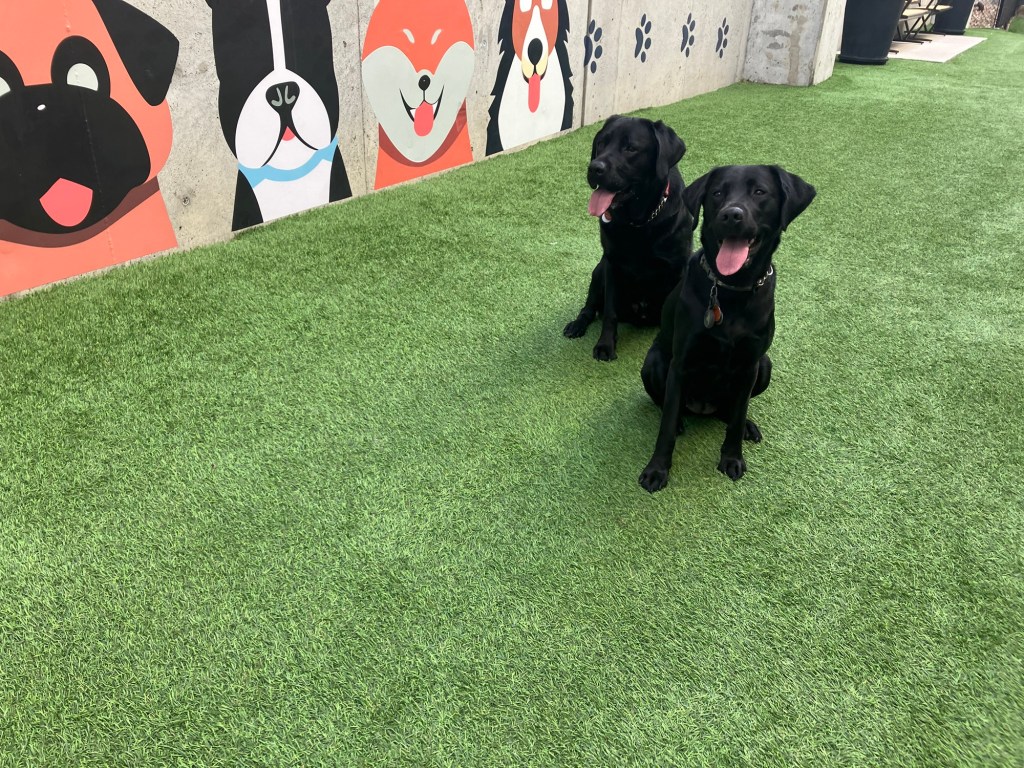


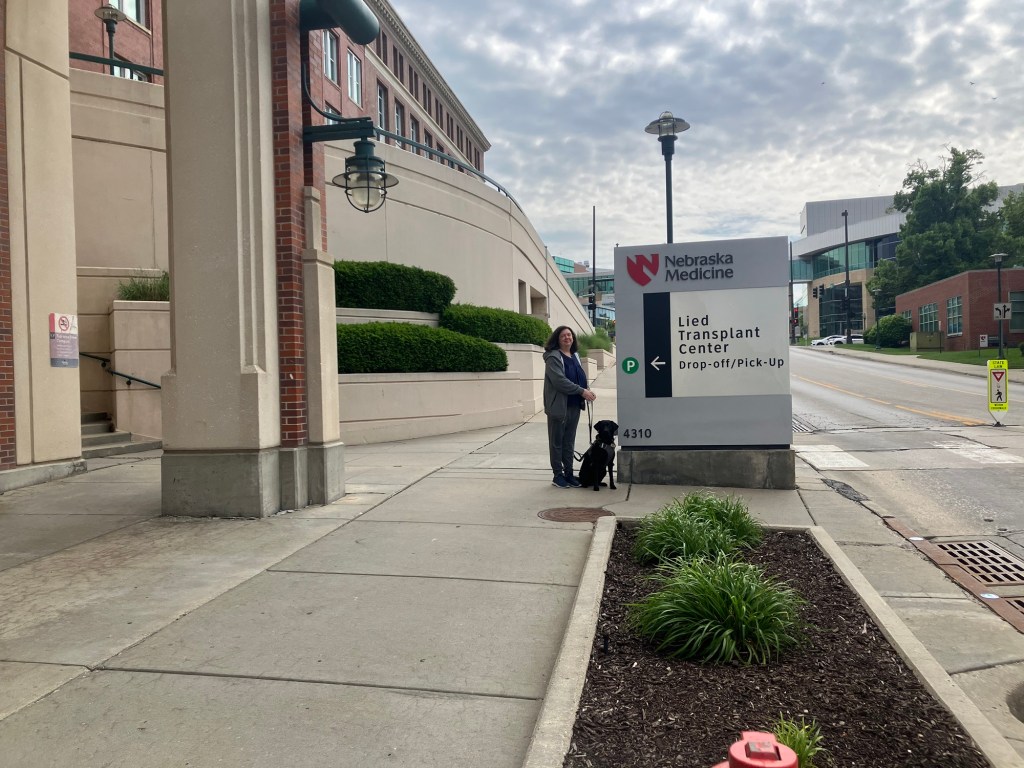


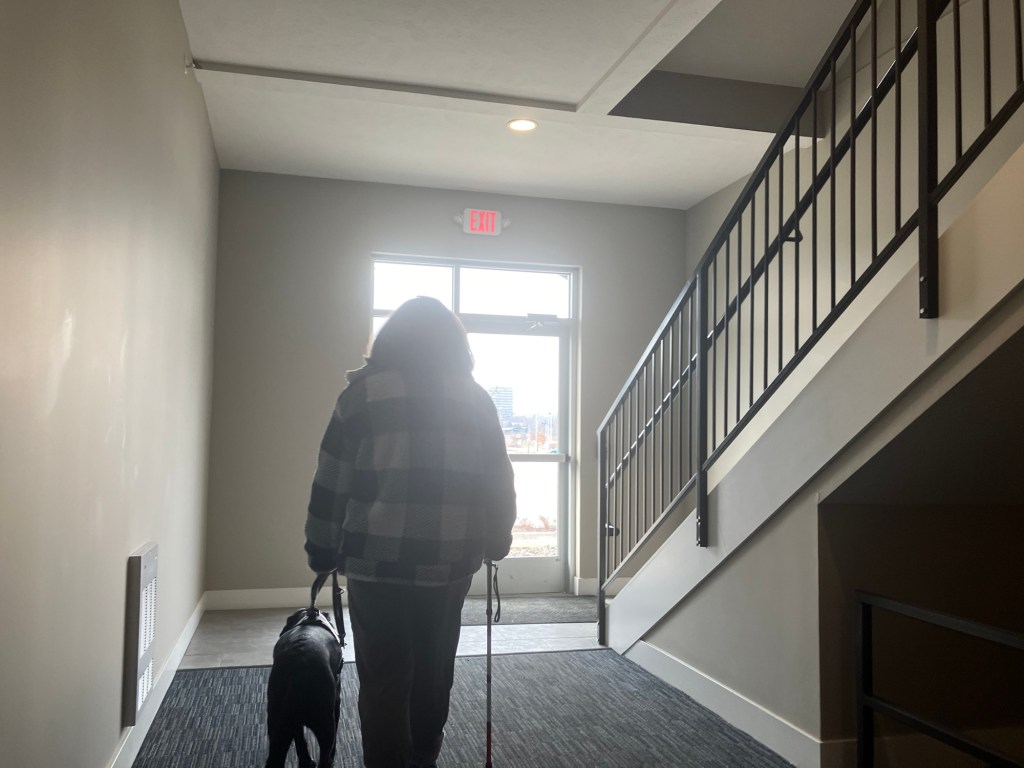
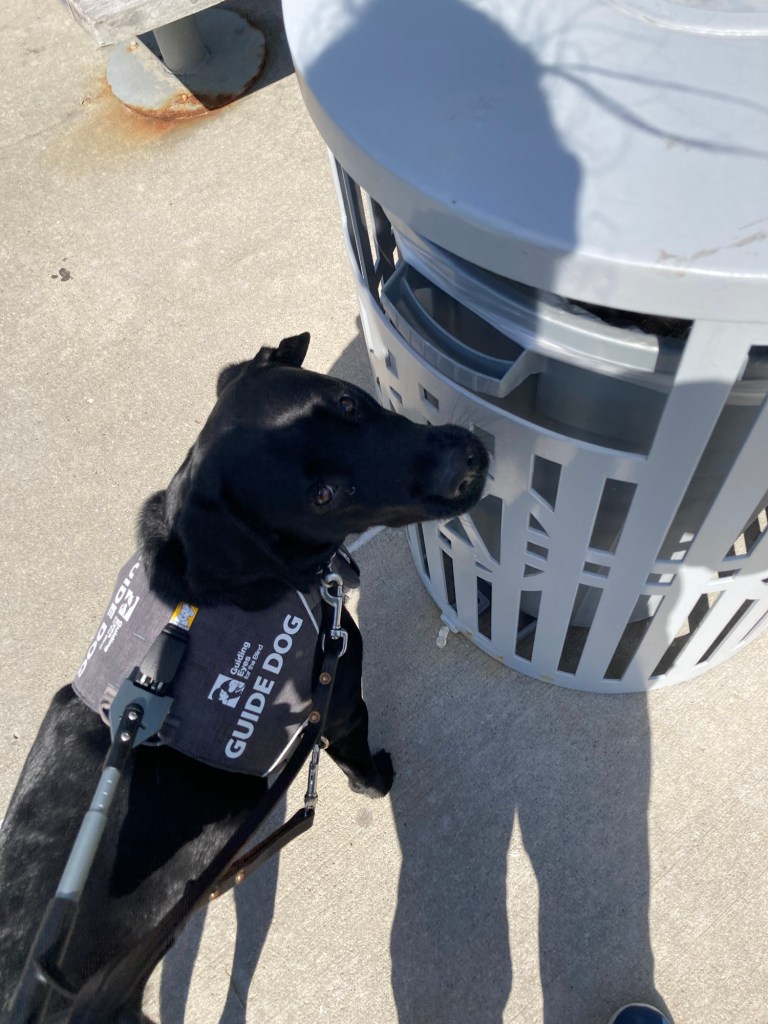


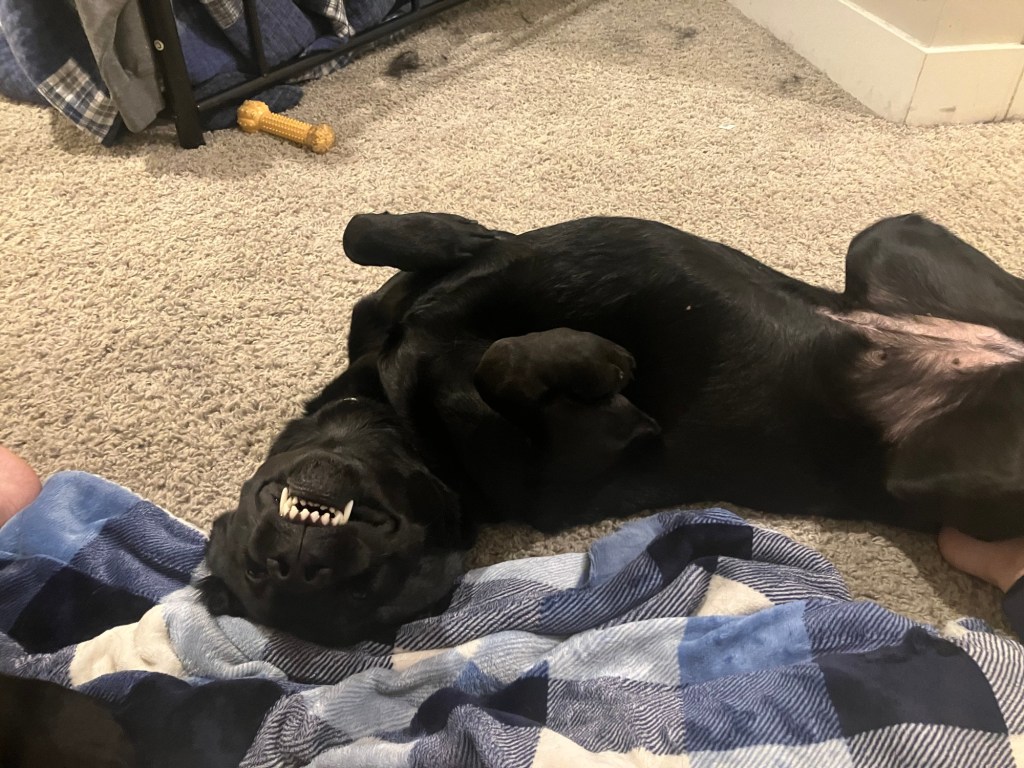


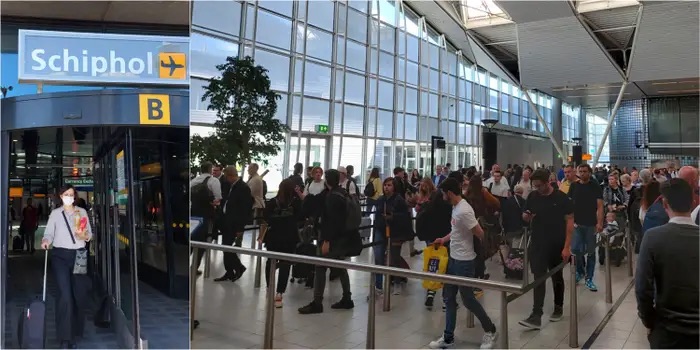
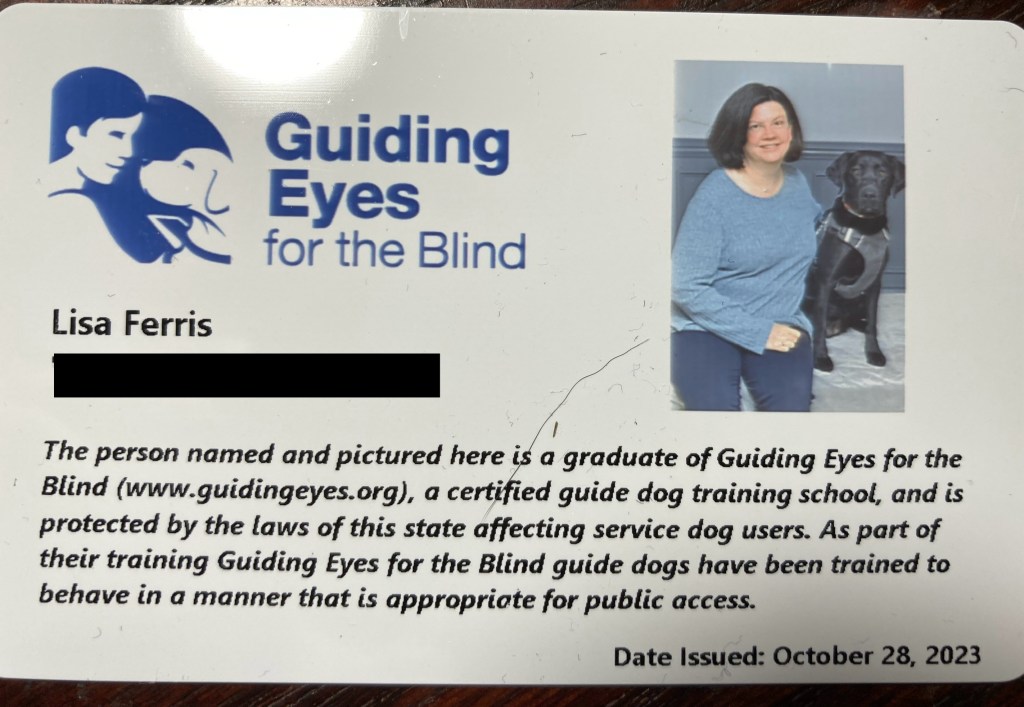
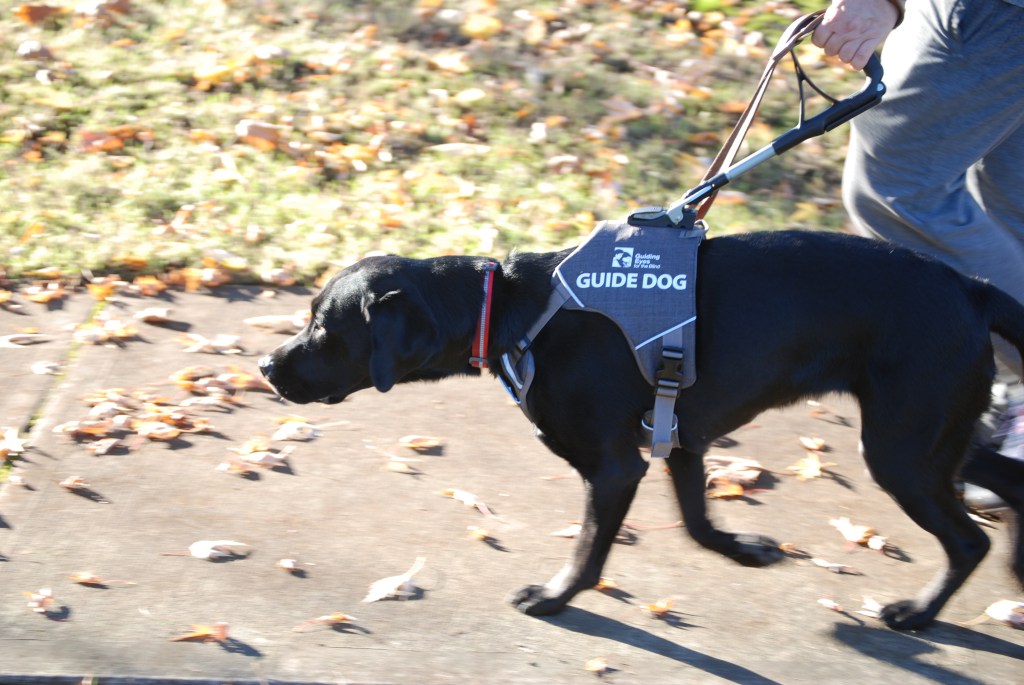


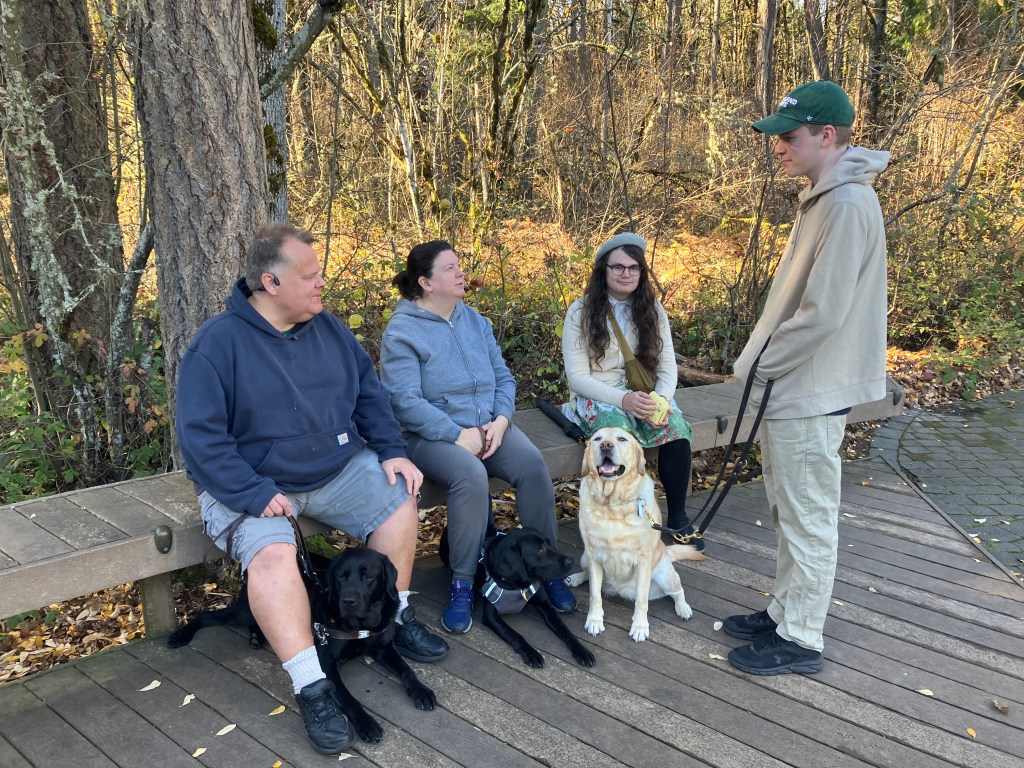
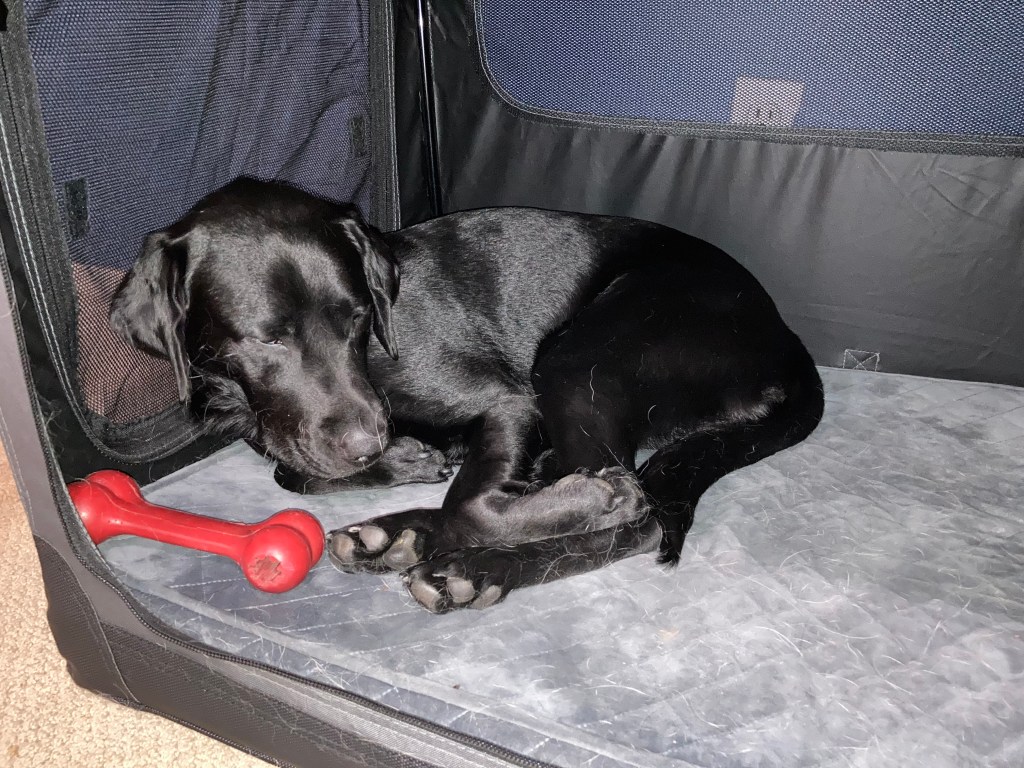

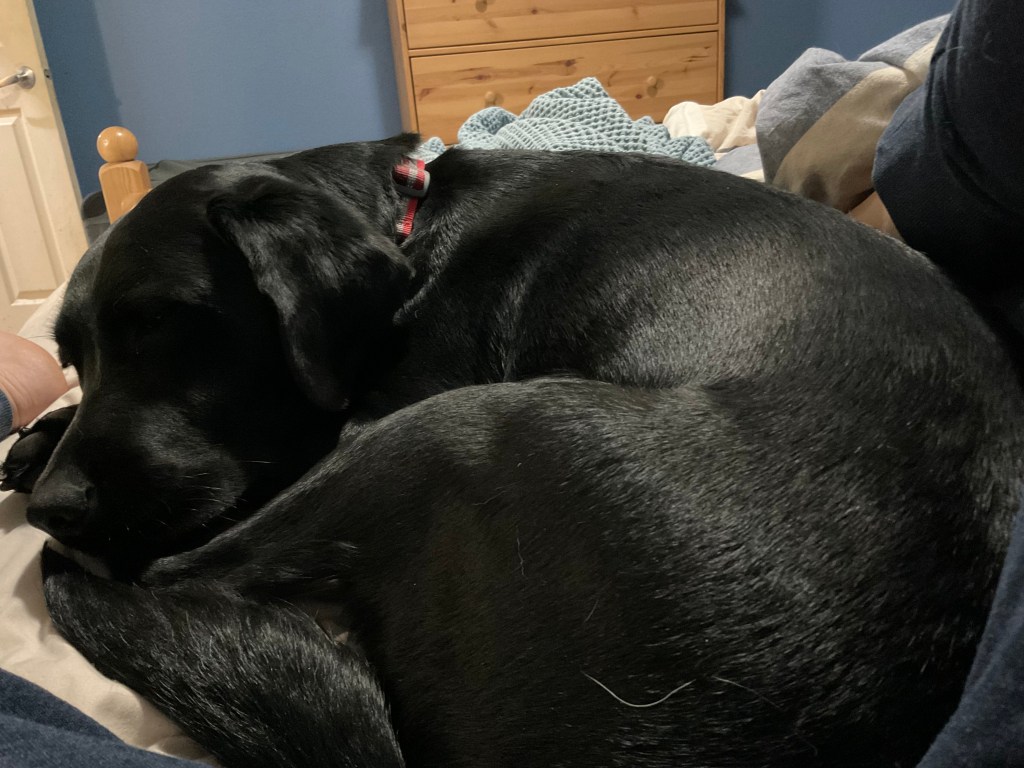





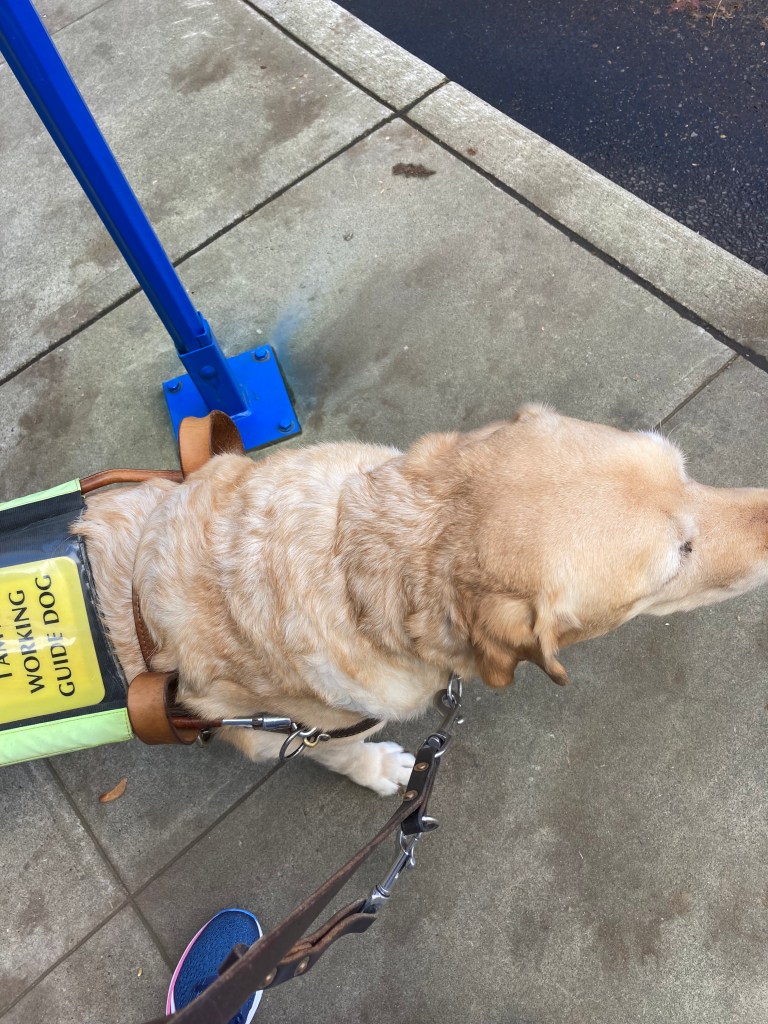
 Writebook